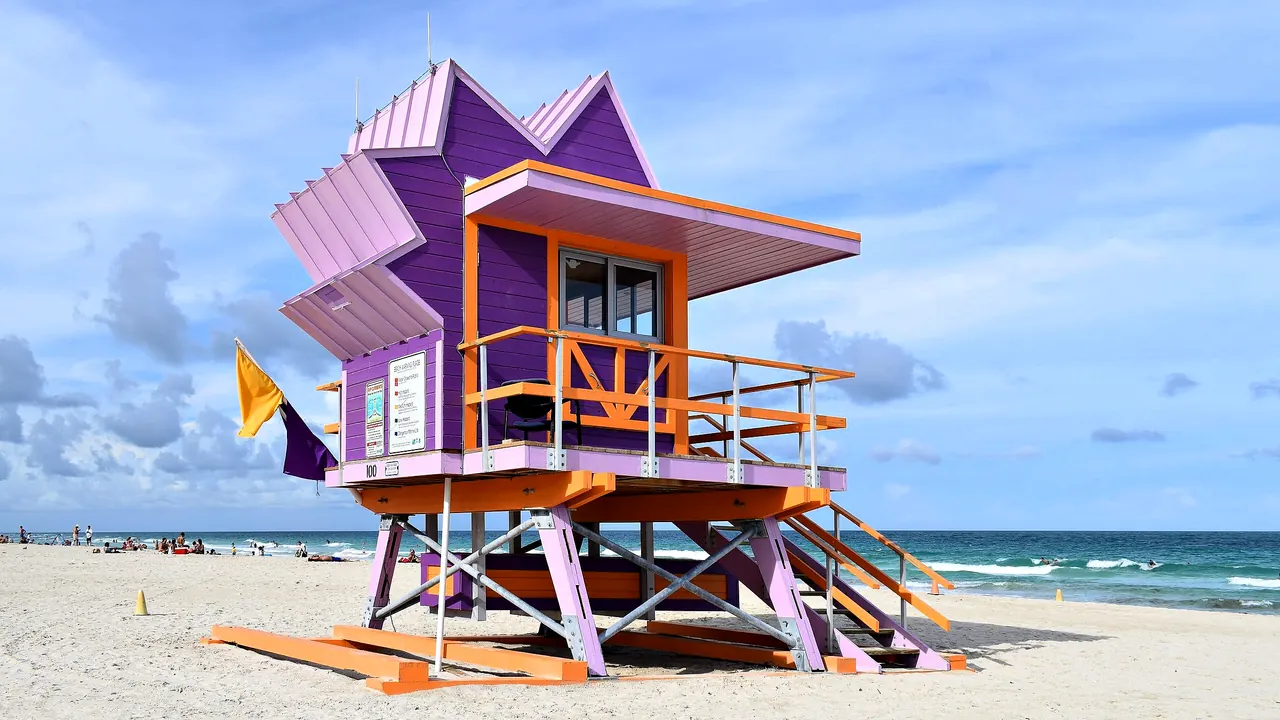
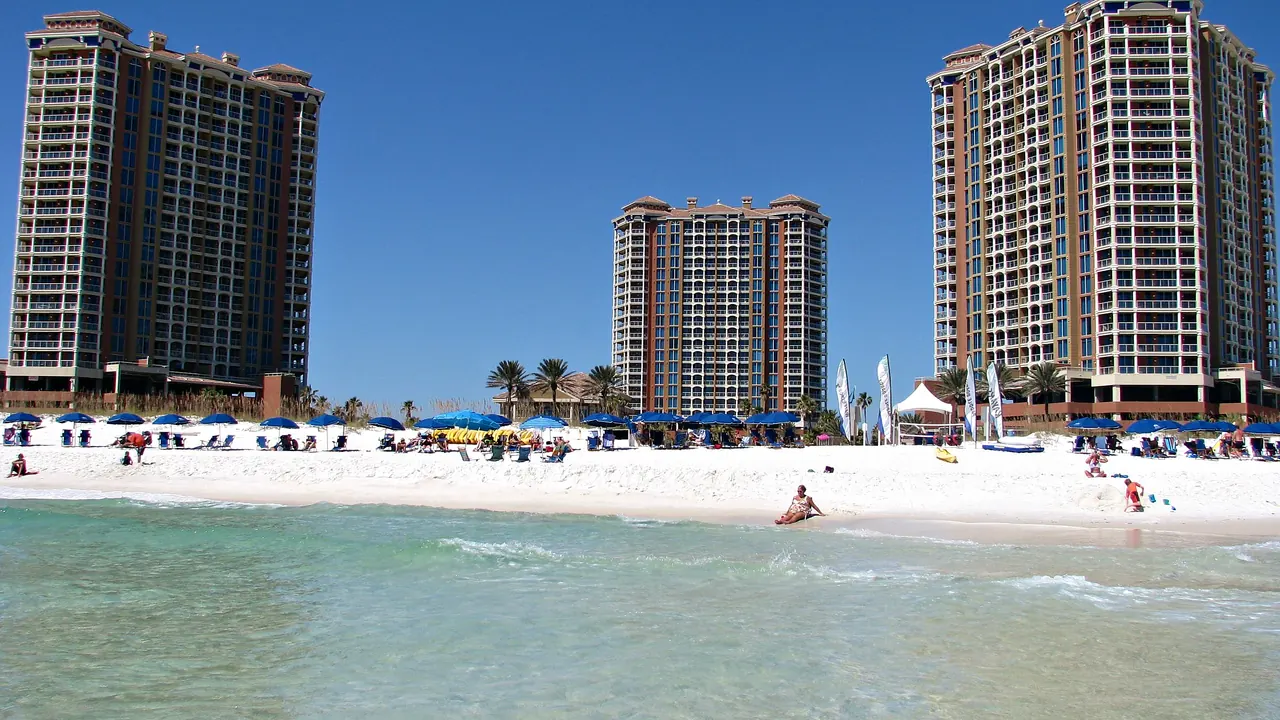
Photos: Miami Beach by Radomianin, CC BY-SA 4.0, cropped; Pensacola by Jason Meredith, CC BY 2.0, cropped.
Miami Beach or Pensacola?
Our verdict in twelve categories, each scored against the same fixed benchmark cities, and the climate month by month, so you can choose for your trip.
Choose Miami Beach for
- getting around
- nightlife
- shopping
Miami Beach suits travellers who want a beach and a city in the same place. The sea stays warm enough to swim in all through the winter, and the nights out, the restaurants and the Art Deco streets are all within walking distance of the sand. It is the better choice for a winter escape, for a couple who want late dinners and clubs after a day on the beach, and for anyone who would rather not drive. You pay for all of that, though, and South Beach is rarely quiet.
Choose Pensacola for
- prices
- nature and the outdoors
- families
Pensacola is a slower, cheaper and more outdoor kind of trip. The national seashore offers long, protected beaches of very white sand with dunes, herons and dolphins, and there is colonial and naval history in town for the days off the sand. It works best for a summer beach vacation by car, for families who want calm water and room to spread out, and for people who prefer a beach bar to a door policy. Outside the warm months the Gulf is too cold for most swimmers.
Scoreboard
Twelve categories on one fixed scale from 0 to 100. The shaded stretch is the gap between the two.
Your match
Pick a travel style or drag the sliders, and both match scores follow your weighting.
Wins on getting around and nightlife with your weighting.
Wins on prices and nature and the outdoors with your weighting.
What matters to you?
Category by category
What the scores mean for a trip.
Beaches & swimming
Both are serious beach destinations, and Miami Beach comes out ahead mainly because its sea stays warm all year. Its 11km of sand runs the length of the island, and you can pick a stretch to suit you: the crowds and people-watching of South Beach, or the space of Mid-Beach and North Beach. The trade-off is green-blue water and busy stretches with music and vendors.
Pensacola's beaches are lovelier to look at, with very white quartz sand, low dunes and clearer green water along the protected seashore. They are also emptier. They take a drive over the bridges to reach, though, rip currents need watching, and from late autumn to spring the water is too cold for most swimmers.
Food & drink
Miami Beach eats better and more widely. It has chef-driven and hotel restaurants, stone crabs in winter, and Cuban and South American cooking from takeaway windows and North Beach cafés, with Little Havana a short hop across the causeway. The thing to avoid is the tourist menus on Ocean Drive.
Pensacola's strength is simpler: Gulf oysters, royal red shrimp and grouper sandwiches in casual waterfront places, plus a decent run of Southern restaurants and breweries around Palafox Street. Beyond seafood and Southern cooking the choice is narrow, and the beach strip leans on chains.
Culture & sights
Miami Beach's sightseeing is one great thing done very well: the 1930s Art Deco district, with Miami Modern hotels further north, easy to see on foot. The Wolfsonian, the Bass and the Holocaust Memorial round it out, and the big museums are across the bay.
Pensacola's interest lies in its history rather than its design. It has the Spanish and British layers of the Seville district, brick Fort Pickens and the huge naval aviation museum, which sits on an active base with ID checks. Both places can be covered in two or three days. Miami Beach has the more distinctive streets and the mainland's museums close by.
Nightlife
This is where the two differ most. South Beach is a world-famous party district, with clubs and guest DJs until dawn, hotel pool parties in the afternoon and Collins and Washington Avenues loud into the early hours. It comes with dress codes, table service and bills to match.
Pensacola goes out in pubs, rooftop terraces and brewery taprooms on Palafox Street and in the Seville Quarter, and in sand-floored beach bars on the island. It is relaxed and friendly, with locals and Navy crowds, but there are barely any clubs and most evenings end early outside summer weekends.
Nature & outdoors
Pensacola has more nature on its doorstep. The Gulf Islands National Seashore protects dunes, salt marsh and maritime forest, with a bike path for spotting ospreys and shorebirds, and dolphins in the sound. Inland, the Blackwater River offers clear-water canoeing, and the sunken carrier offshore draws experienced divers.
Miami Beach is almost all city, so its outdoor life is paddleboarding on the bay, reef and wreck dives, and mangrove trails at Oleta River. Its best natural sights, the Everglades and Biscayne National Park, mean a drive or a tour.
Day trips
Miami Beach has the better day trips, mostly because mainland Miami is right across the bay: Little Havana, the Wynwood murals, Vizcaya and Coral Gables. Palm Beach and Key Largo are each about an hour and a half away by car.
From Pensacola, the best outing is Mobile, about an hour west, with its antebellum streets and Mardi Gras heritage, plus Fairhope across the bay. Heading east, the trips are mostly more beach towns. Both need a car for nearly everything beyond the first hop.
Good for families
Both work well with children, but in different ways. Miami Beach has lifeguards along the whole shore, warm water even in winter and resort pools in Mid-Beach and North Beach. There is little built for children on the island, though, and South Beach can be rowdy.
Pensacola has shallow sound-side water for toddlers, condos with kitchens, and more for children to do off the sand: planes at the aviation museum, the Blue Angels, the lighthouse climb and Fort Pickens' tunnels. Its swimming season is shorter.
Getting around
Miami Beach is far easier without a car. South Beach is flat and compact, and free trolleys, buses, bike share and the beachwalk link it to the rest of the island. Only trips to the mainland mean traffic on the causeways.
In Pensacola a car is close to essential. Downtown is walkable, but the beach, the naval base and Perdido Key are spread along highways and bridges, and the buses are of little use to visitors.
Shopping & style
Miami Beach is the place for serious shopping. Lincoln Road's palm-shaded promenade is mostly international chains, better for an evening stroll than for finds, but Bal Harbour at the island's northern tip brings together the big European fashion and jewellery houses. Collins Avenue adds swimwear and resort clothes.
Pensacola's shopping is small-scale: a few independent boutiques and antique shops on Palafox Street, beach shops selling souvenirs and an ordinary regional mall inland. Its Saturday market does sell local crafts, which you will not find on Miami Beach.
Affordability
Pensacola is clearly the cheaper vacation. Rooms in town and inland cost less, the seafood is reasonably priced, the main museum is free, and prices drop sharply across the island out of season. The cost of a hire car is the one thing visitors tend to overlook.
Miami Beach is expensive, especially oceanfront in winter, when resort fees, parking and South Beach cocktails add up quickly. Staying in North Beach or coming in the stormy summer helps, and you will rarely need a car.
Live music & performing arts
Miami Beach has the stronger stage. The New World Symphony plays in its Frank Gehry hall and projects some concerts onto the outside wall for the lawn, Miami City Ballet is based on the island, and the mainland's opera and Broadway tours are close by.
Pensacola gathers its symphony, opera, ballet and touring shows in the restored 1925 Saenger Theatre, and adds community theatre and bar bands. It makes a good evening out, but the scale is regional.
Wellness & relaxation
Neither place has a bathing tradition, but Miami Beach offers far more pampering: large resort spas with hydrotherapy circuits, and sunrise yoga on the sand, best enjoyed from a calm base in Mid-Beach. Pensacola has only day spas and massage studios. Its advantage is the pace, as the quiet island and Perdido Key out of season are easier places to switch off than anywhere near South Beach.
When should you go?
Pick your month. The climate figures are measured averages, not a forecast.
Miami Beach in July
Pensacola in July
Daytime high, °C
Rainfall in the month, mm
Temperature and rainfall are climate normals, averaged over the years shown. Miami Beach: 1991-2020 normals, Miami International Airport (18.8 km from centre). Pensacola: 1991-2020 normals, Pensacola / Pleasant Grove (12.3 km from centre).
Miami Beach can be a beach trip in any month. Even in January the afternoons reach about 25°C and the sea stays warm enough for a comfortable swim. The best stretch runs from November to April, when the days are warm, dry and pleasant for walking. From May the rain arrives as heavy afternoon storms, June is the wettest month at about 267mm, and the summer heat and humidity make walking at midday hard work until October.
Pensacola has real seasons. Winter is mild but cool, around 17°C in January, with a sea of about 18°C that is for walking beside rather than swimming in. The Gulf warms properly from late May, matching Miami's at about 29°C through the summer, and stays swimmable into early October. Rain falls steadily all year and peaks in high summer with thunderstorms, so late May, June, September and early October are the best times for the beach, and spring and autumn are best for exploring on foot.
Which traveller are you?
For a food and nightlife trip, Miami Beach is the clear pick. It has late dinners, Cuban takeaway windows and Latin flavours, with clubs that run until dawn and quieter cocktail bars in Sunset Harbour. Pensacola has good oysters and pubs, but it winds down early.
On a trip on a tight budget, Pensacola stretches the money further. Casual seafood is reasonably priced, the aviation museum is free and the seashore costs little to visit. Miami Beach adds resort fees, parking charges and expensive cocktails, though it does save you the cost of a hire car.
For an outdoors trip, Pensacola gives you more to do. There are dune and marsh trails on the national seashore, dolphins in the bay and clear rivers for canoeing inland. In Miami Beach the outdoor life happens mostly on the water, with the Everglades an hour's drive away.
Before you go
| Measure | Miami Beach | Pensacola |
|---|---|---|
| Currency | US Dollar (USD) | US Dollar (USD) |
| Sockets | AB120 V, 60 Hz | AB120 V, 60 Hz |
| Driving side | Right | Right |
| Time zone | UTC-5, UTC-4 in summer | UTC-6, UTC-5 in summer |
| Emergency number | 911 | 911 |
| Elevation | 1 m | 31 m |
| Main airport | Miami International Airport (MIA)16 km from centre198 non-stop destinations | Pensacola International Airport (PNS)6 km from centre27 non-stop destinations |
| Public holidays this year | 11 days | 11 days |
By the numbers
| Measure | Miami Beach | Pensacola |
|---|---|---|
| City population | 82,890 | 54,312 |
| People per km² | 2,109 | 515 |
| Museums within 10 km | 14 | 5 |
| UNESCO World Heritage sites within 50 km | 0 | 0 |
| Swim season, months above 21 °C | 12 months | 7 months |
Where else could you go?
Every comparison below shares a destination with this one, so you can follow Miami Beach or Pensacola somewhere new.