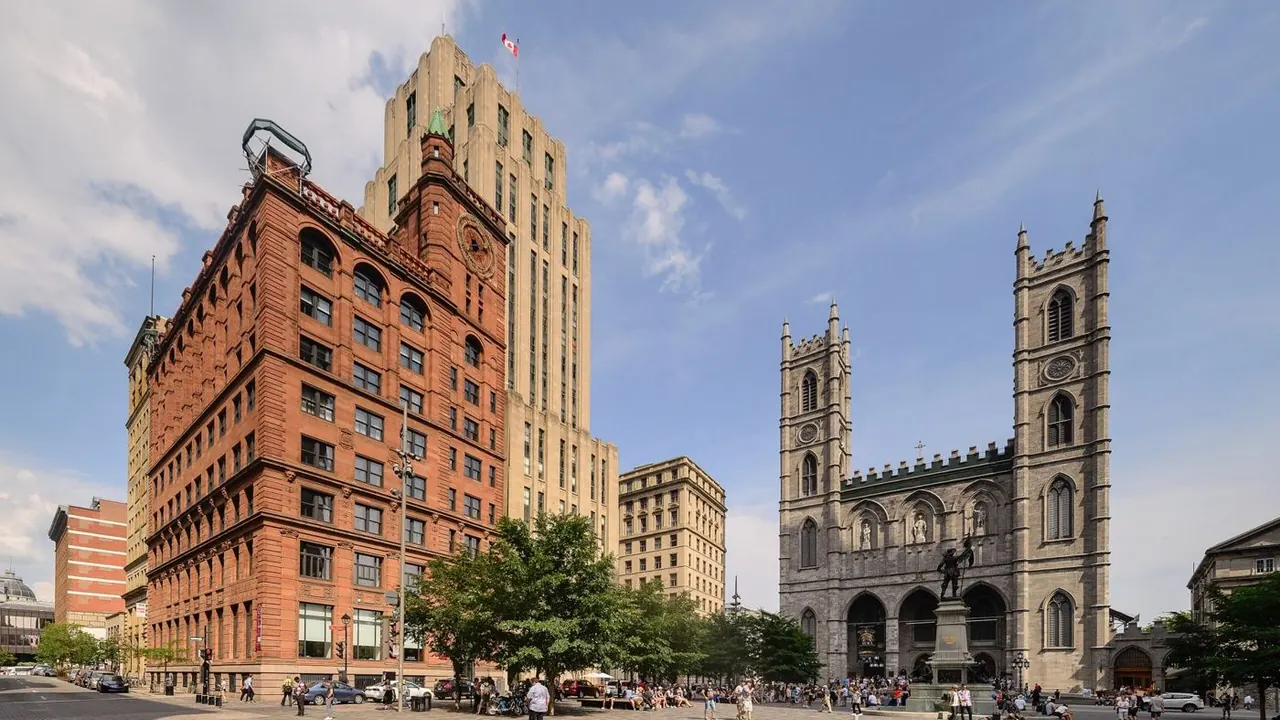
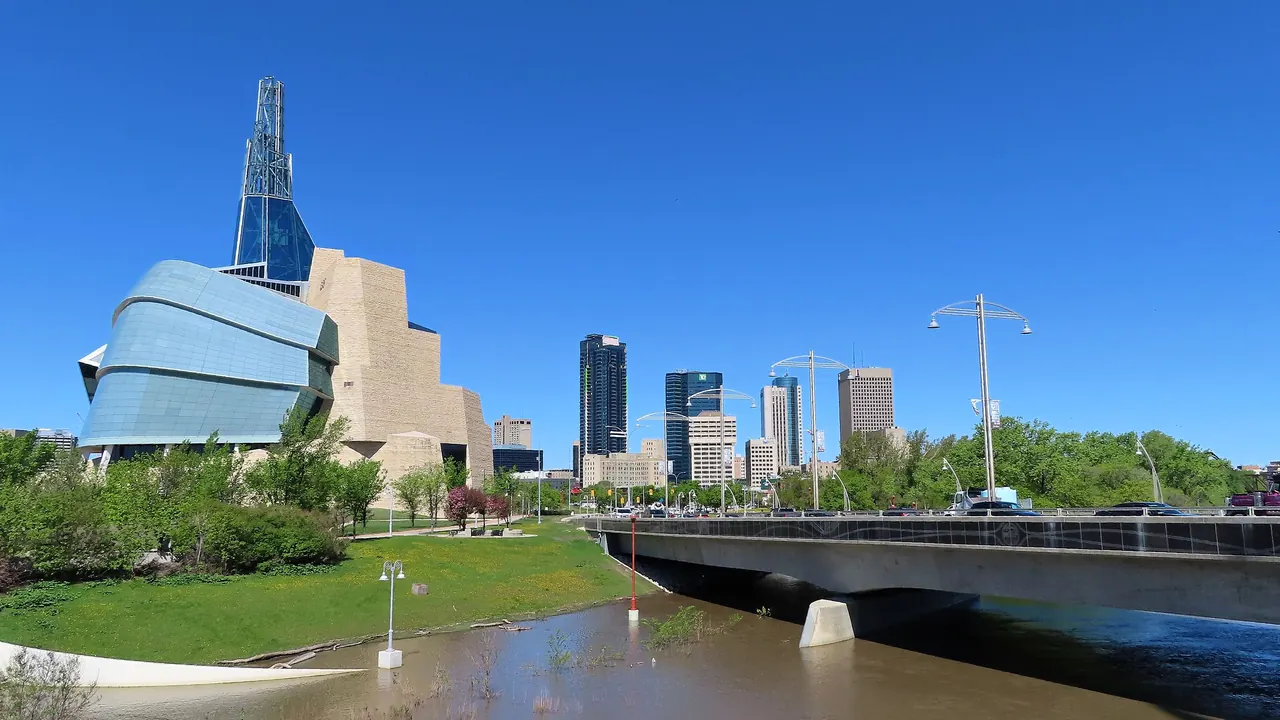
Photos: Montreal by Arild Vågen, CC BY-SA 4.0, cropped; Winnipeg by Dennis Sylvester Hurd, CC BY 2.0, cropped.
Montreal or Winnipeg?
Our verdict in twelve categories, each scored against the same fixed benchmark cities, and the climate month by month, so you can choose for your trip.
Choose Montreal for
- nightlife
- food and drink
- getting around
Montreal is the stronger choice for most city trips. It suits travellers who want to eat well, stay out late and see a lot without a car: bagels and smoked meat, bring-your-own-wine bistros on the Plateau, bars open into the small hours, Old Montreal's stone streets, and a metro and bike lanes that join it all up. It also has Mount Royal in the middle of town and Ottawa within easy reach by train.
Choose Winnipeg for
- beaches
- prices
Winnipeg rewards a quieter, more curious visitor who doesn't mind driving. It is unhurried and uncrowded, and it has a few things you won't find in Montreal: polar bears swimming over your head at the zoo, the Canadian Museum for Human Rights, a world-class collection of Inuit art, and the white sand and dunes of Grand Beach on Lake Winnipeg. It works best as a summer prairie trip with a hire car rather than a city break built around food and nightlife.
Scoreboard
Twelve categories on one fixed scale from 0 to 100. The shaded stretch is the gap between the two.
Your match
Pick a travel style or drag the sliders, and both match scores follow your weighting.
Wins on nightlife and food and drink with your weighting.
Wins on beaches and prices with your weighting.
What matters to you?
Category by category
What the scores mean for a trip.
Beaches & swimming
Neither city is worth choosing for swimming, but Winnipeg has the better shore. Grand Beach on Lake Winnipeg has fine white sand backed by dunes, and Gimli and Winnipeg Beach add old resort towns with piers and boardwalks. All of them are a drive of an hour or more, and late-summer algae can spoil the water.
Montreal's swimming is easier to reach but smaller. There is the supervised lake beach on Île Notre-Dame, which you can get to by metro, and Verdun's small river beach, with Oka's sandier shore about an hour out. In both cities the season runs only from about July to late August.
Food & drink
Food is one of the main reasons to visit Montreal, and Winnipeg cannot match it. Montreal has wood-fired bagels from Mile End, hand-cut smoked meat, poutine and maple-syrup feasts at the sugar shacks in spring. On top of that come French-rooted bistros cooking game and local cheeses, the Jean-Talon and Atwater markets, and bring-your-own-wine restaurants all over the Plateau and Little Italy.
Winnipeg eats honestly and cheaply rather than memorably. Expect Ukrainian and Mennonite perogies, cabbage rolls and farmer sausage, chicken fingers with honey dill sauce, and Filipino, Punjabi and Ethiopian cooking in the suburbs. The Forks Market is the easy place to graze, but it is a narrow range compared with Montreal's.
Culture & sights
Montreal has more to see. Old Montreal's grey-stone streets slope down to the Old Port, the Notre-Dame Basilica has its deep blue, gilded interior, and the Museum of Fine Arts is the strongest collection in either city. Saint Joseph's Oratory, Pointe-à-Callière and the Expo 67 Biosphere round out a full few days.
Winnipeg has fewer sights, but several are unique to it. The Canadian Museum for Human Rights spirals up above the rivers, and the Winnipeg Art Gallery holds the world's largest public collection of contemporary Inuit art. The Exchange District's grain-boom warehouses are its best street scene, though they are no match for Old Montreal's older stone.
Nightlife
This is one of the biggest gaps between the two. Montreal's bars serve until 3am, and students fill Boulevard Saint-Laurent every night of the week. Mile End and Saint-Denis have quieter wine bars, the Village has big gay clubs, and summer adds terraces and outdoor dance events on Île Sainte-Hélène.
Winnipeg is low-key. A night out means craft beer and cocktails in the Exchange District warehouses or pubs in Osborne Village, and most of the city is quiet by the early hours. In deep winter, people tend to settle into a single warm bar for the evening.
Nature & outdoors
Montreal has the better outdoors within easy reach. Mount Royal's wooded park rises beside downtown, the Lachine Canal path is easy cycling, and you can even surf a standing wave on the St Lawrence. The Laurentian lakes and the Eastern Townships are about an hour and a half away, and early October's colour is the high point of the year.
Winnipeg sits on flat prairie, so its outdoors in town is gentler: riverbank paths, the oak woods of Assiniboine Forest, and the bison at FortWhyte Alive. For real landscape you drive to the granite and lakes of Whiteshell Provincial Park. Summer mosquitoes there are fierce.
Day trips
Montreal has much more within a day's reach. Ottawa's Parliament buildings and national museums are about two hours away by train, the Eastern Townships offer covered bridges and cider farms, and Mont-Tremblant works in any season. Quebec City is also possible, though it is better as an overnight stay.
Around Winnipeg the country is mostly farmland. The best outings are the stone fur-trade post at Lower Fort Garry, Icelandic Gimli on the lake and the Mennonite Heritage Village in Steinbach. All of them need a car, and none would be a reason to come.
Good for families
Both cities are relaxed with children, but Montreal has more to fill the days. The Biodome, Insectarium and Botanical Garden sit together at the Olympic Park, the Old Port has the Science Centre and winter skating, and the Expo 67 amusement park is on the islands. All of these are reachable by metro.
Winnipeg's highlight is the zoo's underwater tunnel, where polar bears swim overhead. The Children's Museum at The Forks is also excellent. Beyond those, you will spend more time in the car, and in deep winter the days become a drive from one indoor stop to the next.
Getting around
In Montreal you can leave the car behind. The central neighbourhoods are walkable, the bike-share and separated lanes are ideal in summer, and four rubber-tyred metro lines reach the main sights, including the Olympic Park and the islands.
Winnipeg's walkable core is small: downtown, the Exchange District and The Forks. Beyond that, the city is built around the car and served only by slow buses. Both cities have winter refuges, Montreal's underground passages and Winnipeg's enclosed skywalks, but in Winnipeg most visitors end up hiring a car.
Shopping & style
Montreal is the better place to shop. Rue Sainte-Catherine has the department stores and malls, Sherbrooke and the Golden Square Mile have the luxury end, and Mile End and Saint-Henri are full of Quebec designers, vintage clothing and record shops.
Winnipeg shopping is mostly malls and chain stores, with no luxury street. The Exchange District and Corydon Avenue are the places to browse. In both cities, the most rewarding thing to take home is Inuit or First Nations art from a specialist gallery.
Affordability
Overall the two cost about the same, but the money goes on different things. In Montreal, central hotels cost as much as in other North American cities, especially during the summer festivals, and bar drinks are expensive. The savings are in cheap, casual eating, an inexpensive metro and free festival concerts.
Winnipeg's hotels are noticeably cheaper, but eating out is middling, and the hidden cost is transport. Anything past the centre usually means paying for a hire car or taxis.
Live music & performing arts
Both cities take the stage seriously, but Montreal works on a much larger scale. Place des Arts is home to the symphony, the opera and Les Grands Ballets, there is a large French-language theatre scene, and the city is a world centre of contemporary circus. In summer the Jazz Festival fills the Quartier des Spectacles with concerts, many of them free.
Winnipeg punches above its size. The Royal Winnipeg Ballet is the oldest ballet company in Canada, and there is a French-language company in St Boniface. In summer the Fringe takes over the Exchange District, and the Folk Festival brings stages and campers to Birds Hill Park.
Wellness & relaxation
Both cities practise the Nordic spa circuit: hot pools, saunas, a cold plunge, then a rest, which is at its best in the snow. Montreal has more ways to do it. There are circuits on Nuns' Island and on a converted ferry in the Old Port, and larger forest spas line the Laurentian rivers. Summer adds slow mornings and picnics in Parc La Fontaine.
Winnipeg has one large Nordic spa among the trees in the south of the city, which is memorable at -20°C. Beyond that there are only hotel and day spas. The city is calm and uncrowded, but it is not a place built around rest.
When should you go?
Pick your month. The climate figures are measured averages, not a forecast.
Montreal in July
Winnipeg in July
Daytime high, °C
Rainfall in the month, mm
Temperature and rainfall are climate normals, averaged over the years shown. Montreal: 1991-2020 normals, Montreal McTavish (3.2 km from centre). Winnipeg: 1991-2020 normals, Winnipeg The Forks (0.9 km from centre).
The two cities have almost the same summer, with July highs of about 27°C. In both, June to early September is the easy time to walk the streets, and July and August are the only months warm enough for a lake swim. Montreal gets rain all year, wetter in spring and summer, but the summer also brings long sunny days. Its best extra season is early October, when the trees turn and the days are still mild. Winnipeg is drier for most of the year, and much of its rain falls in summer.
Winter separates them. Montreal is cold, with January highs of around -3°C, but you can still walk about if you dress for it. Winnipeg's January highs are nearer -10°C, which is the kind of cold that keeps everyone indoors, though it makes the frozen-river skating and steaming outdoor spas memorable. Both cities warm up slowly. April is still cool, and May is the first month that feels like spring.
Which traveller are you?
For a beach and sun trip, Winnipeg wins, though only in high summer and only with a car. Grand Beach's fine white sand and dunes on Lake Winnipeg beat Montreal's small supervised beach on Île Notre-Dame, and the old lakeside resort towns make an easy day out.
On a food and nightlife trip, Montreal has a clear lead. It has its own staples, from bagels to sugar-shack feasts, plus neighbourhood bistros and markets. After dinner, Boulevard Saint-Laurent's bars run late every night, while Winnipeg is mostly quiet by the early hours.
For a short city break, Montreal is the better fit. Old Montreal, the Plateau and Mile End are close enough to walk or cycle between, the metro reaches the rest, and every evening has a concert, show or terrace to go to. In Winnipeg, much of what lies beyond the centre needs a car.
Before you go
| Measure | Montreal | Winnipeg |
|---|---|---|
| Official language | French, English | French, English |
| Currency | Canadian Dollar (CAD) | Canadian Dollar (CAD) |
| Sockets | AB120 V, 60 Hz | AB120 V, 60 Hz |
| Driving side | Right | Right |
| Time zone | UTC-5, UTC-4 in summer | UTC-6, UTC-5 in summer |
| Emergency number | 911 | 911 |
| Elevation | 31 m | 238 m |
| Main airport | Montreal / Pierre Elliott Trudeau International Airport (YUL)16 km from centre166 non-stop destinations | Winnipeg / James Armstrong Richardson International Airport (YWG)7 km from centre41 non-stop destinations |
| Public holidays this year | 10 days | 10 days |
By the numbers
| Measure | Montreal | Winnipeg |
|---|---|---|
| City population | 1,895,211 | 749,607 |
| People per km² | 3,806 | 1,670 |
| Museums within 10 km | 37 | 30 |
| UNESCO World Heritage sites within 50 km | 0 | 0 |
Where else could you go?
Every comparison below shares a destination with this one, so you can follow Montreal or Winnipeg somewhere new.