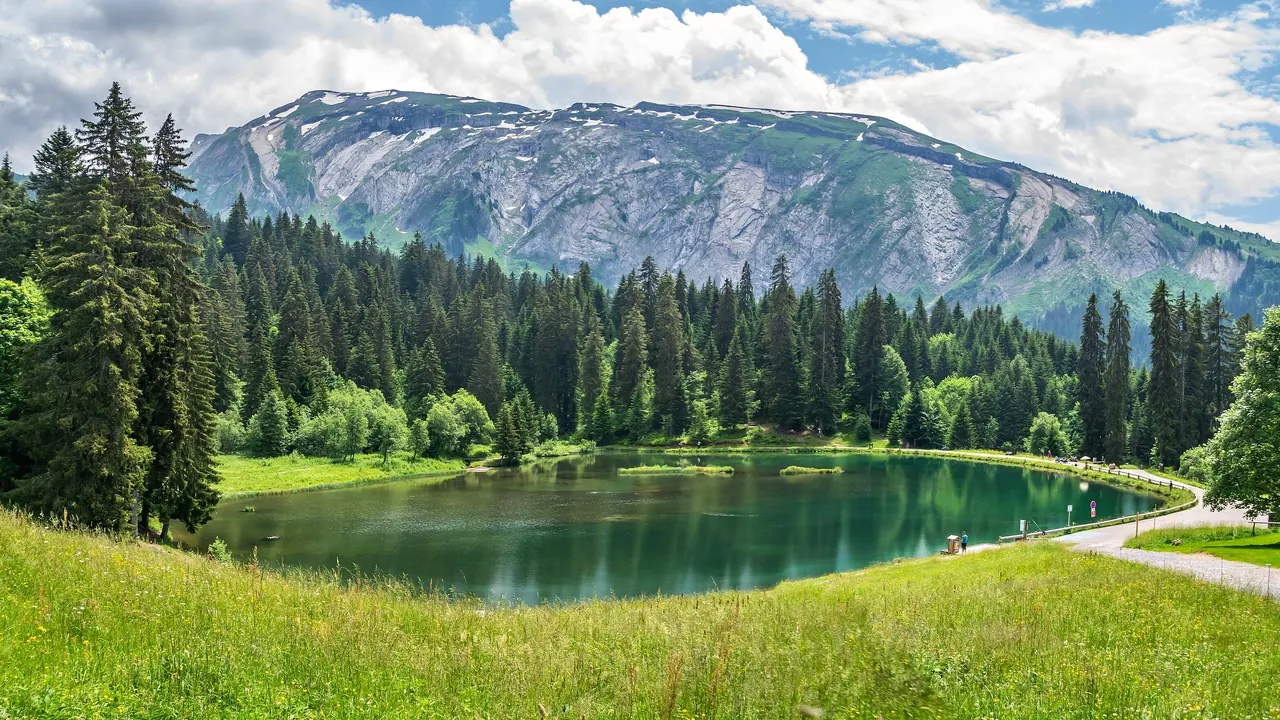
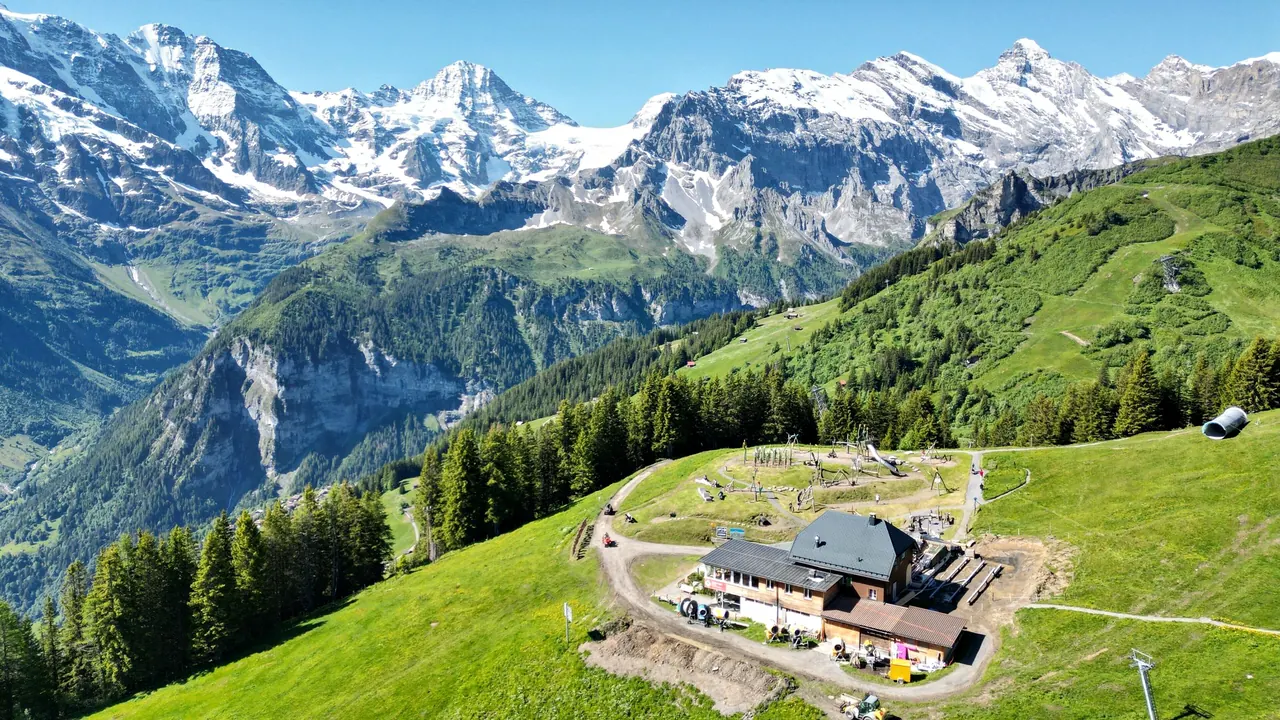
Photos: Morzine by Krzysztof Golik, CC BY-SA 4.0, cropped; Mürren by Bob Tan, CC BY-SA 4.0, cropped.
Morzine or Mürren?
Our verdict in twelve categories, each scored against the same fixed benchmark cities, and the climate month by month, so you can choose for your trip.
Choose Morzine for
- nightlife
- prices
- families
Morzine is the better pick for an active, sociable Alpine trip. It gives you the huge Portes du Soleil ski area in winter and some of Europe's best-known mountain-bike trails in summer. In the evenings there's a proper après-ski scene, and the lakes of Lake Geneva are within reach. It also works better for families and costs less, so it suits groups of friends and parents with ski-age children who want plenty to do on and off the slopes.
Choose Mürren for
- getting around
- wellness
- nature and the outdoors
If you'd rather swap all that for silence and one of the great views of the Alps, choose Mürren. The car-free village sits on a cliff ledge facing the Eiger, Mönch and Jungfrau, the evenings end early and nobody comes to shop. It suits walkers, couples and anyone who wants the mountains to fill the whole day, as long as they can absorb Swiss mountain prices.
Scoreboard
Twelve categories on one fixed scale from 0 to 100. The shaded stretch is the gap between the two.
Your match
Pick a travel style or drag the sliders, and both match scores follow your weighting.
Wins on nightlife and prices with your weighting.
Wins on getting around and wellness with your weighting.
What matters to you?
Category by category
What the scores mean for a trip.
Beaches & swimming
Neither place is for a beach vacation, but Morzine gets you to the water more easily. Lac de Montriond is a few minutes up the valley for a cool paddle, and the grassy and pebble bathing spots at Thonon and Evian on Lake Geneva are under an hour by car.
From Mürren, the lidos on Lake Thun and Lake Brienz mean over an hour of cable car and train, and the water there is a little cooler. In the village itself, swimming means the indoor pool at the sports centre.
Food & drink
Morzine gives you more to choose from. Tartiflette, fondue and croziflette are made with reblochon and Abondance, there are a few more ambitious places in the village, and you can browse the weekly market and cheese shops. It's still a narrow, ski-focused scene, though.
Mürren has even less. A handful of hotel dining rooms, chalet restaurants and mountain huts serve rösti and Älplermagronen, which taste wonderful on a terrace facing the Eiger. Many visitors cook for themselves from the village grocer.
Culture & sights
Neither village is a sightseeing destination, so this shouldn't decide your trip. Morzine has its baroque church, old farm chalets and a short heritage walk about the valley's slate quarries. Mürren's best-known building is the revolving Schilthorn summit station with its Bond film exhibition, plus the old hay barns down in Gimmelwald.
Nightlife
This is where the two villages differ most after dark. In Morzine the evening starts when the lifts close. A large British and seasonal-worker crowd fills the village-centre bars, a few of them keep going late with DJs and bands, and there is a small club or two for the last hours. It is at its liveliest at weekends in high season, and in summer the mountain bikers keep a handful of places busy.
In Mürren, an evening out means one drink, either in a hotel bar after skiing or on a terrace watching the peaks turn pink, and then an early night before an early start on the trails. If a night out matters to you, only Morzine offers one.
Nature & outdoors
Both places are first-rate, and you choose between them for the kind of mountain trip you want. Morzine is about range and movement. The Portes du Soleil links ski areas across France and Switzerland, the summer lifts carry downhill and enduro bikes to hundreds of kilometres of trails, and you can add rafting and canyoning.
Mürren is about drama at close range. It sits on a ledge 800m above the Lauterbrunnen valley, faces the Eiger, Mönch and Jungfrau, has a via ferrata across the cliffs and cable cars to the Schilthorn at nearly 3,000m. In winter it also has the long Inferno descent.
Day trips
Morzine has the wider choice, as long as you have a car. You can reach the painted cloister at Abondance, Evian and the walled village of Yvoire on Lake Geneva, ferries across to Lausanne, Annecy's canals and Chamonix beneath Mont Blanc.
From Mürren, every outing starts with the descent to Lauterbrunnen. That still leads to the castles on Lake Thun, the Ballenberg open-air museum and Bern's arcaded old town, but the long journeys mean fewer places are realistic as a day out.
Good for families
Morzine has more laid on for children. There are ski classes from a young age, nursery slopes near the village, an ice rink and a public pool. Up in Avoriaz there's a children's ski village and a tropical water park, and in summer you can see the goats at Les Lindarets and take pedal boats on Lac de Montriond.
Mürren's main strength is freedom. Without cars, children can roam the lanes safely, and the Allmendhubel has a flower park and playground. Beyond that the list is short, and the cliff edges mean keeping a close eye on small children.
Getting around
Mürren is easier to get around, as long as you stay on the mountain. The car-free village is a quarter-hour walk end to end, and cable cars, the terrace railway and the funicular all fit the integrated Swiss timetable. You can even send your luggage ahead.
Morzine is spread along a hillside. Free shuttles and gondolas work well in season, but there's no train and the shuttles largely stop between seasons. For anything beyond the resort you really need a car, and in winter that can mean snow chains.
Shopping & style
Morzine gives you a little more to browse. Besides the ski, snowboard and bike shops there are a few outdoor-clothing boutiques, and the weekly market and cheese shops mean you can take reblochon, charcuterie and Savoie wine home.
Mürren's shops cover the basics: a small grocery, gear rental and a rack of postcards. For Swiss watches or chocolate you have to go down to Interlaken.
Affordability
Your money goes noticeably further in Morzine, and you have some control over how much you spend. The big costs come together in a winter school-vacation week, with lift passes, ski school and lunches on the slopes. You can avoid most of that by coming in January, March or summer and staying in a catered chalet or a self-catering apartment. Even at its busiest, Morzine costs less than the most exclusive French resorts.
Mürren gives you far less room to save. Its prices are Swiss in every season, so picking a quieter week doesn't change much. The savings that are possible are small: cooking for yourself from the village grocer instead of eating at hotel tables, and using a Swiss travel pass for the trains and lifts. Even a careful stay costs more than a comparable trip to Morzine.
Live music & performing arts
Morzine at least has some live music. Cover bands and acoustic sets play in the après-ski bars through the winter, and there's the odd outdoor concert in summer. Mürren offers little beyond yodelling, alphorns or a brass band at a village festival or on Swiss National Day. For a real concert hall, you'd go to Geneva from Morzine or to Bern from Mürren.
Wellness & relaxation
Mürren is better for a restful stay, simply because it's so quiet. With no traffic, cowbells are often the loudest sound, and its facilities are modest: a sauna and whirlpool at the sports centre and small hotel spas.
Morzine has more pampering, with hot tubs and saunas in many chalets, spa treatments in the village and the thermal baths of Evian within an hour. Its peak winter weeks are noisy, though, so it only matches Mürren's calm in summer and the shoulder months.
When should you go?
Pick your month. The climate figures are measured averages, not a forecast.
Morzine in July
Mürren in July
Daytime high, °C
Rainfall in the month, mm
Where the figures come from
Morzine's temperatures are measured 63 km from the centre, at Bourg-St-Maurice.
Morzine has no rain gauge within 25 km of the centre, so its rainfall comes from a gridded climate dataset read at the destination rather than from a gauge further away.
Mürren has no weather station within reach, so its figures come from a gridded climate model rather than a measured record, and read a broad area rather than one spot.
Temperature and rainfall are climate normals, averaged over the years shown. Morzine: 1999-2020 (rainfall 1991-2020) normals, Bourg-St-Maurice (62.7 km from centre). Mürren: 2001-2020 normals, NASA POWER reanalysis grid, no weather station within 90 km.
Morzine is far warmer through the year. Its summer highs reach about 27°C in July, so June to September are comfortable for hiking, biking and a dip in the lakes down the valley. Winter days are cold but usually just above freezing, and January to March are the months for snow sports. Mürren sits much higher. Even July only reaches about 17°C, and from December to February the days stay below freezing, with March hovering around zero.
Rain falls all year in both places, but at different times. Morzine is wettest in early winter, at about 160mm in December, and fairly steady the rest of the year. Mürren is the other way round: its winters are the driest part of the year, and the rain comes from May to August, peaking at about 165mm in August. Summer walkers there should expect showers and cloud that build quickly. September brings noticeably less rain, so early autumn is a good time to walk the terrace, while a dry, crisp winter day often gives the clearest views of the peaks.
Which traveller are you?
On a food and nightlife trip, Morzine is the obvious choice. Its bars fill as the lifts close, some keep DJs and bands going late, and Savoyard cooking with Savoie wines offers more choice than Mürren's few hotel dining rooms and quiet terraces.
On a family trip with children, Morzine also comes out ahead. Ski schools, nursery slopes, Avoriaz's children's ski village and water park, and summer goats at Les Lindarets give more to do than Mürren's car-free lanes and Allmendhubel playground.
For a relaxing and wellness trip, Mürren is better. It has no traffic and very little evening noise, and you can spend an afternoon on a balcony facing the Jungfrau. That stillness beats Morzine's hot tubs and spas, which come with noisy peak winter weeks in the centre.
Before you go
| Measure | Morzine | Mürren |
|---|---|---|
| Official language | French | French, German, Italian, Romansh |
| Currency | Euro (EUR) | Swiss Franc (CHF) |
| Sockets | CE230 V, 50 Hz | CJ230 V, 50 Hz |
| Driving side | Right | Right |
| Time zone | UTC+1, UTC+2 in summer | UTC+1, UTC+2 in summer |
| Emergency number | 112 | 112 |
| Elevation | 890 m | 1,650 m |
| Main airport | Geneva International Airport (GVA)47 km from centre150 non-stop destinations | Zürich Airport (ZRH)112 km from centre226 non-stop destinations |
| Public holidays this year | 11 days | 10 days |
By the numbers
| Measure | Morzine | Mürren |
|---|---|---|
| Population | 2,658 | 377 |
| People per km² | 60 | 36 |
| Museums within 10 km | 1 | 0 |
| UNESCO World Heritage sites within 50 km | 3 | 1 |
Where else could you go?
Every comparison below shares a destination with this one, so you can follow Morzine or Mürren somewhere new.
- Les Getsvs Morzine
- Avoriazvs Morzine
- Wengenvs Mürren
- Samoënsvs Morzine
- Grindelwaldvs Mürren
- Châtelvs Morzine