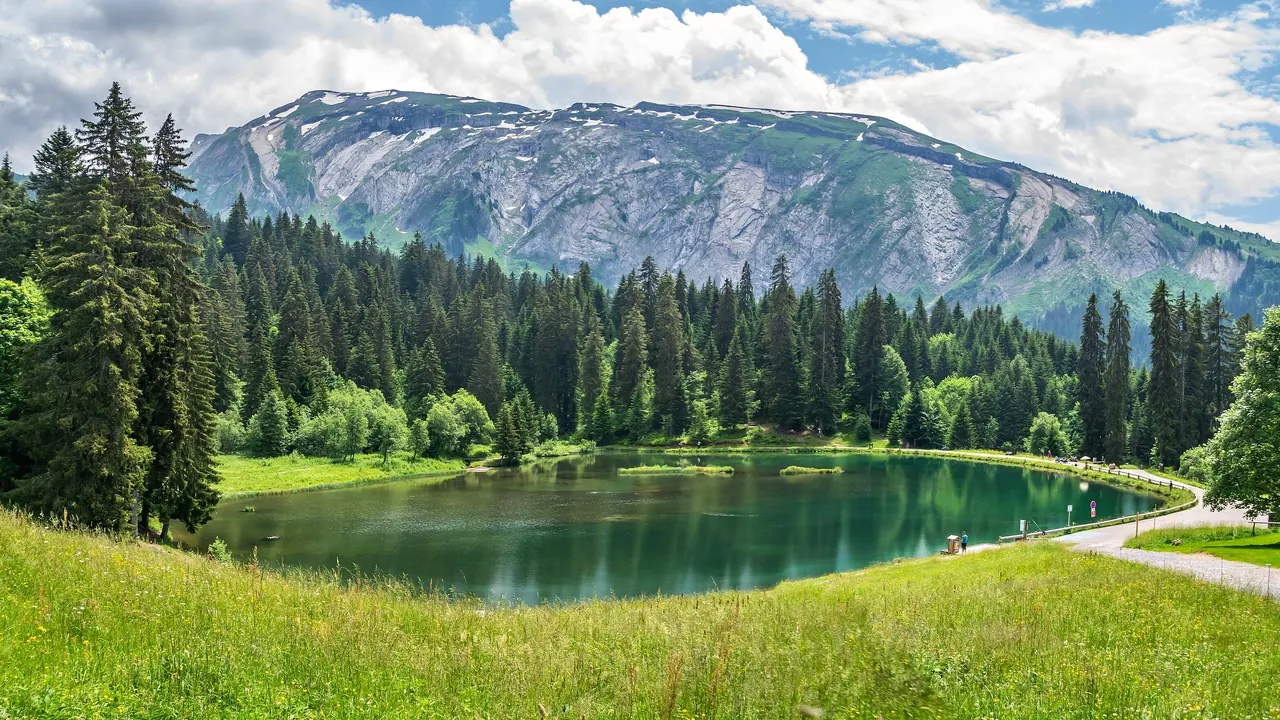
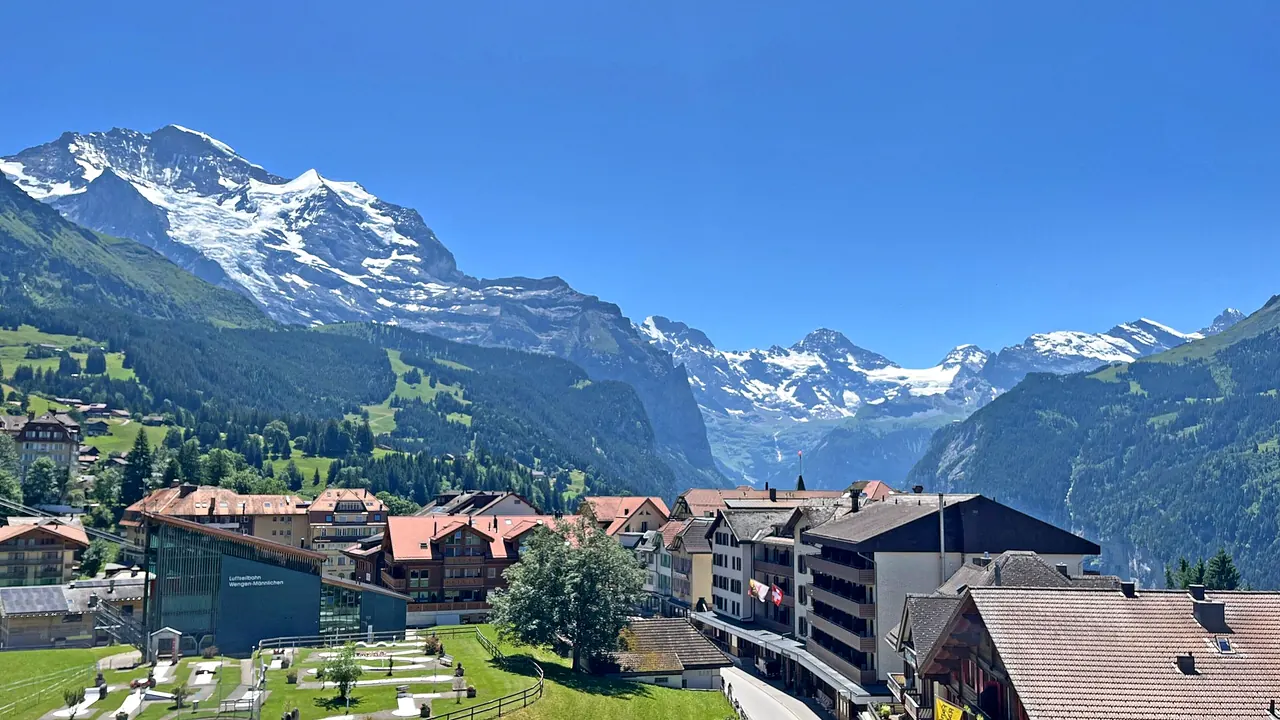
Photos: Morzine by Krzysztof Golik, CC BY-SA 4.0, cropped; Wengen by Charles J. Sharp, CC BY-SA 4.0, cropped.
Morzine or Wengen?
Our verdict in twelve categories, each scored against the same fixed benchmark cities, and the climate month by month, so you can choose for your trip.
Choose Morzine for
- nightlife
- prices
- families
Morzine is the better choice for an active, sociable mountain trip. The Portes du Soleil gives skiers and mountain bikers a huge cross-border playground straight from the village, the après-ski goes on late, families get a children's ski village and an indoor water park in Avoriaz, and summer is warm enough for afternoons by Lake Geneva. It also costs less, especially outside the winter school weeks.
Choose Wengen for
- getting around
- nature and the outdoors
- wellness
Wengen is for travellers who want to sit face to face with the Eiger, Mönch and Jungfrau and reach them without a car. The rack railway and cable cars take you from a quiet, car-free village to glacier views and classic ridge walks. Evenings end early, prices are steep and there is little to do beyond the mountains, but for walkers and anyone after alpine calm, little else compares.
Scoreboard
Twelve categories on one fixed scale from 0 to 100. The shaded stretch is the gap between the two.
Your match
Pick a travel style or drag the sliders, and both match scores follow your weighting.
Wins on nightlife and prices with your weighting.
Wins on getting around and nature and the outdoors with your weighting.
What matters to you?
Category by category
What the scores mean for a trip.
Beaches & swimming
Neither village is a swimming destination, but Morzine gets you to water more easily. Lac de Montriond is a few minutes up the valley for a cool dip, and the grassy and pebbly bathing spots at Thonon and Evian on Lake Geneva are under an hour away, with the water at about 22°C in high summer.
From Wengen, the nearest swimming is about an hour away by train at the lidos on Lake Thun, where the water is slightly cooler. Glacier-fed Lake Brienz is colder still, so a swim there is an occasional outing rather than a regular part of the stay.
Food & drink
Morzine has the stronger food offer, built on Savoyard cheese dishes such as tartiflette, croziflette and reblochon fondue, with Savoie white wines. There are a few more ambitious restaurants in the village, plus a weekly market and cheese shops. The choice still narrows in the off season.
Wengen's food is mostly hotel half-board and mountain huts serving rösti, veal in cream sauce and raclette. A terrace lunch facing the Jungfrau is the highlight, and the view matters more than the food. There are almost no casual options, so for variety you have to go down to Interlaken.
Culture & sights
Morzine's past is rural and working: a baroque church in the old centre, farm chalets with wooden balconies, and a short heritage walk that tells the story of the valley's slate quarries. Wengen's past is a resort one, seen in the large Belle Époque hotels from its early years as an English resort and in its long ski-racing history. You can see either village in an afternoon stroll, and for proper sights both mean a drive or a train ride out.
Nightlife
Morzine is far livelier after dark. In winter, the large British and seasonal-worker crowd fills the village bars as the lifts close, a few stay loud until late, and there is a small club or two. In summer, mountain bikers keep a handful of bars busy.
Wengen has a short après-ski hour in a few bars and hotel lounges, and then the village goes quiet. Its one real party is the Lauberhorn race weekend in January. In summer, the walkers are in bed early.
Nature & outdoors
Both are outstanding mountain bases, but they suit different trips. Morzine is about range and activity. It sits inside the vast Portes du Soleil ski area shared with Switzerland, it is one of Europe's best-known centres for downhill and enduro biking, and it adds paragliding, canyoning and rafting.
Wengen is about the scenery itself. It sits on a sunny ledge above the sheer, waterfall-lined Lauterbrunnen valley and looks straight at the Jungfrau. Classic walks lead to Kleine Scheidegg and beneath the Eiger north face, and the railway climbs to the Jungfraujoch glacier. Walkers will love it, but cloud can hide the peaks for days.
Day trips
Both have a good range of outings, and the difference lies in how you reach them. From Morzine you drive: to the painted cloister at Abondance, to Evian and medieval Yvoire on Lake Geneva with ferries over to Lausanne, or to Geneva and Annecy's canals, all within about an hour and a half.
From Wengen everything goes by train and lake steamer, starting with the slow descent to Lauterbrunnen. That opens up the castles at Thun, Oberhofen and Spiez, the Ballenberg open-air museum near Brienz, and a long but worthwhile day in Bern.
Good for families
Morzine is the easier choice with children. Ski schools take them young and the nursery slopes are close to the village. Avoriaz above has a children's ski village and an indoor tropical water park, and the village has an ice rink and a pool for rainy days. Summer adds the goats at Les Lindarets and gentle bike parks.
Wengen's main strength is that it is car-free, so children can wander safely, and the trains turn big mountain views into short outings. But it has little built for children, wet days are hard to fill, and feeding a family there is very expensive.
Getting around
Wengen is easier to get around without a car. The rack railway brings you up from Lauterbrunnen, electric carts carry your luggage, and the same line continues to Kleine Scheidegg and the Jungfraujoch, with a cable car up to the Männlichen. The catch is the slow trip down whenever you want to go anywhere lower.
Morzine has no train. Most visitors come by transfer from Geneva, and the free shuttles linking the chalets to the lifts mostly stop between seasons. For lakeside towns or longer outings you really need a car, and in winter that means snow chains.
Shopping & style
Morzine gives you more to take home: reblochon and Abondance cheese, charcuterie and Savoie wine from its food shops and weekly market, plus a few outdoor-clothing boutiques alongside the ski and bike shops. Wengen's short main street has gear hire, souvenir and chocolate counters and a small grocery, and not much else. For a real day of shopping, from Morzine you go to Geneva or Annecy, and from Wengen to Interlaken or Bern.
Affordability
Morzine is clearly the cheaper of the two, though it is not a budget resort. Lift passes, ski school and school-vacation accommodation all add up. Self-catering apartments, summer stays and the quieter weeks of January and March bring costs down noticeably.
Wengen is expensive however you plan it. Hotels and meals are priced at Swiss resort levels, and every railway or cable car ride adds to the bill, with the Jungfraujoch the costliest of all. Regional rail passes and free hiking trails help, but they do not make it cheap.
Live music & performing arts
Neither village has a theatre or concert programme, so the difference is in the kind of music you hear. In Morzine, live music means cover bands and acoustic sets in the winter après-ski bars, plus the odd summer festival. Wengen offers traditional Swiss music instead: yodelling or alphorn evenings in a hotel and a brass band at village celebrations. For real concerts, you would go to Geneva from Morzine, or to Interlaken or Bern from Wengen.
Wellness & relaxation
The two are about level for rest, but the kind of rest differs. Morzine is built around recovery after sport: many chalets and hotels have saunas, steam rooms and outdoor hot tubs, the village has massage and spa treatments, and the thermal baths of Evian are under an hour's drive when you want a proper soak. Its calm comes in summer and in the quiet months between seasons.
In Wengen, the rest comes from having no traffic, so the quiet lasts all day and into the evening. The larger hotels have spas with pools, saunas and treatment rooms, but there are no public thermal baths and no bathing tradition to build a trip around. It suits people who unwind by sitting still in mountain air more than those planning a spa trip.
When should you go?
Pick your month. The climate figures are measured averages, not a forecast.
Morzine in July
Wengen in July
Daytime high, °C
Rainfall in the month, mm
Where the figures come from
Morzine's temperatures are measured 63 km from the centre, at Bourg-St-Maurice.
Morzine has no rain gauge within 25 km of the centre, so its rainfall comes from a gridded climate dataset read at the destination rather than from a gauge further away.
Wengen has no weather station within reach, so its figures come from a gridded climate model rather than a measured record, and read a broad area rather than one spot.
Temperature and rainfall are climate normals, averaged over the years shown. Morzine: 1999-2020 (rainfall 1991-2020) normals, Bourg-St-Maurice (62.7 km from centre). Wengen: 1991-2020 normals, TerraClimate 4 km grid at the town, no weather station within 90 km.
The two villages sit at very different heights, and it shows. Morzine's summers are properly warm, with afternoons around 27°C in July, so June to August suits hiking, biking and swimming in the lake. Wengen stays cool all summer at about 16°C, which is ideal for long walks but never beach weather. In winter Morzine's highs drop to single figures, while Wengen's hover around 0°C from December to February, and both are ski destinations in those months.
Rain falls all year in both. Morzine is wettest in late autumn and winter, peaking at about 160mm in December, while Wengen gets most of its rain from May to August and has its driest spell in late winter, at about 76mm in February. For clear walking weather in Wengen, September and early October are a good bet. In Morzine, late spring and September bring mild days without the summer heat.
Which traveller are you?
For a food and nightlife trip, Morzine wins without much contest. Its Savoyard cheese cooking has more range, and the winter après-ski scene runs late with DJs, bands and a club or two. Wengen's evenings mostly end with a hotel dinner.
On a family trip with children, Morzine has more to keep them busy. Avoriaz adds a car-free children's ski village and a tropical water park, and in summer there are the goats of Les Lindarets and pedal boats on Lac de Montriond. Wengen is safe but has little for rainy days.
On a relaxing and wellness trip, Wengen suits people who unwind by staying still. With no cars, all you hear is cowbells and waterfalls, and the balconies face the Jungfrau. Morzine has more hot tubs and spas, but its centre gets noisy in peak winter.
Before you go
| Measure | Morzine | Wengen |
|---|---|---|
| Official language | French | French, German, Italian, Romansh |
| Currency | Euro (EUR) | Swiss Franc (CHF) |
| Sockets | CE230 V, 50 Hz | CJ230 V, 50 Hz |
| Driving side | Right | Right |
| Time zone | UTC+1, UTC+2 in summer | UTC+1, UTC+2 in summer |
| Emergency number | 112 | 112 |
| Elevation | 890 m | 1,274 m |
| Main airport | Geneva International Airport (GVA)47 km from centre150 non-stop destinations | Zürich Airport (ZRH)106 km from centre226 non-stop destinations |
| Public holidays this year | 11 days | 10 days |
By the numbers
| Measure | Morzine | Wengen |
|---|---|---|
| Population | 2,658 | 1,116 |
| People per km² | 60 | 31 |
| Museums within 10 km | 1 | 2 |
| UNESCO World Heritage sites within 50 km | 3 | 1 |
Where else could you go?
Every comparison below shares a destination with this one, so you can follow Morzine or Wengen somewhere new.
- Les Getsvs Morzine
- Avoriazvs Morzine
- Mürrenvs Wengen
- Grindelwaldvs Wengen
- Samoënsvs Morzine
- Châtelvs Morzine