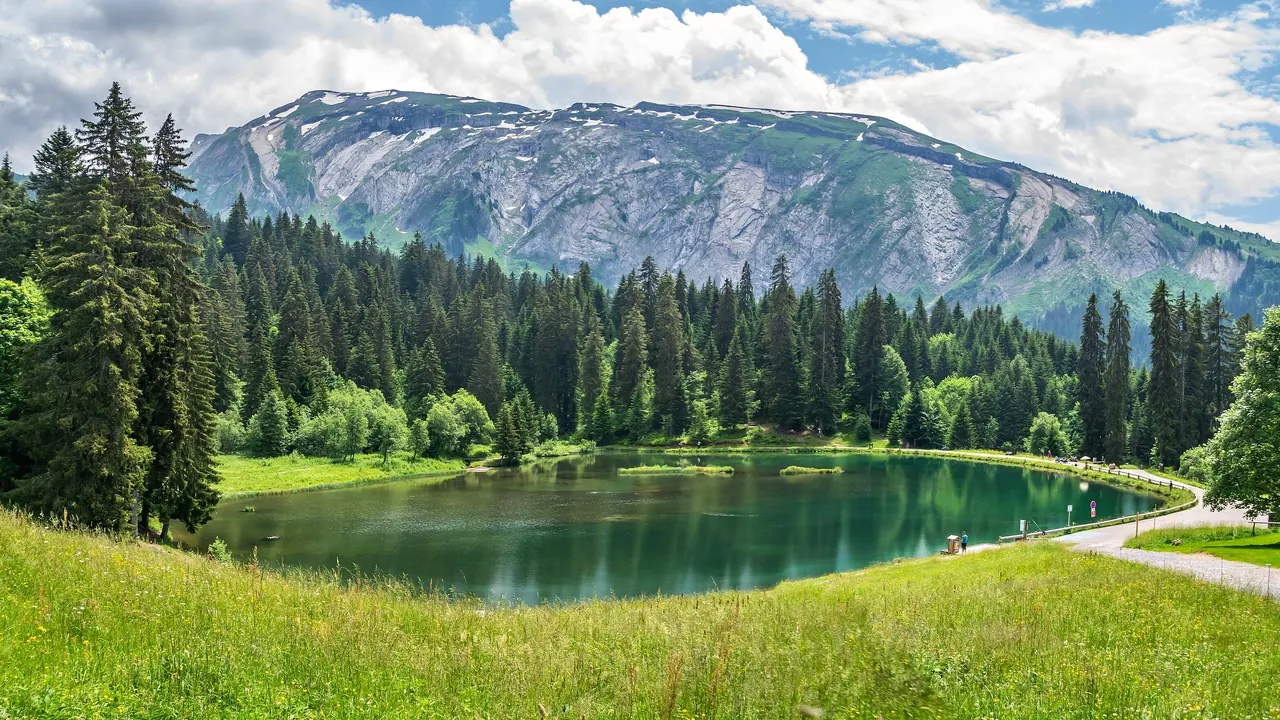
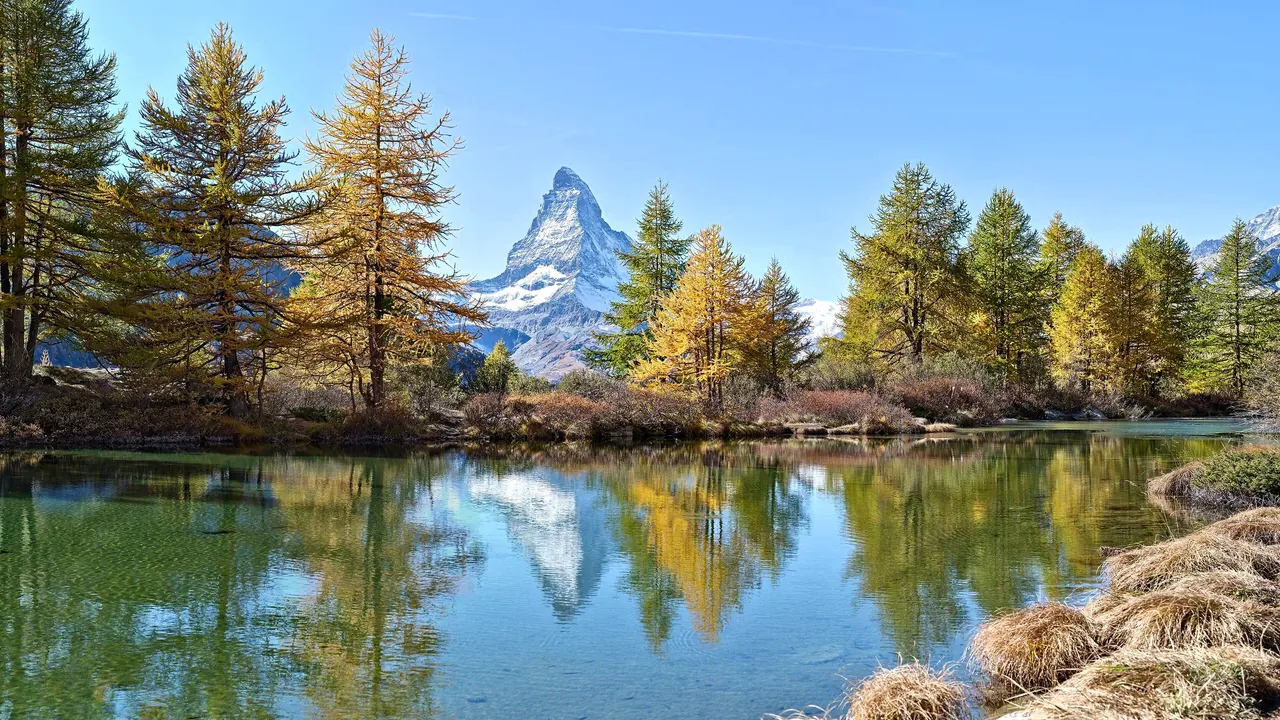
Photos: Morzine by Krzysztof Golik, CC BY-SA 4.0, cropped; Zermatt by Roy Egloff, CC BY-SA 4.0, cropped.
Morzine or Zermatt?
Our verdict in twelve categories, each scored against the same fixed benchmark cities, and the climate month by month, so you can choose for your trip.
Choose Morzine for
- day trips
- prices
- beaches
Morzine suits families, groups watching the budget and anyone who wants a broad, sociable mountain base rather than a showpiece. The Portes du Soleil gives huge linked skiing in winter and some of Europe's best-known mountain biking in summer. Children are well looked after, with ski schools, Avoriaz's car-free ski village and goats at Les Lindarets. With a car, Lake Geneva, Annecy and Geneva are all within reach for a change of scene.
Choose Zermatt for
- getting around
- shopping
- food and drink
Zermatt is the choice when the mountain itself is the point and cost matters less. The Matterhorn stands over a car-free village you reach by train, the lifts climb to glacier height, and the long lunches on chalet terraces are better than anything Morzine offers. Add spa hotels with mountain views and a quieter street life, and it suits couples and serious hikers and climbers who are happy to stay in one valley and pay for the setting.
Scoreboard
Twelve categories on one fixed scale from 0 to 100. The shaded stretch is the gap between the two.
Your match
Pick a travel style or drag the sliders, and both match scores follow your weighting.
Too close to call, 2 points apart
Wins on day trips and prices with your weighting.
Wins on getting around and shopping with your weighting.
What matters to you?
Category by category
What the scores mean for a trip.
Beaches & swimming
Neither is a swimming destination, but Morzine at least gives you water in summer. Lac de Montriond is a few minutes up the valley for a cool dip. The grassy and pebble bathing spots of Thonon and Evian on Lake Geneva are under an hour away, where the water warms to about 22°C in high summer.
Zermatt has nothing comparable. Its mountain tarns are for photographing the Matterhorn rather than swimming, so a dip there means a hotel pool.
Food & drink
Zermatt eats better, mainly up on the mountain. The chalet hamlets of Findeln, Furi and Zum See serve long terrace lunches facing the Matterhorn. The village has a few serious fine-dining kitchens, and Valais wines such as Petite Arvine and Cornalin go with the raclette and air-dried beef.
Morzine's cooking is hearty Savoyard food built on reblochon and Abondance cheese, and its weekly market and cheese shops are good for picnics. Away from the slopes, though, the choice is aimed at skiers and is narrower, partly because so many guests eat in catered chalets.
Culture & sights
Neither town is a place for sightseeing, but Zermatt gives you more to fill a morning. The Matterhorn Museum tells the story of the 1865 first ascent, and the mountaineers' cemetery and the larch-wood granaries of the Hinterdorf are close by. The Gornergrat cog railway, running since 1898, is a historic sight in itself.
Morzine has a baroque church, a few old farm chalets and a short walk about the valley's slate quarrying, and little beyond that.
Nightlife
Both offer après-ski rather than a real night out, and both go quiet between seasons. The difference is the crowd. Morzine's is louder and younger, driven by British visitors and seasonal workers, with DJs and bands in village bars and a few late clubs. In summer the mountain bikers keep some of those bars going.
Zermatt's evenings start in the slope-side bars on the runs back into the village and end on the main street. They are cheerful but costly, and in summer, when hikers have early starts, things wind down after dinner.
Nature & outdoors
Both are first-rate mountain bases, but they differ in kind. Morzine offers breadth. The Portes du Soleil links huge amounts of terrain across the French and Swiss border, and in summer the same lifts make it one of Europe's great downhill and enduro biking centres, with canyoning, rafting and paragliding as well.
Zermatt offers height and drama. It has the Matterhorn, a ring of four-thousand-metre peaks, the Gorner Glacier, lifts to over 3,800m, glacier pistes open in summer and skiing that crosses into Italy. It is the place for guided ascents, high-alpine hiking and the end of the Haute Route.
Day trips
With a car, Morzine has far more to do around it. Within about an hour or so you can reach the painted cloister at Abondance, the Lake Geneva shore at Evian and walled Yvoire, and lake ferries across to Lausanne and Montreux. Geneva, Annecy's canals and Chamonix are all within easy range.
From Zermatt, every outing starts with a long train ride down the valley. Sion's castle hills and old town are the best of it, with Brig and the Visperterminen vineyards as alternatives. Most visitors simply stay in the mountains.
Good for families
Morzine is better set up for children. It has ski schools for young beginners, nursery slopes near the village, and Avoriaz above with its car-free children's ski village and tropical water park. In summer there are the roaming goats of Les Lindarets, pedal boats on Lac de Montriond and beginner bike trails, plus an ice rink and pool for bad days.
Zermatt's real asset is its car-free streets, which make short walks with children relaxed and safe, and the Sunnegga side has gentle slopes. Beyond that there is little made for children. The highest viewpoints, above 3,000m, can be too cold and thin-aired for small ones.
Getting around
Zermatt is much simpler. You arrive by train, leave any car at Täsch, and walk the compact village, where the cog railway, the underground funicular and the gondolas all start within reach. The smooth link into the Swiss rail network makes it workable without a car at all.
Morzine has no train and spreads along a hillside. It relies on seasonal shuttle buses that mostly stop between seasons, and anything beyond the resort really needs a car, with snow chains and slow roads in winter.
Shopping & style
Neither is a shopping trip, but Zermatt's single main street has more to browse. You will find Swiss watch and jewellery boutiques, well-stocked mountaineering outfitters and plenty of chocolate and cowbell souvenirs. Morzine's shops are mostly for hiring skis and bikes and buying Savoyard cheese and wine, and Geneva or Annecy are the places for anything more.
Affordability
Morzine is expensive in winter, especially in school vacation weeks, but it is cheaper than the grandest French resorts. Self-catering, catered chalets, summer and the quiet weeks of January and March all keep it manageable.
Zermatt is in another league for cost. Even plain rooms, terrace drinks and the lifts every visitor uses come at a high price. Staying down the valley in Täsch and eating from the supermarket help, but they do not make it cheap.
Live music & performing arts
Morzine has nothing to plan an evening around. Live music means cover bands and acoustic sets in winter après-ski bars, plus the odd outdoor concert in summer, and Geneva is the nearest place for theatre.
Zermatt gives you two dates worth booking around. In spring, Zermatt Unplugged brings established singers to play stripped-back sets on stages around the village and up the slopes. In late summer, a chamber music festival brings classical players of real standing to the church and other small venues. Outside those weeks Zermatt is as quiet as Morzine, and evenings are for dinner rather than a show.
Wellness & relaxation
Morzine's calm depends on when you go. In summer and the quieter shoulder months the village slows right down, and a week of mountain air, gentle walks and early nights is easy to arrange. The pampering itself is modest, though. Expect massage and treatments in the village and whatever your chalet provides, rather than proper spa facilities.
Zermatt is the better place to be looked after, because its hotels compete on their spas, with indoor pools, steam rooms and treatment rooms of a standard Morzine does not match. Most people around you are there to ski, hike or climb, so in the busy weeks the village feels purposeful rather than slow, and early summer is when it is most restful. Neither town has a thermal spring. For a soak in the waters, Morzine visitors head to the Lake Geneva shore and Zermatt visitors to the spa towns lower down the Valais.
When should you go?
Pick your month. The climate figures are measured averages, not a forecast.
Morzine in July
Zermatt in July
Daytime high, °C
Rainfall in the month, mm
Where the figures come from
Morzine's temperatures are measured 63 km from the centre, at Bourg-St-Maurice.
Morzine has no rain gauge within 25 km of the centre, so its rainfall comes from a gridded climate dataset read at the destination rather than from a gauge further away.
Zermatt has no weather station within reach, so its figures come from a gridded climate model rather than a measured record, and read a broad area rather than one spot.
Temperature and rainfall are climate normals, averaged over the years shown. Morzine: 1999-2020 (rainfall 1991-2020) normals, Bourg-St-Maurice (62.7 km from centre). Zermatt: 1991-2020 normals, TerraClimate 4 km grid at the town, no weather station within 90 km.
Morzine sits much lower and has a proper summer. From June to August afternoons reach about 27°C, warm enough for a dip at Lac de Montriond or a lake day on the Lake Geneva shore. Rain falls all year, but the wettest stretch runs from November to January and peaks at 160mm in December. March, April and September are the driest months, so early autumn is a good time for walking and riding. In winter the village stays a few degrees above freezing, which is why skiers rely on the higher, snow-sure slopes of Avoriaz above it.
Zermatt is far higher and colder. Even in July and August the village barely reaches 14°C. That is good hiking weather, but never warm enough for a swim. From December to March daytime highs hover around freezing, so the snow lies right down in the village. It is drier than Morzine overall, and November is the wettest month at about 130mm. For a warm summer with lakes nearby, choose Morzine. Zermatt is better for cool high-trail walking from late June to September, and for a cold winter with snow down to the streets.
Which traveller are you?
On a family trip with young children, Morzine is the easier choice. It has ski schools and nursery slopes close to the village, the children's village and indoor water park at Avoriaz, and pedal boats and goats nearby in summer. Zermatt's altitude and rainy days are harder to fill.
For a trip on a tight budget, Morzine is the only sensible option of the two. It is expensive in winter, but self-catering and quieter weeks bring it within reach. Zermatt is one of the costliest places in the Alps, from the beds to the lifts.
On a relaxing and wellness trip, Zermatt has the edge. It has many excellent hotel spas, often with Matterhorn views, and its car-free streets stay quiet in the evenings. Morzine has chalet hot tubs and the Evian baths, but its centre is louder.
Before you go
| Measure | Morzine | Zermatt |
|---|---|---|
| Official language | French | French, German, Italian, Romansh |
| Currency | Euro (EUR) | Swiss Franc (CHF) |
| Sockets | CE230 V, 50 Hz | CJ230 V, 50 Hz |
| Driving side | Right | Right |
| Time zone | UTC+1, UTC+2 in summer | UTC+1, UTC+2 in summer |
| Emergency number | 112 | 112 |
| Elevation | 890 m | 1,624 m |
| Main airport | Geneva International Airport (GVA)47 km from centre150 non-stop destinations | Geneva International Airport (GVA)128 km from centre150 non-stop destinations |
| Public holidays this year | 11 days | 9 days |
By the numbers
| Measure | Morzine | Zermatt |
|---|---|---|
| Population | 2,658 | 6,023 |
| People per km² | 60 | 25 |
| Museums within 10 km | 1 | 2 |
| UNESCO World Heritage sites within 50 km | 3 | 2 |
Where else could you go?
Every comparison below shares a destination with this one, so you can follow Morzine or Zermatt somewhere new.
- Les Getsvs Morzine
- Avoriazvs Morzine
- Samoënsvs Morzine
- Châtelvs Morzine
- Saas-Feevs Zermatt
- Flainevs Morzine