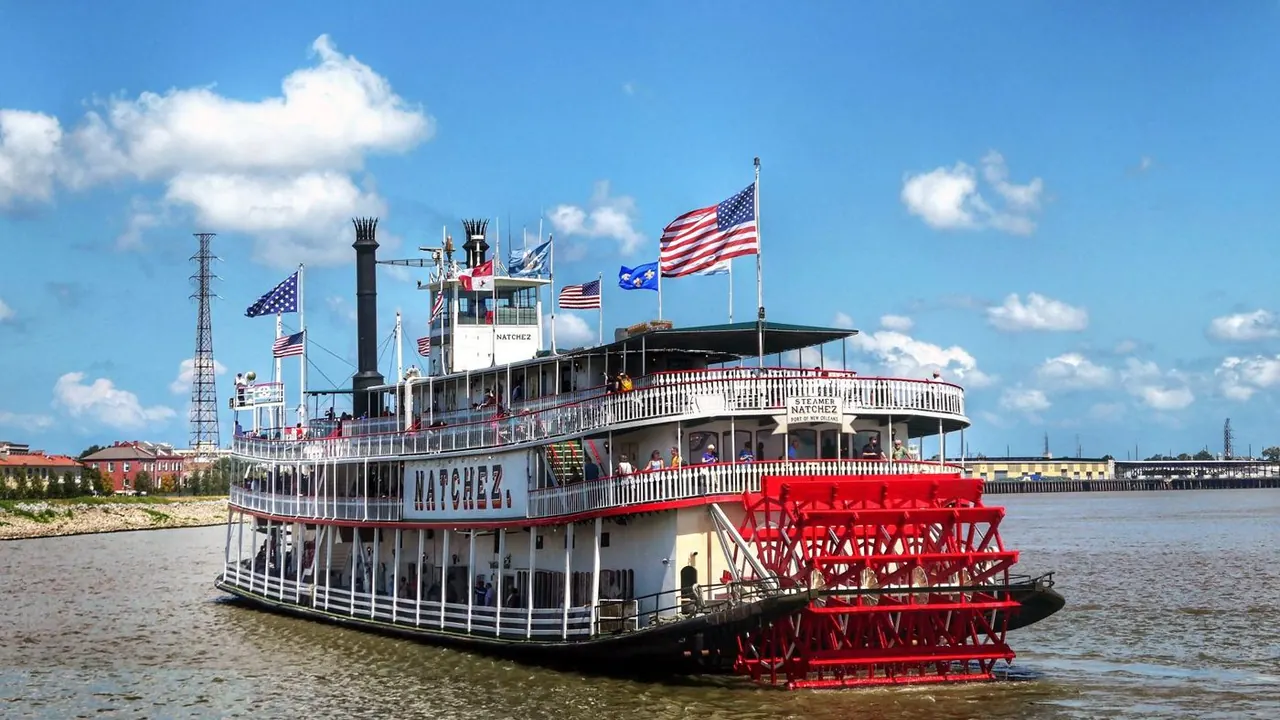
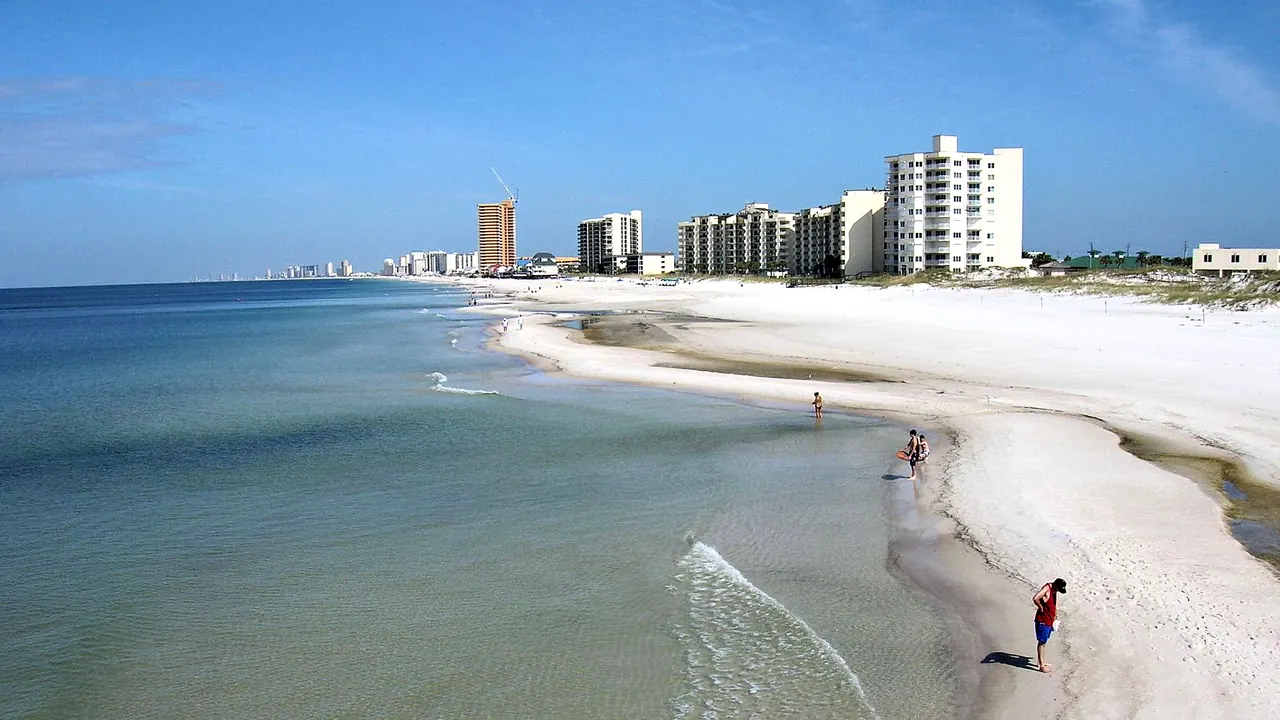
Photos: New Orleans by Bernard Spragg, CC0; Panama City Beach by j.s. clark/ "Image by jsclark.net.", CC BY-SA 2.0, cropped.
New Orleans or Panama City Beach?
Our verdict in twelve categories, each scored against the same fixed benchmark cities, and the climate month by month, so you can choose for your trip.
Choose New Orleans for
- live music and the arts
- culture and sights
- nightlife
New Orleans is the pick for a trip built around eating, drinking and music. Its Creole and Cajun cooking, the jazz bars of Frenchmen Street and the iron-balconied lanes of the French Quarter give a long weekend more to fill it than the Gulf resort could manage in a fortnight. You can also see most of it on foot and by streetcar. What it cannot give you is a swim worth the name.
Choose Panama City Beach for
- beaches
- families
- nature and the outdoors
Families, and anyone whose idea of a good week is sand, warm water and very little planning, will be happier in Panama City Beach. The white quartz shore, the sheltered lagoon at St. Andrews State Park and a strip of water parks and mini-golf keep children busy, and a condo with a kitchen makes a long stay easy. Expect to drive everywhere and to eat simply.
Scoreboard
Twelve categories on one fixed scale from 0 to 100. The shaded stretch is the gap between the two.
Your match
Pick a travel style or drag the sliders, and both match scores follow your weighting.
Wins on live music and the arts and culture and sights with your weighting.
Wins on beaches and families with your weighting.
What matters to you?
Category by category
What the scores mean for a trip.
Beaches & swimming
The gap here is enormous. New Orleans sits between a lake and a working river, and nobody swims in either. The nearest sand, on the Mississippi Gulf Coast, is shallow and brownish, so most visitors make do with the hotel pool.
Panama City Beach is the opposite: about 43km of powder-white sand with clear green water. The western end and St. Andrews State Park are quieter, and boats run out to the undeveloped sands of Shell Island. Rip currents are the one serious caution, so watch the flags.
Food & drink
New Orleans has one of the most distinctive kitchens in America. There are Creole and Cajun dishes from gumbo to étouffée, century-old dining rooms in the French Quarter, po'boy shops in Mid-City, crawfish in spring and oysters in the cooler months, and the Sazerac to go with them. The food is rich, and it rarely strays far from its own tradition.
Panama City Beach does Gulf seafood well enough, with grouper and shrimp baskets on open-air decks. Beyond that, most of the choice along Front Beach Road is chains and themed restaurants. It is fine for a fish sandwich after a swim, but not a reason to go.
Culture & sights
The French Quarter alone outweighs anything the Gulf resort can show. It has Creole townhouses, Jackson Square and the Cabildo, where Louisiana passed to the United States. Beyond it are the Garden District mansions, the above-ground tombs and the National WWII Museum.
Panama City Beach is mostly condo towers built after the mid-twentieth century, plus a small diving museum. The older streets of St. Andrews across the bay are the nearest thing to history it has.
Nightlife
New Orleans has no legal closing time and lets you carry drinks in plastic cups, so a night can run from the neon of Bourbon Street to the music bars of Frenchmen Street and the corner bars of the Bywater. It is a city for going from bar to bar on foot rather than for clubbing.
In Panama City Beach the evening means frozen drinks at sunset in tiki huts and cover bands around Pier Park. That is pleasant after a beach day, but outside summer the town is quiet by mid-evening. Spring break in March makes the strip loud in a way that suits students and almost nobody else.
Nature & outdoors
Both are flat and low-lying, but Panama City Beach puts more of the outdoors within easy reach. St. Andrews State Park has tall white dunes and a lagoon for snorkelling, and Camp Helen borders a rare coastal dune lake. On the water there are dolphin trips, paddleboarding, fishing and diving on offshore wrecks.
New Orleans has a swampier kind of landscape. Within an hour are cypress bayous with alligators and Spanish moss, and the Barataria Preserve has boardwalk trails. In town, City Park has ancient live oaks. In both places the summer heat and humidity weigh on anything energetic.
Day trips
New Orleans has the stronger outings. The main one is the River Road to the plantations about an hour upstream, where the Whitney tells the story of the people enslaved there. Baton Rouge is also within reach, and at a stretch so are the Cajun dance halls around Lafayette.
From Panama City Beach the draw is Scenic Highway 30A, with the pastel planned towns of Seaside and Rosemary Beach, or a drive east to the old oyster port of Apalachicola. These are pleasant trips, but most are variations on the coast itself, and every one needs a car.
Good for families
Panama City Beach is built around families. The water is shallow and warm in summer, and the sheltered St. Andrews lagoon is good for a first snorkel. There is a big water park, a marine park with dolphin shows and mini-golf all along the strip. The month to avoid is March.
New Orleans does better for children than its reputation suggests, with Audubon Zoo, the riverfront aquarium, the carousel and children's museum in City Park, and rides on the streetcars and paddle steamers. Even so, the summer heat, Bourbon Street at night and the care needed after dark make it harder work with children.
Getting around
New Orleans keeps its sights in a compact, flat band along the river, so you can walk the Quarter, the Marigny and the Warehouse District. The St. Charles streetcar runs out to the Garden District, and ride-hailing fills the gaps.
Panama City Beach is spread along one long road. The pavements are patchy and the trolley-bus is slow, so a car is close to essential, and summer traffic on Front Beach Road can crawl.
Shopping & style
Neither is a destination for designer labels, but New Orleans has far more character. Royal Street has antique dealers and galleries, Magazine Street has miles of independent and vintage shops, and Mardi Gras masks are a local speciality.
Panama City Beach offers chain stores at Pier Park and souvenir warehouses with shark-mouth entrances. For anything more individual, you have to drive to the boutiques of the 30A towns.
Affordability
Overall costs are broadly similar, but the money goes in different places. In New Orleans the big expense is the hotel room, which is steep in the French Quarter and around Mardi Gras and Jazz Fest. Po'boys, the streetcar and the street music cost little or nothing.
In Panama City Beach a condo kitchen cuts the cost of eating, and long winter stays are cheap. On the other hand, you cannot avoid hiring a car, and a peak-summer week on the beachfront adds up.
Live music & performing arts
Jazz was born in New Orleans, and every night of the year brings traditional jazz, brass bands, blues and zydeco on Frenchmen Street and in Tremé. There are second-line parades through the neighbourhoods on Sundays for much of the year, and Jazz Fest in spring.
Panama City Beach has cover bands on restaurant decks and a modest season at the restored historic theatre across the bay, which is nothing to plan a trip around.
Wellness & relaxation
Neither has a spa tradition. Both offer little more than hotel and resort spas, so how restful your stay is depends on the setting. In New Orleans the calm comes from a quiet courtyard guesthouse and slow streetcar rides under the oaks of St. Charles Avenue. In Panama City Beach it comes from empty sands and long walks at sunset between autumn and spring, away from the noise of summer and spring break.
When should you go?
Pick your month. The climate figures are measured averages, not a forecast.
New Orleans in July
Panama City Beach in July
Daytime high, °C
Rainfall in the month, mm
Where the figures come from
Panama City Beach has no rain gauge within 25 km of the centre, so its rainfall comes from a gridded climate dataset read at the city rather than from a gauge further away.
Temperature and rainfall are climate normals, averaged over the years shown. New Orleans: 1991-2020 (sunshine 1981-2010) normals, New Orleans Airport (2.7 km from centre). Panama City Beach: 1971-2000 (rainfall 1991-2020) normals, Tyndall Air Force Base (24.6 km from centre).
New Orleans is at its best in March, April, October and November, when it is warm enough to walk the Quarter and sit outside without wilting. From June to September highs reach 33°C, the humidity is heavy and June brings the most rain. The Gulf warms to around 30°C, but there is nowhere in town to swim in it. Winters are mild and good for sightseeing, though not for anything involving water.
Panama City Beach works the other way round, because its season is the hot one. From June to September the sea sits at about 29°C, warm enough for long swims. May is drier and October is still pleasant in the water, which makes both good gentler choices. Late summer brings the heaviest rain, around 220mm in August. From December to February highs near 16°C make the beach a place for walks rather than bathing.
Which traveller are you?
On a beach and sun trip, Panama City Beach wins outright. It has long white quartz sands and clear green water that warms right through the summer. New Orleans has no bathing beach at all, and its nearest sand is over an hour's drive away.
For a food and nightlife trip, New Orleans is in another league. You get gumbo, po'boys and oysters by day, then a night drifting between Frenchmen Street music bars that have no closing time. Panama City Beach offers chain restaurants and tiki bars along the strip.
On a family trip with young children, Panama City Beach is the easier choice. It has shallow summer water, the calm St. Andrews lagoon, water parks and condos with kitchens. New Orleans has a good zoo and aquarium, but its summers and its nights are harder going.
Before you go
| Measure | New Orleans | Panama City Beach |
|---|---|---|
| Currency | US Dollar (USD) | US Dollar (USD) |
| Sockets | AB120 V, 60 Hz | AB120 V, 60 Hz |
| Driving side | Right | Right |
| Time zone | UTC-6, UTC-5 in summer | UTC-6, UTC-5 in summer |
| Emergency number | 911 | 911 |
| Elevation | -2 m | 3 m |
| Main airport | Louis Armstrong New Orleans International Airport (MSY)18 km from centre51 non-stop destinations | Northwest Florida Beaches International Airport (ECP)20 km from centre19 non-stop destinations |
| Public holidays this year | 14 days | 11 days |
By the numbers
| Measure | New Orleans | Panama City Beach |
|---|---|---|
| City population | 383,997 | 18,094 |
| People per km² | 423 | 375 |
| Museums within 10 km | 16 | 0 |
| UNESCO World Heritage sites within 50 km | 0 | 0 |
| Swim season, months above 21 °C | 7 months | 7 months |
Where else could you go?
Every comparison below shares a destination with this one, so you can follow New Orleans or Panama City Beach somewhere new.
- Destinvs Panama City Beach
- Pensacolavs Panama City Beach
- Orange Beachvs Panama City Beach
- Gulf Shoresvs Panama City Beach
- Gulf Shoresvs New Orleans
- Orange Beachvs New Orleans