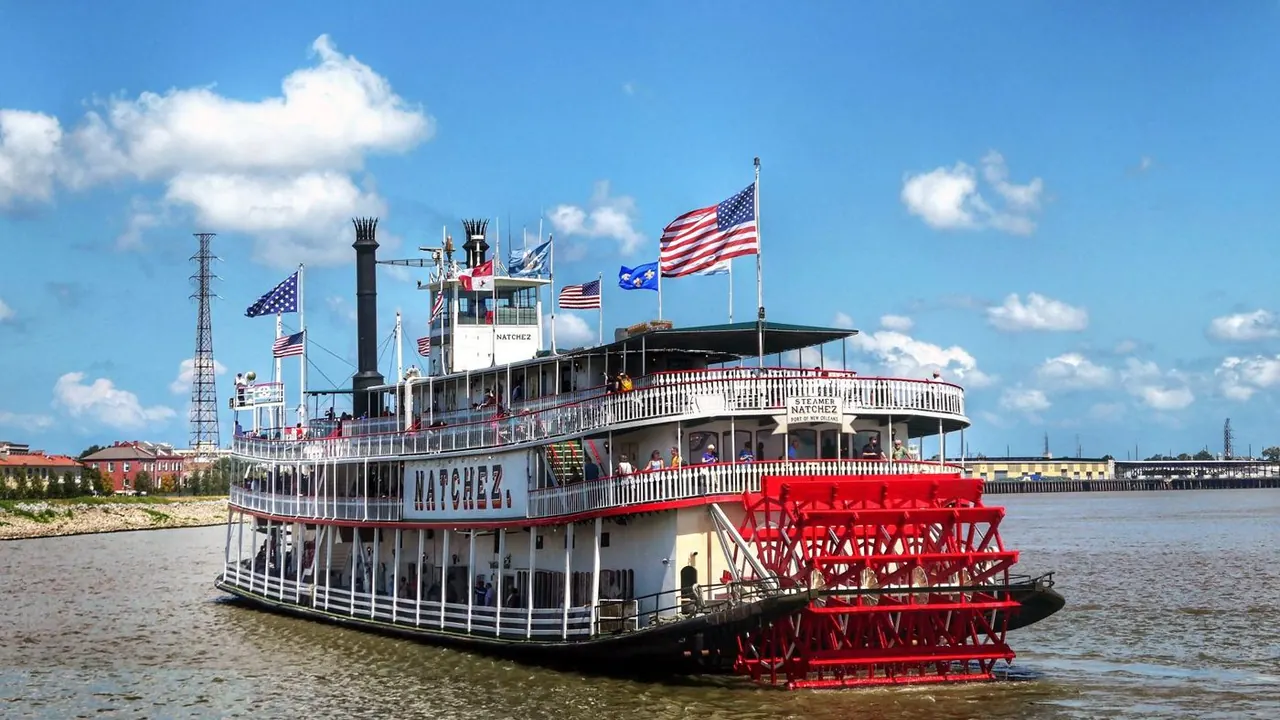
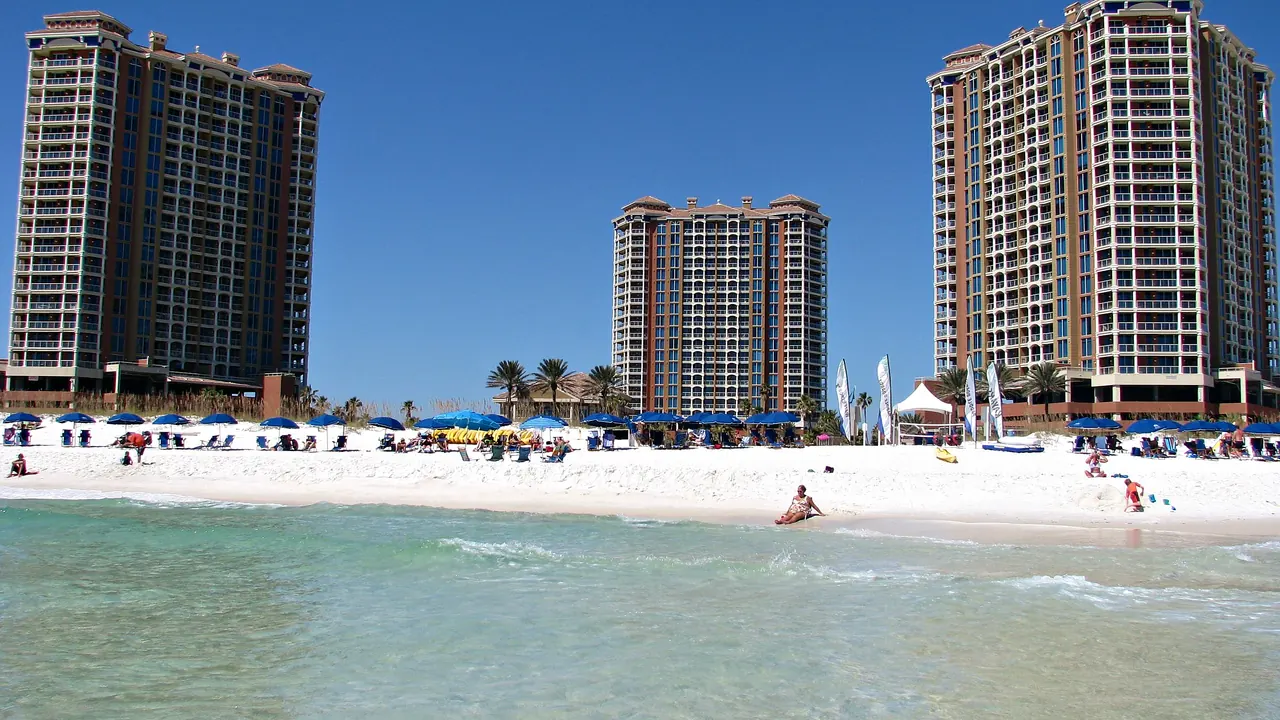
Photos: New Orleans by Bernard Spragg, CC0; Pensacola by Jason Meredith, CC BY 2.0, cropped.
New Orleans or Pensacola?
Our verdict in twelve categories, each scored against the same fixed benchmark cities, and the climate month by month, so you can choose for your trip.
Choose New Orleans for
- live music and the arts
- nightlife
- food and drink
New Orleans is the choice for a trip built around evenings and appetite. Its Creole and Cajun cooking, the jazz and brass bands of Frenchmen Street and Tremé, and the colonial streets of the French Quarter give it a depth Pensacola doesn't try to match. You can also manage the centre on foot and by streetcar, with no car needed. Come for the city itself, not for the water.
Choose Pensacola for
- beaches
- nature and the outdoors
- families
Travellers who want sand under their feet should look to Pensacola. Santa Rosa Island's white quartz beaches and the Gulf Islands National Seashore are twenty minutes from downtown, with warm, gentle water in summer and calm shallows on the sound side for small children. The evenings are quieter, the food simpler and you will need a car. Even so, for a beach vacation with some history and wildlife on the side, it is the better of the two.
Scoreboard
Twelve categories on one fixed scale from 0 to 100. The shaded stretch is the gap between the two.
Your match
Pick a travel style or drag the sliders, and both match scores follow your weighting.
Wins on live music and the arts and nightlife with your weighting.
Wins on beaches and nature and the outdoors with your weighting.
What matters to you?
Category by category
What the scores mean for a trip.
Beaches & swimming
Here the gap is as wide as it gets. New Orleans sits on a working river and a lake that nobody bathes in. Its nearest sand, on the Mississippi Gulf Coast, is well over an hour away and has shallow, murky water, so for most visitors a swim means the hotel pool.
Pensacola is built around its beaches. Pensacola Beach and the Gulf Islands National Seashore run for miles of white quartz sand and clear green water. Perdido Key is quieter, and the sound side has calm shallows for toddlers. Watch the rip-current flags on rough days.
Food & drink
New Orleans is one of the few American cities people visit just to eat. Every meal can be part of the trip: Creole and Cajun cooking, French Quarter dining rooms more than a century old, po'boy shops in Mid-City, beignets by Jackson Square and a Sazerac in the city where it was invented. The food is rich, though, and there is little range beyond the local tradition.
Pensacola eats well but simply, with Gulf oysters, grouper sandwiches and royal red shrimp in casual waterfront places, plus a small modern Southern scene around Palafox Street. Even its gumbo borrows from its neighbour to the west.
Culture & sights
New Orleans has much the stronger old town. The French Quarter is an unusually complete colonial district, with Jackson Square, St. Louis Cathedral and the Cabildo at its heart. The Garden District, the above-ground tombs and the National WWII Museum add several more days.
Pensacola's past is just as layered, having lived under five flags, but less of it survives to see. There are a few restored streets around the Seville district and Plaza Ferdinand, Fort Pickens on the island and the huge National Naval Aviation Museum, which sits on an active base with ID checks. Two or three days cover it.
Nightlife
Going out is one of the main reasons to choose New Orleans. There is no closing time, and you can carry a drink along the street in a plastic cup. Nights run from neon Bourbon Street, where the crowds bring pickpockets, to the more local bars of Frenchmen Street and the Bywater.
Pensacola's nightlife is smaller and seasonal: pubs, rooftop bars and taprooms on Palafox Street and in the Seville Quarter, beach bars with sand floors on the island, and the rowdy roadhouse on the Alabama line. Outside summer and weekends it goes quiet early. Neither city is much for clubbing.
Nature & outdoors
Both sit on flat, wet ground with no hills, but Pensacola makes more of it. The Gulf Islands National Seashore has dunes, salt marsh, a bike path and dolphins in the bay, and you can kayak or paddleboard straight from the shore. Divers head for the sunken aircraft carrier offshore, and inland the Blackwater River is clear enough for canoeing.
New Orleans' nature is the swamp: boat and kayak trips among alligators and Spanish moss within an hour, the Barataria boardwalks and, in town, the oaks and lagoons of City Park. In summer both cities push outdoor plans into the early morning.
Day trips
New Orleans has the slightly better choice of outings, mainly thanks to the River Road plantations about an hour upstream. The Whitney, which tells the story of the people enslaved there, is the most moving stop, and Oak Alley the most photographed. Baton Rouge, the Gulf towns of Bay St. Louis and Ocean Springs, and the Cajun prairie around Lafayette complete the list.
From Pensacola the best day out is Mobile, an hour west, with its antebellum streets and battleship museum, plus Fairhope and Fort Morgan across the bay. To the east lie Destin, Seaside and Rosemary Beach, but these are mostly more beaches, and every trip needs a car.
Good for families
Pensacola is the easier family choice, mostly because the beach does the work: warm, gentle water in summer, shallows on the sound side for toddlers and condos with kitchens. The Naval Aviation Museum, the Blue Angels display team, the lighthouse climb and the tunnels of Fort Pickens fill the other days, though there are no theme parks.
New Orleans has more for children than its reputation suggests: Audubon Zoo, the Aquarium of the Americas, the rides and children's museum in City Park, streetcars and paddle steamers. It needs more care, though, as Bourbon Street at night and some areas after dark are no place for children.
Getting around
New Orleans is far easier without a car. The French Quarter, the Marigny and the Warehouse District are walkable. The slow but charming streetcars run along St. Charles Avenue and out to City Park, and ride-hailing covers the gaps.
In Pensacola only downtown around Palafox Street is walkable, and the seasonal beach trolley helps little beyond the beach strip. The beaches, the naval air station and Perdido Key are spread out along highways and bridges, so you will need to hire a car.
Shopping & style
Neither city is a big shopping destination, but New Orleans is far more interesting to browse. You can bring home things found nowhere else: antiques and art from Royal Street's dealers and galleries, finds from the independent and vintage shops along Magazine Street, and Mardi Gras masks and costumes.
Pensacola has a handful of boutiques and antique shops on Palafox Street, the Saturday market, a regional mall and swimwear shops on the island.
Affordability
Overall costs are much the same, but the money goes in different places. In New Orleans rooms are the big expense: they are priced like any big city, with high taxes and steep rises at Mardi Gras and Jazz Fest. Po'boys, the streetcar and the street music cost little.
In Pensacola beachfront condos are expensive in summer and much cheaper out of season, and the naval museum is free. The car hire, though, is an extra cost that visitors to New Orleans can largely skip.
Live music & performing arts
Music is New Orleans' great draw. Jazz, brass bands, funk, zydeco and blues play every night on Frenchmen Street, in Tremé and the Bywater, on Royal Street's pavements and in the Sunday second-line parades, with Jazz Fest and the French Quarter Festival on top. Formal culture is thin, though, with a small opera company and touring Broadway shows at the Saenger Theatre.
Pensacola has its own historic Saenger Theatre, which hosts the local symphony, opera and ballet. It is a busy stage for a small city, but it offers a pleasant evening rather than a reason to visit.
Wellness & relaxation
Neither city has a spa tradition, and both offer little more than day spas in the larger hotels and a few studios in town.
The difference is in how you slow down. In New Orleans it means a quiet courtyard guesthouse and slow streetcar rides under the oaks, away from the noise of the Quarter at night. In Pensacola it means the empty stretches of the island and Perdido Key outside the summer peak, which is slightly more restful.
When should you go?
Pick your month. The climate figures are measured averages, not a forecast.
New Orleans in July
Pensacola in July
Daytime high, °C
Rainfall in the month, mm
Temperature and rainfall are climate normals, averaged over the years shown. New Orleans: 1991-2020 normals, New Orleans Airport (2.7 km from centre). Pensacola: 1991-2020 normals, Pensacola / Pleasant Grove (12.3 km from centre).
Through the year the two have almost the same temperatures. Both are mild in midwinter, with highs around 17°C. They are at their best for walking in March, April, October and November, when it is warm but not oppressive. From June to September highs reach 33°C, and the humidity makes long walks a chore in either city. Rain is heavy all year in both. New Orleans has its wettest spell in June and Pensacola in July and August, when storms are frequent. October is the driest month in New Orleans and May in Pensacola.
For swimming, the Gulf is warm off both from late May to early October, reaching about 29°C in high summer. That matters mostly in Pensacola, where the beaches are on the doorstep. In winter the sea off Pensacola stays milder, near 18°C against 14°C in the waters nearer New Orleans, but it is still for looking at, not swimming in. May and late September into October are the best beach months there: warm enough to swim, without the worst of the heat.
Which traveller are you?
For a beach and sun trip, Pensacola wins easily. Santa Rosa Island has miles of white sand and clear green water twenty minutes from town. From New Orleans the nearest swim means a long drive to the shallow, brownish water around Bay St. Louis, or the hotel pool.
On a food and nightlife trip, New Orleans is the obvious pick. Gumbo, crawfish boils and chargrilled oysters by day, then a night moving between Frenchmen Street bars with no closing time, beat Pensacola's casual seafood and early-closing Palafox Street pubs.
For a culture and arts trip, New Orleans again. The French Quarter, the Garden District mansions and the WWII Museum come with live jazz every night of the year. Pensacola's historic district and naval aviation museum fill two or three days.
Before you go
| Measure | New Orleans | Pensacola |
|---|---|---|
| Currency | US Dollar (USD) | US Dollar (USD) |
| Sockets | AB120 V, 60 Hz | AB120 V, 60 Hz |
| Driving side | Right | Right |
| Time zone | UTC-6, UTC-5 in summer | UTC-6, UTC-5 in summer |
| Emergency number | 911 | 911 |
| Elevation | -2 m | 31 m |
| Main airport | Louis Armstrong New Orleans International Airport (MSY)18 km from centre51 non-stop destinations | Pensacola International Airport (PNS)6 km from centre27 non-stop destinations |
| Public holidays this year | 14 days | 11 days |
By the numbers
| Measure | New Orleans | Pensacola |
|---|---|---|
| City population | 383,997 | 54,312 |
| People per km² | 423 | 515 |
| Museums within 10 km | 16 | 5 |
| UNESCO World Heritage sites within 50 km | 0 | 0 |
| Swim season, months above 21 °C | 7 months | 7 months |
Where else could you go?
Every comparison below shares a destination with this one, so you can follow New Orleans or Pensacola somewhere new.