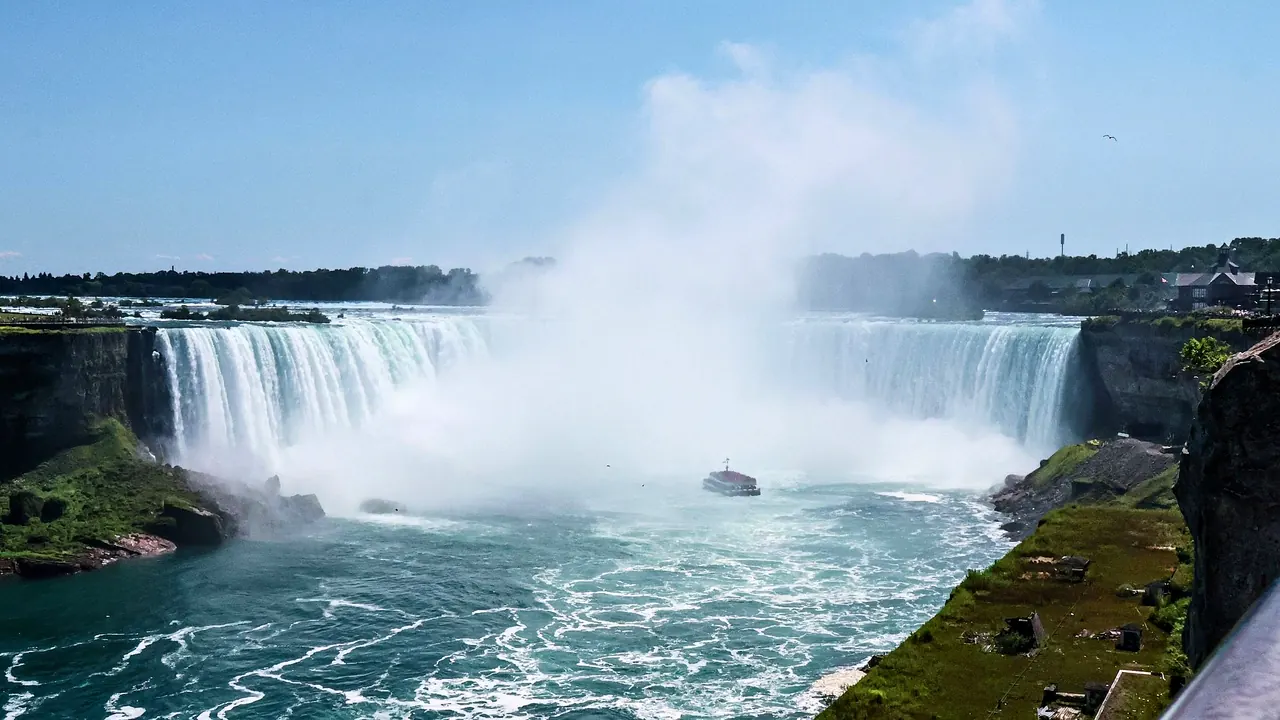
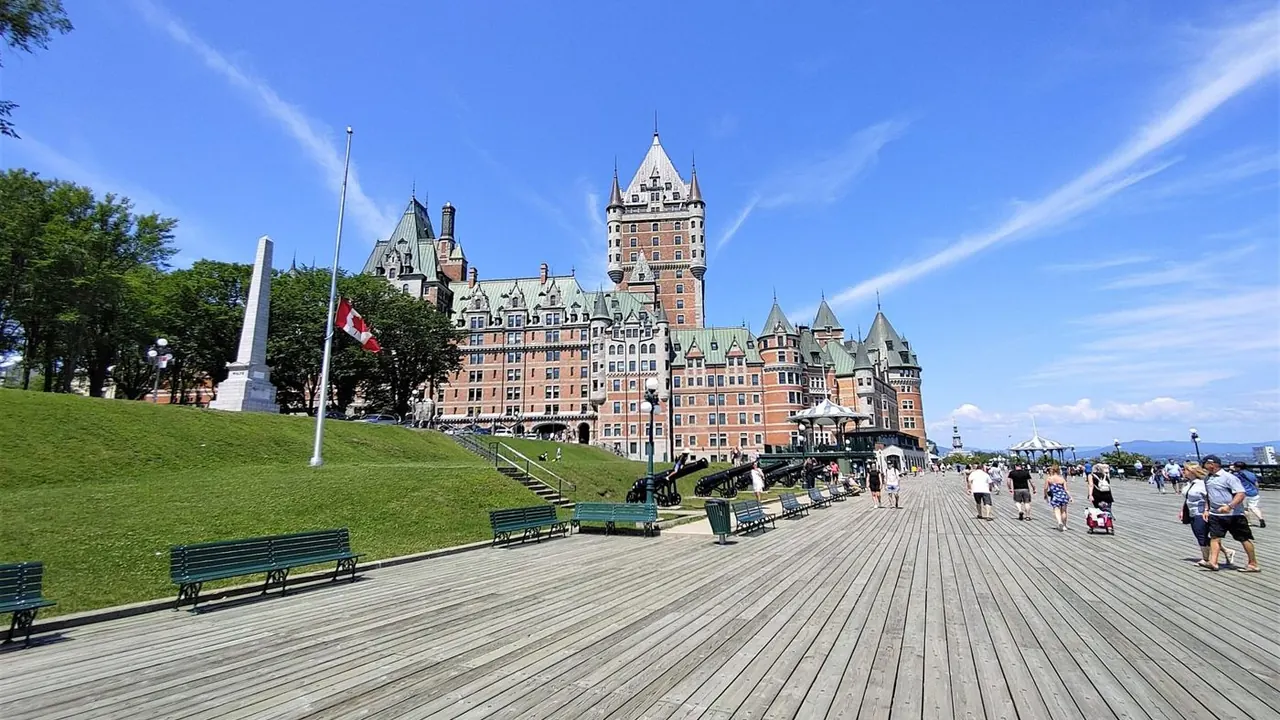
Photos: Niagara Falls by Juju, Pexels License; Quebec City by Jeangagnon, CC BY-SA 4.0, cropped.
Niagara Falls or Quebec City?
Our verdict in twelve categories, each scored against the same fixed benchmark cities, and the climate month by month, so you can choose for your trip.
Choose Niagara Falls for
- beaches
- getting around
- day trips
Niagara Falls suits a short, easy summer trip built around one great natural sight. The Horseshoe Falls, the boats into the spray and the gorge trails are the whole point, and the compact tourist strip, Lake Erie's sandy beaches and the wineries and Shaw Festival theatres of Niagara-on-the-Lake round it off. It works best for families and for couples who want spectacle, wine tastings and little planning.
Choose Quebec City for
- culture and sights
- wellness
- food and drink
Travellers who care about history, food and atmosphere will get more from Quebec City. Its walled old town, French-Canadian bistros, Nordic spas and proper winter of skiing, skating and snowshoeing give a stay of several days real depth. It rewards people who like to walk, eat well and take their time, and it is one of the few cities where coming in deep winter is part of the appeal.
Scoreboard
Twelve categories on one fixed scale from 0 to 100. The shaded stretch is the gap between the two.
Your match
Pick a travel style or drag the sliders, and both match scores follow your weighting.
Wins on beaches and getting around with your weighting.
Wins on culture and sights and wellness with your weighting.
What matters to you?
Category by category
What the scores mean for a trip.
Beaches & swimming
Neither city is a swimming destination, but Niagara Falls has more to offer. Lake Erie, half an hour south, has soft sand and shallow water at Crystal Beach and around Port Colborne, warm enough by late summer for a proper family afternoon.
Quebec City's St Lawrence is cold, tidal and fast. The Baie de Beauport beach is for sunbathing and volleyball, and swimming means driving to Lac Saint-Joseph or Lac-Beauport, where the season is shorter.
Food & drink
Quebec City eats far better. Niagara's town is mostly chains, diners and steakhouses with gorge views at a premium, and its good food is out among the wineries, with their seasonal menus, peaches and icewine.
Quebec has a cuisine of its own: tourtière, pea soup, sugar pie and maple-season meals at the sugar shacks. Its best tables are in the bistros of Saint-Roch and Saint-Jean-Baptiste, which cook with cheese, duck and cider from the Île d'Orléans and Charlevoix. Avoid the set-menu places inside the walls and the city is a real pleasure to eat in.
Culture & sights
There is no real contest. In Niagara Falls almost everything is the falls themselves. The heritage that exists, the early hydro stations, Brock's Monument at Queenston Heights and the Lundy's Lane battlefield, makes a few hours, and Clifton Hill's wax museums are entertainment rather than history.
Quebec City's UNESCO-listed old town is the only walled city north of Mexico. The Château Frontenac, the Citadelle, Petit-Champlain's stone houses, the basilica and the Ursuline convent fill days, and the Plains of Abraham and the Musée de la civilisation explain the history of New France.
Nightlife
Quebec City makes the better night out, though neither is a clubbing city. Niagara's evenings are the illuminated falls, summer fireworks, two casinos and the sports bars of Clifton Hill, a resort crowd of families and groups that thins out in winter.
Quebec has distinct quarters to choose from: party terraces on the Grande Allée, taprooms and student pubs along Rue Saint-Jean, and the cocktail and wine bars of Saint-Roch where locals drink. The university keeps it younger and later, even if dancing is rare.
Nature & outdoors
Both cities have a great waterfall, and Quebec City has more around it. The Horseshoe Falls carry far more water than Montmorency and are the more overwhelming sight, with boats into the mist, tunnels behind the curtain and the Niagara Glen and Whirlpool below. Beyond the gorge, though, Niagara's country turns to gentle orchards and vineyards.
Quebec has Montmorency Falls, taller than Niagara, just 15 minutes away, and within an hour the boreal valley of Jacques-Cartier national park and the ski slopes of Mont-Sainte-Anne and Le Massif. A long winter of cross-country skiing, snowshoeing and skating gives it a second season Niagara lacks.
Day trips
The two are evenly matched, but the outings differ. From Niagara Falls the choice is wide: the clapboard streets and wineries of Niagara-on-the-Lake, a full day of museums in Toronto by train, or Buffalo's early skyscrapers and Frank Lloyd Wright houses across the border with a passport.
Quebec's trips are rural and cultural: the parishes, cideries and farm stands of the Île d'Orléans, the pilgrimage basilica at Sainte-Anne-de-Beaupré, the Huron-Wendat community at Wendake, and the galleries of Baie-Saint-Paul. Almost all of them need a car.
Good for families
Children do equally well in both, in different seasons. Niagara Falls is a summer family town: the boats and tunnels at the falls, the arcades and observation wheel on Clifton Hill, and a compact, pushchair-friendly area that a few days covers, though the paid attractions add up.
Quebec City shines in winter, with the toboggan slide on the Dufferin Terrace, skating rinks and the carnival snowman. It also has the aquarium with its polar bears and walruses, which Niagara cannot match, but its stairways and steep streets are hard work with a pushchair.
Getting around
Both have walkable centres joined by a funicular, and the difference is the terrain. Niagara's promenade, hotels and Clifton Hill sit close together on fairly easy ground, with visitor buses along the parkway, but the town sprawls into motel strips beyond.
Quebec's sights also lie within walking distance, but the cliff between upper and lower town means stairs and steep streets that turn icy in winter. In both, the countryside, whether wineries or ski hills, is far easier with a car.
Shopping & style
Quebec City is the more rewarding place to shop. Niagara's tourist area sells ponchos, magnets and maple syrup, and its real draw is the outlet centres on the edge of town, where brands sell at discount, plus icewine to take home.
Quebec has craft workshops, milliners and galleries in Petit-Champlain, antiques on Rue Saint-Paul and independent design shops on Rue Saint-Joseph. Its souvenirs are better too: cheeses, ice cider, woollens and Inuit and First Nations art.
Affordability
Costs are similar, and in both the main sight is free: the falls from the promenade, or the walls and the Dufferin Terrace. Niagara's costs swing sharply, with expensive view hotels in summer, cheap outer motels and bargains in winter, while the boats and attractions add up for families.
In Quebec the expensive rooms are inside the walls, and Saint-Roch or Sainte-Foy are cheaper. Tax and tip on restaurant bills push up the cost of eating out.
Live music & performing arts
Quebec City has more live culture of its own. Niagara's town offers casino comedians and tribute acts, but the Shaw Festival's repertory theatre, twenty minutes away in Niagara-on-the-Lake, is a serious draw for English-speaking theatre lovers over a long season.
Quebec has Canada's oldest symphony orchestra and an opera company at the Grand Théâtre, experimental work at Robert Lepage's Le Diamant, and the Festival d'été's outdoor stages on the Plains of Abraham in July. Most of its theatre is in French.
Wellness & relaxation
Neither city has historic baths or thermal springs, so the difference is in how spa time fits into the trip. In Niagara Falls it is an extra rather than a reason to come: a massage in one of the hotels above the falls, or at a wine-country inn after a day of tastings. Niagara-on-the-Lake's slower streets make the calmer base.
Quebec City has a bathing habit of its own, and that puts it well ahead. Several Nordic spas lie within half an hour, around Lac-Beauport and along the river, and there is one in the old port. They are best in deep winter, when steam rises off the pools into the snow. Long café afternoons in Saint-Jean-Baptiste fill the rest of a slow day.
When should you go?
Pick your month. The climate figures are measured averages, not a forecast.
Niagara Falls in July
Quebec City in July
Daytime high, °C
Rainfall in the month, mm
Where the figures come from
Niagara Falls's sunshine is measured 34 km from the centre, at Buffalo Airport.
Temperature and rainfall are climate normals, averaged over the years shown. Niagara Falls: 1991-2020 (rainfall 1981-2010) normals, Niagara Falls / Walmore (9.8 km from centre). Quebec City: 1991-2020 normals, Beauport (3.2 km from centre).
Niagara Falls is the warmer and drier-feeling of the two. June to September is the easy season, with July highs around 28°C and the long, sunny days of May to August. The Lake Erie water peaks at about 23°C in August, so the beach is good from July to early September. Winter highs hover around freezing and the streets are raw for walking, though the ice building up around the falls has a beauty of its own. Rain is spread fairly evenly through the year.
Quebec City is colder at both ends. Summer highs reach about 25°C in July and August, which is pleasant for walking the old town, but January sits near -6°C, and that suits skiing, skating and spas far better than sightseeing on foot. It is also wetter, with rain at its heaviest from June to October and peaking around 123mm in October. Late spring and early autumn are mild in both cities, but Quebec's spring melt makes April muddy.
Which traveller are you?
On a culture and arts trip, Quebec City is the clear choice. Its fortified old town, the Citadelle, Place Royale and the Plains of Abraham carry four centuries of history, and the symphony and opera at the Grand Théâtre are a real draw, while Niagara's town has little heritage beyond its battlefields.
For a beach and sun trip, neither city is ideal, but Niagara Falls is the better bet. Lake Erie's soft, shallow beaches lie half an hour away, and summers are warmer and sunnier. Quebec City offers mainly a river beach for sunbathing and cooler lakes further north.
On a relaxing and wellness trip, choose Quebec City. Its Nordic spas, with hot pools and cold plunges in the forest, are a local tradition, and the city moves at an unhurried pace. Niagara has hotel and winery spas, but the town itself is loud in summer.
Before you go
| Measure | Niagara Falls | Quebec City |
|---|---|---|
| Official language | French, English | French, English |
| Currency | Canadian Dollar (CAD) | Canadian Dollar (CAD) |
| Sockets | AB120 V, 60 Hz | AB120 V, 60 Hz |
| Driving side | Right | Right |
| Time zone | UTC-5, UTC-4 in summer | UTC-5, UTC-4 in summer |
| Emergency number | 911 | 911 |
| Elevation | 173 m | 98 m |
| Main airport | Toronto Pearson International Airport (YYZ)77 km from centre191 non-stop destinations | Quebec Jean Lesage International Airport (YQB)13 km from centre34 non-stop destinations |
| Public holidays this year | 11 days | 10 days |
By the numbers
| Measure | Niagara Falls | Quebec City |
|---|---|---|
| City population | 88,071 | 574,482 |
| People per km² | 420 | 1,184 |
| Museums within 10 km | 10 | 16 |
| UNESCO World Heritage sites within 50 km | 0 | 1 |
| Swim season, months above 21 °C | 2 months | - |
Where else could you go?
Every comparison below shares a destination with this one, so you can follow Niagara Falls or Quebec City somewhere new.
- Torontovs Niagara Falls
- Montrealvs Quebec City
- Ottawavs Niagara Falls
- Ottawavs Quebec City
- Philadelphiavs Niagara Falls
- Bostonvs Quebec City