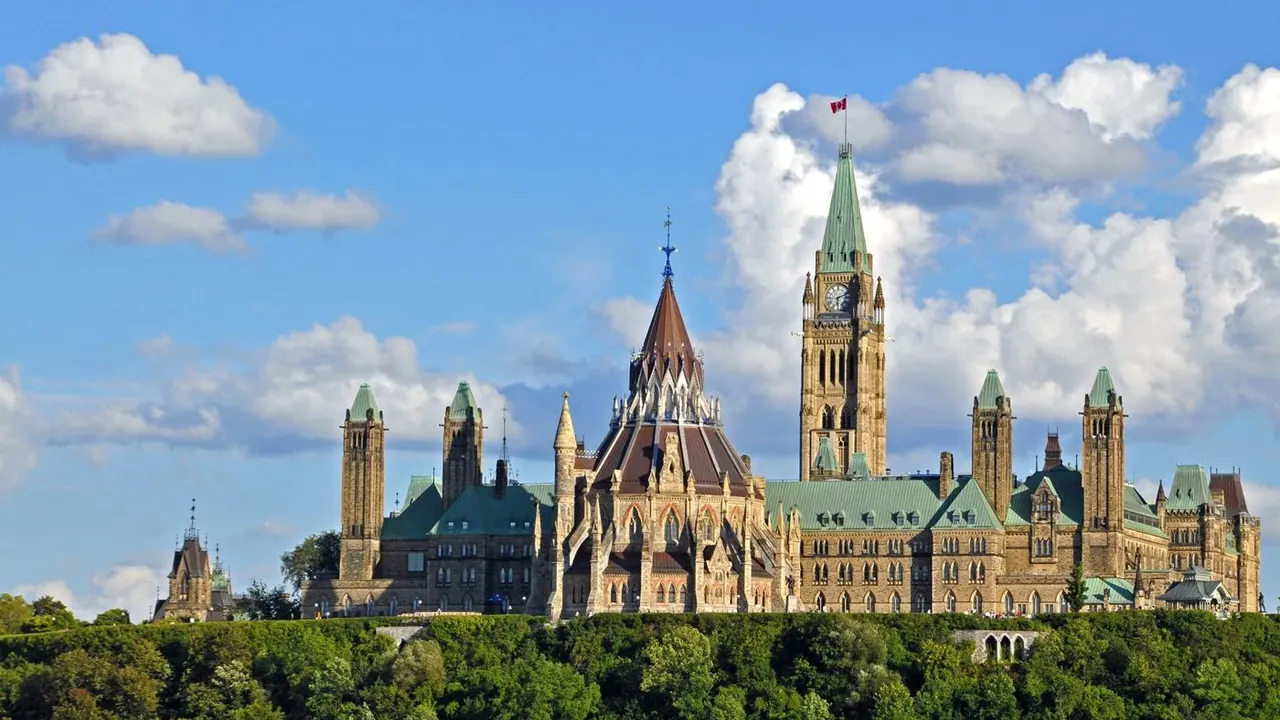
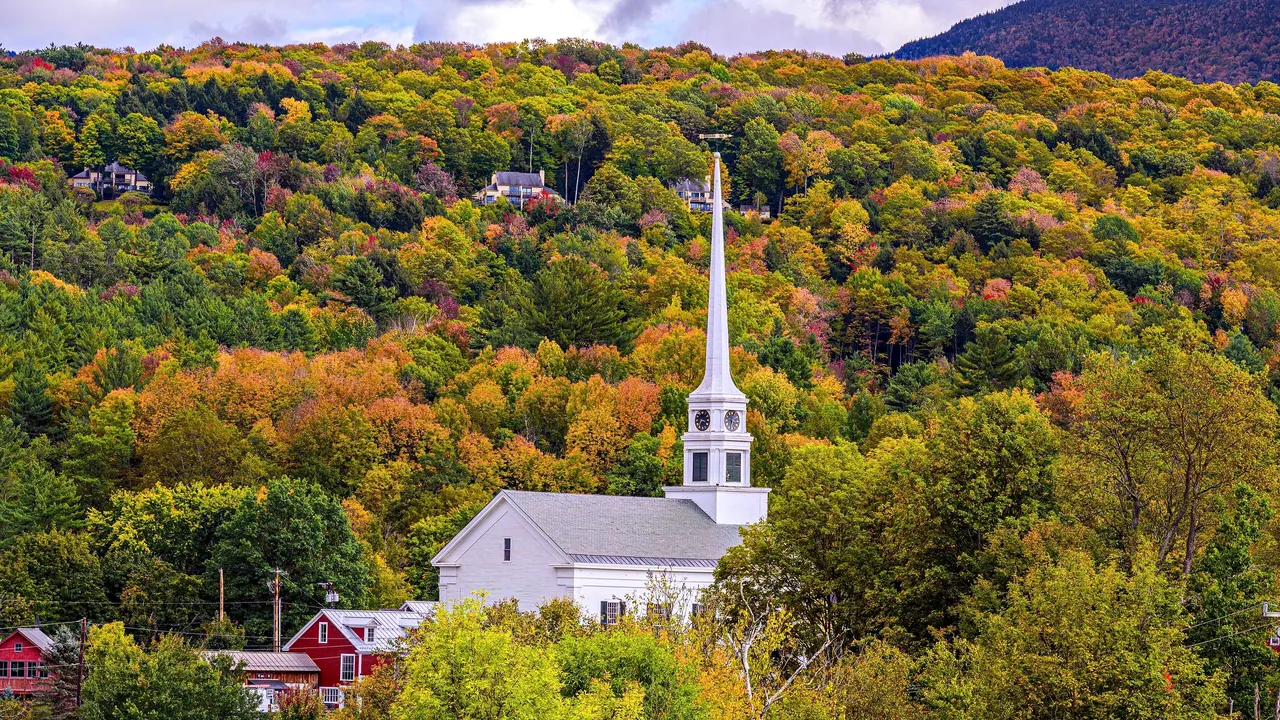
Photos: Ottawa by Dennis G. Jarvis, CC BY-SA 2.0, cropped; Stowe by Shiva Shenoy from Flower Mound, United States, CC BY 2.0, cropped.
Ottawa or Stowe?
Our verdict in twelve categories, each scored against the same fixed benchmark cities, and the climate month by month, so you can choose for your trip.
Choose Ottawa for
- culture and sights
- getting around
- live music and the arts
Ottawa is the better pick for travellers who want a city with depth. Its national museums, Parliament Hill and the Rideau Canal fill several days, and evenings have restaurants, pubs and the National Arts Centre to choose from. Most of it can be walked, it costs noticeably less than a ski resort, and Gatineau Park still puts forest and lakes just across the river.
Choose Stowe for
- nature and the outdoors
Choose Stowe when the mountain is the whole point. Mount Mansfield's ski runs, the Long Trail and Smugglers' Notch give skiers, hikers and mountain bikers far more than Ottawa can, and the quiet inns and resort spas suit couples who want to slow down. In return you will need a car, pay resort prices, and find early nights and very little to see beyond the landscape.
Scoreboard
Twelve categories on one fixed scale from 0 to 100. The shaded stretch is the gap between the two.
Your match
Pick a travel style or drag the sliders, and both match scores follow your weighting.
Wins on culture and sights and getting around with your weighting.
Wins on nature and the outdoors with your weighting.
What matters to you?
Category by category
What the scores mean for a trip.
Beaches & swimming
Neither place has a sea, but Ottawa is the easier one for a summer swim. It has supervised, sandy river beaches inside the city at Mooney's Bay, Westboro, Britannia and Petrie Island, and the clear lakes of Gatineau Park, such as Meech Lake and Lac Philippe, are a short drive away.
Stowe's swimming means rocky holes in the mountain streams, or the small unguarded beaches on Waterbury Reservoir and Lake Elmore, each about half an hour away by car. In both places the season runs from late June to about the end of August, so a swim is a summer extra rather than a reason to choose either.
Food & drink
Neither is a food destination, and the difference is mainly in what kind of eating you get. Ottawa offers more range: the stalls and restaurants of the ByWard Market, shawarma from its Lebanese community, Preston Street and Somerset Street, and Québécois cooking and maple-syrup feasts at the sugar shacks across the river in Gatineau.
Stowe's strength is what grows and brews around it. Vermont's sought-after hazy IPAs, farm cheddar, cider doughnuts and farm-to-table dining rooms along Mountain Road make up for the small choice, although that choice shrinks further in the quiet spring and late-autumn weeks.
Culture & sights
This is where the two differ most. As the national capital, Ottawa has the National Gallery of Canada, the Canadian Museum of History with its hall of totem poles, the War Museum and the Museum of Nature, along with the Gothic Revival Parliament buildings and the Rideau Canal, a UNESCO World Heritage Site.
Stowe offers a pretty New England village with a white church steeple and covered bridges, a small ski and snowboard museum, and the von Trapp family's hillside estate. It is a pleasant backdrop, not a programme of sightseeing.
Nightlife
Ottawa is no party city, but it does have a night out: pubs and a few dance clubs around the ByWard Market, a long strip of bars on Elgin Street, and later closing just over the bridge in Gatineau.
Stowe's evenings revolve around après-ski, with crowded base-lodge bars and brewery taprooms in peak ski weeks and a band now and then on Mountain Road. There are no clubs, it is quiet after midnight, and for anything livelier people drive to Burlington.
Nature & outdoors
Stowe is built around its landscape. Mount Mansfield, Vermont's highest peak at 1,339m, rises straight above the valley and has full downhill skiing, glades and backcountry routes. In summer it offers the Long Trail, the boulder-filled pass of Smugglers' Notch, waterfalls and purpose-built mountain-bike trails.
Ottawa's outdoors are gentler but still very good for a capital. Gatineau Park has forest trails, lakes and cross-country skiing, and the city adds riverside cycling paths, an 8km skating route on the frozen canal and whitewater rafting upstream. Both are superb for autumn colour in early October.
Day trips
Ottawa has the stronger outings, led by Montreal, about two hours away by train. Kingston, the Thousand Islands and Upper Canada Village make a good day to the west, and the canal towns of Merrickville and Perth are closer still.
From Stowe every trip means driving. Burlington on Lake Champlain and the Shelburne Museum, with its village of historic buildings and lake steamboat, are the best of them, and Montpelier's gold-domed statehouse is half an hour away. These are pleasant small towns, without a big city to match Montreal.
Good for families
Ottawa has more to keep children busy, especially indoors. There are dinosaurs at the Museum of Nature, hands-on exhibits at the Science and Technology Museum, aircraft at the Aviation and Space Museum and the Children's Museum inside the Museum of History, which is a real advantage on a frozen or rainy day.
Stowe suits active families: a large ski school with gentle beginner slopes, a resort built for children beyond Smugglers' Notch, and sugarhouses and a flat riverside path in summer. Every outing needs the car, though, and there is nothing laid on for bad weather.
Getting around
In Ottawa, Parliament Hill, the ByWard Market, the National Gallery and the canal are all close enough to walk between, and the Museum of History is just over the Alexandra Bridge. Light rail, buses and a bike-share system cover most of the rest, so a car is only needed for the far side of Gatineau Park.
Stowe stretches about 11km along one valley road. Beyond the walkable village, the riverside path and the winter shuttle, you need a car for trailheads and nearby towns, and for steep, icy roads in winter.
Shopping & style
Ottawa offers more, though it is still no shopping destination. The Rideau Centre has the chains, the ByWard Market has Indigenous art galleries and independent shops, and Bank Street in the Glebe and Wellington West have bookshops and boutiques.
Stowe is mostly ski and outdoor shops, galleries, pottery and wool. In both places, maple syrup is the obvious thing to bring home, and in Stowe Vermont cheddar joins it.
Affordability
Ottawa is the cheaper of the two by some distance. Downtown hotels drop at weekends when government travel stops, Parliament tours and some museum hours are free, and walking, cycling or skating the canal costs nothing. Expect sales tax and tips on restaurant bills, and alcohol is expensive.
Stowe is priced as a major ski resort. Lodging, lift tickets, equipment rental and resort dining all add up, especially over the winter school vacations and the foliage weeks. Valley motels and the shoulder months of spring and November are the way to keep costs down.
Live music & performing arts
Ottawa has a real arts season. The National Arts Centre houses an orchestra and resident English, French and Indigenous theatre companies, and summer brings Bluesfest on LeBreton Flats, a jazz festival and Chamberfest.
Stowe's programme is small and tied to the seasons: touring acts at the arts centre at the base of Spruce Peak, summer community theatre, and outdoor hillside concerts that carry on the von Trapp musical tradition. For orchestras, people from Stowe have to go to Burlington.
Wellness & relaxation
The two are broadly level, but they offer different ways to unwind. From Ottawa, you can take a day out at the large outdoor Nordic spa in Chelsea, about fifteen minutes away, moving between hot pools, saunas and cold plunges in the woods. Back in town, the calm comes from long walks by the river and canal.
In Stowe, the whole stay is the rest. Several resorts have full spas with heated outdoor pools facing the mountain, and the country inns, wood fires and quiet valley evenings are the reason couples come for spa weekends.
When should you go?
Pick your month. The climate figures are measured averages, not a forecast.
Ottawa in July
Stowe in July
Daytime high, °C
Rainfall in the month, mm
Where the figures come from
Stowe has no rain gauge within 25 km of the centre, so its rainfall comes from a gridded climate dataset read at the city rather than from a gauge further away.
Stowe's sunshine is measured 37 km from the centre, at Burlington International.
Temperature and rainfall are climate normals, averaged over the years shown. Ottawa: 1991-2020 normals, Ottawa CDA RCS (5.3 km from centre). Stowe: 2006-2020 (sunshine 1991-2020, rainfall 1991-2020) normals, Morrisville / Morristown (9.5 km from centre).
The two places follow almost the same year. Both reach about 27°C in July and are pleasant from late May to September, though only July and August are warm enough for a comfortable lake or river swim. Ottawa has the harsher winter, with January highs around -5°C, so walking between sights is slow, cold work. That matters more in a city than in a ski town, where the cold keeps the snow good on the slopes from January to March.
Ottawa's rain is spread fairly evenly through the year. Stowe is wetter in summer, with rain peaking at about 113mm in June and July, but those are also its sunniest months, so showers tend to fall between long bright spells. Both are at their best in early October, when the leaves turn and the days are still mild. Ottawa still works for a city visit in spring and November. Stowe is dull in its April and November mud seasons, and November and December are also the months when it gets the least sun all year.
Which traveller are you?
For a culture and arts trip, Ottawa is the clear choice. The National Gallery, the Museum of History, Parliament Hill and the National Arts Centre fill several days, while Stowe's ski museum and the von Trapp story take an afternoon.
On an outdoors trip, Stowe wins. Mount Mansfield gives proper downhill skiing, the Long Trail and Smugglers' Notch offer serious summer hiking, and the mountain-bike trails are built for riders. Ottawa's Gatineau Park and canal paths are gentler, closer-to-town pleasures.
On a tight budget, Ottawa goes further. Hotels are cheaper at weekends, Parliament tours and some museum hours are free, and you can get around without a car. Stowe's lodging and lift tickets add up fast, and a car is hard to avoid.
Before you go
| Measure | Ottawa | Stowe |
|---|---|---|
| Official language | French, English | - |
| Currency | Canadian Dollar (CAD) | US Dollar (USD) |
| Sockets | AB120 V, 60 Hz | AB120 V, 60 Hz |
| Driving side | Right | Right |
| Time zone | UTC-5, UTC-4 in summer | UTC-5, UTC-4 in summer |
| Emergency number | 911 | 911 |
| Elevation | 70 m | 295 m |
| Main airport | Ottawa Macdonald-Cartier International Airport (YOW)12 km from centre46 non-stop destinations | Patrick Leahy Burlington International Airport (BTV)37 km from centre19 non-stop destinations |
| Public holidays this year | 11 days | 12 days |
By the numbers
| Measure | Ottawa | Stowe |
|---|---|---|
| City population | 1,017,449 | 5,223 |
| People per km² | 366 | 28 |
| Museums within 10 km | 19 | 1 |
| UNESCO World Heritage sites within 50 km | 1 | 0 |
Where else could you go?
Every comparison below shares a destination with this one, so you can follow Ottawa or Stowe somewhere new.
- Lake Placidvs Stowe
- Montrealvs Stowe
- Lake Georgevs Stowe
- Montrealvs Ottawa
- Lake Placidvs Ottawa
- Portland, Mainevs Stowe