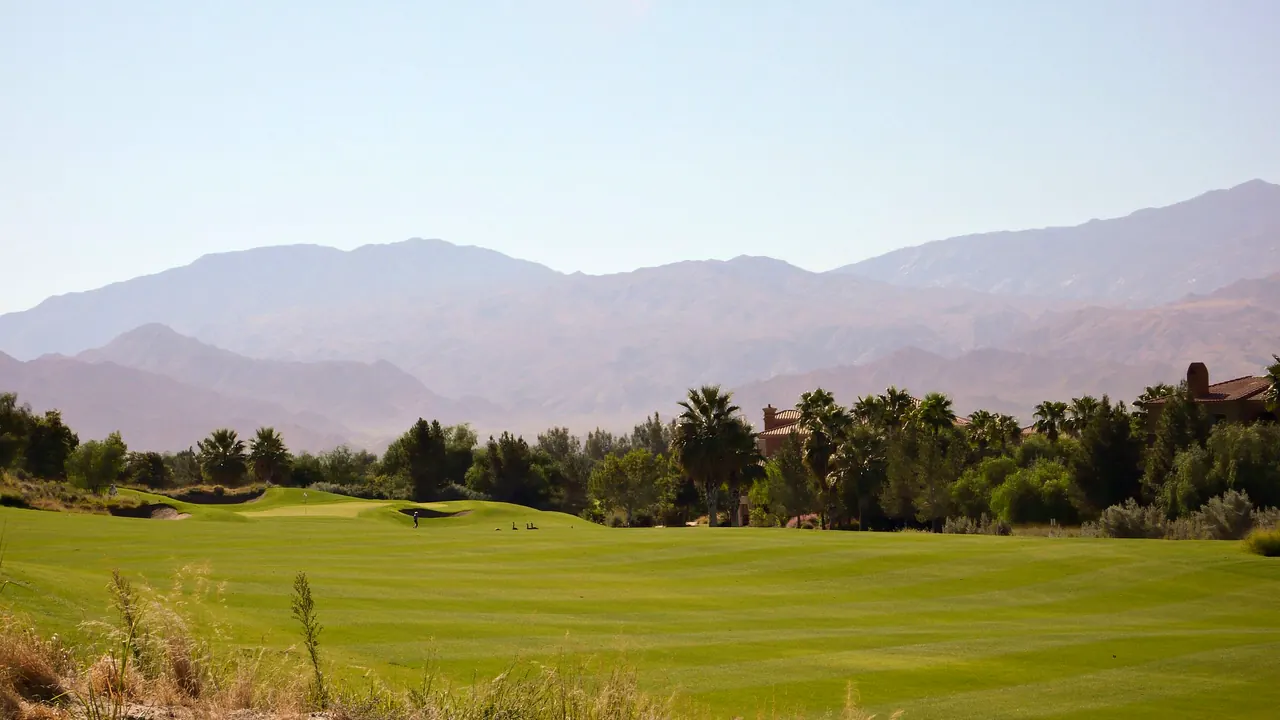
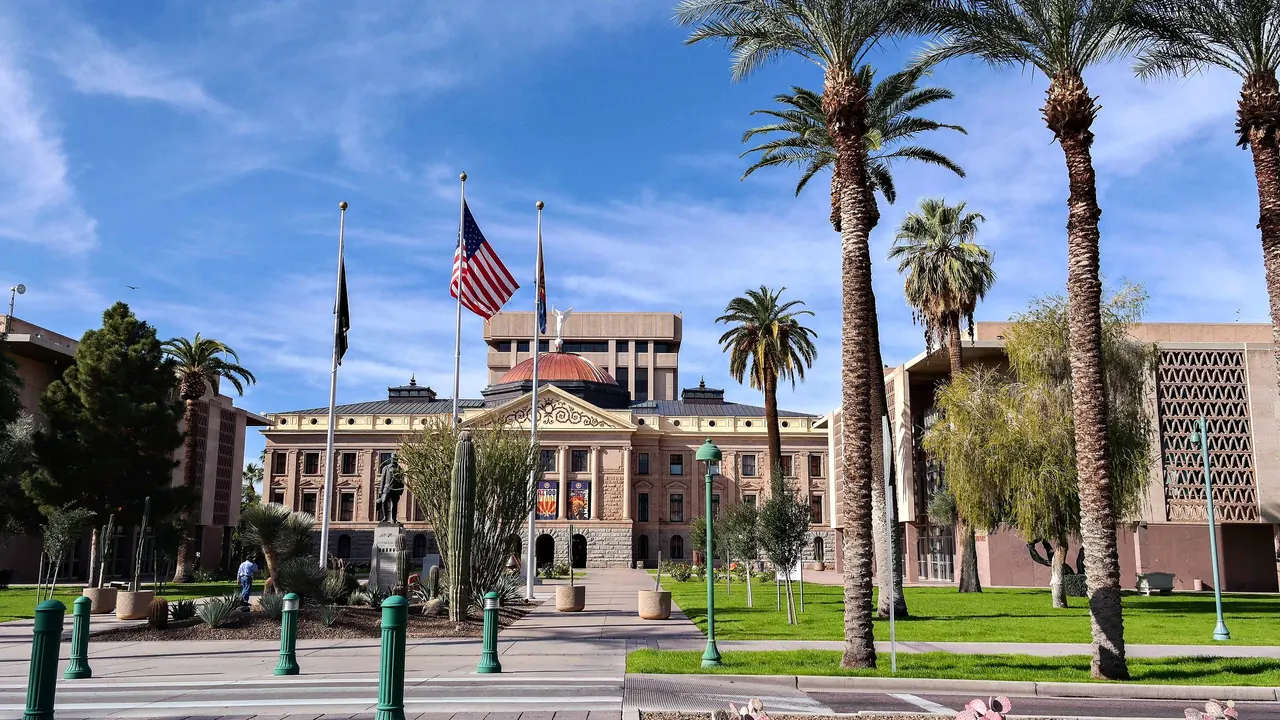
Photos: Palm Desert by David Balmer, CC BY 3.0, cropped; Phoenix by Visitor7, CC BY-SA 3.0, cropped.
Palm Desert or Phoenix?
Our verdict in twelve categories, each scored against the same fixed benchmark cities, and the climate month by month, so you can choose for your trip.
Choose Palm Desert for
- wellness
- nature and the outdoors
Palm Desert suits a traveller who wants to slow right down. It is a smaller, quieter resort town where days revolve around the spa, the pool and the golf course, the Santa Rosa Mountains rise at the edge of town, and the hot mineral springs of Desert Hot Springs are close by. If your ideal week involves early nights, long afternoons under the palms and little need to plan, it is the more restful base.
Choose Phoenix for
- nightlife
- culture and sights
- food and drink
Phoenix makes more sense for anyone who wants things to do between the hikes. It is a large metropolitan area, so it offers more: Sonoran Mexican cooking with real local roots, serious museums such as the Heard, distinct nightlife districts in Scottsdale and Tempe, and more to keep children busy. It is also a little easier on the budget, though you will spend more of the trip driving between places.
Scoreboard
Twelve categories on one fixed scale from 0 to 100. The shaded stretch is the gap between the two.
Your match
Pick a travel style or drag the sliders, and both match scores follow your weighting.
Wins on wellness and nature and the outdoors with your weighting.
Wins on nightlife and culture and sights with your weighting.
What matters to you?
Category by category
What the scores mean for a trip.
Beaches & swimming
Neither city has a beach. In both, swimming means a resort pool, and the Pacific is a long drive away. The difference is in what else is on offer. Phoenix has the Salt River reservoirs, where you can swim off small beaches below desert cliffs, and tubing down the river in summer. Palm Desert's nearest large body of water is the Salton Sea, which nobody swims in.
Food & drink
Phoenix has the stronger and more local food. Its Sonoran Mexican cooking, from carne asada to paper-thin flour tortillas, runs through whole neighbourhoods, and central Phoenix and Roosevelt Row add independent kitchens and good bread and pizza.
Palm Desert eats well but predictably, with steakhouses and Californian bistros along El Paseo. For its real flavour, head to Indio's taquerias and the date groves for a date shake.
Culture & sights
Phoenix offers far more sightseeing. The Heard Museum ranks among the great collections of Native American art, the Musical Instrument Museum can fill half a day, and Frank Lloyd Wright's Taliesin West is a highlight for architecture lovers. The Hohokam canals at Pueblo Grande add some depth, though the sights are spread out.
Palm Desert was built after the war and has little to show apart from its branch of the Palm Springs Art Museum and the galleries on El Paseo. Visitors interested in the mid-century modern houses usually drive to Palm Springs.
Nightlife
Phoenix gives you a real choice of night out. There are the clubs and rooftop bars of Old Town Scottsdale, the student bars of Tempe's Mill Avenue, and quieter cocktail and craft beer bars downtown. It all still winds down at 2am.
Palm Desert's evenings are wine bars and patio happy hours around El Paseo, mostly for an older crowd, and they end early. For anything later you drive to a casino or to Palm Springs.
Nature & outdoors
Both are excellent bases for desert outdoors, with mountains rising straight from the edge of town. Palm Desert has the Santa Rosa trails, palm oases with winter streams in the Indian Canyons, the tramway up to pine forest and Joshua Tree's boulders an hour away.
Phoenix has more within the city itself: South Mountain, the scrambles up Camelback, and saguaro forest in the McDowell Sonoran Preserve. Further out are the Superstitions and the red rocks of Sedona.
Day trips
The day-trip choice is broadly level, but very different in character. From Palm Desert the trips are short and quirky: Palm Springs is twenty minutes away, and further out are Temecula's tasting rooms, cool Idyllwild and the painted Salvation Mountain.
Phoenix's outings are longer drives into Arizona's history: hillside Jerome, the Montezuma Castle cliff dwelling, Sedona and Tucson's Mission San Xavier del Bac. Neither city is a realistic base for its famous big-name destinations.
Good for families
Phoenix keeps children busier. Its zoo, aquarium, science centre, children's museum and water parks cover several days, and spring training baseball makes an easy March outing. The catch is the long drives between them.
Palm Desert has one standout, the Living Desert zoo and garden in town. Beyond that the resort pools do most of the work, because the valley is geared to adults and golf.
Getting around
Both need a car, and both reward one with open roads and easy parking. Phoenix at least has a light rail line linking the airport, downtown and Tempe, though its distances are far greater. Palm Desert is smaller, but its only walkable stretch is a few blocks of El Paseo.
Shopping & style
The two are evenly matched, but each has its own speciality. Palm Desert's highlight is El Paseo, a palm-lined street of boutiques, jewellers and galleries, and a big designer outlet centre is half an hour away.
Phoenix has larger luxury malls in Scottsdale and the Biltmore district. Its distinctive buy is Navajo and Zuni silver and turquoise, Hopi carvings and rugs, best found in museum shops and reputable galleries.
Affordability
Phoenix is the somewhat cheaper of the two. Chain hotels along its freeways are good value, Sonoran Mexican food makes eating out cheap, and the hiking is mostly free.
Palm Desert's winter resort rates and polished dining push costs up, and golf and spa days add more. Both cities get much cheaper in summer, when the heat empties the resorts.
Live music & performing arts
The two are broadly level, but the line-ups are different. Phoenix has a resident symphony, opera and ballet, plus touring shows at Wright's round ASU Gammage auditorium. Palm Desert relies on the McCallum Theatre's winter season of touring acts, and the Coachella and Stagecoach weekends in nearby Indio are among the most famous festivals anywhere.
Wellness & relaxation
Palm Desert has the edge, and the clearest reason is half an hour north in Desert Hot Springs. There, small spa hotels fill their pools straight from natural hot mineral springs, a bathing tradition about as old as the town itself, so a soak in real spring water makes an easy afternoon out. Back in Palm Desert, resort spas and long afternoons by the pool make doing very little the natural way to spend a week.
Phoenix offers a different kind of rest, and it stays inside its big resorts below Camelback Mountain and across north Scottsdale. These are generous places, with treatment menus built on local desert plants and clay, but the city has no springs or historic baths to visit, and outside the resorts it moves at the pace of any large car city. Both are most restful in the dry, sunny months from autumn to spring.
When should you go?
Pick your month. The climate figures are measured averages, not a forecast.
Palm Desert in July
Phoenix in July
Daytime high, °C
Rainfall in the month, mm
Where the figures come from
Palm Desert has no rain gauge within 25 km of the centre, so its rainfall comes from a gridded climate dataset read at the city rather than from a gauge further away.
Temperature and rainfall are climate normals, averaged over the years shown. Palm Desert: 2006-2020 (rainfall 1991-2020) normals, Palm Springs (17.2 km from centre). Phoenix: 1991-2020 normals, Phoenix Sky Harbor Airport (2.8 km from centre).
The two share almost the same desert calendar. From November to March daytime highs sit around 20°C to 27°C, which is ideal for hiking and walking. April and May warm into the thirties, and by June both reach 40°C and stay there until September, so outdoor time shrinks to the hours around dawn and the trip moves to the pool. Neither has a beach season in the usual sense, but pools are pleasant from spring right through to autumn.
Rainfall is where they differ. Palm Desert is dry almost all year, with only a little rain in winter. Phoenix gets similar winter showers, but it also has a summer monsoon, with about 24mm in August and further storms into the autumn. For the most reliably dry spring days, Palm Desert's March is the safer bet.
Which traveller are you?
On a relaxing and wellness trip, Palm Desert is the better choice. The whole town keeps the pace of a winter retreat, resort spas line the valley and the natural mineral pools of Desert Hot Springs are half an hour away. Phoenix has no public bathing culture of that kind.
For a food and nightlife trip, Phoenix wins clearly. It has Sonoran taquerias and hot dog carts, wood-fired pizza, the clubs of Old Town Scottsdale and the craft beer bars around Roosevelt Row. In Palm Desert you get resort dinners and patio bars that close early.
On a culture and arts trip, choose Phoenix. The Heard Museum's Native American collections, the Musical Instrument Museum and Taliesin West will fill several days. Palm Desert offers a sculpture garden and a few galleries, which take a morning or two.
Before you go
| Measure | Palm Desert | Phoenix |
|---|---|---|
| Currency | US Dollar (USD) | US Dollar (USD) |
| Sockets | AB120 V, 60 Hz | AB120 V, 60 Hz |
| Driving side | Right | Right |
| Time zone | UTC-8, UTC-7 in summer | UTC-7 |
| Emergency number | 911 | 911 |
| Elevation | 67 m | 331 m |
| Main airport | Palm Springs International Airport (PSP)17 km from centre29 non-stop destinations | Phoenix Sky Harbor International Airport (PHX)6 km from centre149 non-stop destinations |
| Public holidays this year | 13 days | 12 days |
By the numbers
| Measure | Palm Desert | Phoenix |
|---|---|---|
| City population | 51,163 | 1,608,139 |
| People per km² | 731 | 1,199 |
| Museums within 10 km | 2 | 10 |
| UNESCO World Heritage sites within 50 km | 0 | 1 |
Where else could you go?
Every comparison below shares a destination with this one, so you can follow Palm Desert or Phoenix somewhere new.