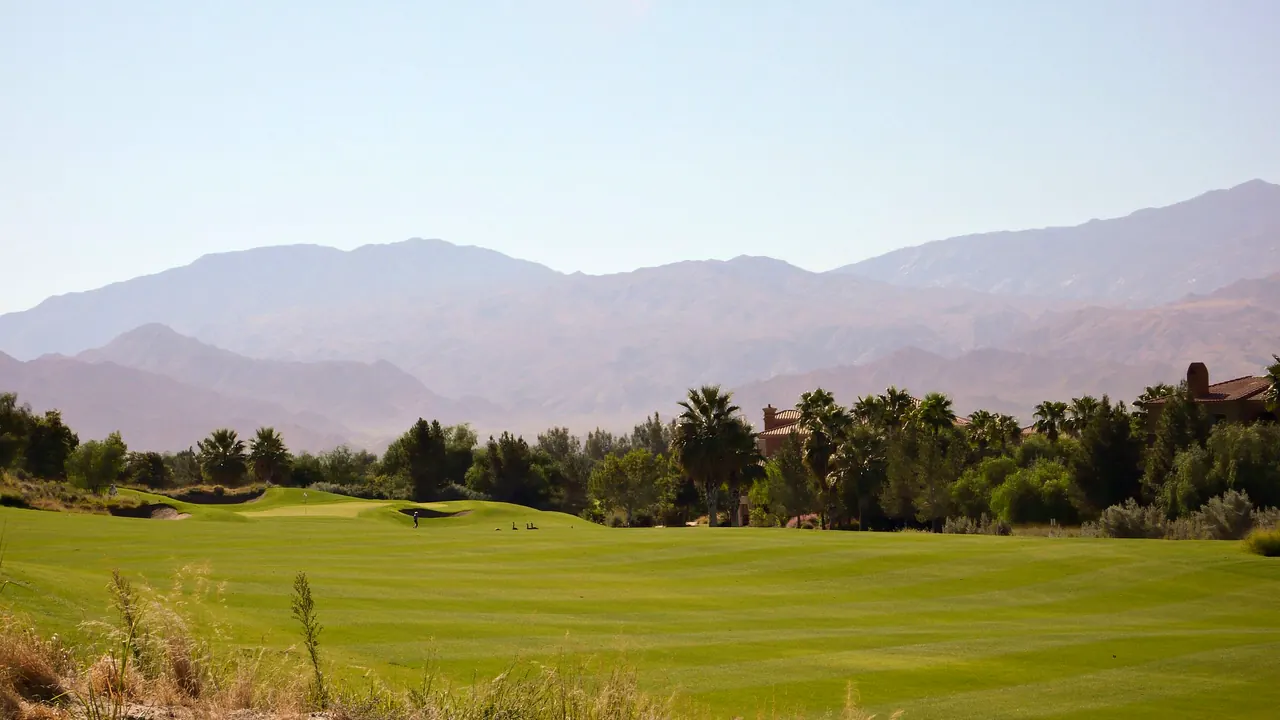
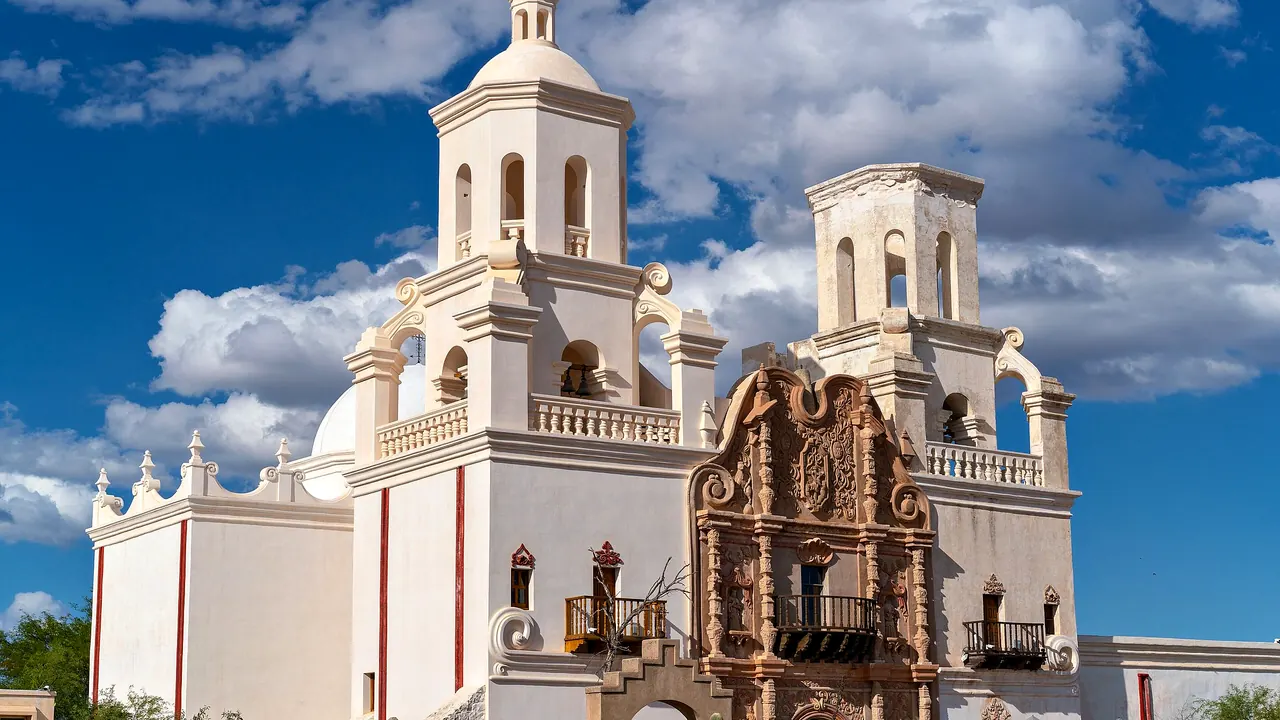
Photos: Palm Desert by David Balmer, CC BY 3.0, cropped; Tucson by Steve and Kimberly Rader, CC BY-SA 4.0, cropped.
Palm Desert or Tucson?
Our verdict in twelve categories, each scored against the same fixed benchmark cities, and the climate month by month, so you can choose for your trip.
Choose Palm Desert for
- shopping
- wellness
- beaches
Palm Desert suits a resort vacation in the warm winter sun. It works best for travellers who want a pool under the palms, golf, a spa afternoon and a stroll along the boutiques and galleries of El Paseo, with Palm Springs a short drive away for some extra interest. Few people go there to sightsee. They go to slow down in comfort.
Choose Tucson for
- food and drink
- culture and sights
- nightlife
Tucson gives you a more rounded trip and usually a cheaper one. Sonoran Mexican cooking in the old barrios, the Spanish colonial mission at San Xavier, the adobe streets of Barrio Viejo and the giant cactus forests of Saguaro National Park give it a character Palm Desert lacks. Choose it if you would rather be out exploring than lying by the pool.
Scoreboard
Twelve categories on one fixed scale from 0 to 100. The shaded stretch is the gap between the two.
Your match
Pick a travel style or drag the sliders, and both match scores follow your weighting.
Wins on shopping and wellness with your weighting.
Wins on food and drink and culture and sights with your weighting.
What matters to you?
Category by category
What the scores mean for a trip.
Beaches & swimming
Neither city has a beach, so in both of them swimming means a hotel or resort pool. The real difference is how far away the sea is. From Palm Desert, the Pacific beaches of Orange County are a long day out, about two hours over the mountains.
From Tucson, the nearest sea is the Gulf of California in Mexico, about four hours away, so it is a weekend trip. The only natural swimming close to Tucson is in the shallow pools that form in Sabino Canyon after rain, and they come and go.
Food & drink
Tucson is the better place to eat. It has a cuisine of its own: Sonoran Mexican cooking with paper-thin flour tortillas, cheese crisps and menudo, served in family kitchens along South 12th Avenue. Heritage desert ingredients such as tepary beans and cholla buds also turn up on menus.
Eating in Palm Desert means steakhouses and Californian bistros on resort patios. They are reliable but much alike. The real local flavour is out east in Indio, at the taquerias and in the date groves selling date shakes.
Culture & sights
Tucson has far more history to see. It was a Spanish and Mexican settlement long before Palm Desert was built as a post-war resort town. In Tucson you can spend days on the mission at San Xavier, the adobe rows of Barrio Viejo, the Arizona State Museum and the huge collection at the Pima Air & Space Museum.
In Palm Desert, sightseeing takes a morning: the sculpture garden at the branch of the Palm Springs Art Museum and the galleries on El Paseo. For mid-century modern architecture you have to drive to Palm Springs.
Nightlife
Tucson has the livelier evenings, thanks largely to its university. You can walk between the dive bars of Fourth Avenue and the rooftops and small dance floors of Congress Street, and both are busy on term-time weekends.
Evenings in Palm Desert are quieter and older: wine bars and patio happy hours on El Paseo, mostly full of golfers and retirees. For a late night, you drive to a casino or to Palm Springs.
Nature & outdoors
The desert scenery is a big draw in both cities, and Tucson has a little more of it right on its doorstep. Saguaro National Park lies on both sides of the city, and the road up Mount Lemmon climbs from cactus to pine forest. Tucson also has a small ski area, serious road cycling and well-known birdwatching.
Palm Desert has the Santa Rosa Mountains rising right behind the town, palm oases in the Indian Canyons and the tramway up to cool forest. Joshua Tree, with its granite boulders, is about an hour's drive away.
Day trips
Most outings from Palm Desert begin twenty minutes west in Palm Springs, with its walkable downtown. Further out are the Temecula wineries, the pine-shaded village of Idyllwild for a cool summer escape and Salvation Mountain, the painted folk-art hillside near the Salton Sea.
Heading south-east from Tucson takes you into old frontier and copper-mining country, and the choice is wider. There are the Wild West streets of Tombstone, steep Victorian Bisbee with its mine tours, the artists' village of Tubac and the adobe ruins at Tumacácori. With Biosphere 2 under an hour to the north, you can easily fill a week with different outings.
Good for families
Tucson has a bit more for children. The Arizona-Sonora Desert Museum has mountain lions and hummingbirds in desert settings, and there is also a zoo, a children's museum, a planetarium, the giant aircraft and a western film set with stunt shows.
Palm Desert has one excellent attraction, The Living Desert, with giraffes and cheetahs. After that, families rely on resort pools and slides. Both cities need a car for every outing, and in both the summer heat is hard on small children.
Getting around
You need a hire car in both cities. Tucson is slightly easier without one, because its Sun Link streetcar connects downtown, Fourth Avenue and the university, and that small core is pleasant to walk around in the cooler months.
Palm Desert has no real centre beyond a few blocks of El Paseo. It is a spread of resorts and gated communities along wide boulevards, and in the evenings ride-hailing fills the gaps.
Shopping & style
Palm Desert is the better place to shop, as long as fashion and fine things are what you are after. El Paseo serves the wealthy winter residents who stroll it, so an hour or two there slips easily into a resort routine, and a big indoor mall covers the everyday American brands. For something with more character, Palm Springs, twenty minutes away, has vintage and mid-century furniture shops. Local crafts are almost absent, unless you count a box of Medjool dates from the farms.
Tucson has no luxury street and no major department store, but what you bring home comes from the Southwest and Sonora, such as Tohono O'odham baskets and pottery, along with the independent and vintage shops of Fourth Avenue. Its real occasion is the gem and mineral show each winter, when dealers fill hotels and tents across the city and serious collectors fly in for it. Outside those weeks, a shopping day here is pleasant but quickly done.
Affordability
Tucson is the cheaper of the two. Its mid-range hotels are reasonably priced, and the taquerías and hot dog stands make eating cheaply easy. In Palm Desert, resort rooms are expensive through the winter and spring, and eating out generally means sit-down meals with tips.
Both cities share the same seasonal pattern. Rates fall sharply in the summer heat, and golf and spa resorts are expensive in either place. In both, a hire car is a daily cost on top of everything else.
Live music & performing arts
The two are about level, but their offer is different. Palm Desert has one comfortable main stage, the McCallum Theatre, for touring shows and well-known singers, and nearby Indio hosts the Coachella and Stagecoach festivals for a few weekends each spring.
Tucson has its own institutions: a symphony orchestra, Arizona Opera and a resident theatre company, along with small music venues on Congress Street. It also has a deep mariachi tradition, celebrated at its annual conference.
Wellness & relaxation
Both cities are made for slowing down, and they do it in different ways. Palm Desert offers resort spas and long days by the pool. Half an hour away, the small spa hotels of Desert Hot Springs fill their pools straight from natural mineral springs.
Tucson has no hot springs and no public baths. Instead it has long-established destination spas in the Catalina foothills, with structured fitness, desert walks and meditation programmes, which suit visitors who want a more active kind of retreat.
When should you go?
Pick your month. The climate figures are measured averages, not a forecast.
Palm Desert in July
Tucson in July
Daytime high, °C
Rainfall in the month, mm
Where the figures come from
Palm Desert has no rain gauge within 25 km of the centre, so its rainfall comes from a gridded climate dataset read at the city rather than from a gauge further away.
Temperature and rainfall are climate normals, averaged over the years shown. Palm Desert: 2006-2020 (rainfall 1991-2020) normals, Palm Springs (17.2 km from centre). Tucson: 1991-2020 normals, Tucson International Airport (10.1 km from centre).
Both cities are winter and spring places. From October to April the days are warm and dry enough for walking, hiking and sitting by the pool. In January, Palm Desert is a little milder at around 21°C, and Tucson is slightly cooler at about 19°C. By March, the afternoons in both are warm enough to spend the day at the pool. What little rain Palm Desert gets falls in light showers between December and February.
From June to September both are too hot for walking around in the middle of the day. Palm Desert is the harsher of the two, reaching about 42°C in July and August and staying almost completely dry. Tucson's summer peaks a few degrees lower but brings the monsoon, with about 56mm in July and dramatic afternoon storms through August. In both cities, summer visitors keep outdoor plans to early morning or head up into the mountains.
Which traveller are you?
For a culture and arts trip, Tucson is the better pick. It has the painted interior of Mission San Xavier del Bac, the adobe houses of El Presidio, strong Native American collections and a proper symphony and opera season. Palm Desert's culture mostly means driving to Palm Springs.
On a food and nightlife trip, Tucson again comes out ahead. You get mesquite-grilled carne asada and Sonoran hot dogs on the south side, then patios and cocktail bars along Fourth Avenue and Congress Street. Palm Desert offers polished resort dinners and wine bars that close early.
On a shopping trip, Palm Desert is the stronger choice. El Paseo is a whole boulevard of fashion boutiques, jewellers and galleries, and a large designer outlet is half an hour away. Tucson is better for Native American jewellery and folk art, but its range is smaller.
Before you go
| Measure | Palm Desert | Tucson |
|---|---|---|
| Currency | US Dollar (USD) | US Dollar (USD) |
| Sockets | AB120 V, 60 Hz | AB120 V, 60 Hz |
| Driving side | Right | Right |
| Time zone | UTC-8, UTC-7 in summer | UTC-7 |
| Emergency number | 911 | 911 |
| Elevation | 67 m | 728 m |
| Main airport | Palm Springs International Airport (PSP)17 km from centre29 non-stop destinations | Tucson International Airport (TUS)12 km from centre18 non-stop destinations |
| Public holidays this year | 13 days | 12 days |
By the numbers
| Measure | Palm Desert | Tucson |
|---|---|---|
| City population | 51,163 | 542,629 |
| People per km² | 731 | 923 |
| Museums within 10 km | 2 | 10 |
| UNESCO World Heritage sites within 50 km | 0 | 0 |
Where else could you go?
Every comparison below shares a destination with this one, so you can follow Palm Desert or Tucson somewhere new.