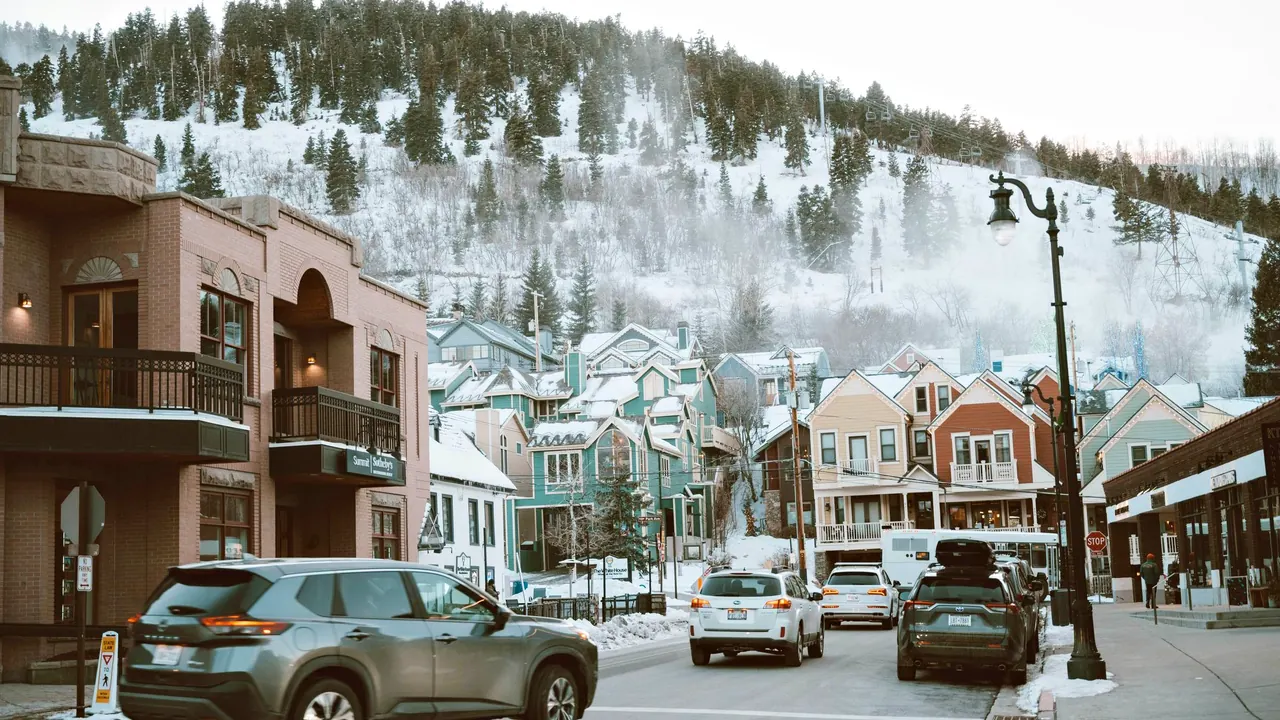
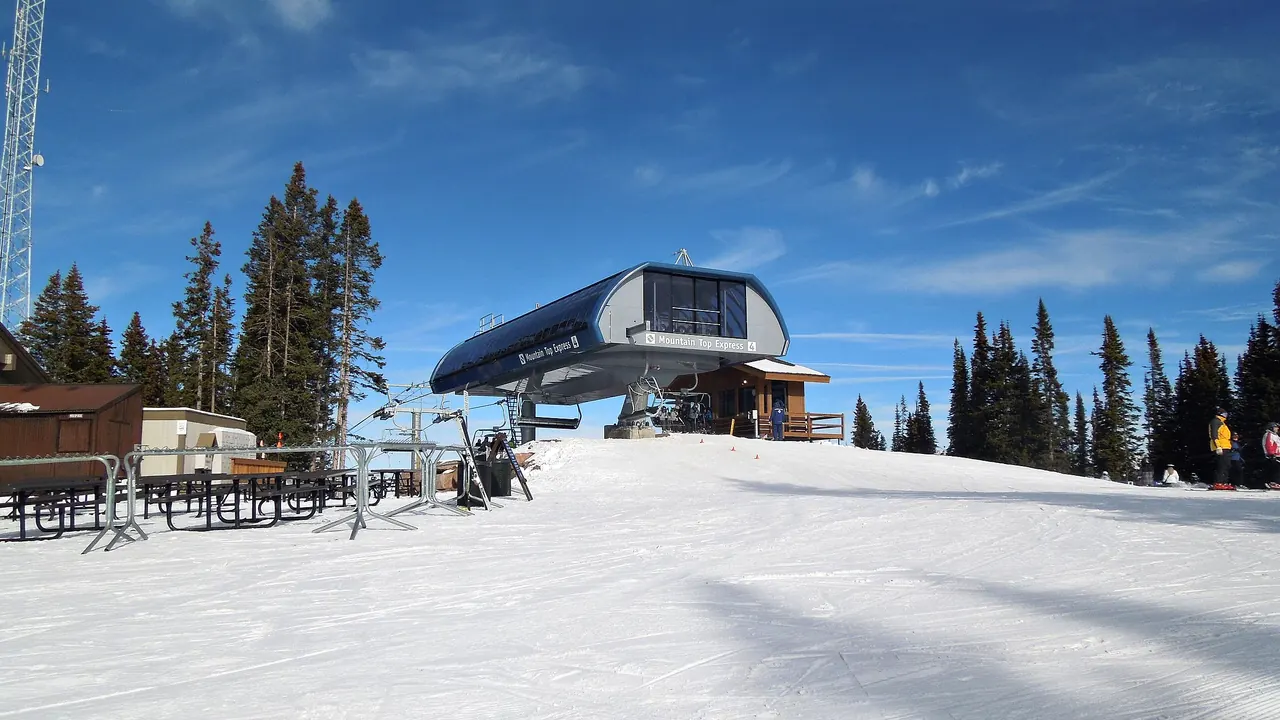
Photos: Park City by Quang Vuong, Pexels License; Vail by DReifGalaxyM31, CC BY 3.0, cropped.
Park City or Vail?
Our verdict in twelve categories, each scored against the same fixed benchmark cities, and the climate month by month, so you can choose for your trip.
Choose Park City for
- families
- culture and sights
- prices
Park City suits families and anyone who wants a real town as well as a ski mountain. Its silver-mining Main Street, Olympic Park and the reach of Salt Lake City down the canyon give children and non-skiers more to do. The airport is close, and the bills, though steep, are a little gentler than in Vail.
Choose Vail for
- live music and the arts
- nightlife
- day trips
Vail is for travellers who want the mountain above everything else and will pay for it. The Back Bowls and the high wilderness of the Gore Range give it a grand alpine scale, the car-free village is easy to live in for a week, and in summer it has a serious music and dance festival that Park City cannot match.
Scoreboard
Twelve categories on one fixed scale from 0 to 100. The shaded stretch is the gap between the two.
Your match
Pick a travel style or drag the sliders, and both match scores follow your weighting.
Too close to call, 1 point apart
Wins on families and culture and sights with your weighting.
Wins on live music and the arts and nightlife with your weighting.
What matters to you?
Category by category
What the scores mean for a trip.
Beaches & swimming
Neither town has anything like a beach, so water time in both mostly means a hotel pool or hot tub. The difference is in the summer lakes. Park City has Jordanelle Reservoir down the valley, with sandy swimming areas and picnic lawns. Vail's nearby lakes are small and cold enough even in July that few people go further than paddling.
Food & drink
The two eat at a similar level, and both cater to well-off skiers rather than having a cuisine of their own. Park City serves modern American mountain cooking along its historic Main Street, and the chains at Kimball Junction give it a cheap fallback.
Vail's resort restaurants have more range, from fondue rooms to sushi counters, but there is no cheap end, and many kitchens close in the quiet spring and autumn weeks. Park City also has the advantage of Salt Lake City's restaurants, only a short drive away.
Culture & sights
Park City has the more genuine past. It grew up as a silver-mining town, and the restored wooden storefronts, the mine headframes on the slopes and the museum in the old city hall tell that story properly. The Olympic Park adds a second afternoon.
Vail was built as a ski resort in the 1960s, and its Tyrolean-style village is an imitation rather than a survival. The Colorado Snowsports Museum, with its account of the wartime Tenth Mountain Division, and the Alpine Gardens in summer cover most of what there is.
Nightlife
Evenings are small-scale and seasonal in both, built around après-ski and quiet outside winter. Park City's nights are spent in Western saloons and cocktail bars on Main Street, and they finish early. Vail's packed slopeside terraces and a small club that stays open past midnight on winter weekends give it a slightly longer and more affluent night. Park City has the escape option of Salt Lake City, though only by car.
Nature & outdoors
These are two of North America's great mountain bases, and the choice comes down to style. Park City has two large ski areas rising straight from town and the steep powder of Alta, Snowbird, Brighton and Solitude over the ridge. In summer, hundreds of kilometres of singletrack start from its streets.
Vail feels bigger and wilder. It sits higher, at about 2,500m, and has the open Back Bowls and Blue Sky Basin behind the front-side runs. In summer the Gore Range and Holy Cross wilderness offer serious hiking past peaks above 4,000m, and there is rafting on the Colorado and Arkansas rivers.
Day trips
Neither has a long list of outings, but the kind differs. From Park City, the obvious trip is Salt Lake City, a real state capital with Temple Square and good museums about 40 minutes away, plus the Heber Valley steam railway and Midway's Swiss-style chalets.
From Vail, most outings are to other mountain towns, such as Breckenridge's Victorian main street and the old silver town of Leadville. Glenwood Springs is the best full day out. The nearest big city, Denver, is two hours away.
Good for families
Park City gives children more to do. The Utah Olympic Park has an alpine coaster, ziplines and freestyle skiers flipping into a splash pool, the resort bases add slides and climbing walls in summer, and Salt Lake City's zoo and aquarium are within reach.
Vail's ski schools and car-free village serve skiing families well, and the top of the gondola has ropes courses and tubing in summer. Away from the mountain there is little made for children, and the higher altitude and harder cold make it tougher with toddlers.
Getting around
You don't need a car in either town once you arrive. Park City's free buses link Old Town, both ski bases and Kimball Junction, and Main Street is walkable but steep. Vail's pedestrian core, with gondolas leaving straight from the village, is the easier place to stroll.
Getting there means a shuttle from the airport in both cases, because neither town has rail. Winter weather is the bigger difference. Snow can slow Park City's canyon road, but the interstate over Vail Pass can close altogether in heavy storms.
Shopping & style
Shopping is resort browsing in both, with galleries, Western boots and upmarket ski wear lining the main streets. Vail leans further towards luxury, with fur, leather and jewellery in its pedestrian lanes. Park City's outlet centre at Kimball Junction gives it a more ordinary, cheaper end. For serious shopping, Park City visitors go to Salt Lake City and Vail visitors to Denver.
Affordability
Both sit at the top of the North American resort market, but Vail is harder on the budget, with lodging, lift tickets and meals well beyond normal levels and no real cheap option in town.
Park City is a little less punishing, and the savings are easier to find. Summer and autumn rates fall considerably, and staying in Salt Lake City or the Heber Valley and driving up is a well-worn way to cut costs. Vail's equivalent is lodging further down its own valley.
Live music & performing arts
Vail has the bigger stage, though only in summer. Bravo! Vail brings major orchestras for weeks of open-air concerts at the Gerald R. Ford Amphitheater, and the dance festival and a long-running jazz festival make July and August a real draw.
Park City's offer is smaller but runs through more of the year. The 1920s Egyptian Theatre stages comedy, plays and cabaret through the year, and in summer the Utah Symphony plays on the lawns at Deer Valley. Opera and ballet mean going to Salt Lake City.
Wellness & relaxation
Unwinding works much the same way in both: polished lodge spas, massages for sore legs and outdoor hot tubs in the snow. The difference is the natural springs. Park City is about 25 minutes from the Homestead Crater, a warm spring inside a limestone dome where you can swim or snorkel. From Vail, the large mineral pools and vapour caves of Glenwood Springs are about an hour away.
When should you go?
Pick your month. The climate figures are measured averages, not a forecast.
Park City in July
Vail in July
Daytime high, °C
Rainfall in the month, mm
Where the figures come from
Park City's temperatures are measured 79 km from the centre, at Evanston.
Park City has no rain gauge within 25 km of the centre, so its rainfall comes from a gridded climate dataset read at the destination rather than from a gauge further away.
Vail's temperatures are measured 47 km from the centre, at Kremmling.
Vail's station stands 186 m below the city centre, so the centre is likely a little cooler than the figures say.
Vail has no rain gauge within 25 km of the centre, so its rainfall comes from a gridded climate dataset read at the destination rather than from a gauge further away.
Temperature and rainfall are climate normals, averaged over the years shown. Park City: 1999-2020 (rainfall 1991-2020) normals, Evanston (78.8 km from centre). Vail: 2006-2025 (rainfall 1991-2020) normals, Kremmling (46.5 km from centre).
Both towns have the same shape of year: snow-bound winters from December to March, a short mountain summer and a golden autumn. Vail lies higher and runs to the extremes a little more, with January highs around -4°C against Park City's -1°C, but both warm to the high 20s in July, which is pleasant hiking and biking weather rather than heat. Neither has a real beach season. A cool swim in a reservoir is only realistic in July and August.
The precipitation falls at different times. Park City gets most in winter, which feeds its powder, and its driest stretch is June and July at around 21mm a month. Vail is fairly even through the year, but late summer brings the most, with afternoon showers peaking at about 40mm in August. For dry summer walking, Park City has the edge in early summer. Both are at their quietest and least reliable in April, May, October and November.
Which traveller are you?
On a family trip with children, Park City is the easier choice for young children, or for a family where not everyone skis. Vail is better for teenagers and confident young skiers who are happy to spend every day on the mountain.
For a trip on a tight budget, neither town is a natural fit. If you have to pick one, choose Park City, and go outside the ski season rather than over Christmas. In Vail, even the quieter months leave little room to save.
For a summer trip built around classical music and dance, Park City offers a pleasant evening or two alongside the hiking. Vail is the one to choose. Go in July or August and the music, more than the mountain, becomes the reason for the trip.
Before you go
| Measure | Park City | Vail |
|---|---|---|
| Currency | US Dollar (USD) | US Dollar (USD) |
| Sockets | AB120 V, 60 Hz | AB120 V, 60 Hz |
| Driving side | Right | Right |
| Time zone | UTC-7, UTC-6 in summer | UTC-7, UTC-6 in summer |
| Emergency number | 911 | 911 |
| Elevation | 2,134 m | 2,445 m |
| Main airport | Salt Lake City International Airport (SLC)43 km from centre108 non-stop destinations | Eagle County Regional Airport (EGE)48 km from centre16 non-stop destinations |
| Public holidays this year | 12 days | 12 days |
By the numbers
| Measure | Park City | Vail |
|---|---|---|
| Population | 8,396 | 4,835 |
| People per km² | 185 | 400 |
| Museums within 10 km | 1 | 1 |
| UNESCO World Heritage sites within 50 km | 0 | 0 |
Where else could you go?
Every comparison below shares a destination with this one, so you can follow Park City or Vail somewhere new.
- Deer Valleyvs Park City
- Beaver Creekvs Vail
- Alta, Utahvs Park City
- Snowbirdvs Park City
- Copper Mountainvs Vail
- Keystonevs Vail