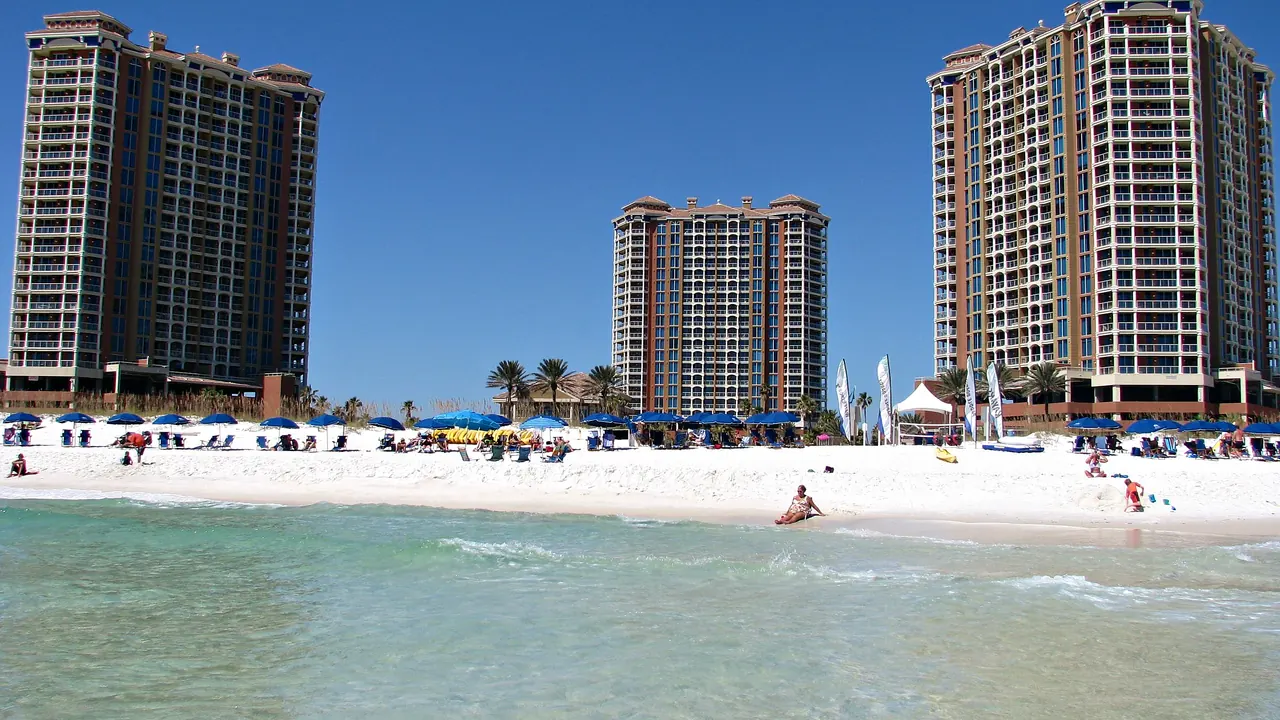
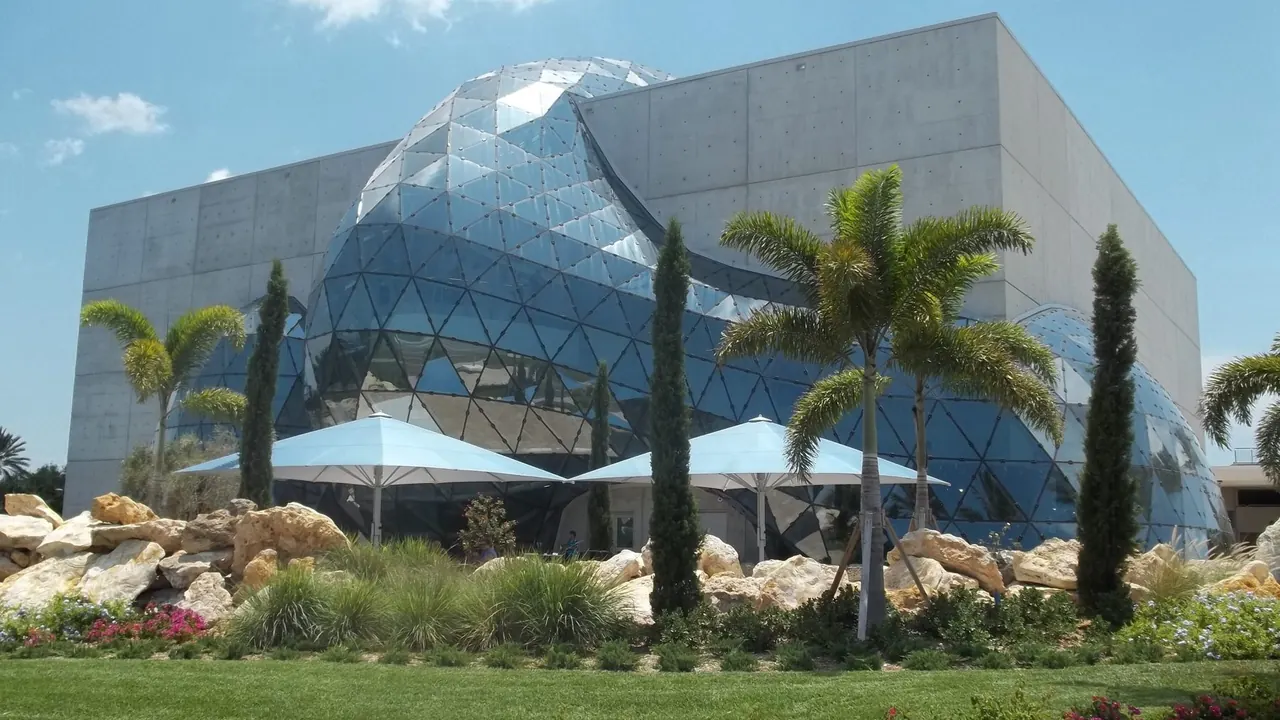
Photos: Pensacola by Jason Meredith, CC BY 2.0, cropped; St. Petersburg, Florida by Ebyabe, CC BY-SA 3.0, cropped.
Pensacola or St. Petersburg, Florida?
Our verdict in twelve categories, each scored against the same fixed benchmark cities, and the climate month by month, so you can choose for your trip.
Choose Pensacola for
- prices
- nature and the outdoors
Pensacola suits travellers who want a long, uncomplicated beach stay at a gentler cost. The Gulf Islands National Seashore gives it miles of protected white sand and dunes, Perdido Key is quieter still, and rooms inland or out of season cost noticeably less. It also has the deeper history of the two, from Fort Pickens to the old Seville district, and a sunken carrier offshore for divers. Its weak points are that you will need a car for almost everything and that the evenings wind down early.
Choose St. Petersburg, Florida for
- getting around
- day trips
- shopping
St. Petersburg is the better all-rounder for a mixed trip. Its beaches are as good as Pensacola's, and around them it adds the Dalí Museum and a walkable downtown waterfront, a broader food and beer scene, and Tampa, Sarasota and Tarpon Springs within easy reach. Families get far more to do on the days away from the sand. You pay more for that, especially in the late-winter high season.
Scoreboard
Twelve categories on one fixed scale from 0 to 100. The shaded stretch is the gap between the two.
Your match
Pick a travel style or drag the sliders, and both match scores follow your weighting.
Wins on prices and nature and the outdoors with your weighting.
Wins on getting around and day trips with your weighting.
What matters to you?
Category by category
What the scores mean for a trip.
Beaches & swimming
These are two of the best beach cities on the Gulf, and the sand is equally fine in both. In Pensacola it is mainly one long island: Pensacola Beach and the protected national seashore run for miles along Santa Rosa Island, with dunes and clear green water. The calm sound side is good for toddlers and Perdido Key offers quieter sand.
St. Petersburg's beaches are spread over a chain of islands and each has a different feel: Pass-a-Grille is an old village, Fort De Soto is wilder, and Caladesi Island can only be reached by ferry. The downtown faces the bay, so a beach day starts with a short trip west. In winter its water stays a little warmer than Pensacola's.
Food & drink
Both cities eat mainly Gulf seafood, and St. Petersburg has more choice. Along Central Avenue there are several chef-led kitchens alongside the fish shacks, a large craft brewery scene, and the Cuban cooking of Ybor City just across the bay.
Pensacola has its own specialities in royal red shrimp, chargrilled oysters and Creole-tinged gumbo, and Palafox Street has some good modern Southern cooking. Outside that the range is narrow, and the beach strip has a lot of chains.
Culture & sights
St. Petersburg is the stronger choice for art. The Dalí Museum and its glass bubble lead a group of museums on the downtown waterfront, including fine arts, Western art and Chihuly glass, with murals across the Central Arts District. Its historic buildings are mostly from the 1920s boom.
Pensacola's appeal is older history. Spanish, French and British rule have left their mark on the colonial streets around Plaza Ferdinand and on the brick forts, and the naval aviation museum is its largest sight. Both cities can be covered in two or three days.
Nightlife
Evenings are similar in both, and neither is a clubbing city. In Pensacola you go out along Palafox Street and in the old Seville Quarter, often among young Navy personnel, and there is a rowdy roadhouse on the state line at Perdido Key. Outside summer weekends, though, the city goes quiet early.
St. Petersburg's Central Avenue is the easier place for a walk between bars, and it is busiest in the winter season rather than in summer. Sunset at the beach tiki bars starts most nights. For a longer night out, people head to Ybor City in Tampa.
Nature & outdoors
Both landscapes are flat and dominated by water, and they offer about the same amount to do outdoors. Pensacola has wide open coast, with dunes, salt marsh and maritime forest in the national seashore. Inland you can canoe on the clear Blackwater River, and the sunken aircraft carrier offshore draws experienced divers.
St. Petersburg is a place for paddling through mangroves. Weedon Island and Shell Key have marked trails where you may see rays, dolphins and manatees in winter, and the long, paved Pinellas Trail makes cycling easy.
Day trips
St. Petersburg has more variety within a day's drive: Tampa's Ybor City and riverwalk, the Ringling's mansion and museums in Sarasota, and the Greek sponge docks of Tarpon Springs. You could fill several days without repeating yourself.
From Pensacola, Mobile is the best outing, with its antebellum streets and battleship. After Fairhope, Fort Morgan and the resort towns to the east, the choices run out quickly.
Good for families
Both make a good family beach base with calm summer water, but St. Petersburg has much more for the other days. Busch Gardens, ZooTampa and the Florida Aquarium are across the bay, the Clearwater Marine Aquarium is up the coast and Orlando is within reach.
Pensacola's extras are on a smaller scale: the naval aviation museum, the Blue Angels, the lighthouse climb and the tunnels at Fort Pickens. These are good for children who love planes, but families hoping for theme parks will find little.
Getting around
Both cities expect you to drive, but St. Petersburg is less hard work without a car. Its downtown museums, pier and Central Avenue are close together, and a rapid bus line runs to St. Pete Beach.
In Pensacola, the beach, the naval air station and Perdido Key are spread along highways and bridges, so only Palafox Street and the seasonal beach trolley work without a car.
Shopping & style
Antique and gift shops on Palafox Street make up most of Pensacola's shopping. There are also a few independent boutiques, local crafts at the Saturday market and a standard mall of chain stores inland. It is enough for an hour or two, not a whole day.
St. Petersburg has more to browse. Central Avenue and the Grand Central District have vintage clothes, record shops and galleries selling glass and prints by local artists, and in the winter season there is a Saturday market downtown. For brand names and designer labels, though, you still have to drive to the malls in Tampa, about half an hour away.
Affordability
Pensacola is the cheaper of the two, though neither is a budget trip. It has moderate rates in town, a sharp drop on the island out of season, and its biggest museum is free.
In St. Petersburg prices are highest in late winter, which is also the best time to visit. Museum tickets and beach parking add to the cost. Both need a hire car, so include that in your budget either way.
Live music & performing arts
St. Petersburg has more live music on a typical night. The Florida Orchestra plays at the Mahaffey Theater, there is a professional regional theatre, a former church used as a concert hall and an open-air courtyard for indie bands. For opera, ballet and big Broadway tours, Tampa's large arts centre is close by.
Pensacola keeps its symphony, opera and ballet together in the restored Saenger Theatre, which is remarkable for a city its size. The scale is regional, though, and there is less live music in its bars.
Wellness & relaxation
Pensacola has little spa culture: a few day spas in the larger beach hotels and some massage studios in town. What it does have is space. Once the summer peak has passed, the national seashore and the far end of Perdido Key are easy places to spend a day doing very little.
St. Petersburg offers more if you want to be looked after. The big historic hotels on the beaches have full resort spas, and downtown adds day spas and yoga classes. On the Gulf side, evenings tend to end with people gathered on the sand to see the sun go down, and the old village of Pass-a-Grille keeps to a slow, small-town pace. Its winter season is the gentlest time for this kind of stay. In summer the heat means a morning swim and a quiet afternoon indoors.
When should you go?
Pick your month. The climate figures are measured averages, not a forecast.
Pensacola in July
St. Petersburg, Florida in July
Daytime high, °C
Rainfall in the month, mm
Temperature and rainfall are climate normals, averaged over the years shown. Pensacola: 1991-2020 normals, Pensacola / Pleasant Grove (12.3 km from centre). St. Petersburg, Florida: 1998-2020 (sunshine 1991-2020, rainfall 1991-2020) normals, Saint Petersburg (1.6 km from centre).
Pensacola sits further north and has a real winter. January highs are around 17°C, against about 21°C in St. Petersburg, and the water is too cold for most swimmers until May. Summer is hot in both cities. From June to September the Gulf is warm enough to swim, at 28°C or more, and both are humid, with afternoon thunderstorms in the wettest months. Around Pensacola, spring and October are the comfortable months for walking and being outdoors.
The biggest difference is the rain. Pensacola is wet all year, with about 130mm even in winter months, while St. Petersburg has a clear dry season from October to May and is sunny right through it. Its summer is very wet, peaking at 228mm in August. That makes St. Petersburg the stronger choice for a winter or spring escape, with mild days that suit long walks along the waterfront. In high summer the two are much the same.
Which traveller are you?
On a trip with a tight budget, Pensacola is easier on the wallet. Rooms in town and inland are reasonably priced, the naval aviation museum is free and the national seashore costs little. St. Petersburg charges more for hotels, meals and museum tickets, particularly in late winter.
On a family trip with children, St. Petersburg gives you more to fill the days. Besides the calm beaches there is a hands-on children's museum in the city, Busch Gardens and the Florida Aquarium across the bay, and Orlando's theme parks are within a long day's drive.
For a culture and arts trip, St. Petersburg has more to see. The Dalí Museum, the Museum of Fine Arts and the Chihuly glass are all close together on a walkable waterfront. Pensacola's colonial district and forts are more about history, and you can see them in less time.
Before you go
| Measure | Pensacola | St. Petersburg, Florida |
|---|---|---|
| Currency | US Dollar (USD) | US Dollar (USD) |
| Sockets | AB120 V, 60 Hz | AB120 V, 60 Hz |
| Driving side | Right | Right |
| Time zone | UTC-6, UTC-5 in summer | UTC-5, UTC-4 in summer |
| Emergency number | 911 | 911 |
| Elevation | 31 m | 134 m |
| Main airport | Pensacola International Airport (PNS)6 km from centre27 non-stop destinations | St. Petersburg Clearwater International Airport (PIE)16 km from centre60 non-stop destinations |
| Public holidays this year | 11 days | 11 days |
By the numbers
| Measure | Pensacola | St. Petersburg, Florida |
|---|---|---|
| City population | 54,312 | 258,308 |
| People per km² | 515 | 725 |
| Museums within 10 km | 5 | 13 |
| UNESCO World Heritage sites within 50 km | 0 | 0 |
| Swim season, months above 21 °C | 7 months | 8 months |
Where else could you go?
Every comparison below shares a destination with this one, so you can follow Pensacola or St. Petersburg, Florida somewhere new.