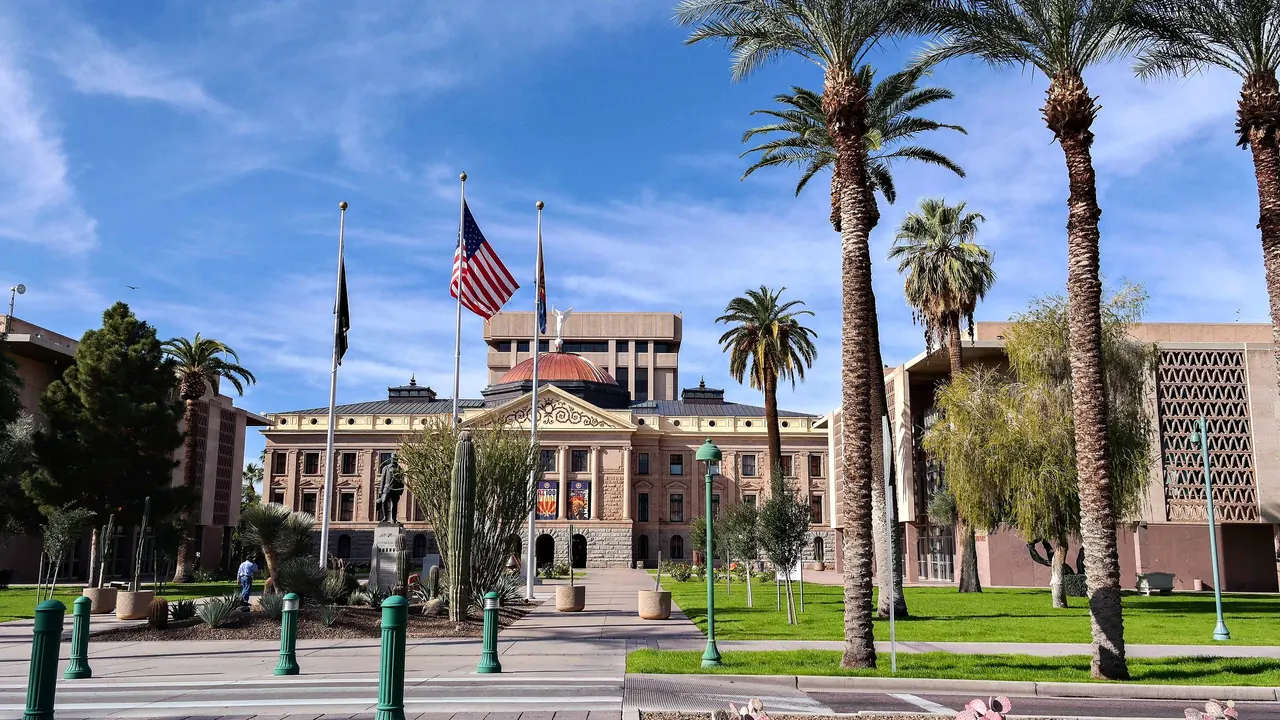
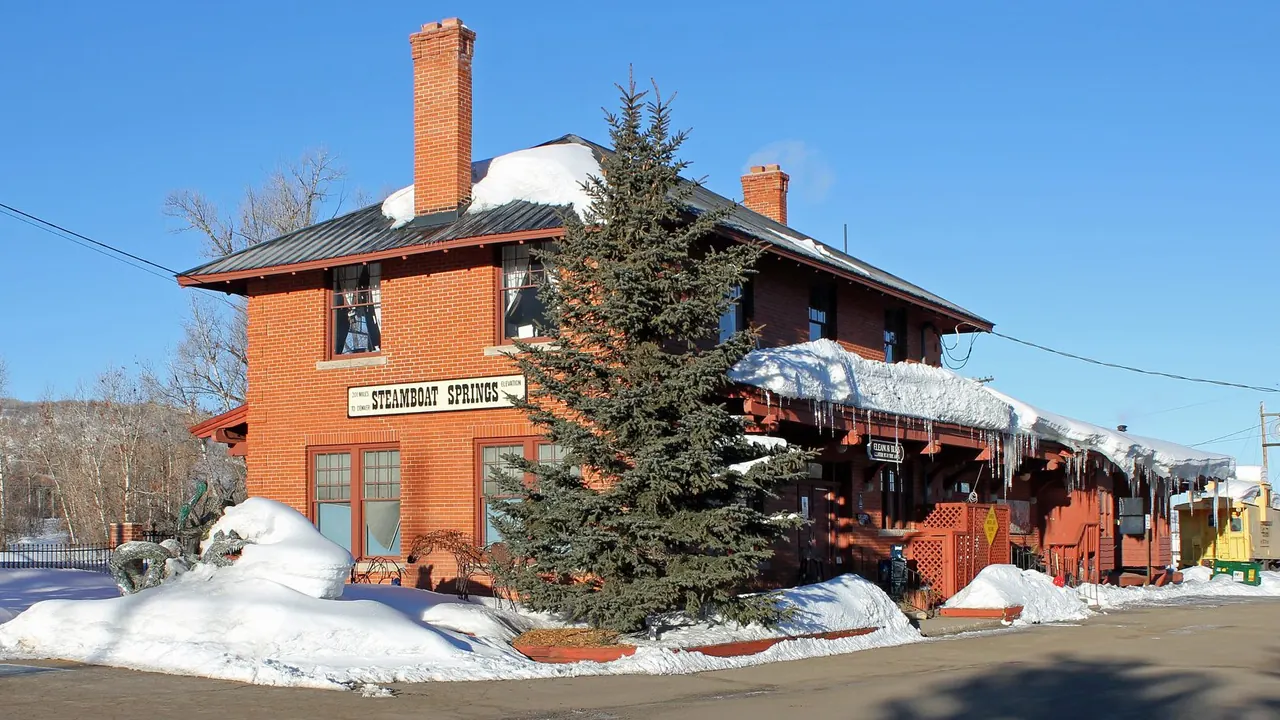
Photos: Phoenix by Visitor7, CC BY-SA 3.0, cropped; Steamboat Springs by Jeffrey Beall, CC BY-SA 3.0, cropped.
Phoenix or Steamboat Springs?
Our verdict in twelve categories, each scored against the same fixed benchmark cities, and the climate month by month, so you can choose for your trip.
Choose Phoenix for
- day trips
- culture and sights
- shopping
Phoenix suits travellers who want a winter escape into warm, dry sunshine with plenty to do around it. It has more to see and eat: the Heard Museum, Taliesin West, Sonoran Mexican cooking and Scottsdale's resort pools. Nights out have more choice, and Sedona, Jerome and Tucson are close enough for day trips. It also costs less to stay, as long as you're happy to drive everywhere and you stay away in high summer.
Choose Steamboat Springs for
- getting around
- nature and the outdoors
- wellness
Steamboat Springs is for people who come for the mountains and are happy to do little else. The skiing on Champagne Powder, summer trails into the Mount Zirkel Wilderness and soaks at Strawberry Park Hot Springs are the reasons to come, and the small, walkable downtown makes things easy. In return there's little culture, a narrow choice of restaurants, quiet evenings and resort prices, especially in ski season.
Scoreboard
Twelve categories on one fixed scale from 0 to 100. The shaded stretch is the gap between the two.
Your match
Pick a travel style or drag the sliders, and both match scores follow your weighting.
Wins on day trips and culture and sights with your weighting.
Wins on getting around and nature and the outdoors with your weighting.
What matters to you?
Category by category
What the scores mean for a trip.
Beaches & swimming
Neither city is anywhere near a coast, so swimming means lakes, rivers and pools in both. The difference is the water temperature. Phoenix has warm water: the Salt River reservoirs, Saguaro Lake and Canyon Lake, have small beaches under bare desert cliffs, and from May to September resort pools with slides and lazy rivers are where much of a stay is spent.
In Steamboat the mountain reservoirs stay cold, and only July and August are warm enough to swim in them. Both places tube down a river in summer, the Salt in Arizona and the Yampa right through Steamboat, but the Yampa is more of a float than a swim.
Food & drink
Phoenix has a regional cuisine to try: Sonoran carne asada and machaca, flour tortillas so thin you can see through them, bacon-wrapped hot dogs from evening carts, and some highly regarded wood-fired pizza. The catch is the distances, as the good places are spread from central Phoenix to Scottsdale and you'll usually drive to eat.
Steamboat's dining is hearty and western, with steakhouses, Colorado lamb and local breweries along Lincoln Avenue and at the ski base. It's a satisfying meal after a day outdoors, but there's no street food or market culture, and the choice runs out quickly.
Culture & sights
Phoenix makes up for having no historic centre with museums worth planning around. The Heard Museum is one of the great collections of Native American art, the Musical Instrument Museum can fill an afternoon, and Taliesin West shows Frank Lloyd Wright at work in the desert. Each one means a separate drive.
Steamboat's heritage is more pleasant than substantial. The western storefronts on Lincoln Avenue, the Tread of Pioneers Museum and Howelsen Hill, one of the oldest ski areas in North America, together make a morning's interest at most.
Nightlife
Phoenix gives you a choice of crowds. Old Town Scottsdale has clubs and rooftop bars, Tempe's Mill Avenue has student bars, and Roosevelt Row has craft beer and cocktails. The districts are far apart, so you pick one for the evening and take a ride-hail home.
In Steamboat, evenings follow the ski day. Après-ski starts at the gondola base as the lifts close and then moves to a few saloons and brewpubs on Lincoln Avenue. There are no clubs, and outside the busy weeks the town is quiet well before midnight.
Nature & outdoors
Steamboat Springs is built around the outdoors in every season. In winter there's Champagne Powder, aspen glades, backcountry on Rabbit Ears Pass and Nordic trails in the valley. In summer the same hills become mountain-bike and hiking terrain, and you can head for Fish Creek Falls, the alpine lakes of the Mount Zirkel Wilderness, fly fishing on the Yampa and elk and moose by the road.
Phoenix's desert is striking in a completely different way. Camelback Mountain, South Mountain and the saguaro forest of the McDowell Sonoran Preserve rise straight out of the suburbs, and Sedona's red rock is within reach. But that's a winter and spring landscape: in summer the heat makes hiking after mid-morning dangerous.
Day trips
From Phoenix there are real towns and sights within a couple of hours. You can drive north to Jerome, Prescott, Montezuma Castle and the red rock of Sedona, or south to Tucson's adobe barrios and the white Mission San Xavier del Bac.
Steamboat is too remote for that. The nearby ranching towns are coffee stops, Vail is about two hours of mountain roads away and Denver about three. Outings from Steamboat go into the hills, not to other towns.
Good for families
Both work well with children, but the trips are very different. Phoenix is the conventional choice, with a zoo, an aquarium, a science centre, water parks and spring training baseball. The downsides are long drives between them and summer heat that keeps small children indoors.
Steamboat suits families who like being outdoors: ski school, gentle first runs on Howelsen Hill, the slides and climbing wall at Old Town Hot Springs, and tubing and the rodeo in summer. It has no zoo, aquarium, theme park or science museum to fall back on, and the altitude can tire young children for the first day or two.
Getting around
In Phoenix you need a car for nearly everything. The light rail is useful only between the airport, downtown and Tempe, buses are slow, and Scottsdale and the hiking areas are long drives across a flat grid of wide roads.
Steamboat is easier to manage. Downtown is flat and easy to walk, the town bus links it with the ski base, and slopeside lodgings let you walk to the gondola. Beyond those two centres, though, a car is close to essential. The hot springs, Fish Creek Falls, the lakes and the passes are all up roads that the buses don't serve, and in winter those roads call for proper tyres.
Shopping & style
Phoenix has the bigger range, with luxury and open-air malls in Scottsdale and around the Biltmore district. Its distinctive buy is Native American craft: Navajo and Zuni silver and turquoise, Hopi katsina carvings, pottery and rugs, best bought from museum shops and reputable galleries. Steamboat is an hour on Lincoln Avenue, browsing western boots and hats at a century-old family outfitter, a few galleries and the ski shops.
Affordability
Phoenix is the cheaper of the two and easier to fit to a budget. Summer room rates fall sharply, freeway chain hotels are good value all year and Sonoran Mexican food is a cheap way to eat well. The unavoidable extra is a rental car.
Steamboat is expensive in every season. In ski season lift access, equipment hire, slopeside condos and resort dining all add up. Summer is gentler on the wallet, and self-catering and free trails help, but it never becomes a cheap stay.
Live music & performing arts
Phoenix has a full city programme. The Phoenix Symphony, Arizona Opera and Ballet Arizona all run regular seasons, touring Broadway shows play in Wright's round ASU Gammage auditorium, and the Musical Instrument Museum has an intimate concert hall. Most of it runs from autumn to spring.
Steamboat's music comes in summer, the opposite season. The Strings Music Festival puts on chamber music, jazz and bluegrass in its pavilion, and the Perry-Mansfield school, founded in 1913, stages student theatre and dance. In winter there's little beyond bands in the bars.
Wellness & relaxation
Steamboat has the more distinctive way to relax: natural hot springs. The rock-lined pools of Strawberry Park Hot Springs sit in a wooded creek valley about 11km up a mountain road, and a snowy evening soak there is a highlight of the region. The spring-fed pools in town are open all year too.
Phoenix's relaxation happens inside resorts. Big spa resorts at the foot of Camelback Mountain use desert ingredients such as sage and agave, and lying by the pool through a dry, sunny winter week is easy. There are no public baths or springs to visit, though, and the best of it costs resort money.
When should you go?
Pick your month. The climate figures are measured averages, not a forecast.
Phoenix in July
Steamboat Springs in July
Daytime high, °C
Rainfall in the month, mm
Where the figures come from
Steamboat Springs has no rain gauge within 25 km of the centre, so its rainfall comes from a gridded climate dataset read at the city rather than from a gauge further away.
Temperature and rainfall are climate normals, averaged over the years shown. Phoenix: 1991-2020 normals, Phoenix Sky Harbor Airport (2.8 km from centre). Steamboat Springs: 2011-2025 (rainfall 1991-2020) normals, Steamboat Springs / Steamboat Ii (5.5 km from centre).
Phoenix is at its best from October to April. Midwinter days reach about 20°C and spring and autumn are warmer, which is good weather for hiking and for walking between sights. From June to August highs reach 41°C, too hot to be outside after mid-morning, so the resort pool becomes the main thing to do. Rain is light all year. Winter and late summer each bring around 20mm a month, and late spring is almost completely dry.
Steamboat Springs has the opposite seasons. From December to February it stays below freezing, with January highs around -3°C, and the steady winter precipitation falls as snow, which is what skiers come for. Summer is its other good season: from June to September the days are mild to warm, reaching about 28°C in July, which suits hiking and biking. Precipitation is spread fairly evenly through the year, and April, May, October and November are in-between months, when the snow is either melting or hasn't arrived yet.
Which traveller are you?
On a culture and arts trip, Phoenix is the clear choice. The Heard Museum's Native American collections, the Musical Instrument Museum and Wright's Taliesin West add up to several good days. It also has a full season of symphony, opera and ballet, while Steamboat is mostly a museum and an hour's stroll.
For a trip on a tight budget, Phoenix is easier. Freeway chain hotels are good value all year, summer rates drop sharply, Sonoran Mexican food is cheap and good, and the hiking is free. Steamboat costs resort prices in every season, and above all in ski weeks.
For a ski trip, go to Steamboat Springs. Its light, dry Champagne Powder, the tree skiing through aspen glades, night skiing on Howelsen Hill and a strong ski school make it a proper mountain resort. Phoenix has winter sun but no snow sports to speak of.
Before you go
| Measure | Phoenix | Steamboat Springs |
|---|---|---|
| Currency | US Dollar (USD) | US Dollar (USD) |
| Sockets | AB120 V, 60 Hz | AB120 V, 60 Hz |
| Driving side | Right | Right |
| Time zone | UTC-7 | UTC-7, UTC-6 in summer |
| Emergency number | 911 | 911 |
| Elevation | 331 m | 2,052 m |
| Main airport | Phoenix Sky Harbor International Airport (PHX)6 km from centre149 non-stop destinations | Yampa Valley Airport (HDN)33 km from centre17 non-stop destinations |
| Public holidays this year | 12 days | 12 days |
By the numbers
| Measure | Phoenix | Steamboat Springs |
|---|---|---|
| City population | 1,608,139 | 13,224 |
| People per km² | 1,199 | 503 |
| Museums within 10 km | 10 | 0 |
| UNESCO World Heritage sites within 50 km | 1 | 0 |
Where else could you go?
Every comparison below shares a destination with this one, so you can follow Phoenix or Steamboat Springs somewhere new.