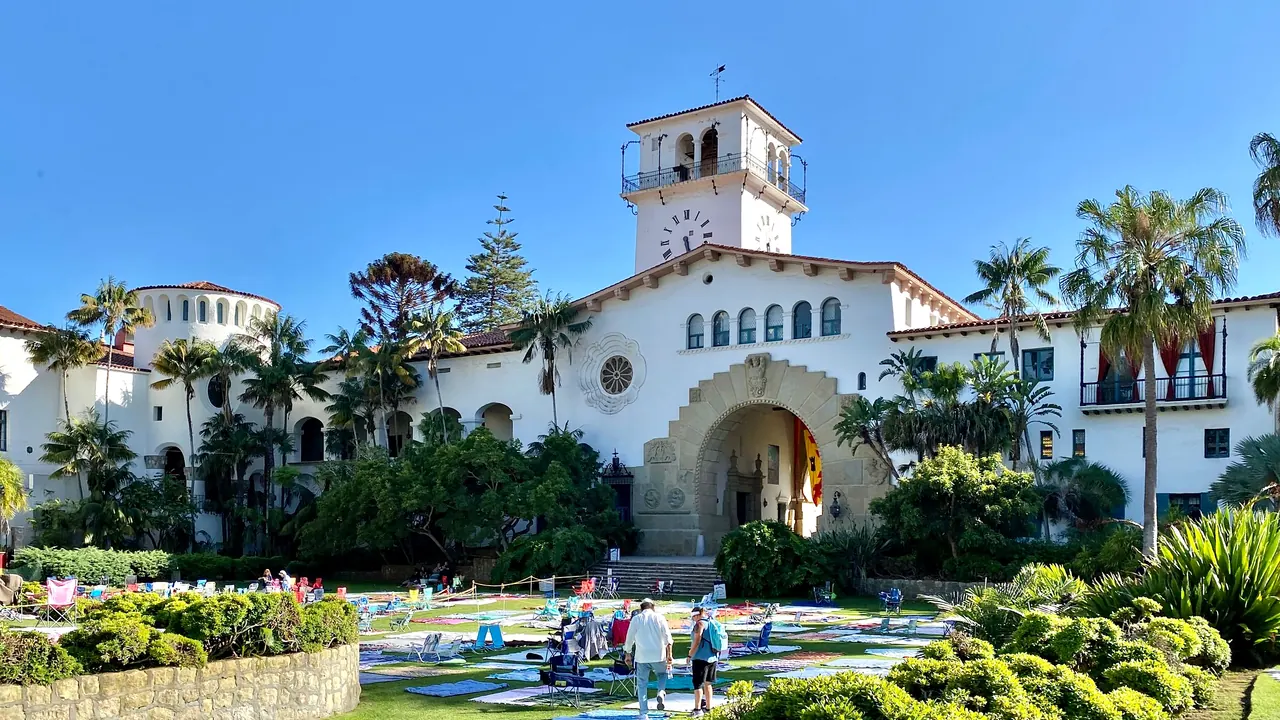
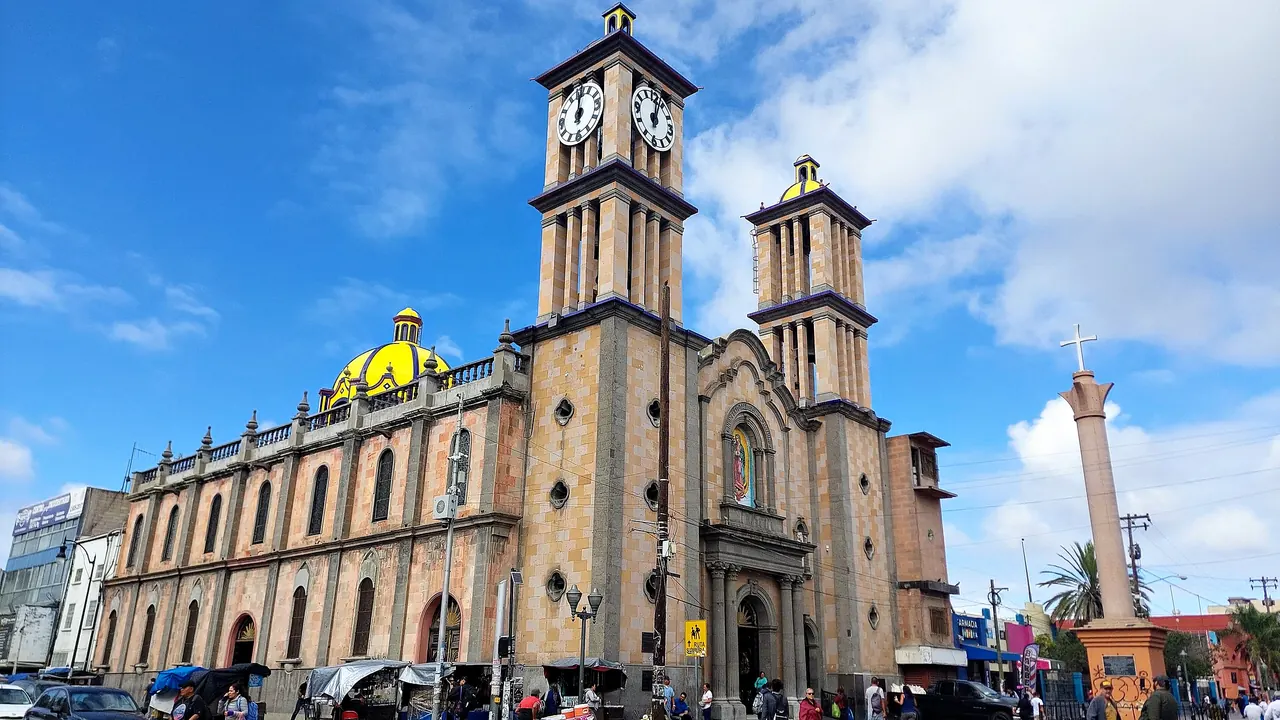
Photos: Santa Barbara by Warren LeMay, CC BY-SA 2.0, cropped; Tijuana by Exprimidor, CC BY-SA 4.0, cropped.
Santa Barbara or Tijuana?
Our verdict in twelve categories, each scored against the same fixed benchmark cities, and the climate month by month, so you can choose for your trip.
Choose Santa Barbara for
- nature and the outdoors
- families
- wellness
Santa Barbara suits a slower, more scenic vacation. You get mountain trails that start at the edge of town, whale-watching from the harbour, a sheltered south-facing coast, a whitewashed Spanish Colonial centre and an evening at the Granada or the Bowl. It works well for families, couples and walkers who want an easy pace, as long as they accept high prices and quiet nights.
Choose Tijuana for
- prices
- nightlife
- food and drink
Travellers who come mainly to eat and go out will get more from Tijuana. Street tacos, seafood carts, Baja Med cooking and craft beer are the point of the trip, followed by late nights on Calle Sexta, all at a fraction of the cost. It is a loud, sprawling border city with few sights and little calm. Its reward is flavour, value and the wine country and Ensenada just to the south.
Scoreboard
Twelve categories on one fixed scale from 0 to 100. The shaded stretch is the gap between the two.
Your match
Pick a travel style or drag the sliders, and both match scores follow your weighting.
Wins on nature and the outdoors and families with your weighting.
Wins on prices and nightlife with your weighting.
What matters to you?
Category by category
What the scores mean for a trip.
Beaches & swimming
Santa Barbara has the better beaches by some way. The Channel Islands shelter its south-facing shore, East and West Beach lie right in town, and Carpinteria's shallow sand suits small children. The catch is cold water, so swims are short and many people wear wetsuits.
At Playas de Tijuana, the shore is for a walk and a seafood lunch beside the border fence, because runoff often makes swimming unwise. A real beach day means going to Rosarito, half an hour south. It has more going on, with beach bars and horse rides, but the currents are strong.
Food & drink
Tijuana is the stronger place to eat, and its depth starts at street level. There is spit-roasted adobada, birria with its broth, grilled carne asada stands open late and seafood carts piling sea urchin onto tostadas. Above that come the Baja Med restaurants of Zona Río and Chapultepec and a serious craft beer culture.
Santa Barbara eats well but more narrowly. Its strengths are spot prawns from the harbour boats, outstanding farmers' markets and wine tasting on foot around the Funk Zone. Its best cheap food is the Mexican cooking on Milpas Street, which is exactly what Tijuana does on every corner, and late meals are hard to find.
Culture & sights
Santa Barbara is the more rewarding town to look at. After 1925 it was rebuilt in the Spanish Colonial Revival style, which gives the centre a single architectural character, from the County Courthouse and its clock tower to the Old Mission on the slope above. That fills two or three unhurried days.
Tijuana has little historic fabric. The Museo de las Californias, inside the domed cultural centre, tells the peninsula's story well, and the Jai Alai palace keeps some Prohibition-era flavour on Avenida Revolución. Its most memorable sight, though, is the mural-covered border fence running into the sea.
Nightlife
After dark, Tijuana wins easily. The dive bars and small dance spots of Calle Sexta, the loud balconies of Avenida Revolución and the cocktail bars of Colonia Cacho stay busy late into Friday and Saturday nights. Stick to those areas and use ride-hailing to get back.
Santa Barbara goes to bed early. A typical evening is a Funk Zone tasting room or brewery, then a nightcap on lower State Street, and the only weekend crowds are students.
Nature & outdoors
This is where Santa Barbara is strongest. Trails into the Santa Ynez Mountains start from suburban streets and lead to Seven Falls or Inspiration Point, with Los Padres National Forest beyond. Boats leave the harbour to see grey, humpback and blue whales, and Rincon is a famous surf break. Summer fires sometimes close trails.
Tijuana sits among dry, scrubby hills with little green space. Its outdoors are along the coast road to Ensenada, with surf near Rosarito and gentle vineyard walks in the wine valleys. Serious hiking in the Sierra de Juárez is too far for a day.
Day trips
The two are evenly matched here, and both offer a good wine-country day. Santa Barbara's best outing goes over the mountains to the Santa Ynez Valley, which pairs well with Solvang's Danish streets and the restored mission at La Purisima. After that the list thins, and Los Angeles works better as a separate stay.
Tijuana gives you two countries to choose from. To the south are Puerto Nuevo's lobster, Ensenada's fish market and the Valle de Guadalupe, and to the north are San Diego's Balboa Park and La Jolla. The return crossing into the United States can take hours, so it shapes every trip north.
Good for families
Santa Barbara is far easier with children. It has a small zoo on a hill above the beach, touch tanks at the Sea Center on Stearns Wharf, the MOXI science museum, calm water at Carpinteria and a bike path along the shore, all in a clean, safe, compact town.
Tijuana has El Trompo's hands-on exhibits and the IMAX dome, and restaurants are warm towards children. Still, distances need a car, pavements are patchy and the main strip is built for adult drinkers. From either city, the big theme parks are a long trip away.
Getting around
Neither city works fully without a car, but Santa Barbara is easier. Its flat downtown runs down State Street to a level shoreline path, buses and a shuttle cover the core, and the train stops near the beach. The car only comes out for trailheads and wine country.
In Tijuana, you can walk only around downtown near the San Ysidro crossing. Beyond it the city sprawls over hills, there is no metro and the bus routes are hard for visitors to follow, so ride-hailing and taxis do the work. Traffic near the border adds long queues.
Shopping & style
Santa Barbara is the better place for browsing. Galleries and boutiques sit around fountain courtyards in paseos such as La Arcada, Coast Village Road in Montecito sells upmarket fashion, and local wine makes the best thing to take home.
Tijuana's shopping is practical and noisier. You haggle for pottery, leather and silver near the border, buy chillies and Mexican vanilla at Mercado Hidalgo and find big malls in Zona Río, but there is little fashion.
Affordability
The gap is wide. Tijuana is cheap, with street-stand tacos, good-value hotels in Zona Río and inexpensive rides across town. Only the bars on Avenida Revolución and the better Baja Med and wine-country tables come close to international prices.
Santa Barbara is one of the most expensive stops on the California coast, especially for beachfront and Montecito rooms on summer weekends. Taquerias, free hikes and beaches help, as do staying in Goleta or Ventura and coming midweek in the cooler months.
Live music & performing arts
For its size, Santa Barbara has a deep stage life. The restored Granada hosts symphony, opera and ballet, the historic Lobero has chamber music and jazz, touring bands play the Santa Barbara Bowl in its canyon, and the Music Academy of the West fills summers with concerts.
Tijuana's formal programme centres on the concert hall at the Centro Cultural Tijuana and a long-standing opera company that stages an open-air performance each year. Its more distinctive music is informal: norteño bands in cantinas, mariachis at Plaza Santa Cecilia and the bars of Calle Sexta, where Nortec grew up.
Wellness & relaxation
For slowing down, Santa Barbara is the clear choice. It offers mild days, quiet mornings, polished resort spas in Montecito and plenty of yoga studios, and the Ojai Valley's long spa tradition is an hour's drive away. The small natural hot pools above Montecito are reached on foot.
Tijuana is loud and traffic-heavy, and its large health trade is medical and dental rather than restful. Finding calm there means going out to the vineyard estates of the wine valleys.
When should you go?
Pick your month. The climate figures are measured averages, not a forecast.
Santa Barbara in July
Tijuana in July
Daytime high, °C
Rainfall in the month, mm
Where the figures come from
Tijuana has no rain gauge within 25 km of the centre, so its rainfall comes from a gridded climate dataset read at the city rather than from a gauge further away.
Temperature and rainfall are climate normals, averaged over the years shown. Santa Barbara: 1991-2020 normals, Santa Barbara / La Patera (11.7 km from centre). Tijuana: 2006-2020 (rainfall 1991-2020) normals, San Diego / Bandini (6.7 km from centre).
Santa Barbara is dry from May to September, with daytime highs climbing to about 24°C in late summer. Most of its rain falls between December and March, and January brings close to 99mm. The sea stays cold for most of the year and reaches only 18°C from July to October, so late summer and early autumn are the best time for the beach. It never gets too hot for walking, and winter stays mild enough for hikes between the wet spells.
Tijuana follows the same pattern but runs a few degrees warmer, peaking near 27°C in September. It gets far less winter rain, which matters because water quality on its beaches suffers after rain. The sea is warmest in August and September at around 21°C. In both cities, August to October is the warmest and most settled stretch. Santa Barbara's cooler, wetter winter makes the difference between them greatest from December to March.
Which traveller are you?
On a food and nightlife trip, Tijuana is the clear pick. Santa Barbara has harbour seafood and wine tasting, but its bars close early. Tijuana fills the days with adobada and birria tacos, ceviche carts, Baja Med dining and craft taprooms, and Calle Sexta's cantinas run late.
For an outdoors trip, choose Santa Barbara. Canyon trails climb straight from town to ridges looking out to the Channel Islands, harbour boats go out to see whales, and Rincon's point break is close by. Tijuana's dry hills offer far less.
On a trip on a tight budget, Tijuana lets you enjoy what it does best. In Santa Barbara, little money means a trip of trails, beaches and farmers'-market picnics, with tasting rooms mostly out of reach. In Tijuana, Mercado Hidalgo and neighbourhood taquerías make eating, its main pleasure, affordable every day.
Before you go
| Measure | Santa Barbara | Tijuana |
|---|---|---|
| Official language | - | Spanish, Nahuatl, Yucatec Maya |
| Currency | US Dollar (USD) | Mexican Peso (MXN) |
| Sockets | AB120 V, 60 Hz | AB127 V, 60 Hz |
| Driving side | Right | Right |
| Time zone | UTC-8, UTC-7 in summer | UTC-8, UTC-7 in summer |
| Emergency number | 911 | 911 |
| Elevation | 15 m | 20 m |
| Main airport | Santa Barbara Municipal Airport (SBA)12 km from centre13 non-stop destinations | General Abelardo L. Rodriguez International Airport (TIJ)6 km from centre38 non-stop destinations |
| Public holidays this year | 13 days | 9 days |
By the numbers
| Measure | Santa Barbara | Tijuana |
|---|---|---|
| City population | 88,665 | 1,810,645 |
| People per km² | 816 | 2,842 |
| Museums within 10 km | 10 | 3 |
| UNESCO World Heritage sites within 50 km | 0 | 0 |
| Swim season, months above 21 °C | None | 1 month |
Where else could you go?
Every comparison below shares a destination with this one, so you can follow Santa Barbara or Tijuana somewhere new.