Türkiye
Alanya
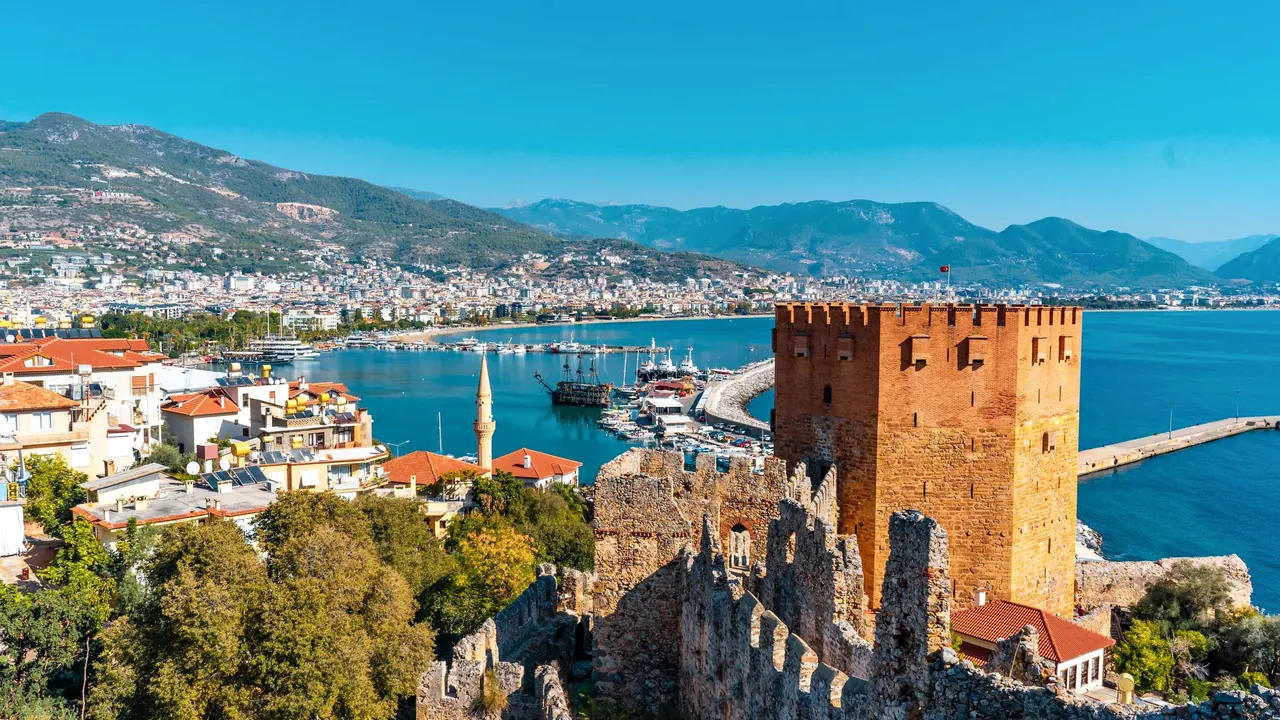
The Red Tower and the harbour
- Beaches84
- Families70
- Nature & outdoors68
Photo: Atlantic Ambience, Pexels License
Match
54
Every category weighted equally
- Beach & sun60
- Culture & arts47
- Food & nightlife48
- Family trip60
- Outdoors60
- Relax & unwind57
- Shopping & style48
- On a budget55
Alanya in twelve categories
Our verdict on each, scored 0 to 100 against the same fixed benchmark cities, so a score means the same thing on every page.
Beaches & swimming. Scores 84 out of 100.
Food & drink. Scores 43 out of 100.
Culture & sights. Scores 44 out of 100.
Nightlife. Scores 58 out of 100.
Nature & outdoors. Scores 68 out of 100.
Day trips. Scores 62 out of 100.
Good for families. Scores 70 out of 100.
Getting around. Scores 50 out of 100.
Shopping & style. Scores 34 out of 100.
Affordability. Scores 65 out of 100.
Live music & performing arts. Scores 15 out of 100.
Wellness & relaxation. Scores 56 out of 100.
Alanya category by category
Beaches & swimming
84Alanya is a beach town first and last. Cleopatra Beach runs west of the castle headland in a long curve of fine pale sand, and Keykubat Beach stretches east past the harbour for several kilometres. Further along, the coast continues through a chain of resort districts, each with its own strand of sand or fine shingle. The water is clear and shelves gently on the main beaches, and it is warm: around 27°C to 28°C in August, still swimmable well into October, and pleasant from late May.
On the rocky headland itself there are small coves reached by boat, and the boat trips that circle the peninsula stop for swims in turquoise water. Days here are organised around sunbeds, umbrellas and the sea. In winter the water cools, and swimming becomes something for the hardy.
Food & drink
43Much of Alanya's eating is resort food: harbourfront restaurants with picture menus, international dishes and all-inclusive hotel buffets. Turkish cooking is close at hand, though, if you look past them. Simple kebab and pide houses in the back streets, grilled fish, gözleme pancakes made at village stalls in the hills, and fresh Mediterranean produce are all easy to find. Bananas grow locally, and the small sweet local variety turns up everywhere.
The big weekly market in the town centre is the best place to taste olives, cheeses, dried fruit and spices. Fine dining and a café culture of real depth are mostly absent.
Culture & sights
44Alanya's history sits on its rocky peninsula. The Seljuk Sultanate built the castle in the 13th century, and its walls climb from the harbour to the summit, enclosing old Ottoman houses, a small Byzantine church and cisterns, with sweeping views over both bays. At the water's edge stand the octagonal Red Tower, the town's emblem, and the Tersane, a medieval shipyard with arched docks cut into the rock.
The archaeological museum is small but well presented, and the Damlataş cave near Cleopatra Beach has dripstone formations. All of this fits into a day or two. The rest of the town is modern resort building.
Nightlife
58In summer Alanya goes out late. The harbour area and its bar street fill after dark with cocktail bars, karaoke, open-air clubs and loud music aimed at a young, international resort crowd, and the busiest places run until the small hours. Party boat cruises around the peninsula are a fixture of the season, and the beachfront hotel districts have their own bars.
The character is package-resort fun rather than anything subtle: drinks deals, DJs and dancing. From late autumn to spring much of it closes, and the town turns quiet and settled.
Nature & outdoors
68The Taurus Mountains rise steeply behind the town, so the scenery changes from coast to pine forest and high plateau within a short drive. The Dim River valley has riverside platforms and the large Dim Cave. Sapadere Canyon has a walkway along a gorge with waterfalls. Mountain villages and summer pastures sit above the heat, and jeep safaris climb up to them. The rafting rivers and the Köprülü Canyon lie further west.
On the coast, the cliffs and sea caves of the castle headland are best seen by boat, and paragliding launches from the slopes above town. Diving and other water sports are easy to arrange. In midsummer, heat rules out serious hiking, so spring and autumn are the times to walk.
Day trips
62The best day trips run west along the coast. Side is a little over an hour away, with a Roman theatre and the Temple of Apollo on the shore. Further on is Aspendos, one of the best-preserved Roman theatres anywhere, and Perge, with its long colonnaded streets. Both are reachable in about two hours, and Antalya's walled old town, Kaleiçi, and its outstanding archaeological museum are about the same distance away.
Eastward, the coast road leads to smaller ruins along the cliffs and towards the ancient city of Anemurium, which is a long day. Most visitors join an organised tour, since the sites are spread out along the coast road.
Good for families
70Alanya works well for a beach vacation with children. Cleopatra and Keykubat beaches shelve gently into calm, warm water, and many resort hotels are built for families, with kids' clubs, pools and slides. Turkish culture is warm towards children, and waiters and shopkeepers fuss over them happily.
There are water parks and a dolphin and sea-life park. The cable car to the castle and the pirate-style boat trips are easy wins with children. Beyond that, attractions made for children are few. Midsummer heat is fierce enough to keep the middle of the day by the pool, and the late-night noise around the harbour is worth avoiding when choosing where to stay.
Getting around
50The town centre, harbour and the two main beaches are close together and walkable along a long seafront promenade. A cable car lifts you from Cleopatra Beach to the castle, saving a steep, hot climb. Frequent municipal buses and dolmuş minibuses run along the coast road, linking the resort districts that stretch for many kilometres on either side of town.
Many hotels sit far out along that strip, so staying central makes a real difference. Taxis are easy to find, but the mountains, ancient sites and canyons are reached by tour or hire car. The nearest airport is about forty minutes away, while the larger Antalya airport is around two hours by road.
Shopping & style
34Shopping in Alanya is mostly resort-bazaar fare: streets near the harbour lined with leather jackets, towels and textiles, imitation branded goods, jewellery and gold, Turkish delight and spices. Bargaining is expected. The large weekly market is the most rewarding stop, with produce alongside clothes and household goods. There are some modern malls, but no designer streets or independent boutiques to speak of.
Affordability
65Alanya is one of the more affordable beach resorts around the Mediterranean, especially as a package or all-inclusive stay, which bundles room, meals and drinks. Local buses, simple Turkish eateries away from the seafront and the weekly market are cheap. Harbourside restaurants, imported drinks, boat trips and tours sold to visitors cost noticeably more, and peak summer weeks push hotel rates up. Out of season, both the prices and the crowds fall away.
Live music & performing arts
15Live performance is thin. Most of what a visitor sees is hotel entertainment, folk-dance evenings and Turkish-night dinner shows. The town hosts a long-running jazz festival in the early autumn, with concerts in historic settings such as the shipyard. Outside that, there is no regular theatre, opera or concert life worth planning around.
Wellness & relaxation
56Hammam rituals are part of an Alanya stay. Nearly every large hotel has a Turkish bath and spa, and standalone bathhouses in town offer the full sequence of steam, scrub, foam wash and massage. They are built for visitors rather than centuries-old institutions, but they are good and easy to fit into a day. The Damlataş cave, with its humid, constant air, has long been visited by people with breathing complaints.
The rhythm of a resort stay suits unwinding, especially in spring and autumn, when the heat and crowds ease. In high summer the harbour area is loud, so for quiet choose a hotel away from the centre.
When should you go?
Pick a month to see what it is like. The climate figures are measured averages, not a forecast.
Alanya in July
Daytime high, °C
Rainfall in the month, mm
The whole year
Shaded against this city’s own year: the deepest cell is its best month for that figure and the palest its weakest.
Where the figures come from
Alanya has no weather station within reach, so its figures come from a gridded climate model rather than a measured record, and read a broad area rather than the city itself.
Temperature and rainfall are climate normals, averaged over the years shown. Alanya: 2001-2020 normals, NASA POWER reanalysis grid, no weather station within 90 km.
Before you go
| Measure | Alanya |
|---|---|
| Official language | Turkish |
| Currency | Turkish Lira (TRY) |
| Sockets | CF230 V, 50 Hz |
| Driving side | Right |
| Time zone | UTC+3 |
| Emergency number | 112 |
| Elevation | 10 m |
| Main airport | Gazipaşa-Alanya Airport (GZP)38 km from centre22 non-stop destinations |
| Public holidays this year | 14 days |
By the numbers
| Measure | Alanya |
|---|---|
| City population | 364,180 |
| People per km² | 228 |
| Museums within 10 km | 2 |
| UNESCO World Heritage sites within 50 km | 0 |
| Swim season, months above 21 °C | 7 months |
Compare Alanya with
Every comparison with a written verdict behind it.