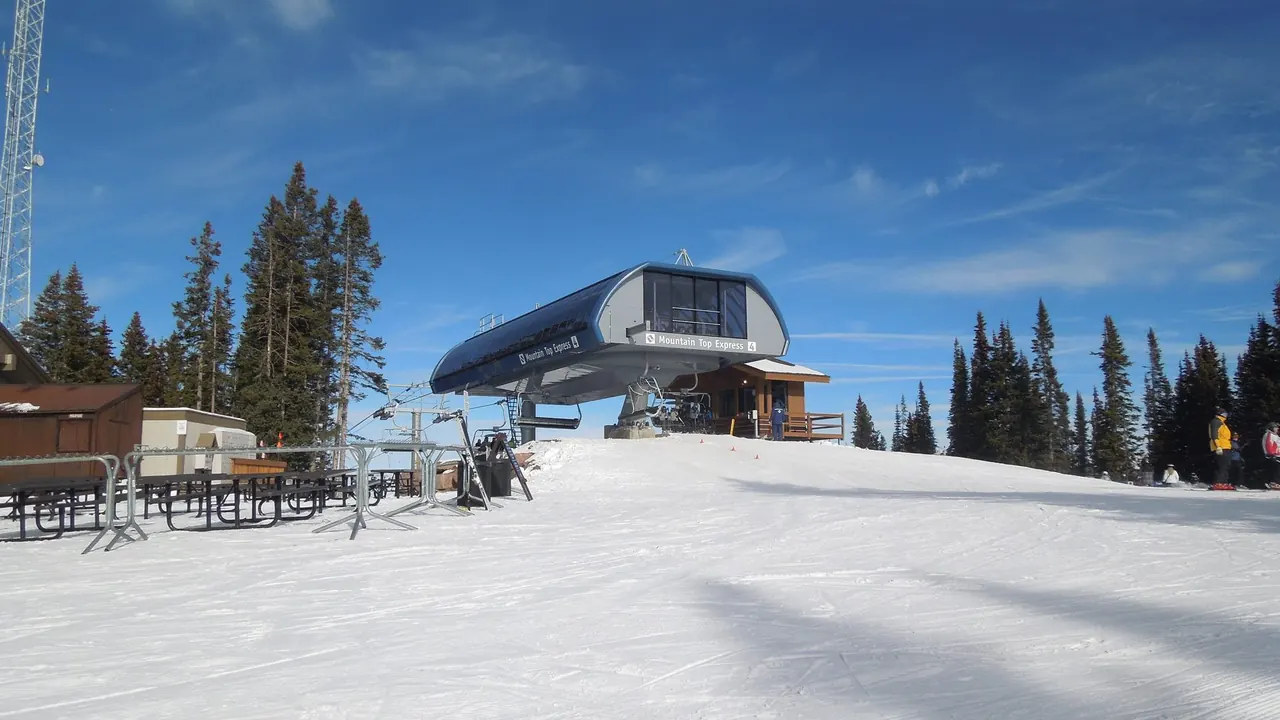
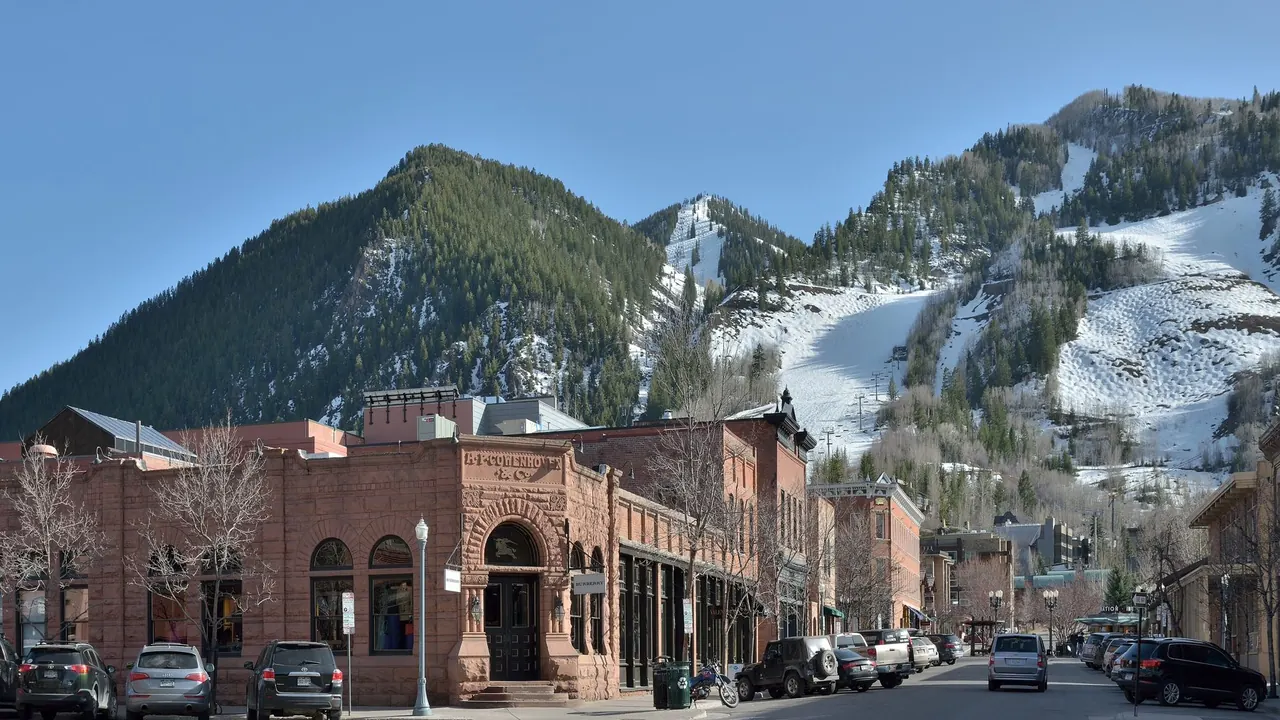
Photos: Vail by DReifGalaxyM31, CC BY 3.0, cropped; Aspen by Moroder, CC BY-SA 3.0, cropped.
Vail or Aspen?
Our verdict in twelve categories, each scored against the same fixed benchmark cities, and the climate month by month, so you can choose for your trip.
Choose Vail for
- day trips
Vail is the pick for skiers and hikers who care most about the terrain and are happy for the town to be a purpose-built chalet village. The Back Bowls and Blue Sky Basin give it a different kind of skiing, and its place on the main mountain highway makes it the better base for a driving week that takes in Breckenridge, Beaver Creek and Leadville.
Choose Aspen for
- shopping
- culture and sights
- food and drink
Aspen suits travellers who want a real town around their mountains. Behind the ski runs sits a Victorian silver-mining centre with an opera house, an art museum, chef-led dining rooms and a run of designer boutiques, and the evenings carry on longer than in most resorts. It is also the easier of the two to manage without a car, with four ski mountains on free buses and an airport minutes away.
Scoreboard
Twelve categories on one fixed scale from 0 to 100. The shaded stretch is the gap between the two.
Your match
Pick a travel style or drag the sliders, and both match scores follow your weighting.
Wins on day trips with your weighting.
Wins on shopping and culture and sights with your weighting.
What matters to you?
Category by category
What the scores mean for a trip.
Beaches & swimming
Neither town has anything to offer here. Both sit high in the Rockies, far from any coast, and their lakes and reservoirs stay cold even in midsummer. In Aspen the summer water outing is a raft down the Roaring Fork, right by town. In Vail you paddle on nearby mountain lakes, and the bigger rafting runs need a drive. For an actual swim, both mean a hotel pool.
Food & drink
Aspen eats better and more widely. Its downtown grid has chef-led dining rooms, Italian places and serious wine lists, and the Food & Wine Classic brings chefs and winemakers to town each June. Vail's restaurants are mostly resort dining in Vail Village and Lionshead: fondue rooms, steak and game houses, and mountain lodges for lunch between runs.
Vail does put more Colorado produce on the plate, such as lamb, elk and trout with local craft beer. Neither town has a cheap end or street food, and both lose many kitchens in the spring and autumn lulls.
Culture & sights
Aspen grew up as a silver town in the 1880s, and that history is still standing. Red-brick blocks around the Wheeler Opera House, painted miners' cottages in the West End, Herbert Bayer's modernist Aspen Institute campus and the ghost town of Ashcroft make an afternoon worth spending.
Vail dates only from the 1960s, and its covered bridges and gabled chalets are an imitation Tyrolean village. The Colorado Snowsports Museum, with its story of the Tenth Mountain Division ski troops, and the Betty Ford Alpine Gardens fill an hour or two, and that is about all.
Nightlife
In ski season Aspen has the livelier nights. After the slopeside decks empty, the crowd moves on to downtown bars, hotel lounges and a few small clubs, and around New Year and the X Games they stay busy late with a well-dressed crowd. Vail's après-ski is packed and cheerful in Vail Village and Lionshead, but on most nights it ends earlier, with one small club for those who carry on.
In both towns summer evenings mean drinks on terraces, and the shoulder seasons are close to silent.
Nature & outdoors
Both are among the great mountain bases of the Rockies. The difference is in the layout. Aspen spreads its skiing across four mountains: steep Highlands, gentle Buttermilk, huge Snowmass and the gondola rising from downtown. In summer the Maroon Bells and Independence Pass are on the doorstep.
Vail puts it all on one vast ski area, with groomed front-side runs and the wide open Back Bowls and Blue Sky Basin behind. Its summer country is the Gore Range and Holy Cross wilderness, and Gore Creek is good for fly fishing. Vail sits a little higher, at about 2,500m, so take the first day gently.
Day trips
From Aspen the list is short, and most of it is small towns. Down the valley lie Carbondale, the coke ovens at Redstone, the quarry village of Marble and Glenwood Springs, about an hour away and also reached by the valley bus. The ghost town of Ashcroft is close by. In summer the road over Independence Pass leads to Leadville. Once the pass closes for winter, Leadville can only be reached the long way round through Glenwood Springs and the interstate, which is too far for a comfortable day out.
Vail has more within easy reach, and most of it can still be reached through the winter. Beaver Creek is a short drive west, Breckenridge's mining-era main street is a little under an hour over the pass, Leadville makes an easy half day and Glenwood Springs is about an hour down the Colorado River canyon. Denver is around two hours away for a longer day. From Vail you will need a car for almost all of these.
Good for families
Both work well for a ski vacation with children and much less well for anything else, as neither has a zoo, aquarium or theme park. In Aspen the strength is choice: Buttermilk is built for beginners and Snowmass has dedicated kids' areas, and the free buses link them. Downtown fountains and an environmental centre fill summer days.
Vail keeps everything in one place, and its car-free village is easy to roam with small children. The ropes courses and tubing at the top of the gondola give summer a focus. At either altitude, young children may need a slow first day.
Getting around
Aspen is the easier of the two. Its flat downtown grid takes minutes to cross, free buses serve all four ski mountains, a summer shuttle runs to the Maroon Bells, and the local airport is just outside town.
Vail's pedestrian core and free valley bus make a car-free week perfectly possible too. The difference is arriving and leaving: Vail has no airport on the doorstep and relies on shuttles and the highway over Vail Pass, which heavy snow can close.
Shopping & style
Aspen has the stronger shopping, mainly in luxury. A few downtown blocks hold international designer boutiques you would not expect in a town this small, alongside jewellers, commercial galleries and pedestrian malls made for evening browsing.
Vail's lanes in the Village and Lionshead lean towards ski and outdoor clothing, Western boots and hats, and paintings of mountain landscapes. That is good for gear or a souvenir, but serious shoppers end up in Denver.
Affordability
Neither is affordable. Lodging, lift tickets, ski school and meals in both are priced for a very wealthy clientele, and peak winter weeks are the most expensive of all. Both get somewhat easier in summer, and both have free town buses.
The usual way to save money is the same in each: sleep down the valley. From Aspen that means Carbondale or Glenwood Springs. From Vail it means the towns further along the Eagle valley, with the bus or a car to reach the lifts.
Live music & performing arts
Both towns hold a major classical festival in summer. In Aspen it is the Aspen Music Festival in the Benedict Music Tent, where you can listen for free from the lawn, and in Vail it is Bravo! Vail at the open-air Gerald R. Ford Amphitheater. Vail adds a strong dance festival, while Aspen has its own ballet company and jazz.
Aspen pulls ahead for the rest of the year. The Wheeler Opera House runs concerts, comedy and film in every season, and a club books touring acts through ski season. Vail in winter has little beyond après-ski bands.
Wellness & relaxation
The two are much alike: hotel spas, clear air, an unhurried pace outside peak weeks and no bathing tradition of their own. The Glenwood Springs mineral pools and vapour caves are about an hour from both.
The detail differs. Aspen adds riverside paths, yoga in the parks and the wild Conundrum Hot Springs at the end of a long hike. Vail's spas are known for outdoor hot tubs under the peaks after a day on the slopes.
When should you go?
Pick your month. The climate figures are measured averages, not a forecast.
Vail in July
Aspen in July
Daytime high, °C
Rainfall in the month, mm
Where the figures come from
Vail's temperatures are measured 47 km from the centre, at Kremmling.
Vail's station stands 186 m below the city centre, so the centre is likely a little cooler than the figures say.
Vail has no rain gauge within 25 km of the centre, so its rainfall comes from a gridded climate dataset read at the city rather than from a gauge further away.
Aspen has no rain gauge within 25 km of the centre, so its rainfall comes from a gridded climate dataset read at the city rather than from a gauge further away.
Temperature and rainfall are climate normals, averaged over the years shown. Vail: 2006-2025 (rainfall 1991-2020) normals, Kremmling (46.5 km from centre). Aspen: 2006-2020 (rainfall 1991-2020) normals, Aspen / Woody Creek (5.2 km from centre).
Both towns have two strong seasons and two quiet ones. Winter, from December to March, brings the snow. Vail runs a little colder in deep winter, with January highs around -4°C against about 0°C in Aspen. From June to September the trails open and the days turn warm, peaking around 27°C in Aspen and 29°C in Vail in July. That is pleasant for hiking but never beach weather, and the lakes stay cold.
Rain is spread fairly evenly through the year in both towns, with August the wettest month at around 40mm, usually as afternoon storms. Late September is the finest walking month in either town, when the aspen groves turn gold and the days are still mild. April, May, October and November are the shoulder seasons: no reliable snow, cool days and many kitchens shut.
Which traveller are you?
For a culture and arts trip, choose Aspen. It has a Victorian downtown, the Wheeler Opera House with a programme all year, a contemporary art museum and a summer music festival with free lawn listening. Vail's purpose-built village has far less to see.
On a food and nightlife trip, Aspen again comes out ahead. Its chef-led restaurants and June food festival go further than Vail's resort dining, and its hotel bars and clubs stay busy late in peak weeks, while Vail's après-ski is festive but winds down early.
On an outdoors trip, both are first-rate, so choose by style. Aspen offers four separate ski mountains and the Maroon Bells. Vail has one vast ski area with open back bowls, plus the Gore Range, and it is better placed for driving to other ranges.
Before you go
| Measure | Vail | Aspen |
|---|---|---|
| Currency | US Dollar (USD) | US Dollar (USD) |
| Sockets | AB120 V, 60 Hz | AB120 V, 60 Hz |
| Driving side | Right | Right |
| Time zone | UTC-7, UTC-6 in summer | UTC-7, UTC-6 in summer |
| Emergency number | 911 | 911 |
| Elevation | 2,445 m | 2,405 m |
| Main airport | Eagle County Regional Airport (EGE)48 km from centre16 non-stop destinations | Aspen-Pitkin County Airport (Sardy Field) (ASE)5 km from centre11 non-stop destinations |
| Public holidays this year | 12 days | 12 days |
By the numbers
| Measure | Vail | Aspen |
|---|---|---|
| City population | 4,835 | 7,004 |
| People per km² | 400 | 700 |
| Museums within 10 km | 1 | 2 |
| UNESCO World Heritage sites within 50 km | 0 | 0 |
Where else could you go?
Every comparison below shares a destination with this one, so you can follow Vail or Aspen somewhere new.
- Beaver Creekvs Vail
- Copper Mountainvs Vail
- Keystonevs Vail
- Breckenridgevs Vail
- Beaver Creekvs Aspen
- Winter Park, Coloradovs Vail