
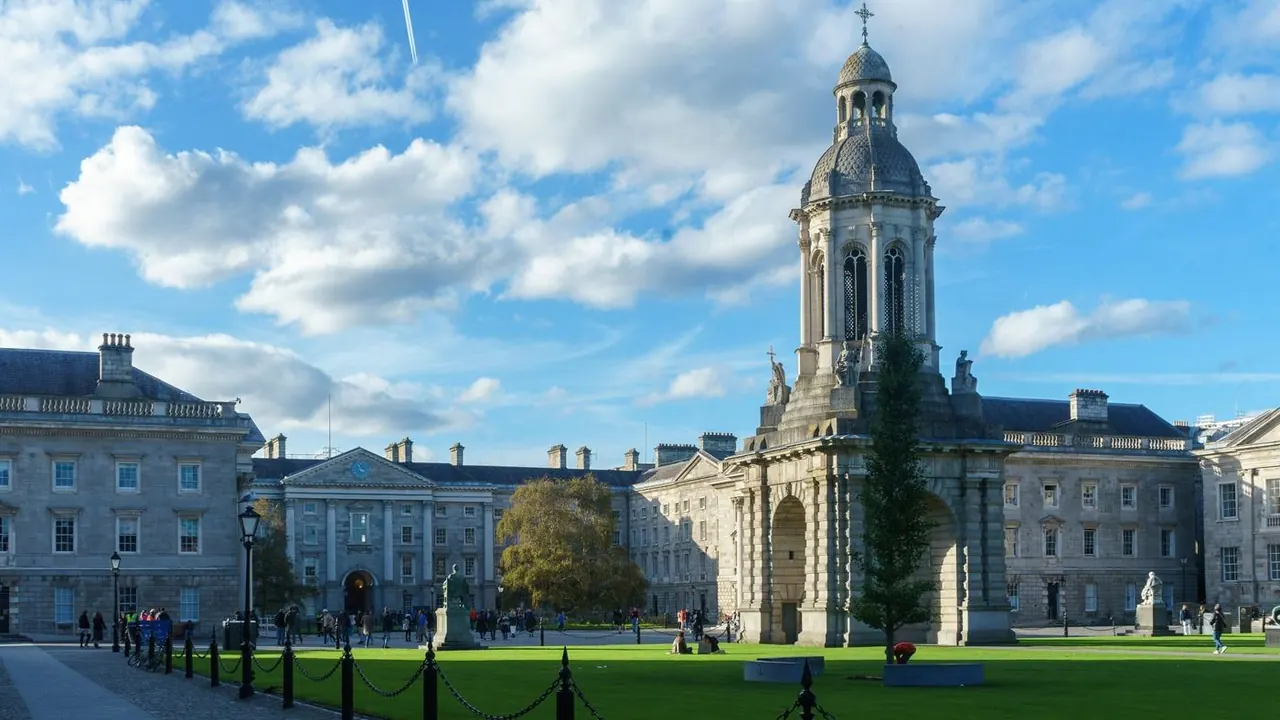
Photos: Aberdeen by Holger Uwe Schmitt, CC BY-SA 4.0, cropped; Dublin by David Kernan, CC BY 4.0, cropped.
Aberdeen or Dublin?
Our verdict in twelve categories, each scored against the same fixed benchmark cities, and the climate month by month, so you can choose for your trip.
Choose Aberdeen for
- prices
- nature and the outdoors
Aberdeen suits travellers who want the outdoors to be the point of the trip. The granite city is a calm, compact base, but its real strength lies beyond it: Royal Deeside and the Cairngorms within an hour or so, castles along the roads inland, and a coast of cliffs, seals and dolphins. It is also easier on the wallet, mainly because its hotels are aimed at business guests and are not priced for weekend visitors.
Choose Dublin for
- live music and the arts
- nightlife
- culture and sights
Choose Dublin for a city that keeps you busy after dark and gives you plenty to do indoors when it rains. Its museums, libraries and medieval cathedrals are a short walk apart, the Abbey and the Gate give it a theatre life Aberdeen cannot match, and its pubs, with their traditional music sessions, are what most visitors remember of the evenings. A room costs a great deal, but you get far more city for it.
Scoreboard
Twelve categories on one fixed scale from 0 to 100. The shaded stretch is the gap between the two.
Your match
Pick a travel style or drag the sliders, and both match scores follow your weighting.
Wins on prices and nature and the outdoors with your weighting.
Wins on live music and the arts and nightlife with your weighting.
What matters to you?
Category by category
What the scores mean for a trip.
Beaches & swimming
Neither is a beach city, but Dublin's shore is more fun to use. The DART runs to sandy strands such as Dollymount and Portmarnock, the water is a couple of degrees less cold than the North Sea, and visitors can join the locals' year-round swims at the Forty Foot and Seapoint.
Aberdeen's beach begins right at the edge of the centre, and the dunes at Balmedie are wide and empty. The wind and the sea make them places for a brisk walk rather than a swim.
Food & drink
Both cities cook with good produce from cold seas and green pasture, and neither is a reason to travel. Dublin offers more, with modern bistros in Dublin 2 and Dublin 8, a wider international range and the slow-poured pint of stout, which is a real local pleasure.
Aberdeen's food is plainer and more local: the buttery at breakfast, Angus beef, and fish and chips down the coast at Stonehaven. Whisky is the common thread, with Speyside malt on every Aberdeen bar shelf and Irish whiskey distilleries and tasting bars in Dublin.
Culture & sights
Dublin has more to see, and more depth. There are the Book of Kells and the Long Room at Trinity, the free national museums, the Chester Beatty Library, two medieval cathedrals and Kilmainham Gaol, all set among Georgian squares and a literary history that runs from Joyce to Wilde.
Aberdeen has less to offer but a strong character of its own. Its granite gives the centre a striking unity, Marischal College is a real spectacle, and Old Aberdeen with King's College and St Machar's is a pleasure to wander. The museums are modest, though, and two or three days covers it.
Nightlife
Both are pub cities, but Dublin goes out on a different scale. Its old pubs with snugs and coal fires, the late bars and younger crowds on Camden and Wexford Streets and its busy weekends make the evenings worth planning a trip around, even though the clubs close early.
Aberdeen's nights depend on its students. They gather on Belmont Street and the lanes off Union Street, where pubs have good whisky lists and real ale. Midweek and outside term, the centre goes quiet early.
Nature & outdoors
Aberdeen has the wilder, higher country. Royal Deeside and the Cairngorms bring real mountain plateau, Lochnagar, pine forest around Braemar and skiing in winter. The coast adds seabird cliffs, the seals at the Ythan estuary and dolphins off Torry Battery.
Dublin's outdoors is gentler but closer at hand. There are deer in Phoenix Park, the Howth cliff path is a train ride away, and the rounded Wicklow hills and Glendalough are within an hour. It suits walkers without a car better, but it is not high country.
Day trips
Both make excellent bases for days out, and the difference is in what you go to see. From Aberdeen it is castles and whisky: Dunnottar on its sea stack, Crathes, Craigievar and Fyvie inland, Balmoral up Deeside and the Speyside distilleries.
From Dublin the sights are far older. The passage tombs of Newgrange and Knowth lie in the Boyne Valley, and there are the monastic ruins at Glendalough, medieval Kilkenny, and Belfast by train. Around both cities, a car or a tour makes the rural sites far easier to reach.
Good for families
Dublin gives children more to do. The zoo inside Phoenix Park, Dublinia's Viking displays, the free natural history museum and a theme park half an hour away can fill a rainy week, and pubs welcome families at lunchtime.
Aberdeen is calm and safe but has less built for children: the Science Centre, the funfair on the beach esplanade and the glasshouses in Duthie Park, plus the chance of seeing dolphins at the harbour mouth. In both cities the weather means keeping an indoor plan ready.
Getting around
Both centres are compact enough to walk, but Dublin's transport reaches further. Two Luas tram lines and the DART along the bay make Howth, Dalkey and the beaches easy to reach without a car, all on one card, though the buses get slow at rush hour.
Aberdeen has buses but no trams. Trains reach Stonehaven, Dundee and Inverness, but the castles, Deeside and the distilleries really need a hire car.
Shopping & style
Dublin is the better place to shop, though not a great one. Grafton Street with its long-established department store, the Powerscourt Townhouse arcade and the design shops around Drury Street give it a proper browsing centre, and Aran knitwear, linen and crystal make good things to take home.
Aberdeen's shopping is mainly chain stores in two indoor centres and on Union Street, with a few independents in Rosemount and around Belmont Street. Its best buys, knitwear, tartan and whisky, are often found out in Deeside or at the distilleries.
Affordability
Neither city is cheap, but Aberdeen is far kinder on the room bill. Its hotels cater to business travellers, so weekend and summer rates are often reasonable. Dublin's central hotels are among the dearest in Europe and cost even more when there is a big match or concert.
Meals and drinks are expensive in both, and both have free museums. In Aberdeen the extra cost is a hire car for the countryside. In Dublin, the usual way to save is to stay further out along a DART or Luas line.
Live music & performing arts
Dublin has a home-grown stage life that Aberdeen lacks. The Abbey and the Gate stage their own productions, the National Concert Hall is home to the national symphony orchestra, and traditional sessions run in pubs almost every night.
Aberdeen's His Majesty's Theatre and Music Hall are handsome buildings with a decent programme, but most of it is touring productions and visiting orchestras. Opera is limited in both: short seasons in Dublin, and visits from the national company in Aberdeen.
Wellness & relaxation
Neither city is built for pampering, and hotel spas are the main option in both. The difference is in the setting. In Aberdeen, calm comes from the unhurried pace and the country-house hotels out in Deeside, while Dublin has the cold sea dip at the Forty Foot or Seapoint, often followed by a sauna on the seafront, and quiet walks in its Georgian squares.
When should you go?
Pick your month. The climate figures are measured averages, not a forecast.
Aberdeen in July
Dublin in July
Daytime high, °C
Rainfall in the month, mm
Temperature and rainfall are climate normals, averaged over the years shown. Aberdeen: 1991-2020 normals, Aberdeen / Dyce (9 km from centre). Dublin: 1991-2020 normals, Dublin Airport (9.3 km from centre).
Neither city ever gets hot, so what matters is how mild and how dry it is. Both are at their most pleasant from late May to early September, when Aberdeen reaches about 18°C on a good afternoon and Dublin is a little warmer at around 20°C. May is the sunniest month in both and often the best for long walks. Dublin is also milder through the winter, while Aberdeen's January afternoons stay in low single figures and the days are short.
The autumn rain is heavier in Aberdeen, where October is the wettest month at about 101mm. Dublin's wettest month comes a month later and brings less rain. The sea stays cold all year on both coasts. It peaks at around 15°C off Dublin in late summer and is colder still in the North Sea, so neither city is a swimming destination in any month.
Which traveller are you?
For a culture and arts trip, Dublin is the clear pick. The Book of Kells, the Chester Beatty Library and Kilmainham Gaol fill the days, and the Abbey, the Gate and traditional sessions fill the evenings. Aberdeen's stage mostly hosts visiting companies.
On a trip on a tight budget, Aberdeen goes further. Its business hotels are often reasonable at weekends and in summer, while Dublin's rooms are among Europe's priciest. Both have free museums, and Aberdeen's hills and coast cost nothing to walk.
For an outdoors trip, Aberdeen has the edge. The Cairngorms offer real high-plateau walking and winter skiing at Glenshee and the Lecht, which Dublin's gentler Wicklow hills cannot match, and you can watch for dolphins from the harbour mouth.
Before you go
| Measure | Aberdeen | Dublin |
|---|---|---|
| Official language | English | English, Irish |
| Currency | Pound Sterling (GBP) | Euro (EUR) |
| Sockets | G230 V, 50 Hz | G230 V, 50 Hz |
| Driving side | Left | Left |
| Time zone | UTC, UTC+1 in summer | UTC, UTC+1 in summer |
| Emergency number | 112 or 999 | 112 |
| Elevation | 29 m | 20 m |
| Main airport | Aberdeen International Airport (ABZ)8 km from centre29 non-stop destinations | Dublin Airport (DUB)9 km from centre200 non-stop destinations |
| Public holidays this year | 10 days | 11 days |
By the numbers
| Measure | Aberdeen | Dublin |
|---|---|---|
| City population | 200,680 | 592,713 |
| People per km² | 3,083 | 5,154 |
| Museums within 10 km | 10 | 40 |
| UNESCO World Heritage sites within 50 km | 0 | 1 |
| Swim season, months above 21 °C | None | None |
Where else could you go?
Every comparison below shares a destination with this one, so you can follow Aberdeen or Dublin somewhere new.