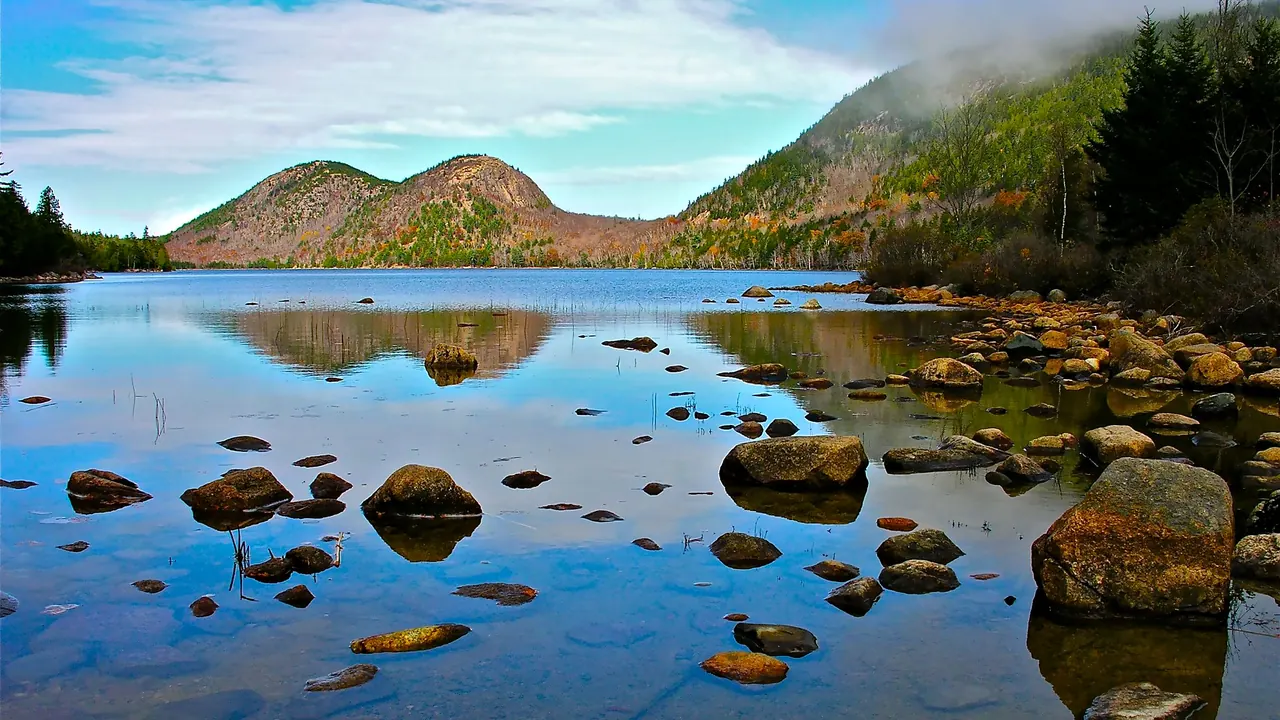
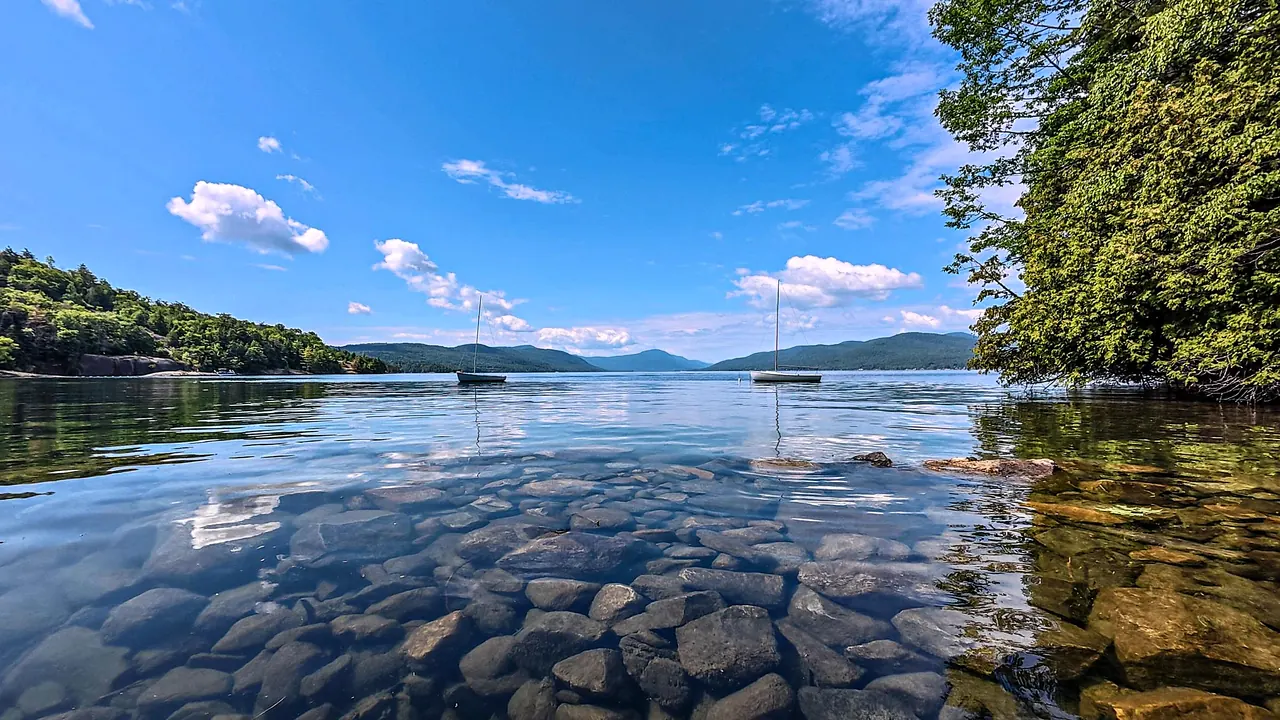
Photos: Acadia by Plh1234us, CC BY-SA 3.0, cropped; Adirondacks by Internetjessy, CC0.
Acadia or Adirondacks?
Our verdict in twelve categories, each scored against the same fixed benchmark cities, and the climate month by month, so you can choose for your trip.
Choose Acadia for
- food and drink
- getting around
Acadia suits travellers who want the sea and the mountains in the same view. On Mount Desert Island you can climb a granite summit at dawn, cycle the car-free carriage roads after breakfast and eat lobster at a harbour picnic table by evening, all without long drives. It is the better choice for a compact, coastal outdoors trip where the summer shuttle does much of the driving, as long as you accept cold sea water and little to do once the sun goes down.
Choose Adirondacks for
- beaches
- wellness
- culture and sights
The Adirondacks are a much larger territory of lakes and forest, and they reward a longer stay with a car. Families on a lake summer, swimmers who want water warm enough to stay in, and walkers drawn to the High Peaks or multi-day canoe routes will find more here. The region also has more history to visit, better day trips to Saratoga Springs, Vermont and even Montreal, and a proper winter season of skiing, which Acadia cannot offer.
Scoreboard
Twelve categories on one fixed scale from 0 to 100. The shaded stretch is the gap between the two.
Your match
Pick a travel style or drag the sliders, and both match scores follow your weighting.
Wins on food and drink and getting around with your weighting.
Wins on beaches and wellness with your weighting.
What matters to you?
Category by category
What the scores mean for a trip.
Beaches & swimming
Neither is a sea-beach destination, but the Adirondacks are far better for swimming. Acadia's one real ocean beach, Sand Beach, is for walking and sitting on the rocks, and the reliable swim is Echo Lake on the western side of the island.
In the Adirondacks, lake life is the centre of a summer stay. Lake George has sandy public beaches and islands you can reach by boat, and Mirror Lake, the Saranac chain and Old Forge add town and campground beaches with water warm enough to stay in for hours. Acadia gives you the drama of surf on pink granite, and the Adirondacks give you docks and rafts.
Food & drink
Acadia eats better, mainly because of the sea. Steamed lobster at the working shacks around Southwest Harbor, Bernard and Trenton, clams and crab rolls, wild blueberry pie and popovers on the lawn at Jordan Pond give a trip there a clear food identity, even if the restaurant range in Bar Harbor is narrow.
Adirondack food is solid fuel after a hike: pancakes with maple syrup at diners, trout and steak in log lodges, and brewpubs. Lake Placid and Saranac Lake offer the most choice, and autumn brings cider and apples from the Champlain Valley, but nobody plans the trip around a meal.
Culture & sights
The Adirondacks have more history to seek out. Fort Ticonderoga and Fort William Henry recall the colonial wars, the Adirondack Experience museum covers guides and boatbuilders, Great Camps such as Sagamore show Gilded Age rusticity, and Lake Placid keeps its Olympic venues from 1932 and 1980. They are far apart, though, so each means a drive.
Acadia's heritage is mostly the landscape itself: Rockefeller's carriage roads with their hand-cut granite bridges, the Gilded Age cottages along Bar Harbor's Shore Path and the Abbe Museum's account of the Wabanaki. It makes a good half-day between hikes rather than a reason to come.
Nightlife
Both go quiet early, and neither is a place to go out. The difference is in the crowd. Bar Harbor's pubs and taprooms fill with hikers and cruise passengers and are winding down well before midnight, with many visitors in bed early for sunrise on Cadillac. Lake George village in summer has a strip of waterfront bars and party boats that draws a younger weekend crowd, and Lake Placid's pubs also stay lively in ski season.
Nature & outdoors
Both are superb, but in different ways. Acadia packs granite summits, glacial lakes and rocky Atlantic shore into one small island, so in a single day you can scramble the Precipice, cycle the carriage roads and take a boat out to see whales or puffins. Fog can roll in at any time.
The Adirondacks work on a far bigger scale: forty-six High Peaks including Mount Marcy, rocky summits above the treeline and canoe routes in the St Regis area where you can travel for days between lean-tos. Moose and loons replace seals, there is skiing and ice climbing in winter, and blackflies make late spring hard going.
Day trips
The Adirondacks have more variety within reach. Saratoga Springs, with its mineral springs and racecourse, and Albany's capitol are easy from Lake George, ferries cross Lake Champlain to Burlington, and Montreal is a long but feasible day from the northern lakes.
Acadia's outings stay small and maritime: mail boats to the Cranberry Isles, the granite fishing harbour of Stonington, artists' studios on Deer Isle and colonial Castine. They are charming, but there is no city within easy reach.
Good for families
Acadia suits outdoorsy families with younger children. Flat walks round Jordan Pond and along Ocean Path, tide pools at Wonderland and Ship Harbor, bike rides on the carriage roads and the park's ranger programmes fill the days easily, and Echo Lake is a gentler swim than the sea. Wet or foggy days are the weak spot, with very little to do indoors.
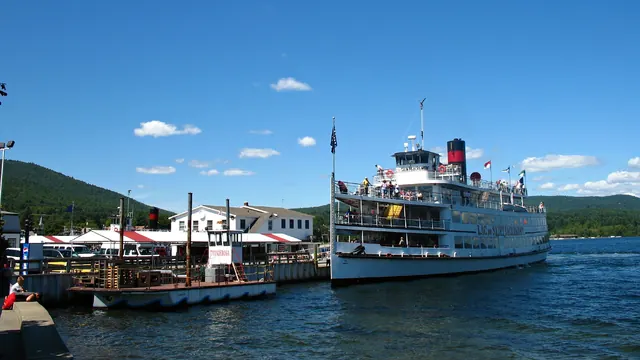
The Adirondacks give families more, built around the long tradition of a rented cabin, a dock and a shallow lake beach. Lake George and Old Forge add water parks, mini golf and paddle steamers. When it rains, the Wild Center's natural history museum in Tupper Lake is a proper indoor fallback. Older children can ride the Olympic bobsled and see the ski jumps at Lake Placid, though you should expect drives between attractions.
Getting around
Acadia is noticeably easier to move around. Distances on Mount Desert Island are short, a free summer shuttle links Bar Harbor with the campgrounds and trailheads, and cyclists can cover much of the park on the carriage roads. You still need a car for the western side, Schoodic and the mainland, and the bridge onto the island gets slow in high summer.
In the Adirondacks a car is not optional. Two-lane roads wind through forest, Lake George to Lake Placid takes more than an hour and a half, and the train along Lake Champlain and the few buses do not reach trailheads or lakes.
Shopping & style
Shopping is a sideline in both, and what differs is the craft. Acadia's best buys are pottery, woodwork and jewellery from studios around Blue Hill and Deer Isle, plus the galleries on Bar Harbor's Main Street. The Adirondacks offer rustic twig and bentwood furniture, pack baskets and balsam pillows, along with an outlet strip just south of Lake George.
Affordability
Neither is cheap in season, but the Adirondacks give you more room to save. Away from Lake Placid and the Lake George lakefront, the central and western lakes have family motels and state campgrounds, and trails and lakes cost nothing to use.
Acadia's squeeze is tighter, with scarce, high-priced rooms in Bar Harbor from July through the foliage weeks and seafood dinners that add up. Park campgrounds, motels further out and the free shuttle help, but the options are fewer.
Live music & performing arts
The Adirondacks have the broader summer programme. Chamber festivals around Lake George, a young singers' opera programme near Schroon Lake and Lake Placid's arts centre are backed by the big open-air amphitheatre at Saratoga Springs, with orchestral and ballet seasons an evening's drive away.
Acadia's offer is narrower and more intimate: chamber concerts in churches in Bar Harbor and Northeast Harbor, and Kneisel Hall's wooden concert hall in the woods at Blue Hill. In both places almost everything happens in July and August.
Wellness & relaxation
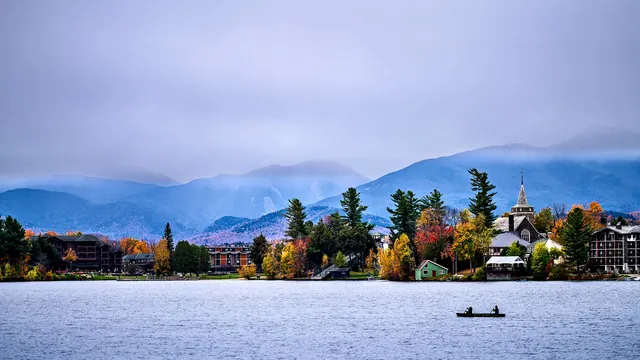
Neither has a bathing tradition, but the Adirondacks are the better place to switch off. Saranac Lake was built for rest in mountain air, grand lakeside resorts on Lake George offer spa treatments, and the mineral baths of Saratoga Springs are just south of the park.
Acadia's calm comes from its harbour villages, porches facing the water and foggy spruce mornings, best found in Northeast and Southwest Harbor or on the Schoodic Peninsula. Treatments are limited to a few places in Bar Harbor.
When should you go?
Pick your month. The climate figures are measured averages, not a forecast.
Acadia in July
Adirondacks in July
Daytime high, °C
Rainfall in the month, mm
Where the figures come from
Acadia has no rain gauge within 25 km of the centre, so its rainfall comes from a gridded climate dataset read at the destination rather than from a gauge further away.
Adirondacks has no rain gauge within 25 km of the centre, so its rainfall comes from a gridded climate dataset read at the destination rather than from a gauge further away.
Temperature and rainfall are climate normals, averaged over the years shown. Acadia: 2006-2020 (rainfall 1991-2020) normals, Bar Harbor / Trenton (14.7 km from centre). Adirondacks: 2006-2020 (rainfall 1991-2020) normals, Harrietstown (20.1 km from centre).
Both destinations come into their own in July and August, when daytime highs reach about 24°C on Mount Desert Island and 25°C in the Adirondacks. In Acadia these are also the driest months, but the Gulf of Maine barely reaches 13°C, so swimmers head for Echo Lake instead. The Adirondack lakes are at their warmest then, though high summer is the wettest stretch of its year, with frequent showers. June and September are mild and good for hiking in both places.
Autumn brings the foliage, from late September in the Adirondacks and in early to mid October in Acadia, where the rain sets in heavily from October and peaks at around 160mm a month into early winter. Winter is harsher inland: Adirondack highs sit near -3°C in January and February, which is cold for walking around but right for skiing. Acadia's winter hovers around freezing and is damp rather than snowy-sporting.
Which traveller are you?
On a beach and sun trip, the Adirondacks win easily. Lake George and the Saranac and Fulton chains have sandy town beaches and water that warms to swimming temperature in summer, while Acadia's Atlantic stays too cold for more than a brief paddle.
For an outdoors trip, Acadia suits those who want variety close at hand: sea cliffs, iron-rung scrambles, carriage-road cycling and kayaking with seals, all on one small island. The Adirondacks suit walkers and paddlers who want bigger peaks and multi-day wilderness routes.
On a family trip with children, the Adirondacks give more to fill the days: calm lake beaches, cabins with docks, water parks, the Wild Center's treetop walkway and Olympic bobsled rides. Acadia's tide pools and ranger programmes are lovely but have little backup for foggy days.
Before you go
| Measure | Acadia | Adirondacks |
|---|---|---|
| Currency | US Dollar (USD) | US Dollar (USD) |
| Sockets | AB120 V, 60 Hz | AB120 V, 60 Hz |
| Driving side | Right | Right |
| Time zone | UTC-5, UTC-4 in summer | UTC-5, UTC-4 in summer |
| Emergency number | 911 | 911 |
| Main airport | Hancock County-Bar Harbor Airport (BHB) | Albany International Airport (ALB)26 non-stop destinations |
| Public holidays this year | 13 days | 13 days |
By the numbers
| Measure | Acadia | Adirondacks |
|---|---|---|
| Swim season, months above 21 °C | None | - |
Where else could you go?
Every comparison below shares a destination with this one, so you can follow Acadia or Adirondacks somewhere new.
- Catskillsvs Adirondacks
- Cape Codvs Acadia
- Nantucketvs Acadia
- Martha's Vineyardvs Acadia
- Poconosvs Adirondacks
- The Hamptonsvs Adirondacks