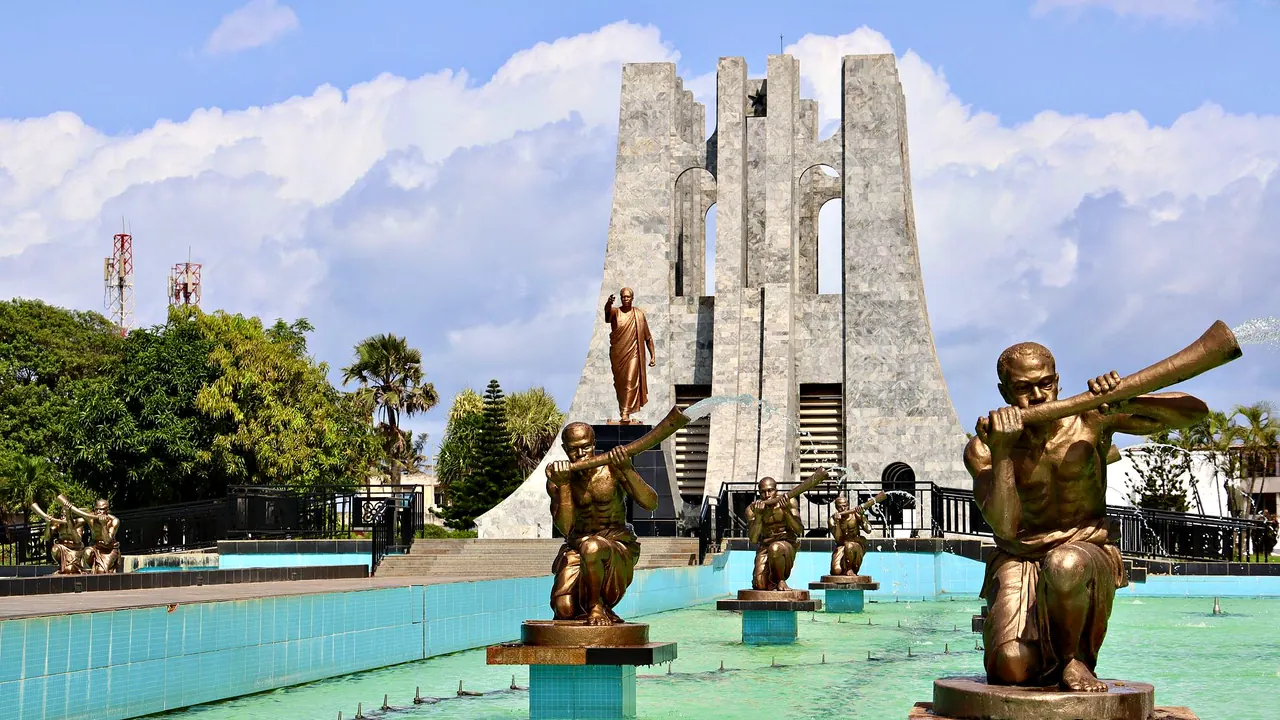
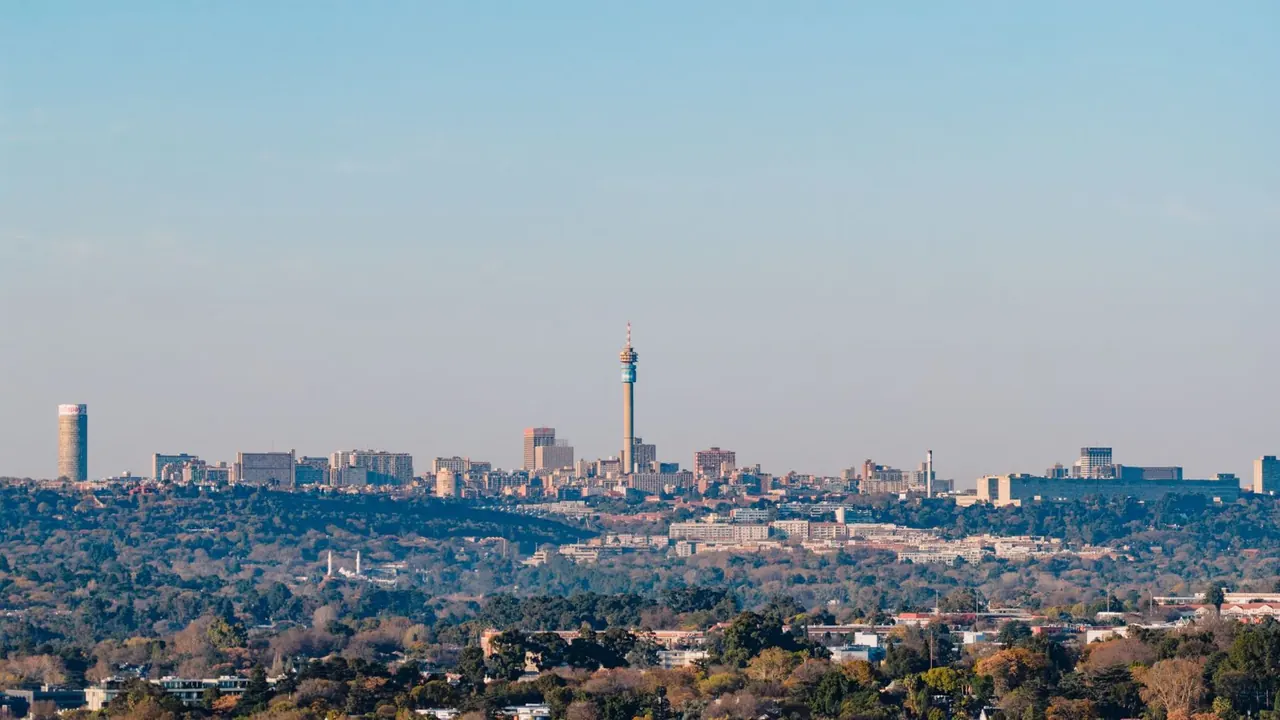
Photos: Accra by Ana Kenk, Pexels License; Johannesburg by K, Pexels License.
Accra or Johannesburg?
Our verdict in twelve categories, each scored against the same fixed benchmark cities, and the climate month by month, so you can choose for your trip.
Choose Accra for
- beaches
- getting around
Accra suits travellers who want West Africa at street level: warm sea air, Ghanaian cooking from roadside stalls and chop bars, highlife and Afrobeats, and a coast lined with fishing quarters and old forts. It is the one of the two where a beach day is possible, and in December, when the diaspora comes home, the whole city turns into a month of parties and concerts. Come for the atmosphere and the people rather than for a long list of sights.
Choose Johannesburg for
- day trips
- nature and the outdoors
- culture and sights
Johannesburg is the better choice for a trip built on history and the land around it. The Apartheid Museum, Constitution Hill and Soweto give it far more depth as a place to understand, and Pretoria, the Cradle of Humankind and game reserves such as Pilanesberg are all within reach. It also stretches a budget further and has more for children, though almost everything here is reached by car.
Scoreboard
Twelve categories on one fixed scale from 0 to 100. The shaded stretch is the gap between the two.
Your match
Pick a travel style or drag the sliders, and both match scores follow your weighting.
Wins on beaches and getting around with your weighting.
Wins on day trips and nature and the outdoors with your weighting.
What matters to you?
Category by category
What the scores mean for a trip.
Beaches & swimming
Accra at least has a coast. The sea stays warm all year, but heavy Atlantic surf and rip currents make the city beaches, Labadi especially, better for drumming, horse rides and weekend crowds than for swimming. The good sand is out of town, at Bojo across its short canoe crossing, at Kokrobite, or at the quiet Ada estuary.
Johannesburg has nothing of the kind. It lies on the inland plateau, so swimming means a hotel or garden pool, or the dams around Hartbeespoort, and the sea is a separate trip by air.
Food & drink
Both cities eat well, but in different ways. Accra goes deep into a single cuisine: fufu and banku with soups, waakye at breakfast, jollof, and kelewele from street-corner stalls in the evening, mostly eaten at chop bars and from vendors in Osu and Jamestown. Beyond Ghanaian and Lebanese cooking there is not much choice.
Johannesburg offers more range. Weekend shisa nyama grills in Soweto, Indian cooking in Fordsburg, Portuguese peri-peri, and polished dining with Cape wines in Parkhurst and Rosebank all sit side by side. The trade-off is that you drive between suburbs to eat, where in Accra you graze on foot.
Culture & sights
Johannesburg gives a visitor much more to see. The Apartheid Museum alone takes half a day, and Constitution Hill and Vilakazi Street in Soweto put a modern struggle in the places where it happened. The Origins Centre and the inner city's Art Deco towers add more, though the sites are scattered and there is no old town.
Accra's story is independence and the coast before it: the Nkrumah mausoleum, Independence Square and the forts and lighthouse of Jamestown. Teshie's painted fantasy coffins are memorably its own, but the museums are thin and most visitors have seen enough in a few days.
Nightlife
The two cities go out with the same energy, and amapiano plays in both. Accra's nights move from roadside grills to Osu rooftops to Afrobeats and hiplife clubs, with beach parties at Labadi and Kokrobite. It reaches its peak in December, when returning Ghanaians turn the month into a long festival.
Johannesburg's scene is steadier through the year and built on house music. Its signature is the weekend afternoon session at a Soweto shisa nyama that runs into the night, alongside Braamfontein rooftops and Melville's bars. Rides between districts need more planning here than in Accra.
Nature & outdoors
Johannesburg is the stronger base for the outdoors. The city is heavily wooded, with black eagles nesting at the Walter Sisulu Botanical Garden. The Magaliesberg is about an hour away for hiking, biking and ballooning, and Pilanesberg's crater reserve offers lions, elephants and rhino within a day trip.
Accra is flat, hot and built up. Its escapes are gentler: Achimota Forest, the cooler ridge at Aburi, baboons and antelope on the Shai Hills savannah, and boat trips on Lake Volta. Kakum's rainforest canopy walk is too far for a day trip.
Day trips
Johannesburg's outings are easier and better. Pretoria is an hour away on the Gautrain, with the Union Buildings and Voortrekker Monument, and the fossil caves of the Cradle of Humankind lie about the same distance north-west. Cullinan's diamond mine and Sun City add more days out.
Accra's most important trip, to the slave-trade castles of Cape Coast and Elmina, is about three hours each way and usually needs an overnight stay. Closer in, Aburi's woodcarvers, the Krobo bead-makers and Ada Foah make pleasant but minor outings.
Good for families
Johannesburg has more that is built for children. Gold Reef City, the zoo, Sci-Bono and the lion and rhino parks on the city's edge show young children big animals without a long safari. Families still need a car for everything.
Accra welcomes children warmly but offers few attractions made for them. The rough surf limits beach play to the sand, so hotel pools do much of the work. Malaria precautions, heat and broken pavements make it harder with toddlers than with older children who enjoy markets and drumming.
Getting around
Neither city is easy without wheels, and in both most visitors use ride-hailing. Accra has no metro or tram and no rail that is useful to a visitor, so traffic shapes every day, and the trotro minibuses are confusing for a newcomer. Its small consolation is that parts of Osu and Jamestown can be walked by day, heat permitting.
Johannesburg has the Gautrain, one clean rail line linking the airport, Sandton, Rosebank, the centre and Pretoria. Beyond that it is a city of cars, and walking between districts after dark is not advised.
Shopping & style
Johannesburg is the bigger shopping city. Sandton's malls around Nelson Mandela Square hold the continent's densest cluster of luxury brands, and Rosebank's Sunday rooftop market gathers beadwork, wire art and carvings from across southern Africa. Parkhurst adds local design studios.
Accra's shopping is smaller but more personal: wax-print cloth in the crowded lanes of Makola Market, kente and drums at the Arts Centre, and the custom of having fabric made up by a tailor in a few days. Luxury shopping hardly exists there.
Affordability
Johannesburg stretches a budget further. Restaurant meals, South African wine and comfortable northern-suburb guesthouses are all good value, and the main extra costs are transport and guided tours.
Accra is cheap only if you live locally, on street food, chop bars and local beer. Hotels with reliable power and air-conditioning are expensive for the region, imported goods are dear, and prices climb in December.
Live music & performing arts
Johannesburg has the stronger stage. The Market Theatre, known for its protest plays under apartheid, still stages South African drama, and the Soweto Theatre and Joburg Theatre add more. Jazz runs back to Sophiatown, and the Joy of Jazz festival keeps that history alive.
Accra's music lives more in everyday life: highlife band nights in garden bars, drumming at Labadi, and the arena concerts of December. The ship-shaped National Theatre has irregular programmes, so Chale Wote's street performances in Jamestown are a more reliable highlight.
Wellness & relaxation
Neither city is restful, and in both the real rest is found out of town. Johannesburg does a little better: its northern suburbs have plenty of reasonably priced day spas and quiet garden guesthouses, and bush lodges and Magaliesberg retreats are close by.
Accra offers little beyond hotel spas and salons, and its heat and traffic wear people down. A night or two at a Kokrobite beach lodge or up in the cooler Aburi hills is the usual remedy.
When should you go?
Pick your month. The climate figures are measured averages, not a forecast.
Accra in July
Johannesburg in July
Daytime high, °C
Rainfall in the month, mm
Temperature and rainfall are climate normals, averaged over the years shown. Accra: 1991-2020 normals, Accra (5.9 km from centre). Johannesburg: 2005-2019 (sunshine 1991-2020, rainfall 1991-2020) normals, Johannesburg B / Roosevelt Park (7.3 km from centre).
Accra is hot all year, with highs of up to 33°C from January to April, so streets are tiring at midday and best walked early or late. The sea is warm enough for the beach in every month. The main rains come in May and June, peaking at 167mm, with a shorter wet spell in October. December to February is the driest stretch, and October to December the sunniest. July and August are a little cooler and cloudier, and the sea drops to 23°C, still fine for a swim.
Johannesburg runs the other way. Its summer, November to February, brings warm days around 27°C and afternoon thunderstorms, with the heaviest rain in December and January. From May to September the city is almost completely dry and very sunny, with highs near 19°C in June and July, mild weather for long days of sightseeing. Put simply, Accra is driest in the northern winter, and Johannesburg is dry and sunny through the northern summer.
Which traveller are you?
On a beach and sun trip, Accra is the only real option. Its Gulf of Guinea coast is warm all year, and Kokrobite and Bojo offer good beach days, while Johannesburg sits far inland with nothing but pools and dams.
For a culture and arts trip, Johannesburg gives far more. The Apartheid Museum, Constitution Hill, Soweto's memorials, the Market Theatre and a deep jazz tradition fill several days, while Accra's sights are covered in two or three.
On an outdoors trip, Johannesburg wins clearly. Hiking and ballooning in the Magaliesberg and lions and rhino at Pilanesberg are within a day's reach. Accra's outdoor options are gentler: the Aburi hills, the baboons of Shai Hills and boat trips on the Volta.
Before you go
| Measure | Accra | Johannesburg |
|---|---|---|
| Official language | English | English, Zulu, Xhosa, Afrikaans, Venda, Northern Sotho, Swazi, Tswana, Tsonga, Sesotho, Southern Ndebele, South African Sign Language |
| Currency | Ghana Cedi (GHS) | Rand (ZAR) |
| Sockets | G230 V, 50 Hz | CMN230 V, 50 Hz |
| Driving side | Right | Left |
| Time zone | UTC | UTC+2 |
| Emergency number | 999 | 112 |
| Elevation | 61 m | 1,753 m |
| Main airport | Kotoka International Airport (ACC)6 km from centre36 non-stop destinations | O.R. Tambo International Airport (JNB)22 km from centre83 non-stop destinations |
| Public holidays this year | 11 days | 13 days |
By the numbers
| Measure | Accra | Johannesburg |
|---|---|---|
| City population | 1,782,150 | 4,803,262 |
| People per km² | 10,301 | 2,922 |
| Museums within 10 km | 3 | 14 |
| UNESCO World Heritage sites within 50 km | 1 | 2 |
| Swim season, months above 21 °C | 12 months | - |
Where else could you go?
Every comparison below shares a destination with this one, so you can follow Accra or Johannesburg somewhere new.
- Durbanvs Johannesburg
- Victoria Fallsvs Johannesburg
- Livingstonevs Johannesburg
- Windhoekvs Johannesburg
- Stellenboschvs Johannesburg
- Cape Townvs Johannesburg