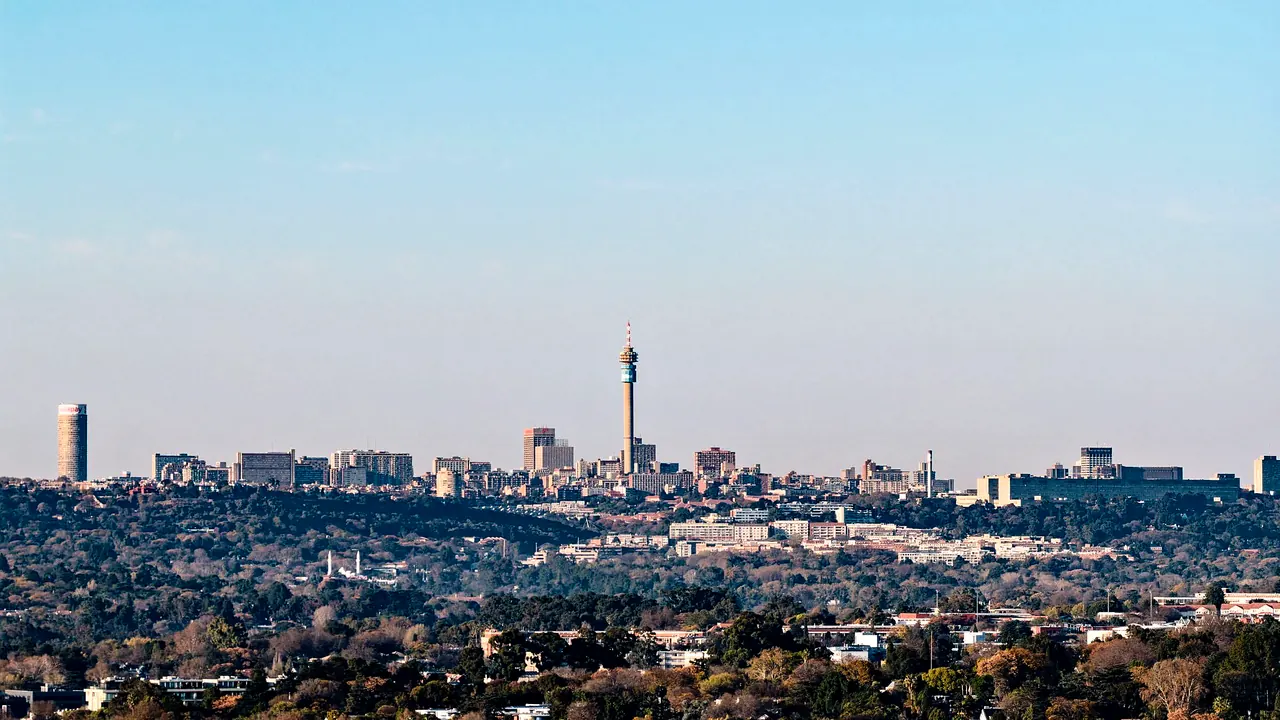
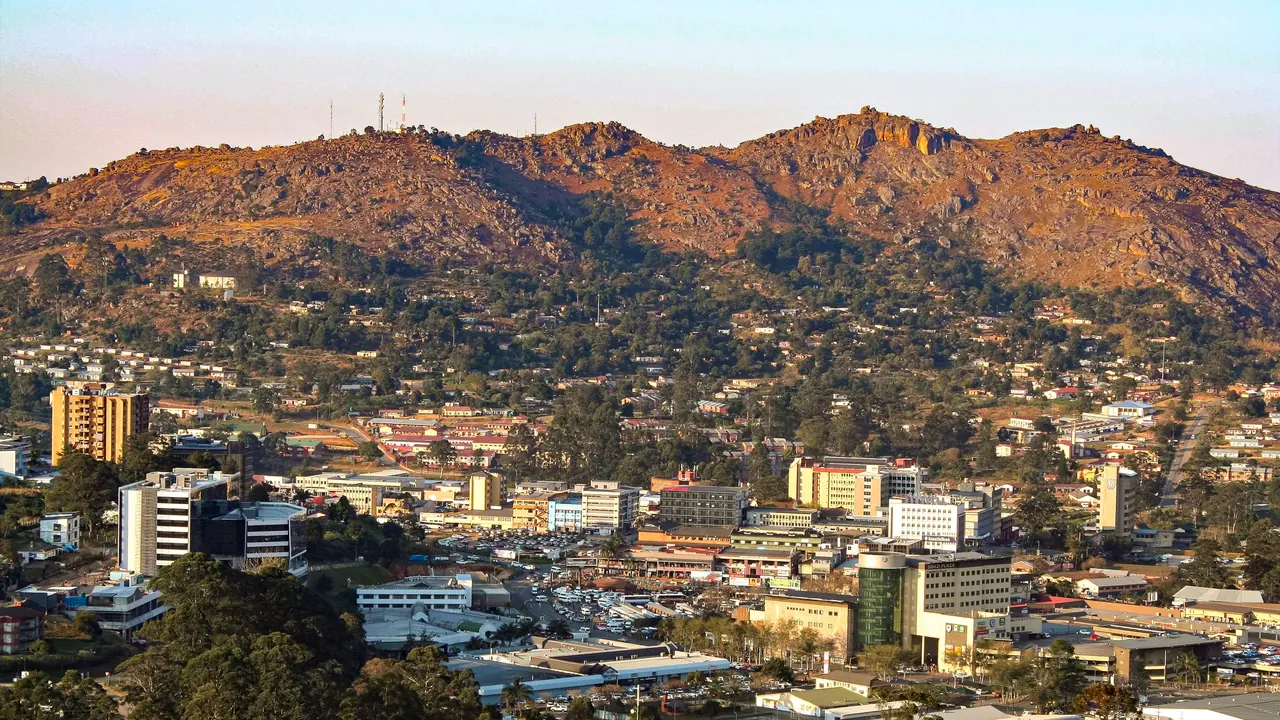
Photos: Johannesburg by K, Pexels License; Mbabane by Khaya Motsa, Pexels License.
Johannesburg or Mbabane?
Our verdict in twelve categories, each scored against the same fixed benchmark cities, and the climate month by month, so you can choose for your trip.
Choose Johannesburg for
- nightlife
- live music and the arts
- food and drink
Johannesburg suits the traveller who wants a city to get into: the Apartheid Museum, Constitution Hill and Soweto for history, shisa nyama grills and Fordsburg kitchens for food, and amapiano nights that run late. It also offers more shopping, more stage and better value for the money spent. The price is a sprawling metropolis you cross by car or Gautrain, with little to wander on foot.
Choose Mbabane for
- nature and the outdoors
- wellness
Mbabane is the better choice when the landscape is the point. Granite domes, the gorges of Malolotja, horseback rides among zebra at Mlilwane and lion country at Hlane are all close, and evenings end quietly at a valley lodge. Eat simply and expect few sights. In return you get a small, unhurried country you can cover in a few days.
Scoreboard
Twelve categories on one fixed scale from 0 to 100. The shaded stretch is the gap between the two.
Your match
Pick a travel style or drag the sliders, and both match scores follow your weighting.
Wins on nightlife and live music and the arts with your weighting.
Wins on nature and the outdoors and wellness with your weighting.
What matters to you?
Category by category
What the scores mean for a trip.
Beaches & swimming
Neither has a coast, so a beach is off the table in both, and swimming means a hotel or lodge pool. Johannesburg locals at least have the dams around Hartbeespoort for a day on the water. From Mbabane, the nearest sand is in Mozambique, which means a border crossing and really belongs to a separate stay.
Food & drink
Johannesburg is the far richer place to eat. Meat grilled to order at township butcheries, bunny chow and kotas on the street, Indian cooking in Fordsburg, Mozambican peri-peri and polished steak and fine dining in Parkhurst and Rosebank give it real range, though that range is spread across suburbs.
Mbabane is plainer. You eat mostly at lodges, along the Ezulwini road and at grill houses in town. The market is the place to try sishwala and slow-cooked greens, and the Malkerns Valley farm terraces are the closest thing to a destination meal.
Culture & sights
Johannesburg has a heavyweight story to tell, and it tells it well. The Apartheid Museum, the old prison at Constitution Hill, and the Hector Pieterson Memorial in Soweto can each take hours, and the Origins Centre and the inner city's Art Deco towers add more, even though the sites are scattered.
Mbabane itself has little to see. Its interest lies down in the Ezulwini Valley: the National Museum and Sobhuza II memorial at Lobamba and the beehive huts of Mantenga. The ancient ochre workings at Ngwenya are the oddity. Together they fill a day or two, not a week.
Nightlife
This is where the two differ most. Johannesburg has a scene with its own sound, house and amapiano, played everywhere from Sandton clubs to Braamfontein rooftops and Melville's 7th Street, and weekends run late, provided you plan your rides home.
Mbabane winds down after dinner. There are a few local bars in town and Manzini, plus casino bars on the Ezulwini hotel strip. The unlit valley roads give most lodge guests a good reason to stay in.
Nature & outdoors
Mbabane has the stronger outdoors, and you don't need to travel to reach it. Sibebe's huge granite dome rises at the edge of town, Malolotja offers the best hiking in the country, and at Mlilwane you can walk, cycle or ride among zebra and wildebeest. Hlane's lions and elephants and the rafting at Mkhaya are an easy drive further on.
Johannesburg has pleasant green corners, notably the black eagles at the Walter Sisulu Botanical Garden. Its real outdoors, though, means an hour's drive to the Magaliesberg or longer to the crater reserve of Pilanesberg.
Day trips
Johannesburg has the better spread of outings. Pretoria's Union Buildings and Voortrekker Monument are an easy Gautrain ride away, the fossil caves of the Cradle of Humankind are about an hour out, and Cullinan's diamond mine and Sun City round out the list.
From Mbabane, the outings are softer: the craft workshops and pineapple farms of the Malkerns Valley, Manzini's market, the glassworks at Ngwenya and the loop up to Piggs Peak. Barberton across the border involves paperwork, and the real draw lies in the reserves rather than the towns.
Good for families
Both work for families about equally well, but in different ways. Johannesburg has the built attractions: Gold Reef City, the zoo, Sci-Bono and lion parks on the city edge. You will be moving between them by car from a base in the northern suburbs.
Mbabane is all about animals. Zebra and warthogs wander around the Mlilwane rest camp, and Mantenga's dancers hold children's attention, but there is almost nothing else made for them. Bring what young children need, because good medical care may mean a trip to a larger centre.
Getting around
Both are hard without wheels, for different reasons. Johannesburg sprawls and is not for walking after dark, but the Gautrain gives one clean, safe link between the airport, Sandton, Rosebank and Pretoria, and ride-hailing covers the rest.
Mbabane's steep little centre can be walked. Beyond it, the kombis don't reach the lodges or reserves, so a hire car or driver is the norm. Expect winding roads, livestock on the tarmac and no night driving.
Shopping & style
Johannesburg is the serious shopping city. Sandton's luxury brands around Nelson Mandela Square, the Sunday rooftop market at Rosebank for crafts from across southern Africa, and design studios in Parkhurst and the inner city give real choice, mostly under cover and reached by car.
Mbabane is for one thing only, handmade crafts, but it does them well. Ngwenya recycled glass, animal candles, sisal baskets and soapstone are bought at the valley workshops and roadside stalls. The malls cover everyday needs and little else.
Affordability
Johannesburg stretches a budget further overall. Restaurant meals, Cape wine and comfortable northern-suburb guesthouses are all reasonably priced, though ride-hailing and guided tours add up.
Mbabane is cheap day to day, from kombi fares and market food to reserve entry. However, the hire car you will almost certainly need and lodges priced for foreign guests take a bigger share. Park rest camps and self-catering cottages are the way to keep costs down.
Live music & performing arts
Johannesburg has a working stage all year. The Market Theatre still stages new South African drama, Joburg Theatre and the casino theatres host musicals and ballet, and the jazz line running back to Sophiatown is alive in clubs and at Joy of Jazz.
Mbabane has almost no formal venues. What it has instead is the daily dancing at Mantenga and a calendar of rare events: the Umhlanga Reed Dance, the Incwala ceremony and the Bushfire festival in the Malkerns Valley. Plan around those dates, or expect quiet evenings.
Wellness & relaxation
Mbabane has the slight edge for rest, mostly because of its pace. The warm mineral pool in the Ezulwini Valley, early evenings at quiet lodges and cool highland air make a few slow days easy, though not a full spa trip.
Johannesburg is fast and business-minded. Its strength is well-priced day spas in the northern suburbs, and real quiet means leaving for a Magaliesberg or bush-lodge retreat.
When should you go?
Pick your month. The climate figures are measured averages, not a forecast.
Johannesburg in July
Mbabane in July
Daytime high, °C
Rainfall in the month, mm
Where the figures come from
Mbabane has no weather station within reach, so its figures come from a gridded climate model rather than a measured record, and read a broad area rather than one spot.
Temperature and rainfall are climate normals, averaged over the years shown. Johannesburg: 2005-2019 (sunshine 1991-2020, rainfall 1991-2020) normals, Johannesburg B / Roosevelt Park (7.3 km from centre). Mbabane: 1991-2020 normals, TerraClimate 4 km grid at the town, no weather station within 90 km.
Neither city has a beach, so what matters is rain and walking weather, and both follow the same pattern of summer rain. From May to August the skies are dry and clear, with daytime highs of about 19°C to 22°C. In Johannesburg these are also the sunniest months, good for long days of sightseeing. Around Mbabane they are the best time for hiking and game viewing. September warms up quickly and stays fairly dry in both, which makes it a good month for either. From October to March it is warmer, up to about 27°C in Johannesburg, and afternoon thunderstorms set in.
Where the two differ is in how wet that summer gets. Johannesburg's rain peaks at about 135mm in December. Mbabane is far wetter, with around 219mm in January, so its trails turn muddy just as the hillsides are at their greenest. For walking, Mbabane is much better in the dry months. Johannesburg is workable all year if you plan your days around the storms.
Which traveller are you?
On a food and nightlife trip, Johannesburg wins easily. Weekend shisa nyama sessions in Soweto roll into amapiano nights, and Melville, Braamfontein and Sandton each go out late. Mbabane offers grill houses, lodge dinners and early nights.
On an outdoors trip, choose Mbabane. Sibebe Rock is right outside town, Malolotja's gorges and waterfalls are about half an hour away, and you can walk among zebra at Mlilwane or track rhino at Mkhaya. Johannesburg's best country needs a drive.
On a culture and arts trip, Johannesburg gives far more to fill the days. The Apartheid Museum, Constitution Hill and Vilakazi Street come first, then protest-born drama at the Market Theatre and the city's jazz. Mbabane's museum and cultural village fill a day or two.
Before you go
| Measure | Johannesburg | Mbabane |
|---|---|---|
| Official language | English, Zulu, Xhosa, Afrikaans, Venda, Northern Sotho, Swazi, Tswana, Tsonga, Sesotho, Southern Ndebele, South African Sign Language | English, Swazi |
| Currency | Rand (ZAR) | Lilangeni (SZL) |
| Sockets | CMN230 V, 50 Hz | M230 V, 50 Hz |
| Driving side | Left | Left |
| Time zone | UTC+2 | UTC+2 |
| Emergency number | 112 | Police 999, ambulance 977, fire 933 |
| Elevation | 1,753 m | 1,243 m |
| Main airport | O.R. Tambo International Airport (JNB)22 km from centre83 non-stop destinations | King Mswati III International Airport (SHO)58 km from centre4 non-stop destinations |
| Public holidays this year | 13 days | 10 days |
By the numbers
| Measure | Johannesburg | Mbabane |
|---|---|---|
| Population | 4,803,262 | 76,218 |
| People per km² | 2,922 | 508 |
| Museums within 10 km | 14 | 1 |
| UNESCO World Heritage sites within 50 km | 2 | 0 |
Where else could you go?
Every comparison below shares a destination with this one, so you can follow Johannesburg or Mbabane somewhere new.
- Maputovs Mbabane
- Krugervs Mbabane
- Maseruvs Johannesburg
- Durbanvs Mbabane
- Maputovs Johannesburg
- Maseruvs Mbabane