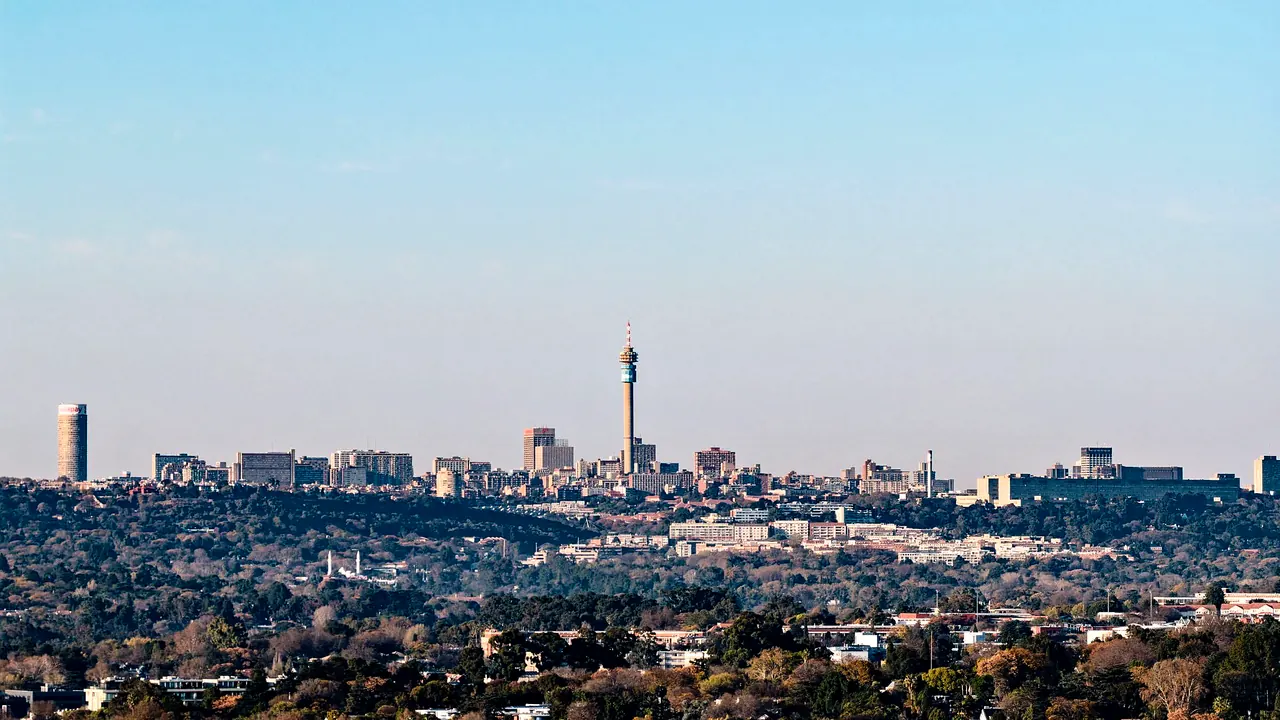
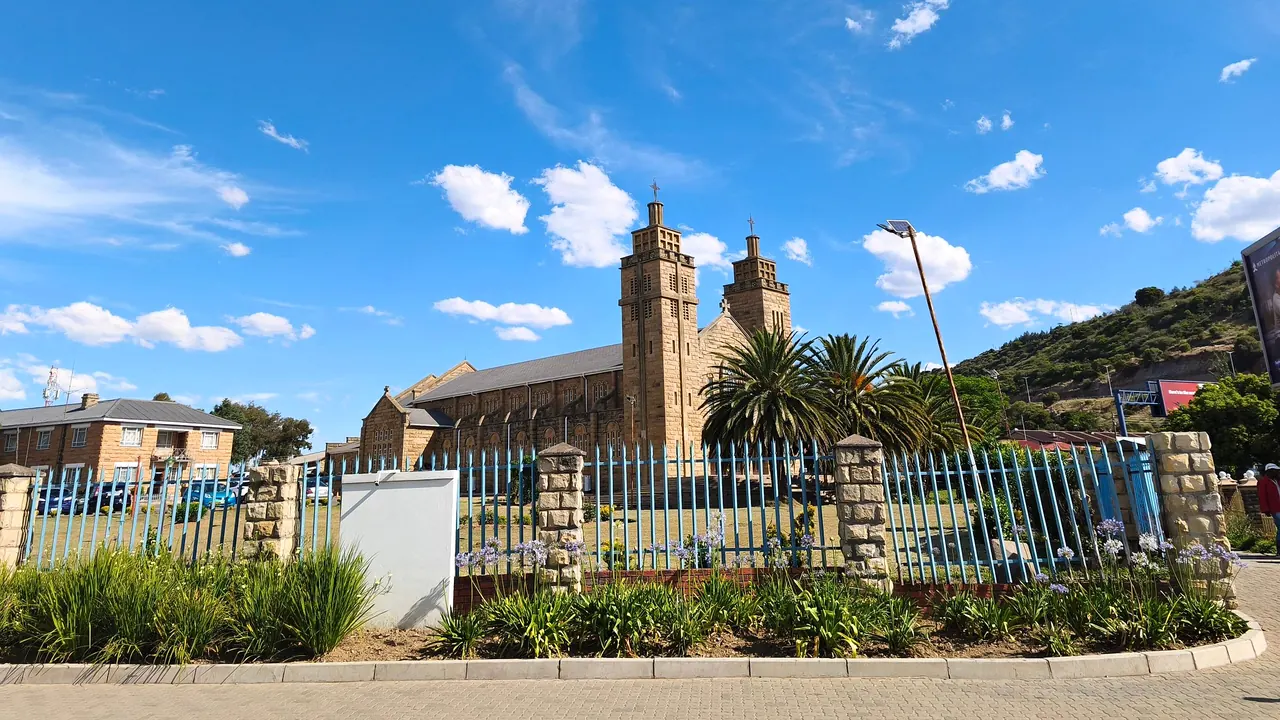
Photos: Johannesburg by K, Pexels License; Maseru by August Dominus, CC0.
Johannesburg or Maseru?
Our verdict in twelve categories, each scored against the same fixed benchmark cities, and the climate month by month, so you can choose for your trip.
Choose Johannesburg for
- culture and sights
- nightlife
- live music and the arts
Johannesburg is the better choice for most city trips. It has the apartheid history told at the Apartheid Museum, Constitution Hill and Soweto, a food scene that runs from shisa nyama grills to fine dining in the northern suburbs, late nights to amapiano and house, and malls and markets for serious shopping. It suits travellers who want a big African city with plenty to fill several days, and who don't mind going everywhere by car or ride-hailing.
Choose Maseru for
- getting around
- nature and the outdoors
Maseru is for people who want Lesotho itself rather than a city. The town is done in a morning, but within an hour or two you reach Thaba Bosiu, the mission town of Morija, the weavers of Teyateyaneng and the pony-trekking country around Malealea. Choose it if you want sandstone mesas, mountain trails and Basotho crafts, and you're happy with plain food and quiet evenings.
Scoreboard
Twelve categories on one fixed scale from 0 to 100. The shaded stretch is the gap between the two.
Your match
Pick a travel style or drag the sliders, and both match scores follow your weighting.
Wins on culture and sights and nightlife with your weighting.
Wins on getting around and nature and the outdoors with your weighting.
What matters to you?
Category by category
What the scores mean for a trip.
Beaches & swimming
Neither city is anywhere near the coast. Both sit high on the inland plateau, and you'd need a flight or a full day's drive to reach the sea. In both, swimming means a hotel pool.
There is one small difference. People in Johannesburg go out to the dams around Hartbeespoort for time on the water, while the rivers and reservoirs around Maseru aren't used for swimming at all.
Food & drink
Johannesburg is the place to travel for food. It has weekend shisa nyama grills in Soweto, bunny chow and kotas on the street, Indian and Middle Eastern kitchens in Fordsburg and Mozambican peri-peri prawns. Parkhurst, Rosebank and Sandton add steakhouses, Cape wines and fine dining.
Maseru shares the basics, maize porridge with chakalaka and grilled meat, but eating there is mostly about getting fed. You'll find canteens, stalls by the taxi ranks, hotel dining rooms and chain restaurants, with no café culture and no local wine. Homebrewed sorghum beer is a curiosity, not a reason to come.
Culture & sights
Johannesburg's sights tell some of the most important history of the twentieth century. The Apartheid Museum, the old prison at Constitution Hill, the Hector Pieterson Memorial and the Mandela and Tutu houses on Vilakazi Street can easily fill two full days, and the Origins Centre and the Art Deco buildings downtown add more. The sights are scattered, but there are plenty of them.
Maseru has the Basotho Hat craft centre, the cathedral and a few colonial buildings along Kingsway, and that's about it. To learn Lesotho's story you have to leave town for Moshoeshoe I's fortress at Thaba Bosiu and the museum at Morija.
Nightlife
Johannesburg's nightlife is one of the best reasons to go. South African house and amapiano fill clubs from Sandton to Soweto, the shisa nyama sessions run from the afternoon into the night, and Braamfontein's rooftops and Melville's 7th Street each draw their own crowd. You'll need to arrange rides between areas, but there's a lot to choose from.
Maseru has a few bars and weekend clubs around the centre and the shopping districts, playing famo and amapiano. Fridays and Saturdays have some life, but most visitors end the day at their hotel.
Nature & outdoors
These two are fairly even, and the difference is what you get. From Maseru, the scenery starts as soon as you leave town: sandstone mesas, the Thaba Bosiu plateau, pony trekking on Basotho ponies through the gorges of Malealea, and the Maletsunyane Falls at Semonkong. The Maluti Mountains rise to the east, with snow on the peaks in winter.
Johannesburg's outdoors is mostly about wildlife and gentle hills. There are walks in the Walter Sisulu Botanical Garden, where black eagles nest, hiking and ballooning in the Magaliesberg, and the lions, elephants and rhino of Pilanesberg about two and a half hours away.
Day trips
Johannesburg has the stronger list of day trips. Pretoria, an easy ride on the Gautrain, has the Union Buildings and jacaranda streets. The Cradle of Humankind, with its Sterkfontein Caves, is a World Heritage Site, and Cullinan's diamond mine and Sun City are further options.
Maseru's outings are fewer and smaller, though they all say something about Lesotho. There are royal graves on Thaba Bosiu, dinosaur footprints near Morija, mohair weavers at Teyateyaneng and people still living in the Ha Kome cave houses.
Good for families
Johannesburg gives children far more to do. There's Gold Reef City's theme park built around an old mine, the zoo, Sci-Bono and lion and rhino parks where small children can see big animals without a long safari. Families still drive everywhere, and usually stay in the northern suburbs.
Maseru has no zoo, theme park or aquarium, so you fall back on hotel pools and shopping centres. Older children might enjoy pony rides and the cultural village at Thaba Bosiu, but you'll need a car to get there.
Getting around
Neither city is easy without a car, but Maseru is the more manageable. Its centre along Kingsway is small enough to walk in daylight, and shared taxis cross town all day, though they're confusing at first. Beyond the town, slow mountain roads and border queues make a hired car or a driver worth having.
Johannesburg spreads across a huge area. The Gautrain is a clean, safe line from the airport through Sandton and Rosebank to Pretoria, but most other journeys mean ride-hailing or a hired car. Walking is limited to areas like Melville or Braamfontein, in daylight.
Shopping & style
Johannesburg is a real shopping destination. Sandton's malls around Nelson Mandela Square carry international luxury brands, Rosebank's Sunday rooftop market sells beadwork and wire art from across southern Africa, and Parkhurst and the converted warehouses downtown have local designers. Nearly all of it is done mall to mall by car.
Maseru is worth it for one thing: Basotho crafts bought close to where they're made. You'll find grass hats and the patterned wool blankets at the Basotho Hat, and mohair tapestries from the weavers in Teyateyaneng. Otherwise its malls hold South African chain stores.
Affordability
Both are good value for foreign visitors, but the money goes in different places. In Johannesburg, meals, wine and comfortable guesthouses are cheap for what you get, and it's the constant rides, the guided tours and staying in Sandton that add up.
In Maseru, daily life costs very little, from canteen meals to shared taxis and sights. Rooms are the expense: the comfortable hotels are few and aimed at business visitors. Mission lodges and guesthouses are the cheaper option if you're fine with simple rooms.
Live music & performing arts
Johannesburg has a proper stage scene. The Market Theatre in Newtown, known for its protest plays under apartheid, still puts on South African drama, and the Soweto Theatre and Joburg Theatre add plays, musicals and ballet. Jazz rooted in Sophiatown, the Joy of Jazz festival and the Johannesburg Philharmonic mean there's usually something on.
Maseru has no theatre programme or orchestra to speak of. Its music is famo, played on accordion and heard in bars and taxis. To see traditional dance, go to Thaba Bosiu or the Morija festival.
Wellness & relaxation
Neither city is a place to unwind. Johannesburg at least has plenty of day spas and hotel spas in the leafy northern suburbs, with treatments at fair prices, and quiet garden guesthouses to go back to.
Maseru has a few hotel spas and gyms, and the traffic noise doesn't help. For real rest, people from both cities leave town. From Johannesburg they head to the bush lodges and the Magaliesberg, and from Maseru to the quiet mountain lodges deeper in Lesotho.
When should you go?
Pick your month. The climate figures are measured averages, not a forecast.
Johannesburg in July
Maseru in July
Daytime high, °C
Rainfall in the month, mm
Where the figures come from
Maseru's temperatures are measured 68 km from the centre, at Ficksburg.
Maseru has no rain gauge within 25 km of the centre, so its rainfall comes from a gridded climate dataset read at the destination rather than from a gauge further away.
Temperature and rainfall are climate normals, averaged over the years shown. Johannesburg: 2005-2019 (sunshine 1991-2020, rainfall 1991-2020) normals, Johannesburg B / Roosevelt Park (7.3 km from centre). Maseru: 1998-2020 (rainfall 1991-2020) normals, Ficksburg (67.7 km from centre).
The two cities share a highland climate, so their year follows the same pattern. Summer, from November to March, is warm and green, with afternoon thunderstorms. Johannesburg's wettest months, December and January, bring about 135mm, while Maseru gets noticeably less rain and runs a little warmer, up to about 29°C at midsummer. Neither has a beach, so the summer heat is for the pool and for hiking in the morning before the storms build.
From May to August both turn dry and bright. Daytime highs are around 21-22°C in May and August and drop to 18-19°C in June and July. That is pleasant for walking between sights and for game viewing outside Johannesburg, though the nights are cold, and frosty around Maseru. Johannesburg's July is almost rainless and August is its sunniest month. April and September are warm and still dry in either city, and October stays good before the heaviest rain arrives.
Which traveller are you?
On a culture and arts trip, choose Johannesburg. The Apartheid Museum, Constitution Hill, Vilakazi Street in Soweto, the Market Theatre and a jazz scene going back to Sophiatown give you days of material. Maseru's town sights take one morning.
For a food and nightlife trip, Johannesburg is far ahead. It has shisa nyama afternoons that turn into dance parties, Fordsburg's Indian cooking, the restaurants of Parkhurst and Rosebank, and clubs playing amapiano late into the weekend. Maseru has hearty papa and a few local bars.
On an outdoors trip, Maseru is better for mountains. Thaba Bosiu, the Roma hills, pony trekking at Malealea and the Maletsunyane Falls all lie within a drive. Johannesburg is better if you want wildlife, with the Magaliesberg and the lions and rhino of Pilanesberg in reach.
Before you go
| Measure | Johannesburg | Maseru |
|---|---|---|
| Official language | English, Zulu, Xhosa, Afrikaans, Venda, Northern Sotho, Swazi, Tswana, Tsonga, Sesotho, Southern Ndebele, South African Sign Language | English, Sesotho |
| Currency | Rand (ZAR) | Loti (LSL) |
| Sockets | CMN230 V, 50 Hz | M220 V, 50 Hz |
| Driving side | Left | Left |
| Time zone | UTC+2 | UTC+2 |
| Emergency number | 112 | Police 112, ambulance 114, fire 115 |
| Elevation | 1,753 m | 1,600 m |
| Main airport | O.R. Tambo International Airport (JNB)22 km from centre83 non-stop destinations | Moshoeshoe I International Airport (MSU)18 km from centre1 non-stop destination |
| Public holidays this year | 13 days | 11 days |
By the numbers
| Measure | Johannesburg | Maseru |
|---|---|---|
| Population | 4,803,262 | 343,541 |
| People per km² | 2,922 | 2,489 |
| Museums within 10 km | 14 | 0 |
| UNESCO World Heritage sites within 50 km | 2 | 0 |
Where else could you go?
Every comparison below shares a destination with this one, so you can follow Johannesburg or Maseru somewhere new.
- Mbabanevs Johannesburg
- Durbanvs Maseru
- Maputovs Johannesburg
- Mbabanevs Maseru
- Durbanvs Johannesburg
- Victoria Fallsvs Johannesburg