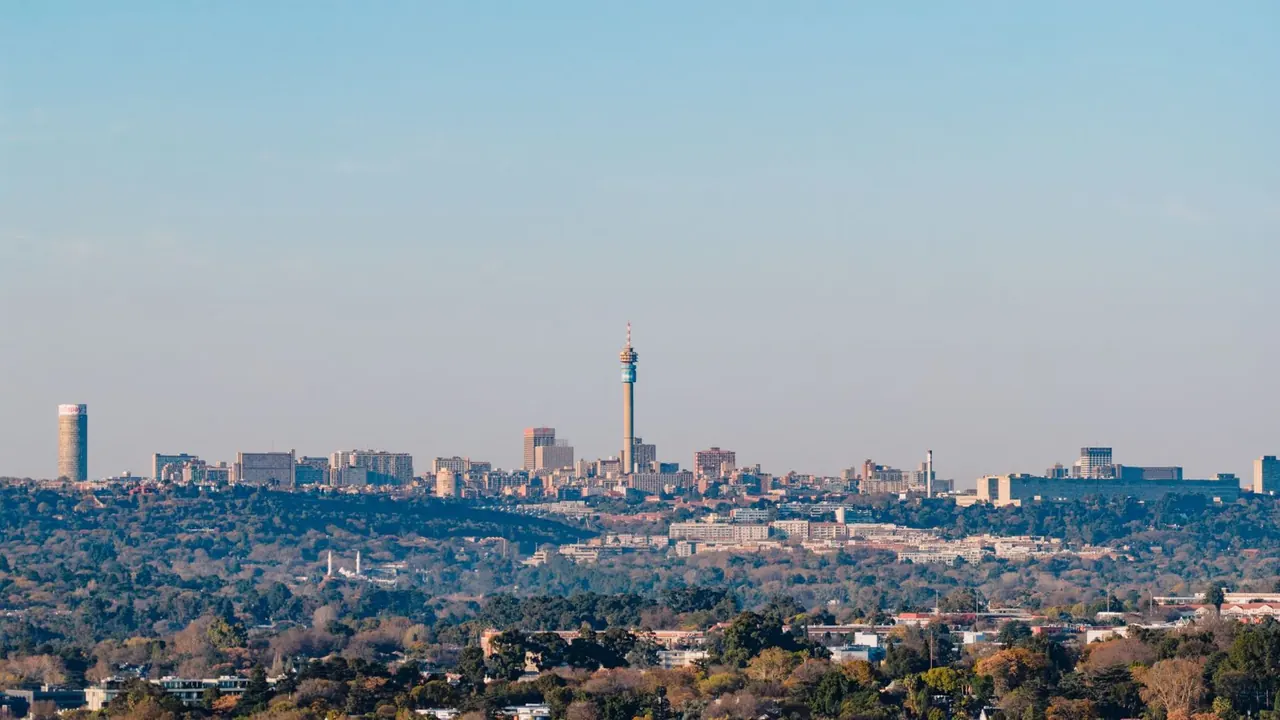
Photos: Johannesburg by K, Pexels License.
Durban or Johannesburg?
Our verdict in twelve categories, each scored against the same fixed benchmark cities, and the climate month by month, so you can choose for your trip.
Choose Durban for
- beaches
- families
- nature and the outdoors
Durban is the one for a trip built around the sea. The Golden Mile gives you lifeguarded sand right in the city, the Indian Ocean is warm enough to swim in every month, and Aliwal Shoal and the winter sardine run add diving and wildlife on the water. It suits families and sun-seekers who are happy to cover the city's layered history in a day, with a bunny chow along the way.
Choose Johannesburg for
- nightlife
- culture and sights
- shopping
Pick Johannesburg if you have come to understand South Africa rather than to swim. The Apartheid Museum, Constitution Hill and Soweto make it the more rewarding place to learn, and the Market Theatre, the jazz clubs and late amapiano nights add a cultural life Durban can't match. Pretoria and the Cradle of Humankind are easy outings, and Pilanesberg makes a good first safari. It rewards curious adults more than anyone hoping for a beach.
Scoreboard
Twelve categories on one fixed scale from 0 to 100. The shaded stretch is the gap between the two.
Your match
Pick a travel style or drag the sliders, and both match scores follow your weighting.
Too close to call, 2 points apart
Wins on beaches and families with your weighting.
Wins on nightlife and culture and sights with your weighting.
What matters to you?
Category by category
What the scores mean for a trip.
Beaches & swimming
This is the widest gap between the two cities. Durban's beaches are the main reason to go. The Golden Mile has piers, shark nets and lifeguards, Umhlanga and Ballito are calmer, and the warm Indian Ocean lets you swim all year, though the rip currents mean staying between the flags.
Johannesburg sits on the Highveld plateau, a flight away from the coast. Swimming there means a garden or hotel pool, or the dams around Hartbeespoort.
Food & drink
The two cities eat about equally well, but in different ways. Durban has the stronger single identity: fiery red curry from Africa's largest Indian community, bunny chow from an unassuming takeaway counter and the spice stalls of the Victoria Street Market. Away from curry and Mozambican prawns, though, the choice narrows.
Johannesburg has more range than focus. You can eat shisa nyama in Soweto, Indian and Middle Eastern food in Fordsburg, peri-peri at Portuguese kitchens and proper fine dining in Parkhurst and Sandton. You will need a car to get between them.
Culture & sights
Johannesburg is the stronger choice for sightseeing. The Apartheid Museum is an essential visit, Constitution Hill and the Hector Pieterson Memorial bring the struggle close, and the Origins Centre and the inner city's Art Deco towers add depth. The sites are scattered, though, and a guide helps.
Durban's sights are more about atmosphere than must-sees: the Edwardian City Hall, the Juma Masjid, the KwaMuhle Museum and Gandhi's Phoenix Settlement. They show a different, Indian-shaped chapter of South African history, but most visitors cover them in a day.
Nightlife
Johannesburg is the place for a big night out. South African house and amapiano fill the dance floors from Sandton's clubs to Soweto's Sunday shisa nyamas, and Braamfontein's rooftops and Melville's 7th Street give each crowd its own patch until late.
Durban is more of a terrace town. Florida Road's bars fill at weekends and Umhlanga's hotel lounges stay polished, so it suits a relaxed evening better than clubbing. In both cities you take a car between venues rather than walking.
Nature & outdoors
Durban's outdoors centre on the ocean. You can surf all year, dive with ragged-tooth sharks and turtles at Aliwal Shoal, and watch dolphins and whales follow the winter sardine run. The Valley of a Thousand Hills and Krantzkloof's gorge give you hiking within an hour.
Johannesburg makes up ground on land. The Magaliesberg is close enough for hiking and ballooning, and Pilanesberg's lions, elephants and rhino are a realistic day out. From Durban, the big reserves need an overnight stay.
Day trips
Johannesburg has the better outings. Pretoria's Union Buildings and Voortrekker Monument are an easy ride on the Gautrain, and the Sterkfontein Caves at the Cradle of Humankind are a World Heritage Site where some of the oldest human ancestors were found. Cullinan and Sun City add more.
From Durban, the trips are pleasant but gentler: Pietermaritzburg's Victorian streets, the craft studios and cheese makers of the Midlands, and the Mandela Capture Site. You need a car for all of them, and the Zulu War battlefields are too far for a day.
Good for families
Durban works better for children because most of it happens by the water. uShaka's aquarium and water park are right on the beach, and the tidal pools, the bike promenade, the stadium cable car and the shark dissections at the Sharks Board fill several days. Umhlanga makes a calm base.
Johannesburg has Gold Reef City, the zoo, Sci-Bono and lion parks, but the streets are no place for a pushchair. Most families treat it as a stop on the way to the bush.
Getting around
Both are car cities, and in both you will mostly use ride-hailing apps. The minibus taxis that residents use are hard for visitors to figure out in either place.
What differs is the one easy option each city has. Johannesburg has the Gautrain, a clean rail line linking the airport, Sandton, Rosebank and Pretoria. Durban has its long beachfront promenade, which you can walk or cycle, plus a small shoreline bus.
Shopping & style
Durban sends you home with spices and beadwork, while Johannesburg can add designer labels and local fashion as well. Durban's big mall at Umhlanga Ridge covers the brands, but the buys worth packing are masalas and Indian goods from the Victoria Street Market and the Zulu baskets and telephone-wire bowls sold along the beachfront. Florida Road and Musgrave have a few galleries, but there is no boutique quarter.
Johannesburg offers a shopper much more. Sandton, around Nelson Mandela Square, has Africa's densest cluster of luxury brands. Rosebank's Sunday rooftop market gathers carvings and textiles from across southern Africa, and Parkhurst and the inner city's converted warehouses sell work by local designers and fashion labels.
Affordability
Your money goes about as far in either city, and in both the hidden cost is transport, since you will use ride-hailing or a hire car every day. In Durban, the cheap win is food: a takeaway curry is one of the best inexpensive meals on the coast, and beachfront guesthouses are fairly priced. Umhlanga is where costs climb.
In Johannesburg, comfortable northern-suburb hotels and good restaurant meals are the bargain. Guided tours of Soweto and the inner city add up, and Sandton is the expensive area.
Live music & performing arts
Johannesburg has more to see on stage. The Market Theatre, known for protest drama under apartheid, still stages new South African plays, the Soweto Theatre brings work to the township, and a jazz line running back to Sophiatown carries on in its clubs and the Joy of Jazz festival.
Durban's stage life is smaller. There is the Playhouse, the KwaZulu-Natal Philharmonic in the City Hall, and the Jomba dance and film festivals. Its own sounds, gqom and maskandi, are worth seeking out with a local guide.
Wellness & relaxation
Neither city is restful in itself, and both have only hotel and day spas. Durban has the easier pace, with slow coastal mornings and spas up the coast at Umhlanga and Ballito. Johannesburg is faster and more business-minded, softened by leafy northern suburbs and quiet guesthouse gardens.
For real rest, people leave both: Durban for the country spa hotels of the Midlands, Johannesburg for the Magaliesberg and bush lodges.
When should you go?
Pick your month. The climate figures are measured averages, not a forecast.
Durban in July
Johannesburg in July
Daytime high, °C
Rainfall in the month, mm
Temperature and rainfall are climate normals, averaged over the years shown. Durban: 1991-2020 normals, Durban, Durban International Airport (14.1 km from centre). Johannesburg: 2005-2019 (sunshine 1991-2020, rainfall 1991-2020) normals, Johannesburg B / Roosevelt Park (7.3 km from centre).
Durban is beach weather all year. The sea is about 26°C at the end of summer and drops only to around 21°C in late winter, and daytime highs stay in the mid-twenties even in July. October to March is the wet season, with heavy afternoon storms, sticky humidity and fewer sunny hours. May to August is drier, sunnier and mild. That is the best stretch for hiking inland, and swimming is still pleasant.
Johannesburg has the same summer rains, but its seasons are sharper. December and January each bring around 135mm of thunderstorm rain. June to August is almost completely dry and very sunny, with crisp days peaking near 19°C, which is cool but good for sightseeing and game drives. Over the year Johannesburg gets more sunshine, while Durban stays warmer and more humid.
Which traveller are you?
On a beach and sun trip, Durban wins easily. It has kilometres of lifeguarded sand along the Golden Mile, warm sea in every month, surf, and quieter beaches at Umhlanga and Ballito. Johannesburg is far inland, and the nearest water is a hotel pool.
For a culture and arts trip, choose Johannesburg. The Apartheid Museum, Constitution Hill and Soweto's Vilakazi Street carry more weight than Durban's sights. The Market Theatre and the city's jazz tradition give you evenings to match the days.
On a family trip with children, Durban is easier. uShaka Marine World sits on the beach, the tidal pools and promenade fill whole days, and the warm water keeps children busy. Johannesburg's theme park and zoo are spread across a city you can only cross by car.
Before you go
| Measure | Durban | Johannesburg |
|---|---|---|
| Official language | English, Zulu, Xhosa, Afrikaans, Venda, Northern Sotho, Swazi, Tswana, Tsonga, Sesotho, Southern Ndebele, South African Sign Language | English, Zulu, Xhosa, Afrikaans, Venda, Northern Sotho, Swazi, Tswana, Tsonga, Sesotho, Southern Ndebele, South African Sign Language |
| Currency | Rand (ZAR) | Rand (ZAR) |
| Sockets | CMN230 V, 50 Hz | CMN230 V, 50 Hz |
| Driving side | Left | Left |
| Time zone | UTC+2 | UTC+2 |
| Emergency number | 112 | 112 |
| Elevation | 22 m | 1,753 m |
| Main airport | King Shaka International Airport (DUR)29 km from centre13 non-stop destinations | O.R. Tambo International Airport (JNB)22 km from centre84 non-stop destinations |
| Public holidays this year | 13 days | 13 days |
By the numbers
| Measure | Durban | Johannesburg |
|---|---|---|
| City population | 595,061 | 4,803,262 |
| People per km² | 2,634 | 2,922 |
| Museums within 10 km | 1 | 14 |
| UNESCO World Heritage sites within 50 km | 1 | 2 |
| Swim season, months above 21 °C | 12 months | - |
Where else could you go?
Every comparison below shares a destination with this one, so you can follow Durban or Johannesburg somewhere new.