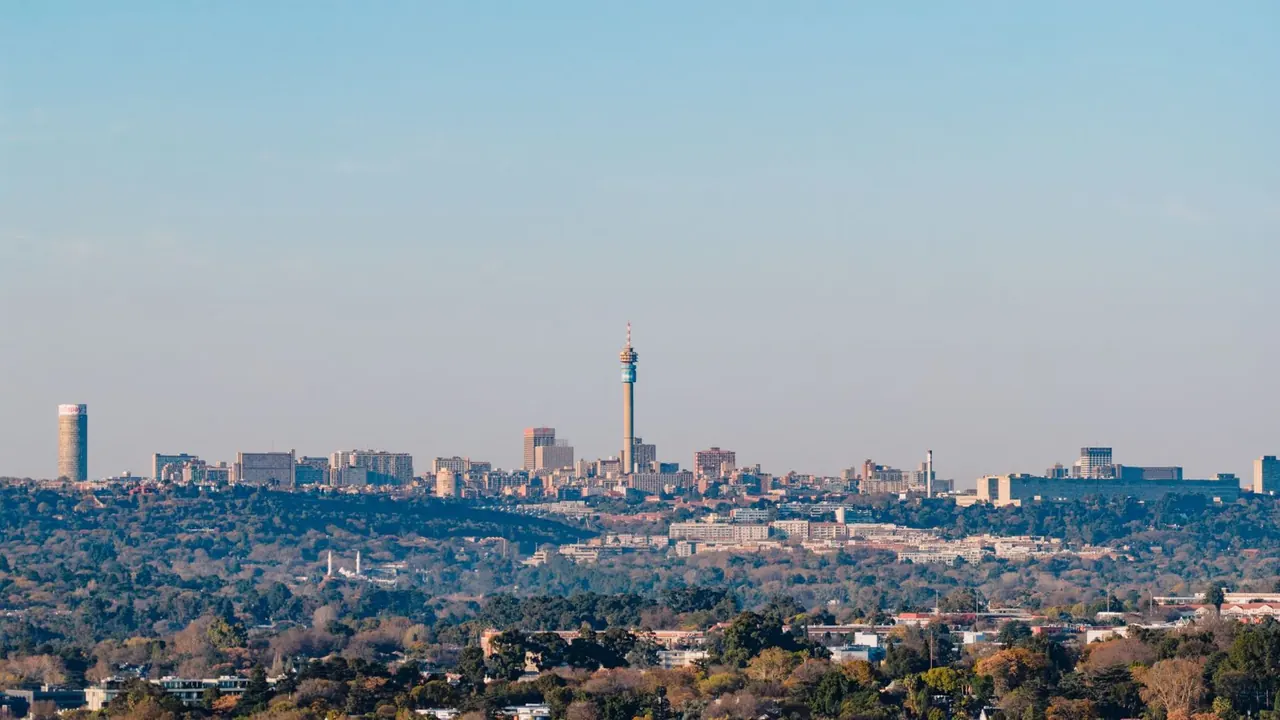
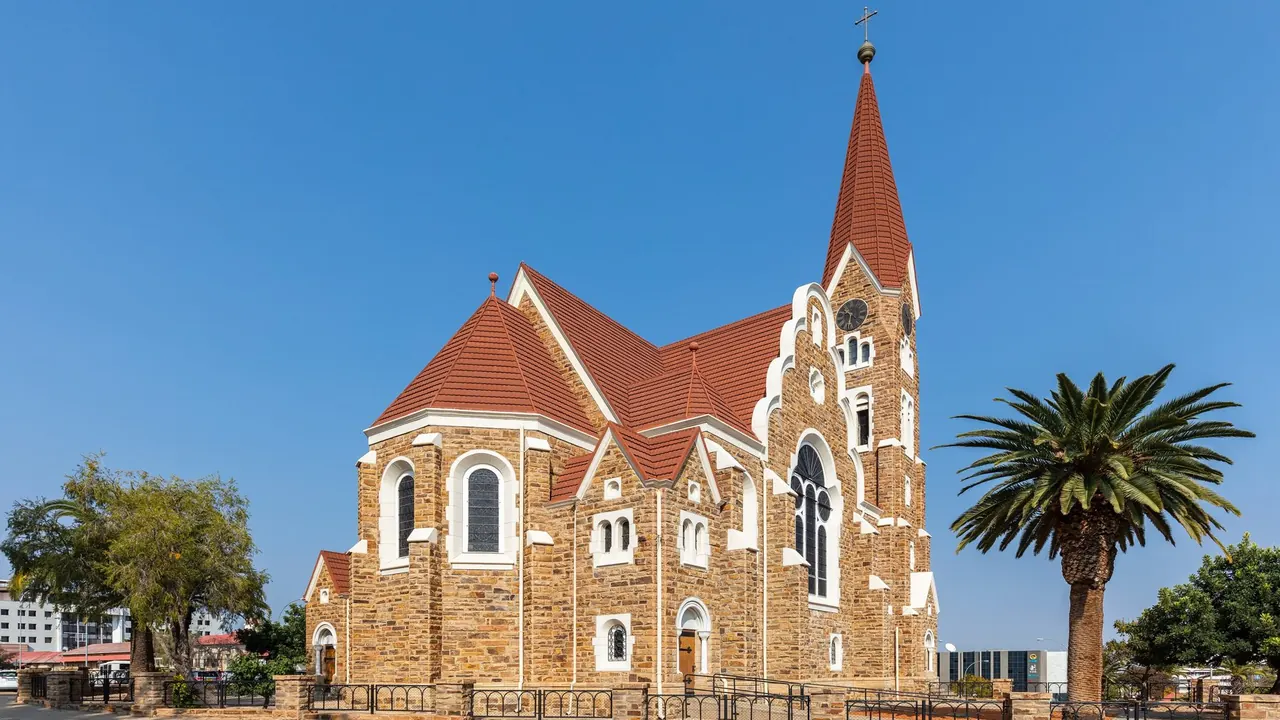
Photos: Johannesburg by K, Pexels License; Windhoek by Diego Delso, CC BY-SA 4.0, cropped.
Johannesburg or Windhoek?
Our verdict in twelve categories, each scored against the same fixed benchmark cities, and the climate month by month, so you can choose for your trip.
Choose Johannesburg for
- day trips
- nightlife
- live music and the arts
Johannesburg is the better choice if the city itself is the reason for the trip. It has the stronger museums and memorials on apartheid and its end, a nightlife built on South African house and amapiano, a much wider spread of food and a real theatre and jazz tradition. Pretoria and the Cradle of Humankind are both easy outings. You will need cars and some planning, but there is enough here for several full days.
Choose Windhoek for
- getting around
- wellness
Windhoek suits travellers who are mainly heading into Namibia's desert and wildlife country and want a quiet, manageable place to start and finish. Its sights fit on one ridge and take a day, game walks begin half an hour from town, and garden guest houses make it easy to rest before or after a long drive. Few people make it the main event of a trip.
Scoreboard
Twelve categories on one fixed scale from 0 to 100. The shaded stretch is the gap between the two.
Your match
Pick a travel style or drag the sliders, and both match scores follow your weighting.
Wins on day trips and nightlife with your weighting.
Wins on getting around and wellness with your weighting.
What matters to you?
Category by category
What the scores mean for a trip.
Beaches & swimming
Both cities sit on high inland plateaus, so a swim in either means a hotel or guest-house pool, which is welcome in the summer heat. The difference is how far away the water is. From Johannesburg, locals drive to the dams around Hartbeespoort or fly to the coast. From Windhoek, the nearest sea is at Swakopmund, about four hours away, and the cold Benguela current keeps that Atlantic too chilly for a comfortable swim.
Food & drink
Johannesburg eats far more widely. There are grilled meats with pap and chakalaka at Soweto's shisa nyamas, bunny chow and kotas on the street, Indian and Middle Eastern cooking in Fordsburg and Mozambican peri-peri prawns. Parkhurst, Rosebank and Sandton add polished dining, Cape wines and weekend markets.
Windhoek's table is narrower but has a clear identity: oryx, kudu and springbok on the menus, kapana grilled over fires in Katutura, and German strudel, Brötchen and beer-hall cooking. It is good for a few days, but the choice thins out on a longer stay.
Culture & sights
Both cities deal with a hard twentieth century, but Johannesburg covers it more broadly and in greater depth. The Apartheid Museum is a long, sobering visit on its own, Constitution Hill turns an old prison into the home of the Constitutional Court, and on Vilakazi Street in Soweto you stand outside the houses where Mandela and Tutu lived. The Origins Centre, the Wits Art Museum and the Art Deco inner city add more than a day's worth, though the sites are scattered and usually visited with a guide.
Windhoek, Namibia's capital, keeps its sights together on one ridge above the centre: the sandstone Christuskirche, the Tintenpalast parliament in its gardens and the white-walled Alte Feste. Next door, the Independence Memorial Museum is frank about the Herero and Nama genocide and the liberation struggle. It makes a rewarding day, but there is little to keep you longer.
Nightlife
Johannesburg goes out late and loud to its own music. Sandton has clubs, Braamfontein has student rooftops, Melville's 7th Street has bars, and Soweto's weekend sessions roll on long after dark.
Windhoek's evenings are mostly long dinners and beer gardens, with a handful of clubs at weekends and the Katutura shebeens best visited with a local. In both cities you will take a car between venues at night, but in Windhoek most visitors are back at their lodgings early.
Nature & outdoors
These two are close in what they offer outdoors, but the landscapes differ. Johannesburg is green and heavily treed, with black eagles nesting at the Walter Sisulu Botanical Garden, ballooning and kloofing in the Magaliesberg, and lions and rhino in Pilanesberg's volcanic crater within a long day's reach.
Windhoek's setting is drier: thornbush, granite koppies and the Auas Mountains. Daan Viljoen, only half an hour out, lets you hike among zebra and oryx. Sossusvlei and Etosha, the landscapes most people come to Namibia for, need nights away.
Day trips
Johannesburg has a solid set of outings. You can take the Gautrain to Pretoria's Union Buildings and jacaranda streets, or go to the Sterkfontein Caves at the Cradle of Humankind, the diamond village of Cullinan or Sun City.
From Windhoek, the realistic day out is north to Okahandja's woodcarvers' market and the Gross Barmen hot springs beyond it. Swakopmund and the country's famous sites are four hours or more away, so they belong on a road trip with overnight stops.
Good for families
Johannesburg has more built for children. There is Gold Reef City's theme park at an old mine, the zoo, Sci-Bono, and lion and rhino parks on the city edge, all reached by car from a base in the northern suburbs.
Windhoek has no zoo or theme park worth the name. Its highlight is a game drive at Daan Viljoen or a nearby farm, where children can see giraffe and zebra up close. With a garden guest house and a hire car, the small city is easy to manage between longer drives.
Getting around
Both cities are hard to get around without a car, but in different ways. Johannesburg is vast, but the Gautrain is a clean, safe link between the airport, Sandton, Rosebank and Pretoria, and ride-hailing covers the rest. Walking is only practical by day in Rosebank, Braamfontein or Melville.
Windhoek has no usable public transport at all, but its centre around Independence Avenue and the Christuskirche ridge is compact enough to walk by day. Most visitors book taxis through their lodging or drive the hire car they need for the wider trip anyway.
Shopping & style
Johannesburg is a real shopping destination. Sandton has luxury brands around Nelson Mandela Square, and Rosebank's Sunday rooftop market has beadwork and wire art from across southern Africa. Parkhurst and the converted inner-city spaces have local designers.
Windhoek is worth it for crafts and little else. The Namibia Craft Centre in the old brewery sells Herero dolls, ostrich-shell jewellery and baskets, and karakul wool and game-leather shoes are local specialities. Its malls are for stocking up before a drive.
Affordability
Johannesburg gives a little more for your money. Meals, Cape wine and comfortable northern-suburb hotels all come in well below Western European levels, although ride-hailing and guided Soweto tours add to the bill.
A stay in Windhoek itself is also reasonable, with cheap kapana and modest guest houses. The bigger cost is the Namibian trip around it, since a hire car, desert lodges and safaris are priced for an international market.
Live music & performing arts
The gap is wide here. Johannesburg has the Market Theatre in Newtown, known for its anti-apartheid protest plays, as well as the Soweto Theatre, big musicals in the north and a jazz line that runs back to Sophiatown and is kept alive by the Joy of Jazz festival.
Windhoek's stage is mainly the National Theatre of Namibia and student concerts at the College of the Arts. Shambo and Namibian kwaito turn up in a few bars, but there is no regular circuit to plan an evening around.
Wellness & relaxation
Neither city is somewhere people go to be pampered, but their kind of rest differs. Johannesburg has plenty of reasonably priced day spas and hotel spas in the northern suburbs, though real calm means leaving for the Magaliesberg or a bush lodge. Windhoek offers fewer treatments, but the city itself is slower and quieter, and the thermal pools at Gross Barmen are about an hour away.
When should you go?
Pick your month. The climate figures are measured averages, not a forecast.
Johannesburg in July
Windhoek in July
Daytime high, °C
Rainfall in the month, mm
Temperature and rainfall are climate normals, averaged over the years shown. Johannesburg: 2005-2019 (sunshine 1991-2020, rainfall 1991-2020) normals, Johannesburg B / Roosevelt Park (7.3 km from centre). Windhoek: 1991-2020 normals, Windhoek (1.7 km from centre).
Neither city has a sea, so the seasons matter for walking and sightseeing rather than for swimming. Johannesburg stays mild all year, with highs that rarely go above 27°C. Its summer, from October to March, is the wet season, with afternoon thunderstorms and rainfall peaking around 135mm in December. From May to September the city is dry and gets the most sunshine of the year. Days sit near 19°C at the coolest, which is ideal for moving between sights.
Windhoek runs noticeably hotter, reaching about 33°C in December, so walking in the middle of the day is tiring in early summer. Its rain is lighter and mostly falls between January and March. May to October is almost completely dry, and June and July, at around 22°C, are the most comfortable months for being out in the city and the bush around it.
Which traveller are you?
On a food and nightlife trip, Johannesburg is the clear pick. Soweto's shisa nyama afternoons turn into amapiano nights, and there are Fordsburg curries, Braamfontein rooftops and Cape wines in the northern suburbs. Windhoek offers kapana, beer gardens and an early night.
For a short city break, Johannesburg gives a few days far more to fill them. The Apartheid Museum, Constitution Hill and Soweto make a strong core, the Market Theatre covers the evenings, and the Gautrain reaches Pretoria. You can see Windhoek's sights in one day.
On a relaxing and wellness trip, Windhoek's slow pace has the edge, with low-rise suburbs, garden guest houses, wide skies and the Gross Barmen thermal pools an hour north. Johannesburg has more day spas, but the city itself is fast and business-driven.
Before you go
| Measure | Johannesburg | Windhoek |
|---|---|---|
| Official language | English, Zulu, Xhosa, Afrikaans, Venda, Northern Sotho, Swazi, Tswana, Tsonga, Sesotho, Southern Ndebele, South African Sign Language | English |
| Currency | Rand (ZAR) | Namibia Dollar (NAD) |
| Sockets | CMN230 V, 50 Hz | M220 V, 50 Hz |
| Driving side | Left | Left |
| Time zone | UTC+2 | UTC+2 |
| Emergency number | 112 | 112 |
| Elevation | 1,753 m | 1,650 m |
| Main airport | O.R. Tambo International Airport (JNB)22 km from centre84 non-stop destinations | Hosea Kutako International Airport (WDH)41 km from centre16 non-stop destinations |
| Public holidays this year | 13 days | 13 days |
By the numbers
| Measure | Johannesburg | Windhoek |
|---|---|---|
| City population | 4,803,262 | 486,169 |
| People per km² | 2,922 | 95 |
| Museums within 10 km | 14 | 5 |
| UNESCO World Heritage sites within 50 km | 2 | 0 |
Where else could you go?
Every comparison below shares a destination with this one, so you can follow Johannesburg or Windhoek somewhere new.