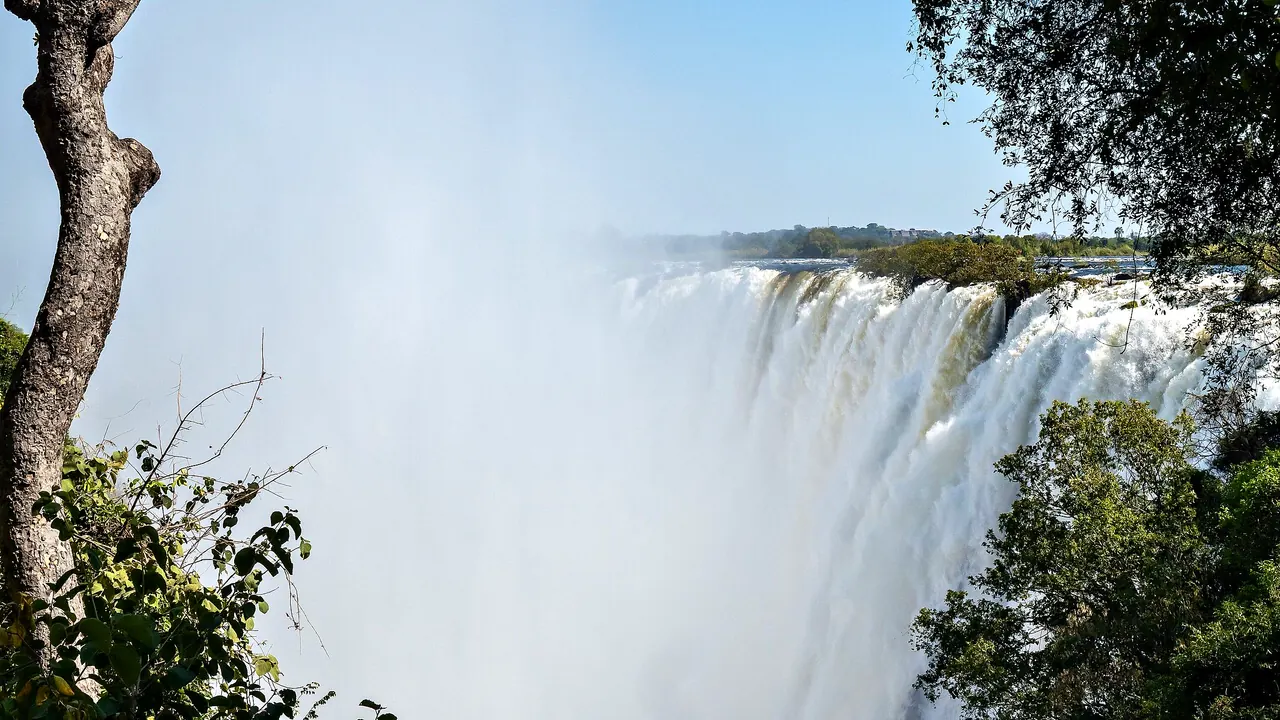
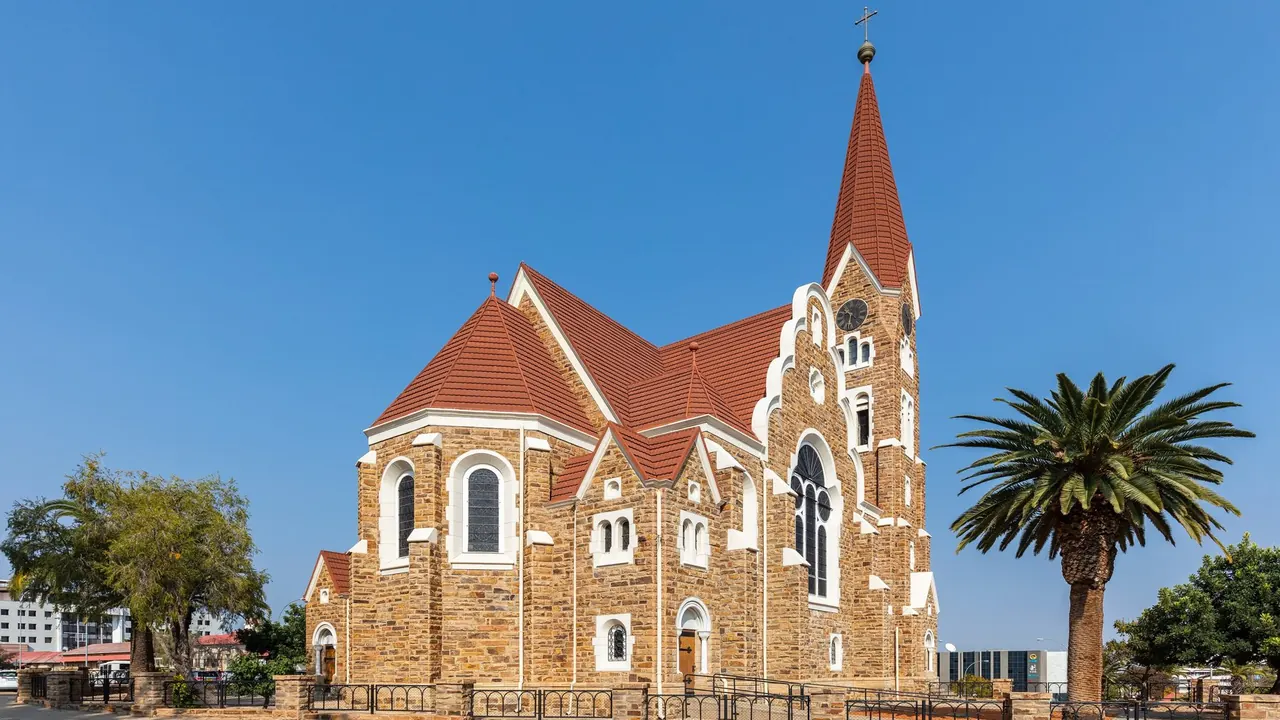
Photos: Livingstone by Matti Blume, CC BY-SA 4.0, cropped; Windhoek by Diego Delso, CC BY-SA 4.0, cropped.
Livingstone or Windhoek?
Our verdict in twelve categories, each scored against the same fixed benchmark cities, and the climate month by month, so you can choose for your trip.
Choose Livingstone for
- nature and the outdoors
- wellness
- day trips
Livingstone is the choice if the landscape is the reason for the trip. Victoria Falls is a short drive from town, the Batoka Gorge below it has serious white water, and the upper Zambezi has hippos and elephants. Chobe's elephant herds are close enough for a day out. The town itself is small and evenings end early, but quiet riverside lodges make the gaps between excursions restful. It suits active travellers and couples who want one great natural sight and are happy to pay for the activities around it.
Choose Windhoek for
- prices
- food and drink
- shopping
Windhoek gives more as a city, though not much more. Its kapana grills and German bakeries, its weekend clubs and shebeens, a proper craft centre and a national theatre add up to more to do in the evenings and on foot in the centre, and staying there costs less day to day. Most people use it as a comfortable, sensibly priced first or last stop on a Namibian road trip, not as the main event.
Scoreboard
Twelve categories on one fixed scale from 0 to 100. The shaded stretch is the gap between the two.
Your match
Pick a travel style or drag the sliders, and both match scores follow your weighting.
Too close to call, level with your weighting
Wins on nature and the outdoors and wellness with your weighting.
Wins on prices and food and drink with your weighting.
What matters to you?
Category by category
What the scores mean for a trip.
Beaches & swimming
Neither city has a beach, so the difference is only in the oddities each offers. In Livingstone, crocodiles, hippos and strong currents keep you out of the Zambezi. The one exception is a guided swim in Devil's Pool on the lip of the falls when the river is low, an adventure rather than a swim.
Windhoek's nearest sea is at Swakopmund, about four hours across the desert, and the Benguela current keeps that Atlantic water too cold for comfort. In both places, everyday swimming means the pool at your lodge or guest house.
Food & drink
Windhoek has more to eat. You can stand at a kapana stall in Katutura with grilled beef and chilli salt, eat oryx or kudu at a steakhouse, or have strudel and a lager brewed to the German purity law. Klein Windhoek has a few decent mid-range restaurants.
Livingstone's choice is narrower: lodge menus and a few restaurants on the main road. Its best dishes are nshima with relishes and whole Zambezi bream. Your best meal there is likely to be on a deck over the river, remembered more for the view than for the cooking.
Culture & sights
Each town can be seen in about a day, but the subject matter differs. Livingstone's sights look back to the explorer and the railway: Livingstone's own letters in Zambia's oldest museum, steam locomotives, and the steel arch of the Victoria Falls Bridge over the gorge.
Windhoek is the place to understand a country's politics. The Christuskirche, the Tintenpalast and the Alte Feste stand together on one ridge, and the Independence Memorial Museum is unusually frank about colonial rule and the Herero and Nama genocide. That makes Windhoek the weightier half-day.
Nightlife
Windhoek has a bit more after dark. There are beer gardens and lounge bars in Klein Windhoek, a few clubs at weekends, and the Katutura shebeens, best visited with someone local. Taxis are a must, since the centre is not for walking at night.
In Livingstone, the main event is the sundowner on a river cruise. After dinner your options are a couple of hostel bars and some local taverns, and with rafting starting at dawn, most visitors are in bed early.
Nature & outdoors
This is where the two differ most. From Livingstone, the falls are a short ride away: more than 1.7km of water dropping into a basalt gorge, with rainforest paths soaked by spray. Below them are some of the world's hardest one-day rapids and the hike down to the Boiling Pot, and upstream you canoe past hippos and elephants.
Windhoek's surroundings are quieter. The Khomas Hochland is thornbush and granite koppies, and Daan Viljoen has trails among zebra and oryx. Pleasant as that is, Sossusvlei and Etosha, the landscapes Namibia is known for, are a long drive and an overnight stay away.
Day trips
Neither city is a good base for day trips, but Livingstone has the better ones. You can walk across the bridge to Zimbabwe's Victoria Falls town for a second view of the falls, visit Mukuni village with its traditional custodian of the falls, or cross into Botswana for the river and game safaris around Kasane.
From Windhoek, a day out means Okahandja's woodcarvers' market and the Herero chiefs' graves, perhaps with the Gross Barmen springs added on. Swakopmund and the rest of the country belong on a road trip with overnight stops.
Good for families
Both work about equally well for families, and both depend on wildlife rather than anything built for children. Livingstone suits teenagers best, with rhino walks, hippo cruises and the spray of the falls. Minimum ages rule out many of the big activities for younger children, and malaria all year puts off many parents of small children.
In Windhoek, a game drive at Daan Viljoen or a nearby farm shows children giraffe and zebra. Suburban guest houses with gardens and the dry air make it an easy stop with children of any age, usually on the way to Etosha or the coast.
Getting around
Neither has public transport a visitor would use, but Livingstone needs less effort. Its activities usually include pick-ups, and taxis are easy to find for the 10km out to the falls. Don't walk along the roads outside town, where elephants roam.
Windhoek covers more ground across hilly suburbs, and the shared sedan taxis take confidence. Most visitors hire a car, which they need anyway for the rest of Namibia, and walking after dark is best avoided.
Shopping & style
Both are mainly about crafts, but Windhoek has more choice. The Namibia Craft Centre, in the old brewery, brings together baskets, Herero dolls, ostrich-shell jewellery and leatherwork from across the country, and semi-precious stones and karakul wool add to the range.
In Livingstone you will mostly find carvings, baskets and copper at the curio markets, with bargaining expected. A length of bright chitenge cloth is the souvenir to take home.
Affordability
Windhoek is the cheaper place to stay. Suburban guest houses, kapana and local beer keep daily costs low, though taxis or a hire car add up.
Livingstone's costs depend on how you spend your days. Hostels, minibuses and local meals cost little, but the reasons to go, from park entry and visas to rafting, helicopter flights and Chobe safaris, are priced for international travellers and quickly push the total above Windhoek's.
Live music & performing arts
Windhoek at least has a stage. The National Theatre of Namibia puts on drama, dance and choirs, and the College of the Arts holds student concerts, though you need to check what is on.
Livingstone has no theatre at all. What you can see is traditional drumming and dance at cultural centres and lodge dinners, sometimes including Makishi masked dancers, and the Lwiindi ceremony if your dates match.
Wellness & relaxation
Livingstone is the more restful choice, as long as you pick the right lodge. On the quiet upper Zambezi you get decks over the water, birdsong at dawn and empty hours between a morning game walk and an evening cruise, with spa treatments at the larger lodges.
Windhoek's calm is more suburban: garden guest houses, wide skies and cool winter nights, good for a day's rest after a long drive. Its one real addition is the thermal pools at Gross Barmen, about an hour north.
When should you go?
Pick your month. The climate figures are measured averages, not a forecast.
Livingstone in July
Windhoek in July
Daytime high, °C
Rainfall in the month, mm
Temperature and rainfall are climate normals, averaged over the years shown. Livingstone: 1991-2020 (sunshine 1981-2010) normals, Livingstone (6.5 km from centre). Windhoek: 1991-2020 (sunshine 1971-2000) normals, Windhoek (1.7 km from centre).
Livingstone has a sharper wet season. Rain sets in around November and peaks at about 154mm in January, and from April to October it is almost completely dry. June and July are the easiest months for walking and game drives, with highs around 26°C. October is the month to avoid, when the heat before the rains climbs to about 35°C. Plan around the falls too: they are at their fullest from about March to May, while the dry months that follow are better for rafting.
Windhoek's rain is lighter and comes later, from about December to March and peaking near 96mm in February. Its winter is cooler, with June and July highs around 22°C, and that is when walking is at its best. Both cities are sunny for most of the year. The difference shows in summer: Windhoek stays bright through December and January, while Livingstone clouds over more in the rains. Neither has any sea to think about.
Which traveller are you?
On an outdoors trip, Livingstone is the clear choice: the falls, rafting and bungee in the Batoka Gorge, canoeing on the upper Zambezi, walks to see white rhino and Chobe within a day. Windhoek has gentle trails at Daan Viljoen, but Sossusvlei and Etosha need an overnight stay.
For a food and nightlife trip, Livingstone offers little beyond grilled bream, a sundowner cruise and an early night before rafting. Windhoek has more going on, with kapana fires in Katutura, game on the menus, German beer halls and bakeries, and weekend clubs playing amapiano and kwaito.
On a tight budget, Livingstone can work from a hostel with local meals and minibuses, but the things people come for, the falls, the parks and the gorge activities, are priced for international visitors. Windhoek goes further day to day, with suburban guest houses, kapana and local beer at moderate cost.
Before you go
| Measure | Livingstone | Windhoek |
|---|---|---|
| Official language | English | English |
| Currency | Zambian Kwacha (ZMW) | Namibia Dollar (NAD) |
| Sockets | CG230 V, 50 Hz | M220 V, 50 Hz |
| Driving side | Left | Left |
| Time zone | UTC+2 | UTC+2 |
| Emergency number | 991 or 999 | 112 |
| Elevation | 931 m | 1,650 m |
| Main airport | Harry Mwanga Nkumbula International Airport (LVI)6 km from centre6 non-stop destinations | Hosea Kutako International Airport (WDH)41 km from centre15 non-stop destinations |
| Public holidays this year | 16 days | 13 days |
By the numbers
| Measure | Livingstone | Windhoek |
|---|---|---|
| City population | 177,393 | 486,169 |
| People per km² | - | 95 |
| Museums within 10 km | 2 | 5 |
| UNESCO World Heritage sites within 50 km | 1 | 0 |
Where else could you go?
Every comparison below shares a destination with this one, so you can follow Livingstone or Windhoek somewhere new.
- Victoria Fallsvs Livingstone
- Swakopmundvs Windhoek
- Johannesburgvs Livingstone
- Johannesburgvs Windhoek
- Cape Townvs Windhoek
- Stellenboschvs Windhoek