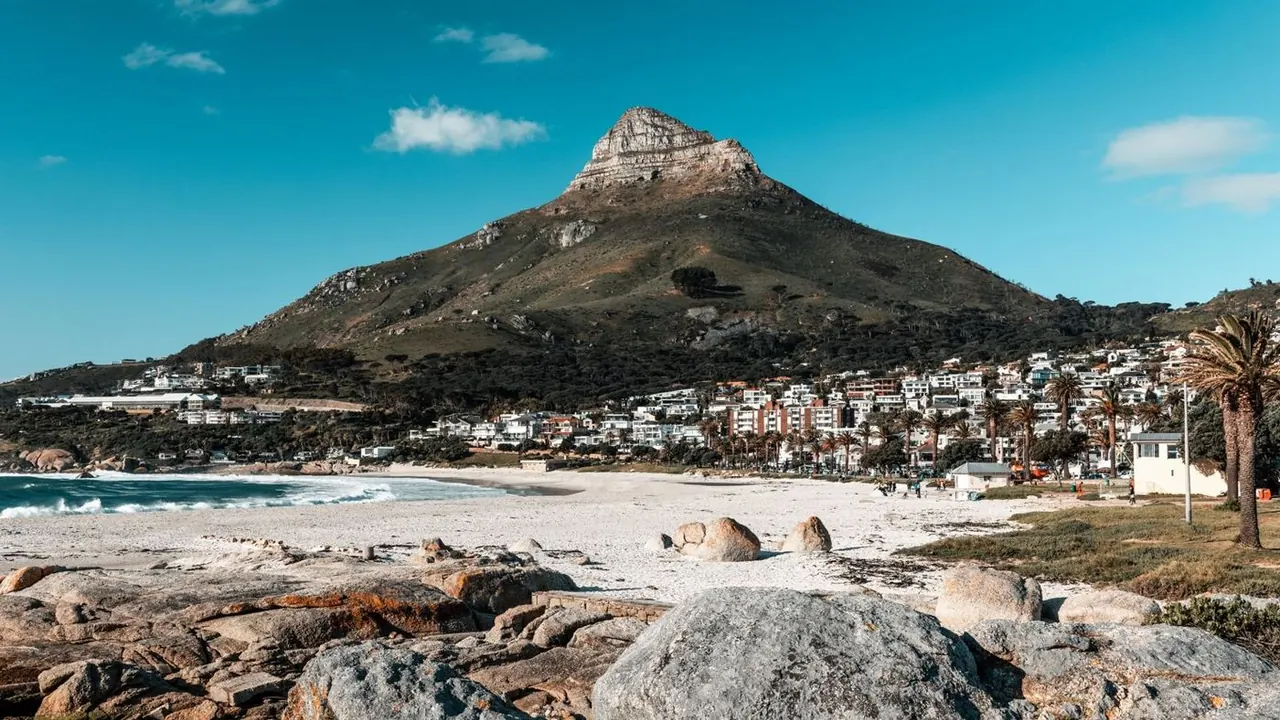
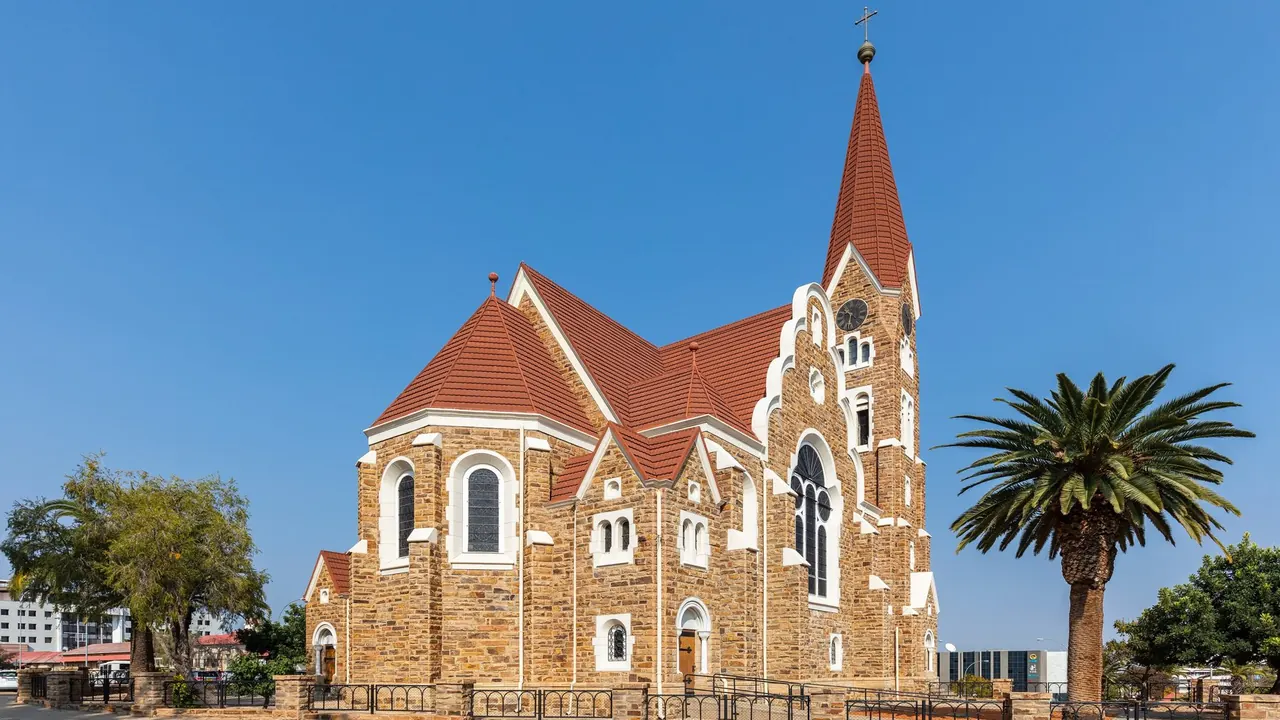
Photos: Cape Town by Stephan Louis, Pexels License; Windhoek by Diego Delso, CC BY-SA 4.0, cropped.
Cape Town or Windhoek?
Our verdict in twelve categories, each scored against the same fixed benchmark cities, and the climate month by month, so you can choose for your trip.
Choose Cape Town for
- beaches
- day trips
- nature and the outdoors
Cape Town is a trip in its own right. A mountain national park rises straight behind the centre, wine estates start less than an hour away, there are beaches on two coasts, and the restaurants and bars will keep you busy for a week or more. Choose it if you want the city itself to be the vacation: hiking Table Mountain, watching penguins at Boulders, long lunches in the Winelands and sundowners over the Atlantic. You will need to drive or use ride-hailing to get between them.
Choose Windhoek for
Windhoek does not lead in any category we score.
Windhoek is a quiet highland capital that most travellers use to start or finish a Namibian road trip. It has enough for a day or two: the Christuskirche ridge and the Independence Memorial Museum, grilled kapana in Katutura, and a game drive at Daan Viljoen. After that you head off for the dunes of Sossusvlei or the wildlife of Etosha. Come for the country beyond the city, and treat the city as a calm place to rest before or after the long drives.
Scoreboard
Twelve categories on one fixed scale from 0 to 100. The shaded stretch is the gap between the two.
Your match
Pick a travel style or drag the sliders, and both match scores follow your weighting.
Wins on beaches and day trips with your weighting.
Has no clear advantage with the weighting you have chosen.
What matters to you?
Category by category
What the scores mean for a trip.
Beaches & swimming
Cape Town has some of the most photographed sand in the world. Clifton's coves and Camps Bay sit under granite boulders with the Twelve Apostles behind them. The Atlantic there is icy, though, so the real swimming is half an hour away on False Bay, at Muizenberg, St James and Kalk Bay's tidal pools, from December to March.
Windhoek sits on an inland plateau with no beach within a day's reach. Even the coast at Swakopmund is too cold for a comfortable swim. In the city, swimming means a guest-house pool on a hot afternoon.
Food & drink
Cape Town has much more to offer at the table. It has its own creole cuisine of bobotie, curries and koeksisters from the Bo-Kaap, fish eaten by the harbours at Kalk Bay and Hout Bay, and chef-driven restaurants along Bree Street and in Woodstock. Wine from the Winelands appears on every list.
Windhoek's strengths are narrower but distinctive. Game such as oryx and kudu is on most menus, kapana beef is grilled over open fires in Katutura, and German-style bakeries and lagers survive from the colonial era. A few good meals are easy to find, but on a long stay the variety runs out.
Culture & sights
Cape Town's history fills three or four days. You can take the ferry to Robben Island, where Mandela was held, and visit the District Six Museum, the Castle of Good Hope, and the museums and gallery around the Company's Garden. Zeitz MOCAA adds a major collection of contemporary African art.
Windhoek's sights fit into a single day on one short ridge: the Christuskirche, the Tintenpalast and the Alte Feste. The Independence Memorial Museum deserves your time for how frankly it covers the Herero and Nama genocide, but after that there is little else to see.
Nightlife
Cape Town has a real night out. Long Street is for rowdy bars, Bree and Kloof Streets for cocktails and wine, and De Waterkant is the gay quarter. In summer there are sundowners at Camps Bay and clubs open into the small hours. Use ride-hailing to get between areas.
Windhoek winds down early. Evenings mostly mean dinner, a beer garden or a lounge bar in Klein Windhoek, plus a handful of clubs on weekends. Katutura's shebeens are the city's most authentic night out, and they are best visited with a local.
Nature & outdoors
Few cities anywhere match Cape Town here. Table Mountain, Lion's Head and the national park reaching down to Cape Point begin at the edge of the centre, and they are covered in the fynbos of the world's richest floral kingdom. Add penguins, seals, whales in False Bay, surf lessons at Muizenberg and the drive along Chapman's Peak.
Windhoek offers quieter thornbush highland. There are hiking trails among zebra and oryx at Daan Viljoen, game farms within easy reach, and reliably clear skies. Namibia's famous landscapes, Sossusvlei and Etosha, are a night away rather than on the doorstep.
Day trips
As a base for days out, Cape Town is far stronger, mostly because wine country starts just beyond its suburbs. Stellenbosch's Cape Dutch university streets, Franschhoek's Huguenot valley, Paarl and Constantia are near enough to leave after breakfast and be back for dinner, and there are so many estates that you can go back several times without visiting the same cellar twice. Clifftop whale watching at Hermanus and the old Cape Dutch houses of Tulbagh add variety further out. The trains are no help for any of this, so hire a car or book a tour.
Windhoek is a place to set off from rather than return to. Within an easy drive there is little more than Okahandja, about an hour north, with its woodcarvers' market and the graves of Herero chiefs. Swakopmund and the country's great sights are so far across the desert that each one means a night away. From Windhoek you move on from one lodge to the next, while in Cape Town you can unpack once and come back to the same bed every evening.
Good for families
Cape Town gives children far more to do: the Two Oceans Aquarium, the penguins at Boulders, a ride on the cableway, Kirstenbosch's treetop walkway, and calm tidal pools at St James and Fish Hoek. The catch is that the sights are spread out, so you will need a car.
Windhoek has nothing built specifically for children. Its highlight for families is a game drive where children can see giraffe and zebra up close. A suburban guest house with a pool makes an easy stop on the way to Etosha.
Getting around
You will want a car or ride-hailing in both cities, but Cape Town gives you slightly more choice. The City Bowl, Bo-Kaap and Waterfront are walkable by day, and MyCiTi buses reach the airport, the Atlantic beaches and Hout Bay. Ride-hailing is cheap, and the coastal roads are a pleasure to drive.
Windhoek has a compact walkable centre around Independence Avenue but no public transport a visitor can realistically use. Visitors book taxis or hire a car, which they need anyway for the road trip that usually follows. In both cities, avoid walking after dark.
Shopping & style
Neither city is a shopping destination, but Cape Town has more range. There is the large Waterfront mall, independent South African design in Woodstock and on Bree and Kloof Streets, African crafts at Greenmarket Square, and wine to carry home.
Windhoek's shopping is mostly crafts, and the Namibia Craft Centre in the old brewery is the place to go for baskets, Herero dolls and ostrich-shell jewellery. Beyond that there are malls that are useful for stocking up before a road trip.
Affordability
Cape Town gives you more for your money. Visitors from abroad can eat tasting menus, drink estate wine and hire a car for much less than at home. The main expense is rooms near the beaches in the December to January peak.
Windhoek is cheap enough day to day, with inexpensive kapana, beer and suburban guest houses. The cost lies in how Namibia is travelled: taxis or a hire car, and safari lodges and guided trips priced for international visitors.
Live music & performing arts
Cape jazz gives Cape Town a sound of its own. A few clubs keep it alive, and a large international jazz festival is held every year. In summer, Sunday sunset concerts on Kirstenbosch's lawns bring picnics beneath the mountain, while Artscape stages opera, ballet and musicals and the Baxter puts on South African drama, enough for a couple of evenings out.
Windhoek offers no regular circuit you can count on. The National Theatre of Namibia hosts local drama, dance and choirs, and shambo or Namibian kwaito turns up in a few bars, so check what is on during your stay.
Wellness & relaxation
Neither city has a bathing tradition, so both rely on hotel and estate spas. Cape Town relaxes you better. You can spend slow lunches in the Winelands, take early yoga on the Atlantic seaboard and join the year-round morning swimmers in False Bay's tidal pools.
Windhoek does have one thing Cape Town lacks nearby: the thermal pools at Gross Barmen, about an hour away. Otherwise its calm comes from garden guest houses, wide skies and cool, clear winter nights between long days on the road.
When should you go?
Pick your month. The climate figures are measured averages, not a forecast.
Cape Town in July
Windhoek in July
Daytime high, °C
Rainfall in the month, mm
Temperature and rainfall are climate normals, averaged over the years shown. Cape Town: 1991-2020 normals, Cape Town Airport (17.5 km from centre). Windhoek: 1991-2020 normals, Windhoek (1.7 km from centre).
The two cities have their rain in opposite halves of the year. Cape Town is at its best from December to March. Those months are dry and very sunny, with highs up to 28°C, and this is the only real beach season. Even then the sea reaches only about 18°C, so swims are short. From May to August the days turn cool and grey, and June brings close to 97mm of rain, so winter is better for whale watching and museums than for the coast.
Windhoek gets its rain in summer. It is heaviest in February, at around 96mm, and the weeks before it are hot, peaking near 33°C in December, which makes walking around at midday tiring. From May to September almost no rain falls at all, the days are mild and the nights clear and cool. That is the best time for walking in the city and for setting off on the road into the desert, and it falls just when Cape Town is at its wettest.
Which traveller are you?
On a beach and sun trip, choose Cape Town. Clifton and Camps Bay are beautiful places to sunbathe, and False Bay's milder water, tidal pools and gentle surf at Muizenberg give you proper swimming in summer. Windhoek is a four-hour desert drive from any coast.
For a food and nightlife trip, Cape Town is clearly better. It has Cape Malay cooking in the Bo-Kaap, tasting menus around Bree Street, wine from estates close by, and bars and clubs running late across the City Bowl. Windhoek's evenings are mostly game dinners and beer gardens, and they end early.
For a self-drive safari across Namibia, start in Windhoek. You can get used to the country with a game drive at Daan Viljoen, stock up on supplies, and head for Etosha or Sossusvlei. Cape Town's wildlife is coastal, with penguins, seals and whales, not the big game of the savannah.
Before you go
| Measure | Cape Town | Windhoek |
|---|---|---|
| Official language | English, Zulu, Xhosa, Afrikaans, Venda, Northern Sotho, Swazi, Tswana, Tsonga, Sesotho, Southern Ndebele, South African Sign Language | English |
| Currency | Rand (ZAR) | Namibia Dollar (NAD) |
| Sockets | CMN230 V, 50 Hz | M220 V, 50 Hz |
| Driving side | Left | Left |
| Time zone | UTC+2 | UTC+2 |
| Emergency number | 112 | 112 |
| Elevation | 5 m | 1,650 m |
| Main airport | Cape Town International Airport (CPT)18 km from centre45 non-stop destinations | Hosea Kutako International Airport (WDH)41 km from centre16 non-stop destinations |
| Public holidays this year | 13 days | 13 days |
By the numbers
| Measure | Cape Town | Windhoek |
|---|---|---|
| City population | 3,776,313 | 486,169 |
| People per km² | 1,538 | 95 |
| Museums within 10 km | 22 | 5 |
| UNESCO World Heritage sites within 50 km | 3 | 0 |
| Swim season, months above 21 °C | None | - |
Where else could you go?
Every comparison below shares a destination with this one, so you can follow Cape Town or Windhoek somewhere new.