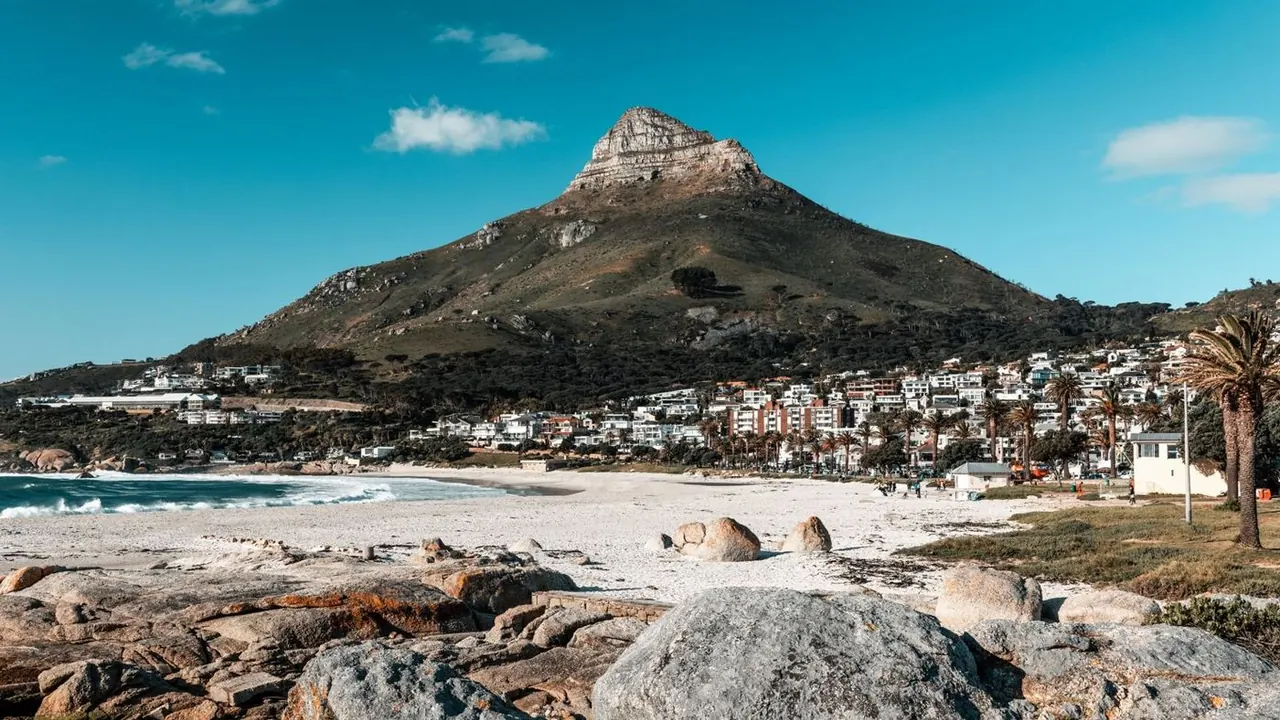
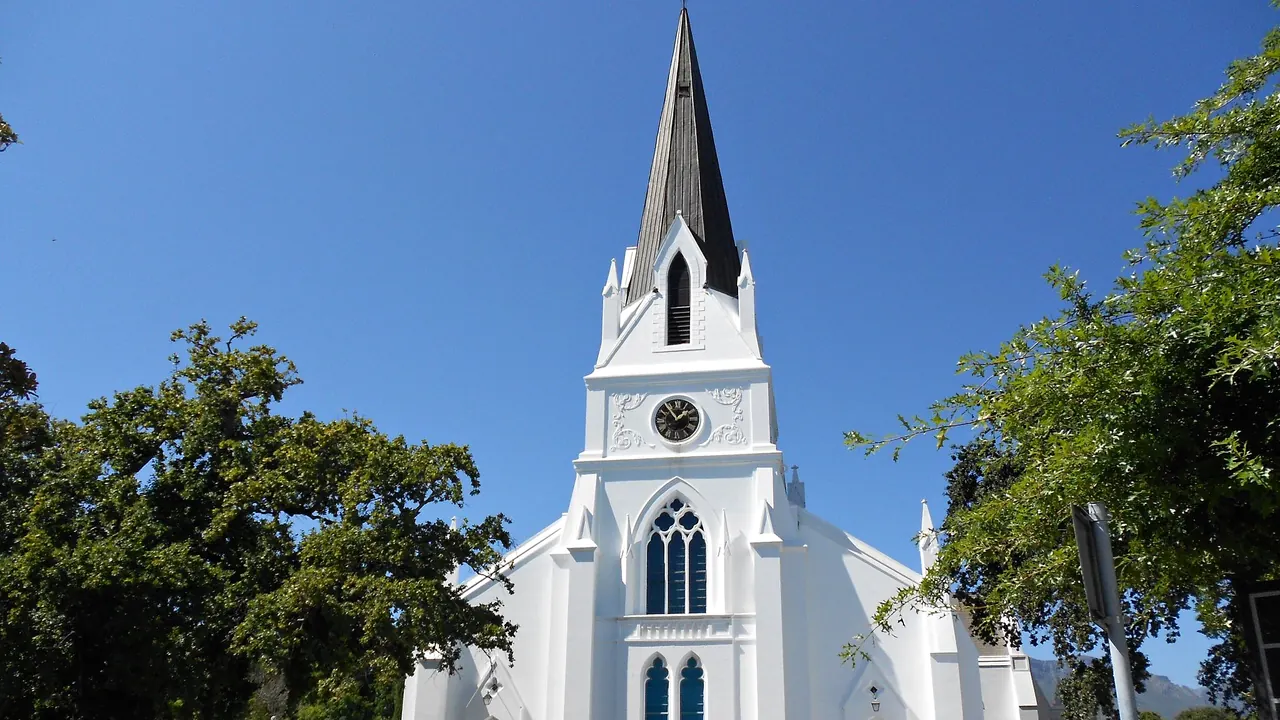
Photos: Cape Town by Stephan Louis, Pexels License; Stellenbosch by Lugerda, CC BY-SA 3.0, cropped.
Cape Town or Stellenbosch?
Our verdict in twelve categories, each scored against the same fixed benchmark cities, and the climate month by month, so you can choose for your trip.
Choose Cape Town for
- nightlife
- culture and sights
- live music and the arts
Cape Town suits travellers who want a whole city wrapped around the scenery. Table Mountain and the peninsula start behind the streets, Robben Island and the District Six Museum tell South Africa's hardest stories, False Bay gives you summer swimming, and Bree Street and Long Street keep the evenings going. You will lean on cars and ride-hailing, but a week here never runs short of things to do.
Choose Stellenbosch for
- day trips
- wellness
For a slower stay built around wine, Stellenbosch is the better base. Its oak-lined Cape Dutch streets are the best-kept in the region, the estates of Jonkershoek and Helshoogte are minutes from your door, and Franschhoek, Paarl and Cape Town itself are easy days out. Nights are quiet and the sea is an excursion, so it rewards couples and wine lovers more than anyone after beaches or late bars.
Scoreboard
Twelve categories on one fixed scale from 0 to 100. The shaded stretch is the gap between the two.
Your match
Pick a travel style or drag the sliders, and both match scores follow your weighting.
Wins on nightlife and culture and sights with your weighting.
Wins on day trips and wellness with your weighting.
What matters to you?
Category by category
What the scores mean for a trip.
Beaches & swimming
Cape Town has its beaches inside the city: Clifton's coves and Camps Bay on the Atlantic for sunbathing below the Twelve Apostles, with icy water, and Muizenberg, St James and Boulders on False Bay for proper swims next to the penguins.
Stellenbosch has no coast of its own. The nearest sand is at Strand and the sheltered water of Gordon's Bay, half an hour's drive away on the same warm False Bay. So a beach day there has to be planned as an outing, and on hot January afternoons in town the hotel pool does the job.
Food & drink
The two eat equally well in very different settings. In Cape Town you eat in the city: Cape Malay curries and koeksisters from the Bo-Kaap, gatsbys from the Cape Flats, snoek at the Kalk Bay harbour, and ambitious tasting menus on Bree Street and in Woodstock's warehouses.
Stellenbosch is where those wine lists come from. Its best tables sit on the estates themselves, with tasting menus over the vines, farm lunches under oaks and summer picnics on the lawns, while the town centre is mostly student cafés and bistros. Choose Cape Town for range, Stellenbosch for the cellar door.
Culture & sights
Cape Town has far more to see, and it is mostly about history rather than buildings: the ferry to Robben Island, the District Six Museum, the Castle of Good Hope, and the museums and Parliament around the Company's Garden, with Zeitz MOCAA adding world-class contemporary African art.
Stellenbosch is the opposite. Its whitewashed Cape Dutch houses, gables and oak avenues along Dorp Street and around the Braak form a more complete old townscape than anything in Cape Town, but the Village Museum and the Moederkerk take a day or two at most.
Nightlife
Cape Town has a real night out: rowdy bars on Long Street, cocktail and wine bars on Bree and Kloof Street, De Waterkant's gay quarter, and summer sundowners at Camps Bay before the clubs. You will need ride-hailing between areas after dark.
Stellenbosch's evenings depend on the university. In term, student pubs and a few dance venues around Bird Street and Plein Street get loud at weekends; in the vacations, and for most visitors anyway, a night means dinner, a glass on a terrace and bed.
Nature & outdoors
Cape Town comes out ahead because the wild landscape is the city itself: Table Mountain by cableway or Platteklip Gorge, sunrise on Lion's Head, the cliffs of Cape Point, penguins at Boulders, whales in False Bay, surfing at Muizenberg and the drive along Chapman's Peak.
Stellenbosch is still superb for the outdoors in a quieter way. The Jonkershoek trails start at the edge of town, the valley is one of the country's main mountain-biking centres with singletrack through the wine farms, and road cyclists take on the passes. Kogelberg's fynbos lies over Sir Lowry's Pass.
Day trips
Stellenbosch is the better base for days out because it sits in the middle of them. Franschhoek is half an hour over the Helshoogte Pass, Paarl and Wellington are close, and Cape Town itself, with Robben Island and the Waterfront, is under an hour away.
From Cape Town the Winelands are still an easy day, and Hermanus brings whale watching from the cliffs, but beyond the vineyards the choice is thinner. In both places nearly every trip needs a car or a booked tour.
Good for families
Children get far more out of Cape Town. The Two Oceans Aquarium, the penguins at Boulders, the cableway ride up Table Mountain, Kirstenbosch's treetop walkway and the calm tidal pools at St James and Fish Hoek add up to a week of easy outings. You still need a car to link them, and the Atlantic is too cold for long swims.
Stellenbosch is relaxed, but it is built around adults who like wine. Some estates add playgrounds, farm animals and picnic lawns, there is a small wildlife park outside town, and the Jonkershoek trails suit older children. The summer heat is hard on little ones, though, so most families drive into Cape Town for the big days.
Getting around
Neither is a place to do without a car, but Cape Town gives you a little more help. The City Bowl, Bo-Kaap and Waterfront are walkable by day, and MyCiTi buses run to the airport, the Atlantic beaches and Hout Bay, with cheap ride-hailing for the rest.
Stellenbosch's centre is small, flat and pleasant on foot, but the estates are spread along winding valley roads with no useful public transport. Hop-on hop-off wine tours are the practical answer, since they also take drinking and driving out of the day.
Shopping & style
Cape Town gives you more to browse: the V&A Waterfront mall with its makers' hall, local design and fashion in Woodstock and on Bree and Kloof Street, and African crafts at Greenmarket Square.
Stellenbosch shopping is mostly about taking the valley home. You buy wine at the cellar door, with shipping from many estates, plus galleries and ceramics along Dorp Street, an old-fashioned general store full of preserves and curios, and weekend farm markets. For fashion, people drive to Cape Town.
Affordability
Both are good value for visitors from Europe or North America, and Cape Town is slightly kinder overall. Tasting menus, wine and ride-hailing all cost little there. The catch is rooms in Camps Bay and Clifton over the December to January peak.
Stellenbosch is one of the pricier towns in the country, though tastings and estate lunches still cost far less than in other famous wine regions, and guesthouses are fair. What adds up is the hire car or tours you can't really do without.
Live music & performing arts
Neither is a place people travel to for the stage. Cape Town has a modest city programme, though, where Stellenbosch has a thin town one. Its real distinction is Cape jazz, the sound Abdullah Ibrahim carried abroad, which lives on in a few clubs and at one of the continent's biggest jazz festivals, while Artscape, the Baxter and the summer Sunday concerts on Kirstenbosch's lawns are enough for a couple of good evenings in a week.
Stellenbosch offers a few dates in the year rather than a season. The autumn Afrikaans arts festival fills halls and gardens with theatre, music and readings for about ten days. Otherwise there are term-time concerts at the university conservatorium and summer evenings in a wine-estate amphitheatre, and for opera or ballet you drive to Cape Town.
Wellness & relaxation
Neither has thermal baths or a bathing culture, and both offer good spas in their better hotels and estates. The difference is in the kind of calm. Cape Town's version is by the sea: year-round morning swims in the False Bay tidal pools, yoga on the Atlantic seaboard and slow afternoons in Kalk Bay. Stellenbosch's is rural and quieter still, with shaded verandas, mountain gardens and empty valleys.
When should you go?
Pick your month. The climate figures are measured averages, not a forecast.
Cape Town in July
Stellenbosch in July
Daytime high, °C
Rainfall in the month, mm
Temperature and rainfall are climate normals, averaged over the years shown. Cape Town: 1991-2020 normals, Cape Town Airport (17.5 km from centre). Stellenbosch: 1991-2020 normals, Cape Town Airport (24.7 km from centre).
The two share one climate, so the calendar is the same in both. December to March is the dry, sunny summer, with highs around 28°C, very little rain and long days that reach about 350 hours of sunshine in January. This is the only real swimming season, when False Bay warms to around 18°C. The Atlantic side of Cape Town stays far colder, and from April onwards the beaches in both places are for looking at.
Winter, from June to August, brings highs of about 18°C and the heaviest rain, with June the wettest at close to 97mm. April and October to November are the easiest months for walking streets and hiking, warm and mostly dry without the midsummer heat. That heat matters more in Stellenbosch, where hikes are best started early and a pool helps in the afternoons, while Cape Town spends its summer by the sea.
Which traveller are you?
For a culture and arts trip, Cape Town is the clear choice. Robben Island, the District Six Museum, Zeitz MOCAA and the National Gallery fill several days, and Artscape, the Baxter and Cape jazz cover the evenings, which a small Stellenbosch can't match.
On a food and nightlife trip, Cape Town again wins. The cooking is just as good in both places, but only Cape Town adds Bree Street cocktail bars, Long Street clubs, De Waterkant and sundowners at Camps Bay. Stellenbosch nights mean student pubs or an early bed.
For a relaxing and wellness trip, Stellenbosch has the edge in mood. Neither has a bathing tradition, but its quiet valleys, shaded verandas, long estate lunches and country-hotel spas make for unhurried days without the city's traffic and distances.
Before you go
| Measure | Cape Town | Stellenbosch |
|---|---|---|
| Official language | English, Zulu, Xhosa, Afrikaans, Venda, Northern Sotho, Swazi, Tswana, Tsonga, Sesotho, Southern Ndebele, South African Sign Language | English, Zulu, Xhosa, Afrikaans, Venda, Northern Sotho, Swazi, Tswana, Tsonga, Sesotho, Southern Ndebele, South African Sign Language |
| Currency | Rand (ZAR) | Rand (ZAR) |
| Sockets | CMN230 V, 50 Hz | CMN230 V, 50 Hz |
| Driving side | Left | Left |
| Time zone | UTC+2 | UTC+2 |
| Emergency number | 112 | 112 |
| Elevation | 5 m | 136 m |
| Main airport | Cape Town International Airport (CPT)18 km from centre45 non-stop destinations | Cape Town International Airport (CPT)24 km from centre45 non-stop destinations |
| Public holidays this year | 13 days | 13 days |
By the numbers
| Measure | Cape Town | Stellenbosch |
|---|---|---|
| City population | 3,776,313 | 80,316 |
| People per km² | 1,538 | 9,795 |
| Museums within 10 km | 22 | 2 |
| UNESCO World Heritage sites within 50 km | 3 | 2 |
| Swim season, months above 21 °C | None | None |
Where else could you go?
Every comparison below shares a destination with this one, so you can follow Cape Town or Stellenbosch somewhere new.
- Johannesburgvs Stellenbosch
- Durbanvs Stellenbosch
- Johannesburgvs Cape Town
- Windhoekvs Cape Town
- Durbanvs Cape Town
- Windhoekvs Stellenbosch