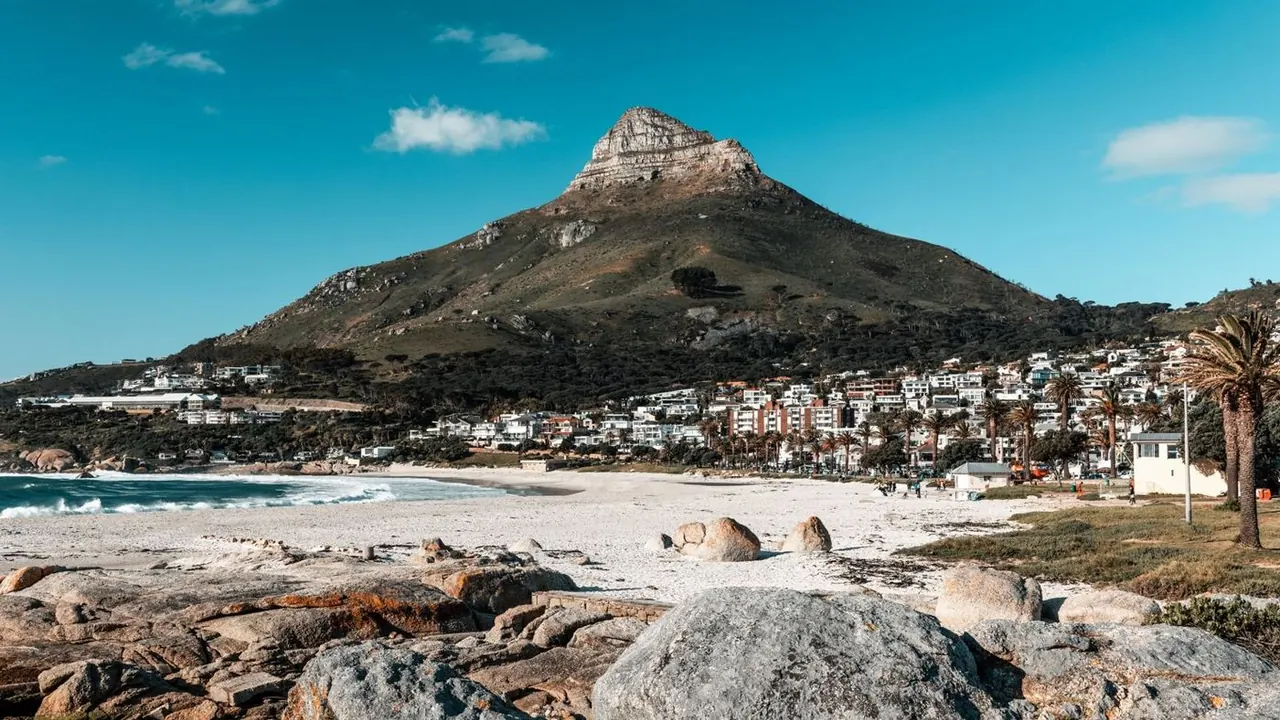
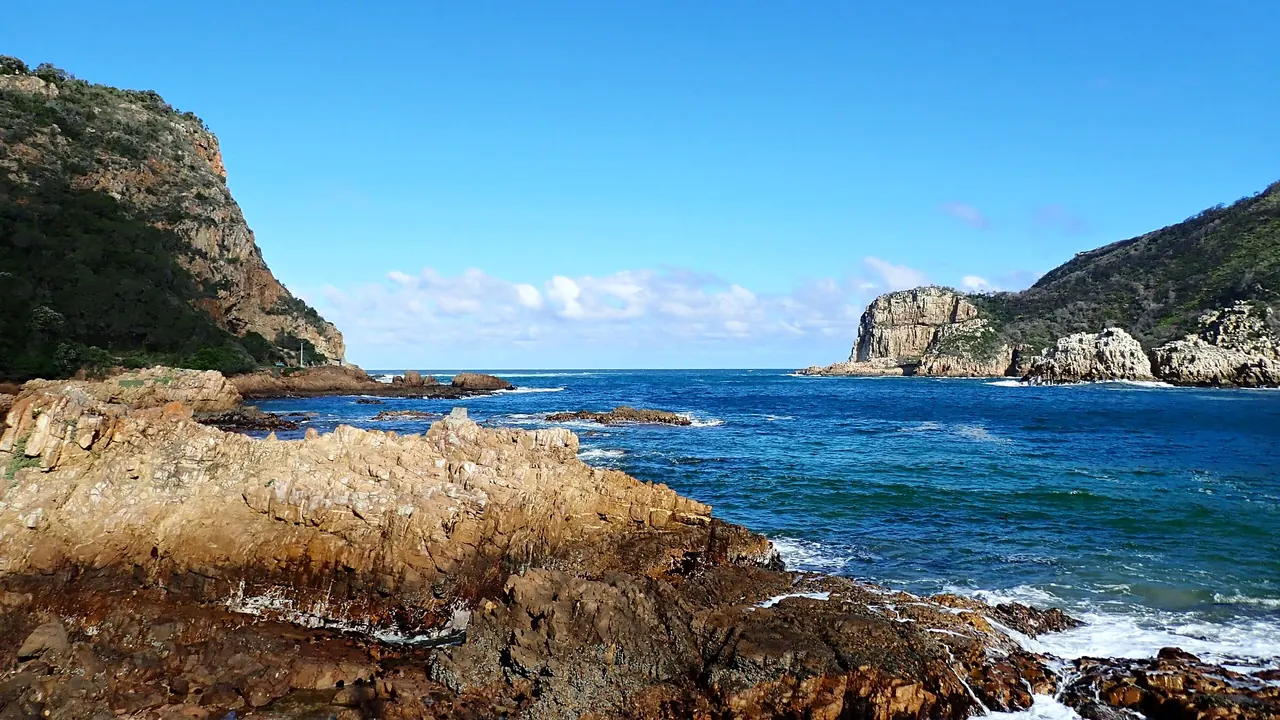
Photos: Cape Town by Stephan Louis, Pexels License; Knysna by Andrawaag, CC BY-SA 4.0, cropped.
Cape Town or Knysna?
Our verdict in twelve categories, each scored against the same fixed benchmark cities, and the climate month by month, so you can choose for your trip.
Choose Cape Town for
- nightlife
- culture and sights
- live music and the arts
Cape Town suits travellers who want wild scenery and a real city in the same trip. Table Mountain, the peninsula and the Winelands are on the doorstep, and in the evening there are Cape Malay kitchens, serious restaurants, Long Street bars and jazz. Robben Island and the District Six Museum give the stay a weight of history that a small town can't match. It is the better base for a first visit, for food and wine lovers, and for anyone who wants their days and evenings full.
Choose Knysna for
- beaches
Knysna is for a slower, quieter vacation built around forest, lagoon and coast. You get oysters on a waterfront deck, kayaking on calm water, walks under yellowwood trees and long Indian Ocean beaches a short drive away, and then early nights. Bring a car and come for the setting rather than for sights or nightlife. It works best for couples and active families who want to switch off, or as a stop on a longer drive along the Garden Route.
Scoreboard
Twelve categories on one fixed scale from 0 to 100. The shaded stretch is the gap between the two.
Your match
Pick a travel style or drag the sliders, and both match scores follow your weighting.
Wins on nightlife and culture and sights with your weighting.
Wins on beaches with your weighting.
What matters to you?
Category by category
What the scores mean for a trip.
Beaches & swimming
The two coasts are equally rewarding but in different ways. Cape Town's Atlantic beaches at Clifton and Camps Bay are some of the most photogenic anywhere, but the cold water makes them places to lie in the sun rather than swim. For a proper swim you go half an hour to False Bay, where the water is warmer and you share the sand with penguins at Boulders.
Knysna itself lies on a lagoon, so the sea is a short drive away, at the long, empty sands of Brenton-on-Sea and Buffalo Bay or the cove at Noetzie. The Indian Ocean here is warmer for swimming, but watch for rip currents and stay near the lifeguards. The calm lagoon shallows at Leisure Isle are something Cape Town has no equivalent for.
Food & drink
Cape Town is far ahead. It has its own creole tradition in the Cape Malay dishes of the Bo-Kaap, from bobotie to the gatsby, plus an ambitious restaurant scene around Bree Street and Woodstock, and Stellenbosch and Constantia wines poured from estates less than an hour away. You could eat somewhere different every night of a week and never repeat yourself.
Knysna's strength is narrow but real: oysters farmed in its own lagoon, line fish and braai on the Thesen Island quays, and a local brewing tradition. Expect relaxed lunches by the water rather than variety. After a few days the menus start to look alike.
Culture & sights
Cape Town offers three or four days of sightseeing with real weight. The ferry to Robben Island, the District Six Museum and the Castle of Good Hope tell the story of colonial rule and apartheid. The museums around the Company's Garden and the contemporary African art at Zeitz MOCAA add more.
In Knysna, heritage takes a morning: the small stone church at Belvidere, the gold-rush remains at Millwood and the timber-trade museums. The Heads at the lagoon mouth are the landmark people remember, and that is scenery rather than history.
Nightlife
Both places share the sundowner habit, but only Cape Town keeps going afterwards. Long Street has rowdy bars and clubs, Bree and Kloof Streets have cocktail and wine bars, and De Waterkant is a long-established gay quarter, with weekend clubs running into the small hours. You will need ride-hailing between areas.
Knysna's evening is a drink on a lagoon deck, a long dinner and perhaps a pub. The town only livens up in the summer peak and for the Oyster Festival and the Pink Loerie Mardi Gras.
Nature & outdoors
Both are superb outdoor bases, and Cape Town edges ahead because the wild is right on its streets. You can climb Table Mountain or Lion's Head from the city, the fynbos national park runs to Cape Point, and there are penguins, seals, surf lessons at Muizenberg and kitesurfing on the Atlantic side.
Knysna's landscape is greener and gentler: South Africa's largest indigenous forest at Diepwalle and Harkerville, a lagoon for kayaking and paddleboarding, and the clifftop walk on Robberg with its seal colony. The forest and lagoon make a calmer counterpart to Cape Town's mountain, and both get whales in winter and spring.
Day trips
Cape Town has the stronger range of days out, thanks to the Winelands. Stellenbosch, Franschhoek and Paarl alone could fill several days, and Hermanus adds clifftop whale watching.
From Knysna the outings run along the Garden Route to Plettenberg Bay, Wilderness and Mossel Bay. The best of them crosses the Outeniqua passes to Oudtshoorn, with its ostrich mansions and the Cango Caves. They are pleasant, but more of the same coast and forest. Either way you will be driving.
Good for families
Both work equally well for children who like the outdoors, and neither has a theme park. Cape Town offers set-piece outings: the Two Oceans Aquarium, the cableway, Boulders penguins and the treetop walkway at Kirstenbosch, with False Bay's tidal pools for swimming.
Knysna is more about open-ended days: paddling in the lagoon shallows, a boat out through the Heads, walking with rescued elephants and the animal sanctuaries near Plettenberg Bay. In both places the family will spend much of the day in the car.
Getting around
Neither is easy without a car, but Cape Town gives you more options. The City Bowl, Bo-Kaap and Waterfront are walkable by day, MyCiTi buses reach the airport and the Atlantic beaches, and cheap ride-hailing covers the rest, including door-to-door trips after dark.
In Knysna, only the town centre and Thesen Island are walkable. Everything else is spread along the N2 and up forest roads, so the usual plan is to fly into George, about an hour away, and hire a car there.
Shopping & style
Cape Town has more to offer, though neither is a shopping destination. The V&A Waterfront covers the chains and South African labels, Woodstock and Kloof Street sell local design and ceramics, and you can take wine and rooibos home.
Knysna's shopping is for browsing. The best things to buy are galleries on Thesen Island and furniture and turned pieces in local yellowwood and stinkwood, a craft that comes straight from the surrounding forest.
Affordability
Both are good value for visitors from Europe, North America or Australia, and the difference lies in where the money goes. In Cape Town, tasting menus, wine and ride-hailing are remarkably cheap. Rooms on the Atlantic seaboard in December and January are the big expense, along with the cableway and Robben Island tickets.
Knysna's guesthouses and cottages are reasonable for most of the year, and most outdoor activities cost little. Car hire is the one cost you can't avoid, and rooms there also peak in the same summer weeks.
Live music & performing arts
Cape Town has a musical identity of its own in Cape jazz. It hosts one of Africa's biggest jazz festivals and summer sunset concerts on the lawns at Kirstenbosch, and Artscape, the Baxter and the Cape Philharmonic provide a few good evenings of opera, drama or orchestral music.
Knysna has no theatre season or orchestra. Live music means a weekend band in a pub, or the concerts that come with its festivals.
Wellness & relaxation
Neither has a bathing tradition or thermal springs, and both rely on hotel and lodge spas. In Cape Town, rest is something you plan into a busy city stay: a long lunch on a wine estate, yoga on the Atlantic seaboard, or a morning swim in a False Bay tidal pool.
In Knysna the slow pace comes with the place. Lagoon mornings, forest lodges and retreats in the hills mean you wind down without trying.
When should you go?
Pick your month. The climate figures are measured averages, not a forecast.
Cape Town in July
Knysna in July
Daytime high, °C
Rainfall in the month, mm
Where the figures come from
Knysna's temperatures are measured 62 km from the centre, at George, George Airport.
Knysna's station stands 184 m above the city centre, so the centre is likely a little warmer than the figures say.
Knysna has no rain gauge within 25 km of the centre, so its rainfall comes from a gridded climate dataset read at the city rather than from a gauge further away.
Temperature and rainfall are climate normals, averaged over the years shown. Cape Town: 1991-2020 normals, Cape Town Airport (17.5 km from centre). Knysna: 1991-2020 normals, George, George Airport (61.5 km from centre).
Cape Town has a dry, very sunny summer and a wet winter. From December to March the days are warm, rain is rare and the beaches are at their best, though the sea only reaches about 18°C even at its warmest. From May to August the weather turns cool and grey, with June the wettest month at around 97mm. That is still fine for museums and walking the city, but not for the beach. October, November and April are pleasant months in between for hiking and the Winelands.
Knysna has a milder, more even climate. The summers are a little less hot, the winters a little less cool, and rain falls in every month instead of coming in one season. The wettest stretch is spring, with around 81mm in November, and Knysna gets far fewer sunshine hours than Cape Town in summer. Its sea is the warmer of the two, at about 21°C from December to February, so a summer beach stay is better here. In winter Knysna is the gentler place to be, while Cape Town has the drier, brighter summer.
Which traveller are you?
On a culture and arts trip, Cape Town is the clear choice. Robben Island, the District Six Museum, the Castle and Zeitz MOCAA fill several days, and at night there is Cape jazz, the Baxter and Artscape. Knysna offers a church, some forest ruins and almost no stage life.
For a food and nightlife trip, choose Cape Town. Cape Malay cooking, the tasting menus around Bree Street and Winelands bottles on every list come before evenings on Kloof Street, Long Street and in De Waterkant. Knysna serves excellent oysters but goes quiet well before midnight.
On a beach and sun trip, Knysna has the edge for swimming. Its Indian Ocean water is warmer, the lagoon shallows are calm, and Plettenberg Bay has sheltered beaches nearby. Cape Town has the more dramatic, sunnier beaches, but the Atlantic is usually too cold for more than a quick dip.
Before you go
| Measure | Cape Town | Knysna |
|---|---|---|
| Official language | English, Zulu, Xhosa, Afrikaans, Venda, Northern Sotho, Swazi, Tswana, Tsonga, Sesotho, Southern Ndebele, South African Sign Language | English, Zulu, Xhosa, Afrikaans, Venda, Northern Sotho, Swazi, Tswana, Tsonga, Sesotho, Southern Ndebele, South African Sign Language |
| Currency | Rand (ZAR) | Rand (ZAR) |
| Sockets | CMN230 V, 50 Hz | CMN230 V, 50 Hz |
| Driving side | Left | Left |
| Time zone | UTC+2 | UTC+2 |
| Emergency number | 112 | 112 |
| Elevation | 5 m | 9 m |
| Main airport | Cape Town International Airport (CPT)18 km from centre45 non-stop destinations | George Airport (GRJ)62 km from centre4 non-stop destinations |
| Public holidays this year | 13 days | 13 days |
By the numbers
| Measure | Cape Town | Knysna |
|---|---|---|
| City population | 3,776,313 | 51,078 |
| People per km² | 1,538 | 469 |
| Museums within 10 km | 22 | 0 |
| UNESCO World Heritage sites within 50 km | 3 | 0 |
| Swim season, months above 21 °C | None | 1 month |
Where else could you go?
Every comparison below shares a destination with this one, so you can follow Cape Town or Knysna somewhere new.
- Stellenboschvs Cape Town
- Hermanusvs Cape Town
- Hermanusvs Knysna
- Stellenboschvs Knysna
- Durbanvs Knysna
- Johannesburgvs Knysna