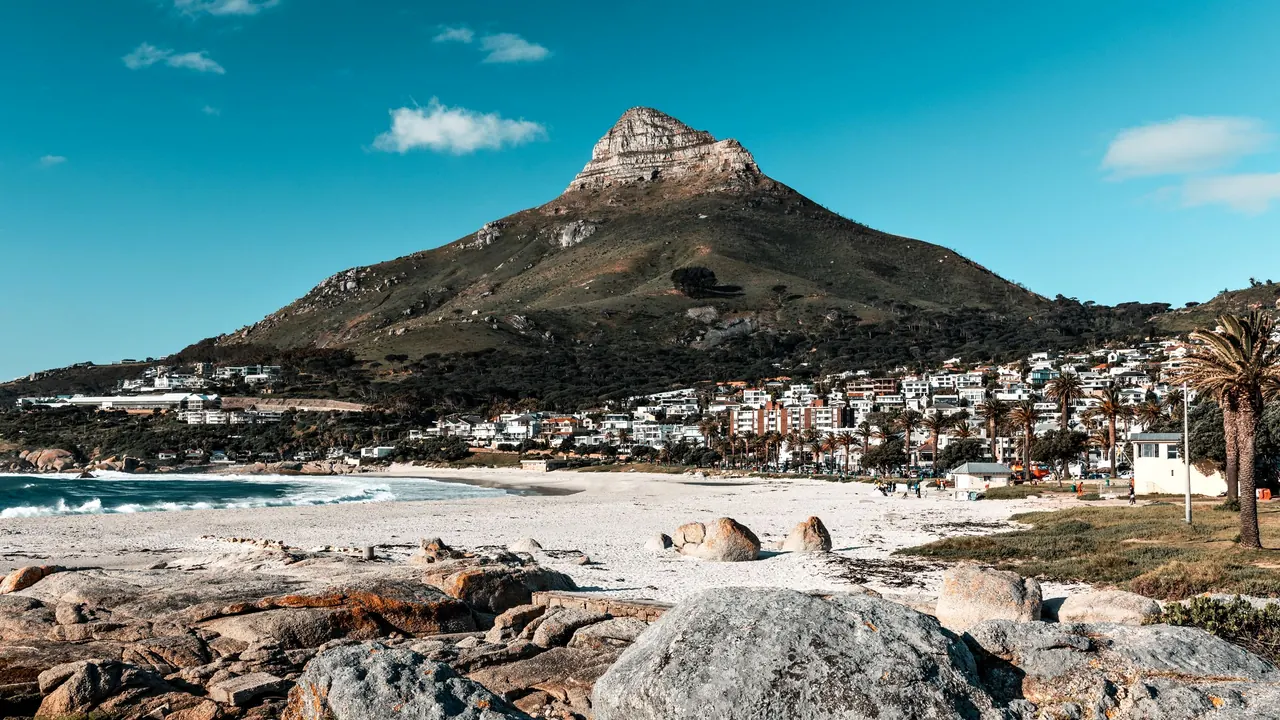
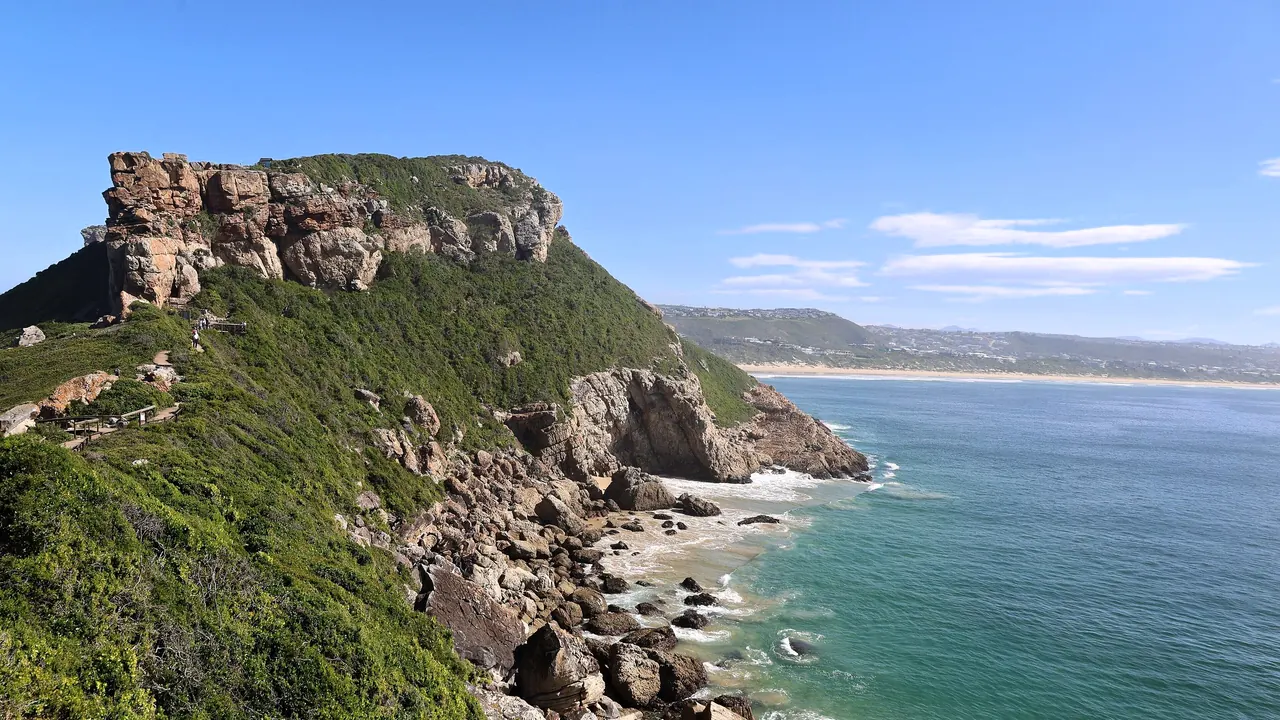
Photos: Cape Town by Stephan Louis, Pexels License; Garden Route by flowcomm, CC BY 2.0, cropped.
Cape Town or Garden Route?
Our verdict in twelve categories, each scored against the same fixed benchmark cities, and the climate month by month, so you can choose for your trip.
Choose Cape Town for
- nightlife
- culture and sights
- live music and the arts
Cape Town suits travellers who want a city and wild country in the same stay. Table Mountain and the peninsula's national park start at the edge of the centre, the Winelands are under an hour away, and in the evenings there are serious restaurants, Cape Malay cooking, bars on Bree Street and enough history, from Robben Island to the District Six Museum, to fill several days. It gives you far more to do after dark and on a rainy day.
Choose Garden Route for
- getting around
- beaches
- families
The Garden Route is the better pick for a slower road trip along the coast, especially with children. The sea is warmer, the lagoons at Knysna, Keurbooms and Wilderness are calm, and forest, cliffs and wildlife centres are a short drive from wherever you stay. You give up most of the culture, nightlife and food choice in return for long beaches and quiet evenings.
Scoreboard
Twelve categories on one fixed scale from 0 to 100. The shaded stretch is the gap between the two.
Your match
Pick a travel style or drag the sliders, and both match scores follow your weighting.
Wins on nightlife and culture and sights with your weighting.
Wins on getting around and beaches with your weighting.
What matters to you?
Category by category
What the scores mean for a trip.
Beaches & swimming
Cape Town has the more famous beaches. Clifton and Camps Bay are beautiful to look at, but the Atlantic water there is too cold for more than a quick dip. Real swimming means driving across to False Bay at Muizenberg or St James.
The Garden Route is the better place for a beach vacation. Its Indian Ocean water is a few degrees warmer, the long sands at Plettenberg Bay, Keurboomstrand and Wilderness give you room to spread out, and the lagoons offer calm water as an alternative to the rip currents on the open beaches.
Food & drink
Cape Town eats far better. It has a cooking tradition of its own in Cape Malay curries, bobotie and the gatsby, a cluster of ambitious chefs around Bree Street and Woodstock, and the Stellenbosch and Franschhoek wine country close enough for lunch.
The Garden Route's strength is simple seafood, above all Knysna's oysters, along with Plettenberg Bay's sparkling wines and Saturday farm markets such as Sedgefield's. It is good eating but with a narrow range, and many evenings end at a braai outside a rented cottage.
Culture & sights
This is one of the widest gaps between the two. Cape Town's history gives you days of meaningful sightseeing: the ferry to Robben Island, the District Six Museum, the Castle of Good Hope, the Bo-Kaap's mosques and Zeitz MOCAA's African contemporary art in its converted silo.
The Garden Route offers a handful of half-days. These include the caravel replica and Post Office Tree at Mossel Bay, Knysna's gold-rush relics and Oudtshoorn's ostrich-feather mansions. Pleasant as they are, nobody chooses the coast for its sights.
Nightlife
Cape Town has a real night out: the rowdy bars of Long Street, cocktail and wine bars on Bree and Kloof Streets, De Waterkant's gay quarter and sundowners over the Atlantic at Camps Bay. You will need ride-hailing to get between areas after dark.
On the Garden Route the evenings are quiet for most of the year. Plettenberg Bay's beachfront only fills up in the weeks around Christmas and New Year, and Knysna's waterfront pubs are lively on summer weekends and calm the rest of the time.
Nature & outdoors
Both are superb, but Cape Town goes further. Table Mountain and Lion's Head rise straight out of the city, and the fynbos-covered national park runs down to Cape Point with penguins, baboons and seals along the way. Surfing at Muizenberg and kitesurfing on the Atlantic side add to it.
The Garden Route's scenery is softer and more wooded. It has the country's largest indigenous forest, the cliffs and suspension bridge at Tsitsikamma, the multi-day Otter Trail, canoe trips up tea-coloured rivers and the seal colony on Robberg. Whales come into the bays of both from about June to November.
Day trips
Cape Town has one outstanding day out. The Winelands start under an hour away, and Stellenbosch, Franschhoek and Paarl alone can fill several days of tastings and long lunches. Hermanus's clifftop whale-watching and the Cape Dutch street at Tulbagh add a few more.
From a Garden Route base, the outings are mostly to small coastal towns a short drive along the N2. The best is over the Outeniqua Pass to Oudtshoorn and the Cango Caves. The region's best days are spent in its forests and on its trails rather than in other places.
Good for families
The Garden Route works better with children. The lagoons give you shallow, sheltered water and self-catering houses are easy to find. The Crags puts primate, bird and wildlife sanctuaries close together, and the ostrich farms and Cango Caves inland suit older children.
Cape Town has excellent individual outings, including the Two Oceans Aquarium, the penguins at Boulders and the cableway. However, the sights are spread out, the Atlantic beaches are too cold for long swims, and families need to keep their wits about them in town.
Getting around
Neither place works without a car, but the Garden Route is simpler. One good highway, the N2, runs its full length, most hops between towns take well under an hour, and you can fly into George and be at a lagoon soon after landing. The catch is that there is no public transport for visitors at all.
Cape Town has MyCiTi buses and a walkable centre by day. Even so, the peninsula and the Winelands are spread out, so most trips mean driving or ride-hailing, and at night you should take a car door to door rather than walk.
Shopping & style
Shopping is a real pastime in one and an afterthought in the other. In Cape Town, the V&A Waterfront's harbourside mall covers the international chains and South African labels. Woodstock's warehouses, Bree Street and Kloof Street sell ceramics, leather and fashion by local designers, and Greenmarket Square adds African crafts. Wine and rooibos are the easy things to take home.
On the Garden Route, shopping is limited to Knysna's waterfront galleries, a few boutiques in Plettenberg Bay and the weekend craft markets. Furniture made from Knysna's indigenous timber is the one real local speciality.
Affordability
Both are inexpensive for visitors from Europe, North America or Australia. Cape Town stretches your money a little further at the table, with tasting menus and estate wines costing a fraction of what they would at home and cheap ride-hailing to get around.
On the Garden Route, the essential car hire and the guesthouses are reasonable. Both places get expensive over the December to January peak, when Camps Bay in one and Plettenberg Bay and Knysna in the other book up and rates rise. Spring or autumn in quieter towns such as Wilderness or Sedgefield gives the best value along the coast.
Live music & performing arts
Only one of the two has a regular programme of concerts and theatre. In Cape Town, Cape jazz still plays in a handful of clubs and the city hosts a big international jazz festival. In summer there are Sunday sunset concerts on Kirstenbosch's lawns, and Artscape and the Baxter Theatre put on opera, ballet and drama. That fills a couple of good evenings, though it rarely shapes a trip.
Along the Garden Route, live performance mostly means one week each autumn, when Oudtshoorn's Afrikaans arts festival fills the town with theatre and cabaret. The rest of the year there is little beyond the odd acoustic gig or a pub band in summer.
Wellness & relaxation
The two are evenly matched, and neither has a bathing tradition. Spas are mostly found in good hotels, Winelands estates and luxury lodges. Cape Town's way of slowing down is sociable: long lunches on wine estates, yoga on the Atlantic seaboard and a morning dip in the False Bay tidal pools. For hot springs you have to drive inland to the old spa towns of the Overberg.
The Garden Route offers more seclusion, with forest walks, lagoon views, retreats in the woods around The Crags and lodge spas near Plettenberg Bay. Its nearest thermal water is a family resort fed by hot springs near Calitzdorp in the Klein Karoo. It is pleasant, but not worth the drive for its own sake.
When should you go?
Pick your month. The climate figures are measured averages, not a forecast.
Cape Town in July
Garden Route in July
Daytime high, °C
Rainfall in the month, mm
Where the figures come from
Garden Route's temperatures are measured 62 km from the centre, at George, George Airport.
Garden Route's station stands 188 m above the place it is measured for, so that place is likely a little warmer than the figures say.
Garden Route has no rain gauge within 25 km of the centre, so its rainfall comes from a gridded climate dataset read at the destination rather than from a gauge further away.
Temperature and rainfall are climate normals, averaged over the years shown. Cape Town: 1991-2020 normals, Cape Town Airport (17.5 km from centre). Garden Route: 1991-2020 normals, George, George Airport (61.6 km from centre).
Cape Town has a sharp split between the seasons. December to March is hot, very sunny and almost dry, with highs around 28°C in February, so this is the time for the beaches and the mountain. From May to August it turns cool and wet, with June the rainiest month at close to 100mm, so walking and hiking get harder to plan. The sea stays cold all year and reaches only about 18°C even at its warmest, on the False Bay side.
Along the Garden Route, measured around the central coast, the year is much more even. Summer highs are a few degrees lower than in Cape Town and winters are milder, but rain falls in every month and is heaviest in October and November, when it reaches about 80mm. It also gets fewer hours of sun in summer. The sea is the warmer of the two, about 21°C in January and February, so it is the better choice for swimming in high summer. In winter it is the drier and milder option, while Cape Town is at its wettest.
Which traveller are you?
For a beach and sun trip, the Garden Route has the edge. The Indian Ocean is warmer than anywhere around Cape Town, the beaches at Plettenberg Bay and Wilderness are long and open, and the sheltered lagoons give you calm water when the surf is rough.
On a food and nightlife trip, Cape Town is clearly the better choice. It has Bree Street's restaurants and bars, Cape Malay cooking from the Bo-Kaap, wine estates close to town and late nights on Long Street. On the Garden Route most evenings end quietly after a seafood dinner.
On a family trip with children, the Garden Route makes life easier. It has shallow lagoons, lifeguarded beaches in summer, plenty of self-catering houses and the animal sanctuaries at The Crags close together. Cape Town's attractions are spread out, and its Atlantic water is too cold for long swims.
Before you go
| Measure | Cape Town | Garden Route |
|---|---|---|
| Official language | English, Zulu, Xhosa, Afrikaans, Venda, Northern Sotho, Swazi, Tswana, Tsonga, Sesotho, Southern Ndebele, South African Sign Language | English, Zulu, Xhosa, Afrikaans, Venda, Northern Sotho, Swazi, Tswana, Tsonga, Sesotho, Southern Ndebele, South African Sign Language |
| Currency | Rand (ZAR) | Rand (ZAR) |
| Sockets | CMN230 V, 50 Hz | CMN230 V, 50 Hz |
| Driving side | Left | Left |
| Time zone | UTC+2 | UTC+2 |
| Emergency number | 112 | 112 |
| Elevation | 5 m | - |
| Main airport | Cape Town International Airport (CPT)18 km from centre45 non-stop destinations | George Airport (GRJ)4 non-stop destinations |
| Public holidays this year | 13 days | 13 days |
By the numbers
| Measure | Cape Town | Garden Route |
|---|---|---|
| Population | 3,776,313 | - |
| People per km² | 1,538 | - |
| Museums within 10 km | 22 | - |
| UNESCO World Heritage sites within 50 km | 3 | - |
| Swim season, months above 21 °C | None | 1 month |
Where else could you go?
Every comparison below shares a destination with this one, so you can follow Cape Town or Garden Route somewhere new.
- Stellenboschvs Cape Town
- Hermanusvs Cape Town
- Knysnavs Cape Town
- Johannesburgvs Cape Town
- Windhoekvs Cape Town
- Durbanvs Cape Town