South Africa
Garden Route
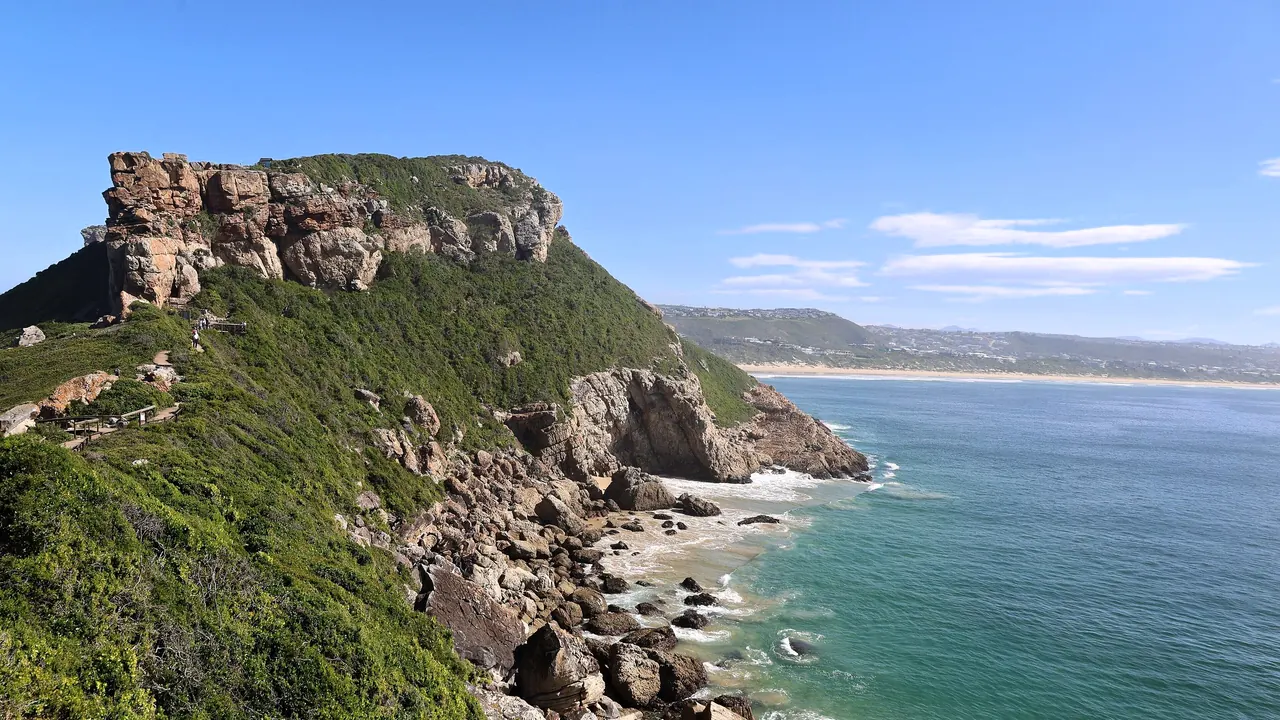
The cliffs of the Robberg peninsula at Plettenberg Bay
- Nature & outdoors81
- Beaches68
- Families66
Match
46
Every category weighted equally
- Beach & sun52
- Culture & arts39
- Food & nightlife39
- Family trip55
- Outdoors55
- Relax & unwind51
- Shopping & style41
- On a budget48
Garden Route in twelve categories
Our verdict on each, scored 0 to 100 against the same fixed benchmark cities, so a score means the same thing on every page.
Beaches & swimming. Scores 68 out of 100.
Food & drink. Scores 45 out of 100.
Culture & sights. Scores 22 out of 100.
Nightlife. Scores 20 out of 100.
Nature & outdoors. Scores 81 out of 100.
Day trips. Scores 45 out of 100.
Good for families. Scores 66 out of 100.
Getting around. Scores 55 out of 100.
Shopping & style. Scores 28 out of 100.
Affordability. Scores 63 out of 100.
Live music & performing arts. Scores 18 out of 100.
Wellness & relaxation. Scores 46 out of 100.
Garden Route category by category
Beaches & swimming
68The coast between Mossel Bay and Plettenberg Bay has long, open beaches of pale sand backed by dunes and forested hills. Plettenberg Bay is the strongest base, with Central, Lookout and Robberg beaches and the long sweep of Keurboomstrand. Wilderness has wide, empty sands. Mossel Bay's Santos Beach faces north and is unusually sheltered. Victoria Bay is a tiny cove that surfers favour.
The Indian Ocean is usually around 19°C to 22°C from December to March, but upwelling can make it noticeably colder overnight. Rip currents are common on the open beaches, so it is best to swim where lifeguards patrol in summer. Families with small children often use the calm lagoons at Knysna, Keurbooms and Wilderness instead. During the long December school break the beach is the centre of the day. Outside summer it is more for walking than swimming.
Food & drink
45Eating here centres on the sea. Knysna lagoon is known for its oysters, and the line-fish, calamari and mussels on menus along the coast are usually fresh and simply done. The hills around Plettenberg Bay grow cool-climate wines, mostly sparkling and Sauvignon Blanc, and their tasting rooms make easy afternoons. Inland, Oudtshoorn serves ostrich, and the Klein Karoo makes port-style wines around Calitzdorp.
The best places to eat are spread across Knysna, Plettenberg Bay and Wilderness: relaxed bistros, waterfront seafood places and farm kitchens. Weekend farm markets, especially the Saturday market in Sedgefield, are a local habit. A braai at a self-catering cottage is part of most stays. The cooking is good, but the range is limited and there is no real street food.
Culture & sights
22Most people come for the coast and forest rather than for sights, and the heritage is modest. The best stop is in Mossel Bay. The Dias Museum complex has a full-size replica of a Portuguese caravel and the Post Office Tree, where sailors left letters in the 1500s. The caves at Pinnacle Point nearby hold some of the earliest evidence of modern human behaviour, but they can only be visited with a guide.
Knysna's past as a timber and gold-rush town shows in the old woodcutters' cottages and the Millwood goldfields in the forest. George has a good railway museum. Inland, Oudtshoorn has sandstone 'feather palaces' built during the ostrich-feather boom of around 1900. These are rewarding half-days, not the reason for a trip.
Nightlife
20For most of the year the evenings are quiet: dinner, a drink by the lagoon and an early night before a hike. The exception is Plettenberg Bay from mid-December to early January. Then its beachfront bars and a few late venues fill with summer visitors from Johannesburg and Cape Town, and end-of-school crowds arrive around the start of December. Knysna's waterfront and Thesen Island have pubs and wine bars that stay lively on summer weekends. Anyone who wants a big night out should come in that short peak season, or not plan on one at all.
Nature & outdoors
81This is a coast of sandstone cliffs, river gorges and lakes, backed by the largest indigenous forest in the country and the Outeniqua and Tsitsikamma ranges. The mountains are modest in height, so the drama lies where forest meets sea. Tsitsikamma, about an hour east of Plettenberg Bay near Storms River, is the high point: a suspension bridge over the river mouth, cliff walks and the five-day Otter Trail, about 45km along the shore. Closer to Plett, the Robberg peninsula has a rugged circuit walk past a Cape fur seal colony.
Around Wilderness and Knysna, the landscape is gentler: canoe trips up tea-coloured rivers to waterfalls, lake paddling and walks under old yellowwoods. Dolphins are often seen offshore, and southern right whales come into the bays from about June to November. Inland, the Outeniqua and Swartberg passes climb into the dry Klein Karoo, a striking change of scenery. The weather is mild all year, and rain falls in every season.
Day trips
45From a central base such as Knysna or Wilderness, the region's towns make easy outings. Mossel Bay, with its museums and harbour, is about an hour west. Plettenberg Bay is half an hour east. Smaller places like Sedgefield and the village at Storms River are on the way. The best outing is inland over the Outeniqua Pass to Oudtshoorn, about an hour from George, for ostrich farms, the feather palaces and the Cango Caves. Calitzdorp's port cellars are close by, and Prince Albert is a longer drive over the Swartberg Pass. These are pleasant small towns rather than major destinations, and most of the best days out here are into nature rather than to other towns.
Good for families
66This is a common family road trip in South Africa, and it works well with children. The lagoons at Knysna, Keurbooms and Wilderness have shallow, sheltered water for small swimmers. The surf beaches have lifeguards in summer. Self-catering houses are easy to find.
The Crags, east of Plettenberg Bay, has the most made for children. There are walk-through primate and bird sanctuaries, big-cat and wildlife rescue centres, and elephant encounters close together. Inland, older children enjoy riding and feeding at the Oudtshoorn ostrich farms and the guided tours of the Cango Caves. Forest canopy tours and seal-spotting boat trips suit teenagers. Long drives between towns and changeable weather are the main things to plan around. The area is malaria-free.
Getting around
55This is a self-drive region. The N2 coastal highway runs along the whole route on a good road. Mossel Bay to Plettenberg Bay is about two hours, and most hops between towns take well under an hour. George has the airport, so a visitor can fly in, pick up a car and be at a lagoon soon afterwards. Driving here from Cape Town takes most of a day.
In practice there is no public transport for visitors. Long-distance coaches stop in the towns but do not reach the beaches, trailheads or farms. The centres of Knysna and Plettenberg Bay are walkable, but little else is. Knysna's single road through town gets congested in December. The mountain passes to the Klein Karoo are scenic but slow.
Shopping & style
28Shopping is a light pastime here. Knysna has the most choice, with the waterfront and Thesen Island offering galleries, homeware and beachwear shops. Plettenberg Bay has a few boutiques aimed at its well-off summer visitors. Weekend farm and craft markets in Sedgefield and around the towns sell local produce, ceramics and woodwork. Furniture and objects made from Knysna's indigenous timbers are a real local craft. Beyond that it is souvenirs and supermarkets, and nobody comes here to shop.
Affordability
63For most overseas visitors this is an inexpensive part of the world to travel in. Guesthouses, self-catering cottages, local wine and seafood dinners cost well below Western European levels. Hiring a car, the essential expense here, is reasonable. Park fees and activities such as canopy tours are fair value.
The exception is the South African summer peak from mid-December to early January. Then Plettenberg Bay and Knysna fill up, accommodation is booked far ahead and rates rise sharply. The luxury lodges and golf estates are expensive at any time. A visit in spring or autumn, staying in Wilderness, Sedgefield or Mossel Bay, gets the most for the money.
Live music & performing arts
18Formal performance is rare. The big exception is the Klein Karoo Nasionale Kunstefees in Oudtshoorn, a long-running Afrikaans arts festival held each autumn. For about a week, the town fills with theatre, music and cabaret. The rest of the year offers small theatres, occasional acoustic gigs in Knysna and Plettenberg Bay, and live bands in pubs during the summer peak. Anyone who wants a regular concert or theatre programme will not find one here.
Wellness & relaxation
46The region's main appeal for relaxation is its pace. Days here mean forest walks, lagoon views and quiet guesthouses, and this is a place people come to slow down. The best spas belong to the luxury lodges and golf estates around Knysna, Plettenberg Bay and George, and some take day guests. Yoga and wellness retreats run in the forest around The Crags and Knysna.
There is no local bathing tradition. The nearest thermal water is inland in the Klein Karoo, where natural hot springs near Calitzdorp feed a family-style resort. It is pleasant enough, but not a reason to make the drive.
Where to stay in Garden Route
Knysna makes the easiest first base. It sits in the middle of the route, with Plettenberg Bay half an hour east and Mossel Bay about an hour west. It also has the widest choice of seafood places, waterfront pubs and shops. Its lagoon has calm water for small children, and forest walks and old goldfields are close by. The one road through town does clog in December.
Plettenberg Bay suits beach days, with several lifeguarded beaches and Keurboomstrand all close together. From mid-December to early January it is also the only place with real nightlife. Families do well here, with The Crags and its animal sanctuaries just to the east. Robberg and Tsitsikamma are the best walking within reach.
For a quiet stay, Wilderness and Sedgefield have wide empty sands, sheltered lagoons, river canoeing and lower rates. Mossel Bay is good value and suits visitors who want museums, though it is further from the forest. Distances are short, so one base can cover a week by car. For a longer trip, split the stay between Knysna or Wilderness and Plettenberg Bay. A second visit could add a night inland around Oudtshoorn for the Klein Karoo.
When should you go?
Pick a month to see what it is like. The climate figures are measured averages, not a forecast.
Garden Route in July
Daytime high, °C
Rainfall in the month, mm
The whole year
Shaded against this destination’s own year: the deepest cell is its best month for that figure and the palest its weakest.
Where the figures come from
Garden Route's temperatures are measured 62 km from the centre, at George, George Airport.
Garden Route's station stands 188 m above the place it is measured for, so that place is likely a little warmer than the figures say.
Garden Route has no rain gauge within 25 km of the centre, so its rainfall comes from a gridded climate dataset read at the destination rather than from a gauge further away.
Temperature and rainfall are climate normals, averaged over the years shown. Garden Route: 1991-2020 normals, George, George Airport (61.6 km from centre).
Before you go
| Measure | Garden Route |
|---|---|
| Official language | English, Zulu, Xhosa, Afrikaans, Venda, Northern Sotho, Swazi, Tswana, Tsonga, Sesotho, Southern Ndebele, South African Sign Language |
| Currency | Rand (ZAR) |
| Sockets | CMN230 V, 50 Hz |
| Driving side | Left |
| Time zone | UTC+2 |
| Emergency number | 112 |
| Main airport | George Airport (GRJ)4 non-stop destinations |
| Public holidays this year | 13 days |
By the numbers
| Measure | Garden Route |
|---|---|
| Swim season, months above 21 °C | 1 month |
Compare Garden Route with
Every comparison with a written verdict behind it.