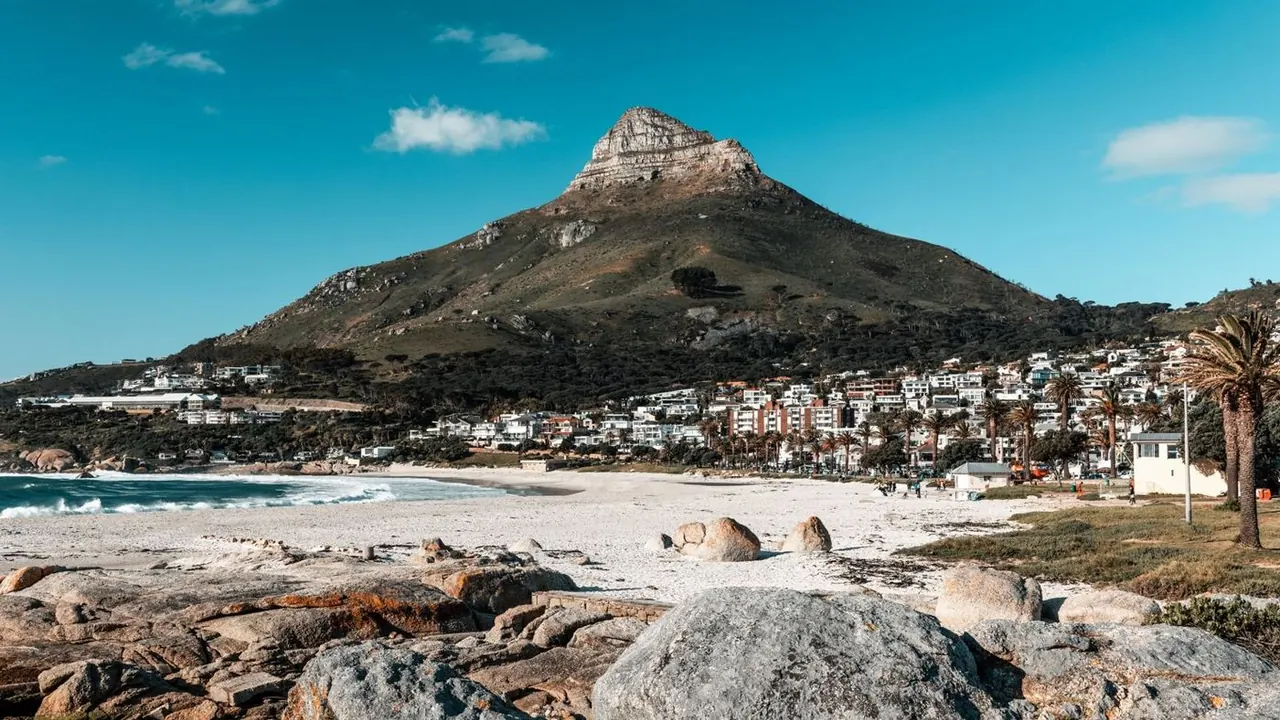
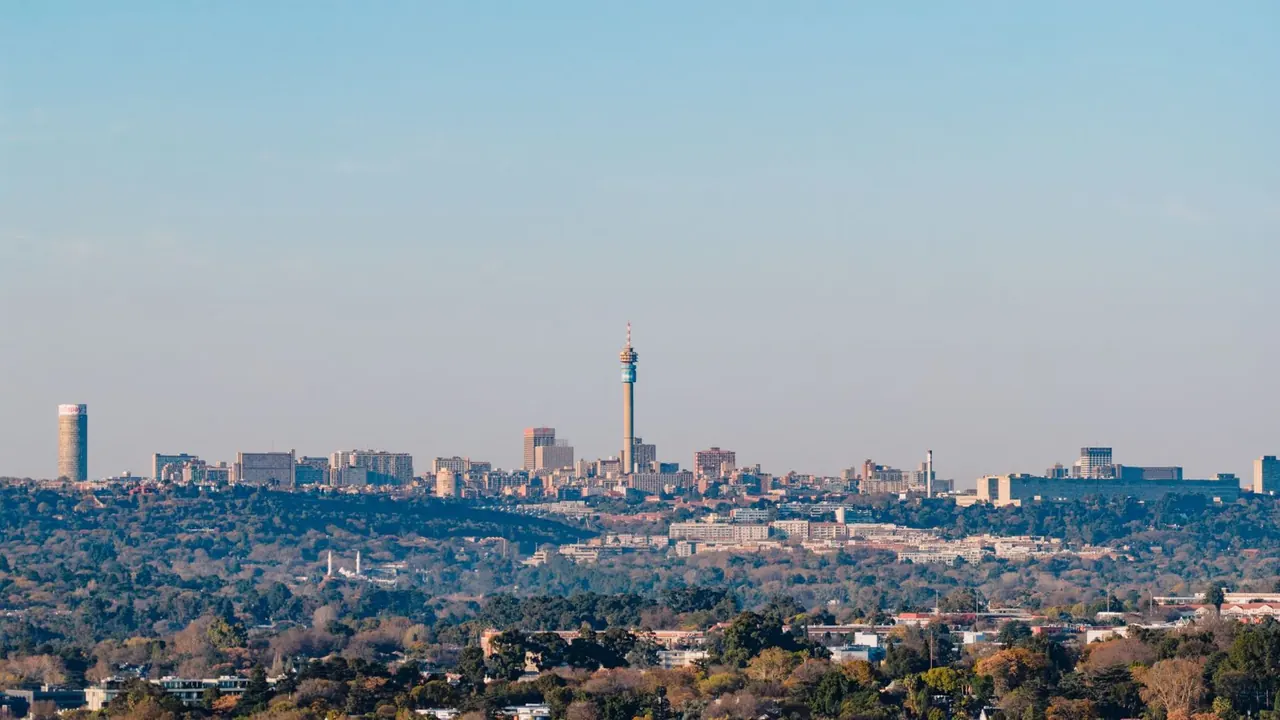
Photos: Cape Town by Stephan Louis, Pexels License; Johannesburg by K, Pexels License.
Cape Town or Johannesburg?
Our verdict in twelve categories, each scored against the same fixed benchmark cities, and the climate month by month, so you can choose for your trip.
Choose Cape Town for
- beaches
- nature and the outdoors
- getting around
Cape Town is the choice for a trip built around landscape and the good life. Table Mountain sits behind the centre, the peninsula runs down to Cape Point past penguins and surf beaches, and the Winelands begin under an hour away. It suits travellers who want hiking, beaches, long lunches on wine estates and a summer stay with plenty of sun, and who are happy to drive between the sights.
Choose Johannesburg for
- shopping
- live music and the arts
- nightlife
Johannesburg makes more sense for travellers drawn to the country's modern story and its urban energy. The Apartheid Museum, Constitution Hill and Soweto put recent history in front of you, amapiano and house fill the dance floors, and Sandton's malls are the strongest shopping on the continent. It also works well as the starting point for a safari, with Pilanesberg and the smaller game reserves within a drive.
Scoreboard
Twelve categories on one fixed scale from 0 to 100. The shaded stretch is the gap between the two.
Your match
Pick a travel style or drag the sliders, and both match scores follow your weighting.
Wins on beaches and nature and the outdoors with your weighting.
Wins on shopping and live music and the arts with your weighting.
What matters to you?
Category by category
What the scores mean for a trip.
Beaches & swimming
This is Cape Town's category by a long way. It has two coasts: the Atlantic coves of Clifton, Camps Bay and Llandudno for sunbathing beneath granite boulders, with a cold, quick dip, and False Bay for real swimming at Muizenberg, St James and the tidal pools, with penguins at Boulders.
Johannesburg has no coast at all. In the hot summers you swim in a hotel or garden pool, and the nearest open water is the dam at Hartbeespoort.
Food & drink
Cape Town is the better city to eat in, because its strengths are things Johannesburg can only bring in from elsewhere. Cape Malay cooking from the Bo-Kaap, with bobotie, fragrant curries and koeksisters, is a cuisine that belongs to the city. Snoek and yellowtail are eaten by the harbour at Kalk Bay and Hout Bay, and the wine estates are less than an hour away. Johannesburg's restaurants pour the same Chenin Blanc and Pinotage, but those bottles come from the far end of the country.
Johannesburg wins on the street, which is exactly where Cape Town is thin. Bunny chow, kotas and vetkoek give it the grazing food Cape Town lacks, and weekend afternoons at Soweto's shisa nyama butcheries make eating meat over fire into a social occasion. Fordsburg's Indian and Middle Eastern kitchens add range. Its smarter dining in Parkhurst, Rosebank and Sandton is good, especially for steak, but it is spread across the suburbs, so you drive to dinner rather than strolling between restaurants as you can around Bree Street.
Culture & sights
The two are well matched here, and both show the history of apartheid, but they tell it in different ways. Cape Town has Robben Island, the District Six Museum and the older colonial layer of the Castle and the Company's Garden. It also has Zeitz MOCAA for contemporary African art, and the Bo-Kaap gives you a historic street to walk.
Johannesburg is younger and more concentrated on the twentieth century. The Apartheid Museum, Constitution Hill and Vilakazi Street in Soweto are the core visits, with Art Deco buildings in the inner city. There is no old quarter to wander, so a guide and a car do most of the work.
Nightlife
Both cities offer a good night out, but in different styles. Cape Town is about sundowners on the Camps Bay beachfront, cocktail and wine bars on Bree and Kloof Streets, the backpacker bars of Long Street and the gay quarter in De Waterkant. It is busiest in summer and much quieter for the rest of the year.
Johannesburg is more about dancing to local music, with amapiano and house in Sandton's clubs and Soweto shisa nyama sessions that start in the afternoon and roll on into the night. In both cities you ride between areas after dark rather than walk.
Nature & outdoors
Cape Town is one of the great outdoor cities, and Johannesburg cannot match it. Table Mountain National Park begins behind the centre and runs to Cape Point, covered in fynbos. Whales come into False Bay, and there is surfing, kitesurfing and coastal driving, all within half an hour or so of your hotel.
Johannesburg's green side is gentler: a heavily treed city, the Walter Sisulu Botanical Garden and its black eagles, and Klipriviersberg for short walks. What it offers that Cape Town doesn't is big game, with lions, elephants and rhino at Pilanesberg, a long morning's drive away.
Day trips
Cape Town has the better range of outings, mainly because of the Winelands. Stellenbosch, Franschhoek, Paarl and Constantia can fill several days of tastings and Cape Dutch towns, and Hermanus adds whale watching from the clifftops. You will need a car or a tour for almost all of it.
From Johannesburg the choice is narrower but easier to reach. The Gautrain runs to Pretoria's Union Buildings and Voortrekker Monument, and the Cradle of Humankind adds a World Heritage Site about early human ancestors. Cullinan and Sun City fill out the list.
Good for families
Cape Town is the easier and more rewarding city with children. The Two Oceans Aquarium, the penguins at Boulders, the cableway and Kirstenbosch's treetop walkway are big hits, and the tidal pools at St James and Fish Hoek suit small swimmers.
Johannesburg has the theme park that Cape Town lacks in Gold Reef City, as well as a zoo, a science centre and lion parks on the edge of town. But it is harder to manage with a pushchair, and many families treat it as a stop on the way to a game reserve.
Getting around
Both are car cities, but Cape Town is the easier of the two. Its City Bowl, Bo-Kaap and Waterfront can be walked by day, and the MyCiTi buses reach the airport, the Atlantic beaches and Hout Bay.
Johannesburg spreads over a far larger area, with patchy pavements. The Gautrain between the airport, Sandton, Rosebank and Pretoria is the one easy option. Otherwise you rely on ride-hailing, a hire car or a guide, and walk only in small pockets such as Melville or Braamfontein in daylight.
Shopping & style
Johannesburg is the stronger shopping destination. Sandton, around Nelson Mandela Square, has the continent's main concentration of luxury labels, Rosebank's rooftop market is good for southern African crafts, and Parkhurst has local designers. Most of it is in enclosed malls you drive between.
Cape Town has less but more of a sense of place. Woodstock's warehouses and Bree and Kloof Streets sell local design, Greenmarket Square has craft stalls, and wine and rooibos are the obvious things to take home. Its luxury shopping comes down to a few stores in the Waterfront mall.
Affordability
Both are good value for visitors from Europe, North America or Australia, with cheap restaurant meals and wine, but the extra costs come from different places. In Cape Town, rooms on the Atlantic seaboard and at the Waterfront get expensive in the December to January peak and ease off in the cooler months.
Johannesburg's hotels are more even through the year. There, the extra cost is getting around: you need a car or ride-hailing almost everywhere, and Soweto tours and a Sandton address add to the bill.
Live music & performing arts
The two are close here, and both have deep jazz roots. Cape Town's version is Cape jazz and the big International Jazz Festival, with Sunday summer concerts on Kirstenbosch's lawns and Artscape and the Baxter for opera and drama.
Johannesburg has more of an edge. The Market Theatre is famous for its protest theatre under apartheid, the Soweto Theatre brings plays and music to the township, and the city's music runs from Sophiatown jazz through gospel and kwaito to house.
Wellness & relaxation
Neither city has a bathing tradition, but Cape Town is more restful. Long lunches on wine estates, morning swims in the False Bay tidal pools and quiet afternoons in Kalk Bay give it an easy pace, and the Winelands spas are excellent.
Johannesburg is fast and business-minded. Its day spas in the northern suburbs are good value, but for real calm locals head out to the Magaliesberg or a bush lodge.
When should you go?
Pick your month. The climate figures are measured averages, not a forecast.
Cape Town in July
Johannesburg in July
Daytime high, °C
Rainfall in the month, mm
Temperature and rainfall are climate normals, averaged over the years shown. Cape Town: 1991-2020 normals, Cape Town Airport (17.5 km from centre). Johannesburg: 2005-2019 (sunshine 1991-2020, rainfall 1991-2020) normals, Johannesburg B / Roosevelt Park (7.3 km from centre).
The two cities have their rain at opposite times of year. Cape Town is at its best from December to March: warm, around 28°C at the peak, almost dry and with very long sunny days, which is the only time its beaches really work. Even then the sea in False Bay reaches only about 18°C. From May to August the winter rains arrive, with close to 97mm in June, highs in the high teens and short, grey days. That's fine for museums and wine estates but poor for the mountain and the beaches.
Johannesburg gets its rain in summer, in afternoon thunderstorms that bring around 135mm in December and January, though mornings are often bright and the heat stays moderate. Its winter from May to August is dry and reliably sunny, with highs around 19°C, pleasant for walking and game viewing. September and October are a good middle ground: warm, still mostly dry, and before the summer storms build.
Which traveller are you?
On a beach and sun trip, Cape Town is the clear pick. Summer brings dry, sunny weather, the white Atlantic coves of Clifton and Camps Bay, and warmer swimming in False Bay. Johannesburg is far inland, so swimming there means a pool.
For an outdoors trip, Cape Town again comes out ahead. You can hike Table Mountain and Lion's Head straight from town, surf at Muizenberg, kitesurf off the Atlantic beaches and drive Chapman's Peak. Johannesburg's hills and game reserves mostly need a longer drive out of the city.
On a shopping trip, Johannesburg is the better bet if you are happy to spend your days in malls. You drive from one big air-conditioned centre to the next, with international labels in a depth Cape Town cannot match. Cape Town is better for a slow browse and a few bottles of wine.
Before you go
| Measure | Cape Town | Johannesburg |
|---|---|---|
| Official language | English, Zulu, Xhosa, Afrikaans, Venda, Northern Sotho, Swazi, Tswana, Tsonga, Sesotho, Southern Ndebele, South African Sign Language | English, Zulu, Xhosa, Afrikaans, Venda, Northern Sotho, Swazi, Tswana, Tsonga, Sesotho, Southern Ndebele, South African Sign Language |
| Currency | Rand (ZAR) | Rand (ZAR) |
| Sockets | CMN230 V, 50 Hz | CMN230 V, 50 Hz |
| Driving side | Left | Left |
| Time zone | UTC+2 | UTC+2 |
| Emergency number | 112 | 112 |
| Elevation | 5 m | 1,753 m |
| Main airport | Cape Town International Airport (CPT)18 km from centre45 non-stop destinations | O.R. Tambo International Airport (JNB)22 km from centre84 non-stop destinations |
| Public holidays this year | 13 days | 13 days |
By the numbers
| Measure | Cape Town | Johannesburg |
|---|---|---|
| City population | 3,776,313 | 4,803,262 |
| People per km² | 1,538 | 2,922 |
| Museums within 10 km | 22 | 14 |
| UNESCO World Heritage sites within 50 km | 3 | 2 |
| Swim season, months above 21 °C | None | - |
Where else could you go?
Every comparison below shares a destination with this one, so you can follow Cape Town or Johannesburg somewhere new.