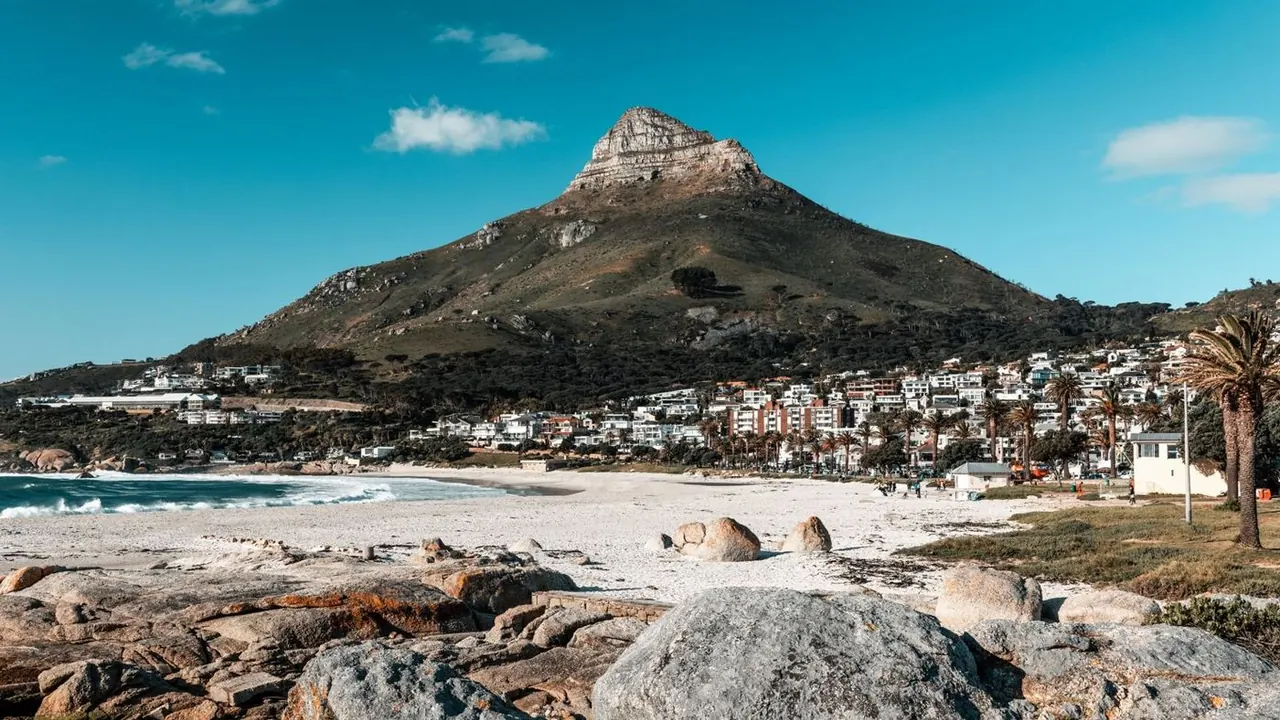
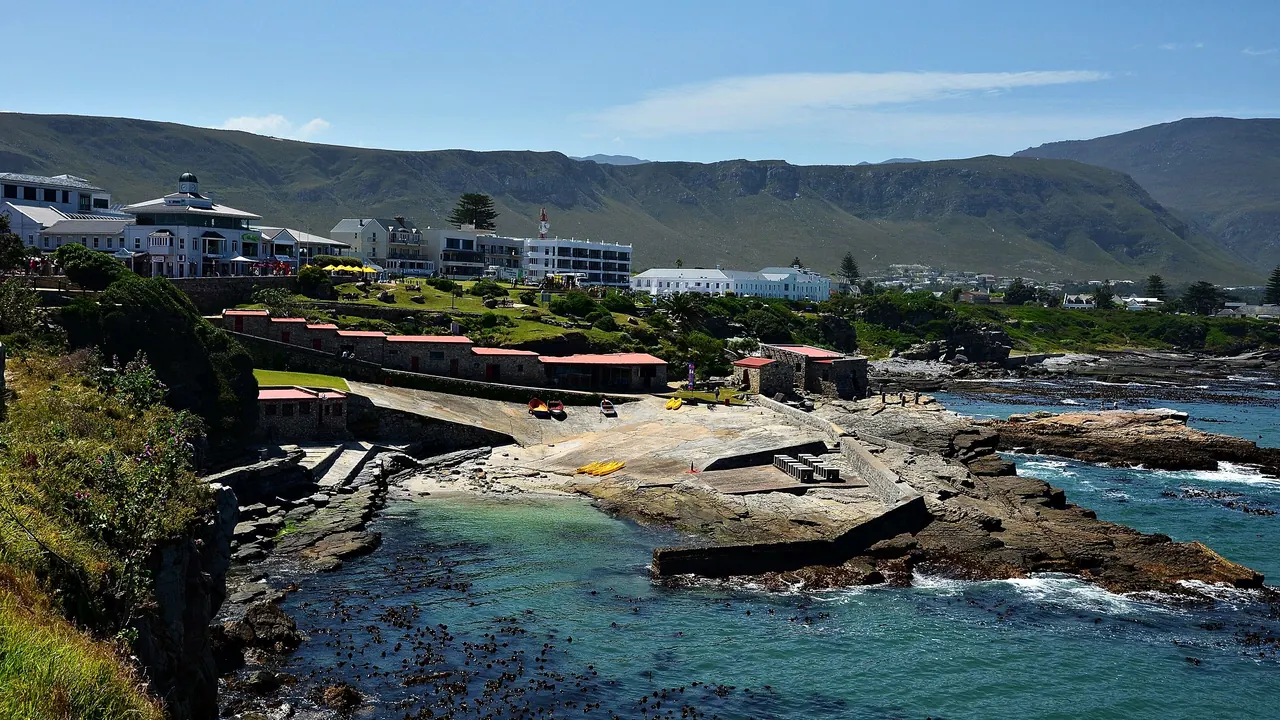
Photos: Cape Town by Stephan Louis, Pexels License; Hermanus by Pavel Špindler, CC BY 3.0, cropped.
Cape Town or Hermanus?
Our verdict in twelve categories, each scored against the same fixed benchmark cities, and the climate month by month, so you can choose for your trip.
Choose Cape Town for
- nightlife
- culture and sights
- live music and the arts
Cape Town is the better choice for almost every kind of trip that needs a city. You get Table Mountain behind the centre, Robben Island and Zeitz MOCAA for history and art, Cape Malay cooking and serious restaurants, and a night out on Bree Street or Long Street. If you want variety, evenings with something on and the Winelands within easy reach, base yourself here.
Choose Hermanus for
Hermanus does not lead in any category we score.
Hermanus suits a slower, narrower stay. People come for the whales that calve in Walker Bay, the cliff path you can watch them from, the Fernkloof trails and long lunches in the Hemel-en-Aarde valley, and they are happy to be in bed early. Pick it for a quiet self-catering week by the sea with a car, or add a few days here to a Cape Town trip in whale season.
Scoreboard
Twelve categories on one fixed scale from 0 to 100. The shaded stretch is the gap between the two.
Your match
Pick a travel style or drag the sliders, and both match scores follow your weighting.
Wins on nightlife and culture and sights with your weighting.
Has no clear advantage with the weighting you have chosen.
What matters to you?
Category by category
What the scores mean for a trip.
Beaches & swimming
Cape Town gives you two coasts. On the Atlantic side, Clifton, Camps Bay and Llandudno are some of the most photographed beaches in the country, though the water there is icy. A short drive away on False Bay, Muizenberg, St James and Boulders have warmer water, gentle surf, tidal pools and penguins on the sand.
Hermanus has a single fine stretch at Grotto, smaller coves at Voëlklip and Kammabaai, and the Klein River lagoon, which is the calmest place to swim. Walker Bay is similar to False Bay in temperature but has less choice, and a change in the wind can make it bracing overnight.
Food & drink
Cape Town is a place to travel for food. It has its own Cape Malay cooking of curries, bobotie and the gatsby roll, inventive chefs along Bree Street and in Woodstock's warehouses, weekend markets, and wine lists drawn from estates on the city's edge.
Hermanus eats well but simply. The best of it is line fish and abalone near the old harbour and lunches with long views at the Hemel-en-Aarde estates, whose cool-climate Pinot Noir and Chardonnay are among South Africa's finest. Beyond that you will mostly find grills, pizza and a few bistros.
Culture & sights
On sightseeing the two are far apart. Cape Town tells the country's hard history: the ferry to Robben Island from the V&A Waterfront, the District Six Museum and the Castle of Good Hope. Add the museums around the Company's Garden, the mosques of the Bo-Kaap and Zeitz MOCAA, and you have three or four full days.
Hermanus has the Old Harbour, with its stone slipways, old fishing boats and a small museum, and the Whale House Museum. That takes an afternoon at most, and nobody goes there to sightsee.
Nightlife
In Cape Town you can choose your kind of night: rowdy balconied bars on Long Street, cocktails and wine bars on Bree and Kloof, De Waterkant's gay quarter, and in summer clubs that run into the small hours after sundowners in Camps Bay. You will move between areas by ride-hailing rather than on foot.
Hermanus has a sundowner on a terrace near the waterfront, a pub, then bed. Anyone who wants more faces a drive of about an hour and a half back to the city.
Nature & outdoors
Both sit in superb landscape, but Cape Town offers more variety. You can climb Table Mountain via Platteklip Gorge or Lion's Head at sunrise, drive Chapman's Peak to Cape Point, walk Kirstenbosch, see penguins and seals, learn to surf at Muizenberg or kitesurf off the Atlantic beaches, and spot whales in False Bay.
Hermanus is narrower but has one outstanding draw: southern right whales calving in Walker Bay close to the rocks, seen from a cliff path that runs the length of town. Fernkloof's fynbos trails, paddling on the lagoon and the penguins at Stony Point round it out.
Day trips
The day trips from both are about equally good, but they lead in different directions. From Cape Town, the Winelands are the main event and very close: Stellenbosch, Franschhoek, Paarl and Constantia have enough estates for several days, with Hermanus itself as the main trip beyond them.
From Hermanus, the Winelands and Cape Town are each a longer drive. In return you are close to small country places like Stanford, Greyton and the mission town of Elim, and can reach Arniston and Cape Agulhas, the southern tip of Africa. Either way, you need a car.
Good for families
Cape Town has more for children to do: the Two Oceans Aquarium, the penguins at Boulders, the cableway ride, Kirstenbosch's treetop walkway, and warm tidal pools at St James and Fish Hoek. The cost is long drives between sights and the need for some street awareness.
Hermanus is simpler. You can spot whales from the path, explore rock pools and paddle in the shallow Grotto lagoon, all from a self-catering house. There is nothing built for children, though, so it suits families who want a quiet week more than a full one.
Getting around
Neither works well without a car, but Cape Town gives you more options. The City Bowl, Bo-Kaap and Waterfront are walkable by day, MyCiTi buses run out to the airport, the Atlantic beaches and Hout Bay, and ride-hailing is cheap for everything else.
In Hermanus, you can walk the village centre, the Old Harbour and the cliff path, but the town stretches for kilometres along the coast. There is no public transport a visitor can rely on, so the eastern beaches, the wine valley and everything beyond mean driving yourself.
Shopping & style
Cape Town has real places to shop. There is the V&A Waterfront mall with its makers' hall, local design and ceramics in Woodstock and on Bree and Kloof Streets, and African crafts on Greenmarket Square, though you still would not plan a trip around it.
Hermanus has a few galleries and boutiques, craft stalls by the Old Harbour and a weekend market. The best thing to take home is wine bought at the Hemel-en-Aarde cellars.
Affordability
Both are good value for visitors from Europe or North America, with cheap wine and restaurant meals. In Cape Town, the money you save at dinner, even on tasting menus, can go on rooms, which are expensive in Camps Bay and around the Waterfront in December and January. Paid sights such as the cableway and Robben Island add up for a family.
In Hermanus, self-catering cottages give you more space for the money, but rooms rise in the summer vacation and in whale season too. You cannot avoid a hire car, and boat trips take a large share of the budget.
Live music & performing arts
Cape Town has a musical identity of its own in Cape jazz, a major annual jazz festival, and summer Sunday concerts on the lawns at Kirstenbosch. There is also opera and ballet at Artscape, South African drama at the Baxter and a resident philharmonic, enough for a couple of good evenings.
Hermanus has a yearly arts festival, outdoor stages during the whale festival and the occasional singer in a pub. For a concert or a play, you go to Cape Town.
Wellness & relaxation
Neither town has a bathing tradition or thermal baths, and both rely on a slow outdoor pace and cold morning dips in tidal pools. In Cape Town you build calm into a city stay: yoga on the Atlantic seaboard, an afternoon in Kalk Bay, or a spa on a grand Winelands estate.
In Hermanus the whole stay is slow, with cliff-path walks, watching the bay and a town that empties out of season. The spas, though, are fewer and simpler.
When should you go?
Pick your month. The climate figures are measured averages, not a forecast.
Cape Town in July
Hermanus in July
Daytime high, °C
Rainfall in the month, mm
Where the figures come from
Hermanus's temperatures are measured 77 km from the centre, at Cape Town Airport.
Hermanus has no rain gauge within 25 km of the centre, so its rainfall comes from a gridded climate dataset read at the city rather than from a gauge further away.
Temperature and rainfall are climate normals, averaged over the years shown. Cape Town: 1991-2020 normals, Cape Town Airport (17.5 km from centre). Hermanus: 1991-2020 normals, Cape Town Airport (76.8 km from centre).
The two towns share the same warmth through the year. Summer from December to March brings highs of 26°C to 28°C and long, sunny days, which is the only real beach season. In June to August the days peak around 18°C, which is cool and fine for walking but too cool for the beach, and both towns get their heaviest rain then, close to 100mm a month. The shoulder months of April, May, October and November are mild and pleasant for hiking and exploring.
The difference is in summer rain. Cape Town is almost dry from December to March, with around 10mm a month, while Hermanus gets showers more often. The sea in Hermanus is also a little warmer at its peak, reaching about 19°C, though neither coast is ever warm. If you are going to Hermanus for the whales, which the town's own guidance places from about June to November, you need to accept the wetter, cooler half of the year.
Which traveller are you?
On a culture and arts trip, choose Cape Town. Its apartheid and colonial past is told with weight, contemporary African art has a major museum, and evenings can bring drama, ballet or a Cape jazz club. Hermanus offers little beyond its coast.
For a food and nightlife trip, Cape Town is the clear pick. You get Cape Malay cooking in the Bo-Kaap, tasting menus around Bree Street and Woodstock, and bars and clubs into the small hours. Hermanus offers good fish and Pinot Noir, then goes quiet by eleven.
On a relaxing trip, Hermanus has the gentler rhythm. Spas are no reason to pick either town, but here the whole stay can be cliff walks, whale watching and wine-farm lunches, with no city nights pulling you away.
Before you go
| Measure | Cape Town | Hermanus |
|---|---|---|
| Official language | English, Zulu, Xhosa, Afrikaans, Venda, Northern Sotho, Swazi, Tswana, Tsonga, Sesotho, Southern Ndebele, South African Sign Language | English, Zulu, Xhosa, Afrikaans, Venda, Northern Sotho, Swazi, Tswana, Tsonga, Sesotho, Southern Ndebele, South African Sign Language |
| Currency | Rand (ZAR) | Rand (ZAR) |
| Sockets | CMN230 V, 50 Hz | CMN230 V, 50 Hz |
| Driving side | Left | Left |
| Time zone | UTC+2 | UTC+2 |
| Emergency number | 112 | 112 |
| Elevation | 5 m | 27 m |
| Main airport | Cape Town International Airport (CPT)18 km from centre45 non-stop destinations | Cape Town International Airport (CPT)77 km from centre45 non-stop destinations |
| Public holidays this year | 13 days | 13 days |
By the numbers
| Measure | Cape Town | Hermanus |
|---|---|---|
| City population | 3,776,313 | - |
| People per km² | 1,538 | - |
| Museums within 10 km | 22 | 0 |
| UNESCO World Heritage sites within 50 km | 3 | 0 |
| Swim season, months above 21 °C | None | None |
Where else could you go?
Every comparison below shares a destination with this one, so you can follow Cape Town or Hermanus somewhere new.
- Stellenboschvs Cape Town
- Stellenboschvs Hermanus
- Knysnavs Hermanus
- Knysnavs Cape Town
- Durbanvs Hermanus
- Johannesburgvs Cape Town