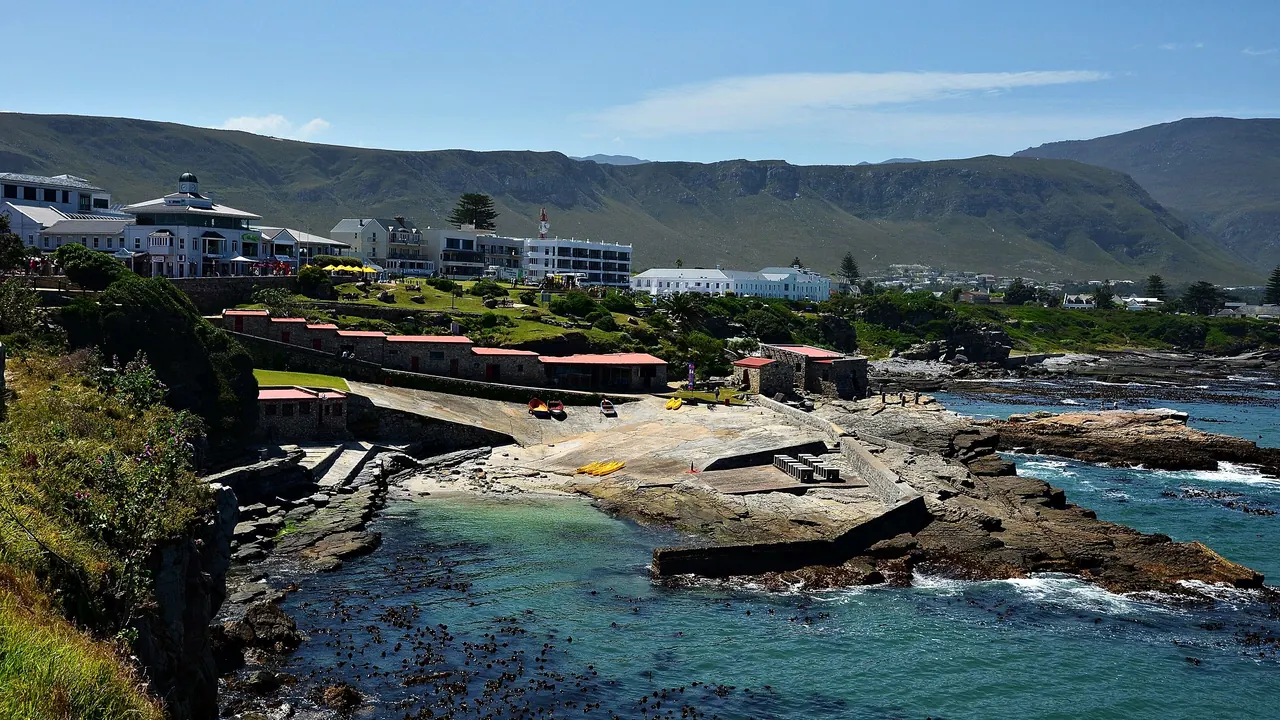
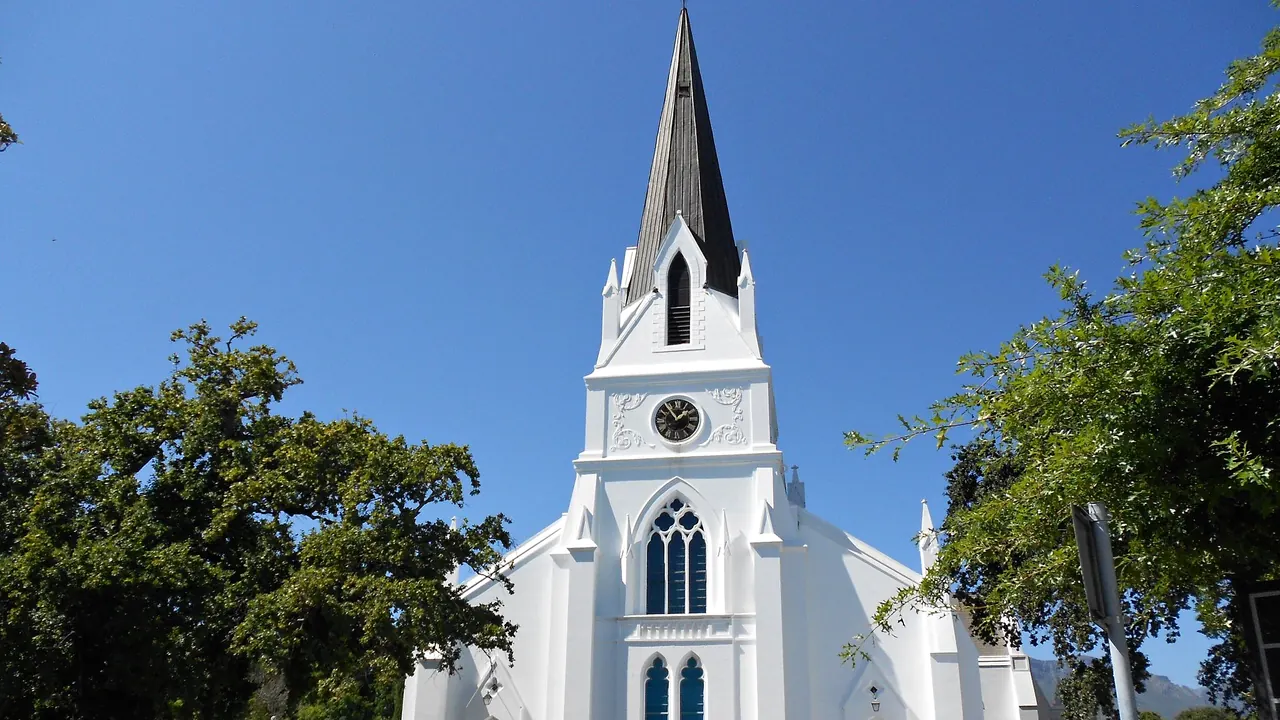
Photos: Hermanus by Pavel Špindler, CC BY 3.0, cropped; Stellenbosch by Lugerda, CC BY-SA 3.0, cropped.
Hermanus or Stellenbosch?
Our verdict in twelve categories, each scored against the same fixed benchmark cities, and the climate month by month, so you can choose for your trip.
Choose Hermanus for
- beaches
- families
- nature and the outdoors
Hermanus suits travellers who want the sea at the end of the road and the outdoors as the whole point of the trip. From the cliff path you watch southern right whales in the bay, and you can walk to sandy coves, tidal pools and the fynbos trails of Fernkloof. Evenings are quiet and there is little to see in the way of sights, so it is best for a slow, nature-led stay rather than a busy one.
Choose Stellenbosch for
- food and drink
- culture and sights
- nightlife
Stellenbosch is the better choice for anyone who travels to eat, drink and look around. Its wine estates and estate restaurants are among the best in the country, and the oak-lined Cape Dutch streets give it a history Hermanus lacks. It also has more going on after dark and Cape Town is close by, which makes it the more varied base. The mountains on its doorstep are almost as good for walking and riding as the Hermanus coast.
Scoreboard
Twelve categories on one fixed scale from 0 to 100. The shaded stretch is the gap between the two.
Your match
Pick a travel style or drag the sliders, and both match scores follow your weighting.
Wins on beaches and families with your weighting.
Wins on food and drink and culture and sights with your weighting.
What matters to you?
Category by category
What the scores mean for a trip.
Beaches & swimming
On beaches the two are close, but how you get to the sea is very different. In Hermanus you can walk to the sand: Grotto Beach stretches towards De Kelders, Voëlklip and Kammabaai are close to town, and Onrus lies just west. The catch is Walker Bay's cold water, so most swims are quick, and families head for the calmer, warmer Klein River lagoon.
Stellenbosch has no beach of its own. The sea means a half-hour drive to Strand or Gordon's Bay on False Bay, which is a little warmer and has sheltered water at Gordon's Bay. On ordinary days, swimming in Stellenbosch means a guesthouse pool.
Food & drink
Stellenbosch is the clear winner here, and for many visitors food and wine are the reason to go. More than a hundred and fifty wine farms pour Chenin Blanc, Pinotage and Cape blends. The best cooking is on the estates around Helshoogte, Jonkershoek and the Simonsberg. In town you can try Cape Malay and Afrikaans dishes such as bobotie and bredie.
Hermanus eats well but in a narrower way. The menus near the harbour feature line fish, mussels and farmed abalone, and there are cool-climate Pinot Noir lunches in the Hemel-en-Aarde valley. Beyond that, it has the grills and pizza of an ordinary seaside town.
Culture & sights
Neither town is a major sightseeing destination, but Stellenbosch has far more to walk and look at. As one of South Africa's oldest European settlements, it keeps whitewashed Cape Dutch houses, gabled facades and oak avenues along Dorp Street and around the Braak. The Village Museum and the Moederkerk fill a day or two.
In Hermanus, the history is the Old Harbour set into the cliffs, its stone slipways and the Whale House Museum. Together they take a single afternoon.
Nightlife
Stellenbosch has a real night out, at least in term time. The streets around Bird Street and Plein Street fill with students in pubs, sports bars and a few dance venues. For older visitors, evenings are more often a long dinner and a glass on a terrace, and the town quietens in the university vacations.
Hermanus is quieter still. Evenings mean sundowners at wine bars and terraces in the village centre, and most of the town is in bed by eleven.
Nature & outdoors
Both are excellent for the outdoors, but they face in different directions. Hermanus is about the sea. You can watch whales from land in a way few places allow, and dolphins and seals are found towards Gansbaai, with penguins at Stony Point. Fernkloof's fynbos trails climb straight up behind the houses.
Stellenbosch is about mountains. Jonkershoek begins at the edge of town with waterfall trails, and the valley is one of the country's main mountain-biking centres, with singletrack through wine farms and forest. Table Mountain is within about an hour.
Day trips
Hermanus sits further out, and its outings lean towards quiet villages and open coast rather than towns and sights. Cape Town is about an hour and a half away and the Winelands nearly two hours, so either makes a long day. The trips that suit it best stay local: Stanford on its river twenty minutes away, or east along the coast to Cape Agulhas, the southern tip of Africa.
Stellenbosch is the better base, because the bigger outings are closer. Cape Town, with its museums and the boats to Robben Island, is under an hour away. Franschhoek is half an hour over the Helshoogte Pass and Paarl is close by, so several days of Winelands towns need no long drives. Hermanus itself makes a day out from here, about an hour and a half away on the coast, and from either town these trips need a car or a booked tour.
Good for families
Neither town is built around children, and they come out about even. Hermanus suits small children better on the ground. Whales seen from the cliff path, rock pools to explore and the shallow Grotto lagoon all keep them busy, though the cold sea limits swimming.
Stellenbosch is mainly for adults who like wine. Some estates add lawns, playgrounds and farm animals, and there is a small wildlife park with giraffes just outside town. Summer heat and long car journeys are harder on younger children, and families often add Cape Town's aquarium and cable car.
Getting around
You will want a car in both, but Stellenbosch is a little easier. Its historic centre is small, flat and shaded, with the museums and cafés a few blocks apart. Ride-hailing works well, and hop-on hop-off wine tours mean nobody has to drive after a tasting.
Hermanus stretches for many kilometres along the coast. The village centre and the cliff path are walkable, but the eastern beaches and the wine valley are not, and there is no public transport a visitor can rely on.
Shopping & style
Shopping is small-scale in both, and Stellenbosch has more of it. Dorp Street and the streets around the Braak have galleries, ceramics and design shops, plus an old-fashioned general store full of preserves and curios. Estates will ship cases of wine home for you, and there are large malls on the edge of town.
Hermanus has a handful of galleries and boutiques, African craft stalls by the Old Harbour and a weekend market. The best thing to take home is a bottle bought at a Hemel-en-Aarde cellar door.
Affordability
The two cost about the same, and both are good value for visitors from Europe or North America, especially for wine and meals out. They get expensive in different ways. Hermanus rooms cost more over the December and January summer vacation and in whale season, and boat trips add up. In Stellenbosch, the famous estate hotels and tasting menus charge international rates. In both towns a hire car is a steady extra.
Live music & performing arts
Stellenbosch offers more to attend, thanks largely to the university. The conservatorium runs recitals and orchestral concerts in term time, a wine-estate amphitheatre holds summer evening concerts, and the long-running Afrikaans arts festival fills the town for about ten days in autumn.
In Hermanus, there is a yearly arts festival with chamber music and outdoor stages at the whale festival, and little else. For opera or larger theatre, visitors to either town drive to Cape Town.
Wellness & relaxation
Both are places to slow down rather than places for spa treatments, and neither has thermal baths. Stellenbosch has more pampering on offer, with proper spas and pools at several of the larger estates and country hotels. Hermanus relies on its setting: walks along the cliffs, watching the bay and a cold morning dip in the rock tidal pools.
When should you go?
Pick your month. The climate figures are measured averages, not a forecast.
Hermanus in July
Stellenbosch in July
Daytime high, °C
Rainfall in the month, mm
Where the figures come from
Hermanus's temperatures are measured 77 km from the centre, at Cape Town Airport.
Hermanus has no rain gauge within 25 km of the centre, so its rainfall comes from a gridded climate dataset read at the city rather than from a gauge further away.
Temperature and rainfall are climate normals, averaged over the years shown. Hermanus: 1991-2020 normals, Cape Town Airport (76.8 km from centre). Stellenbosch: 1991-2020 normals, Cape Town Airport (24.7 km from centre).
The two towns share almost the same temperatures through the year, and they also see the same sunshine. Summer runs from December to March, with highs near 28°C in February. Those are long, bright beach days, but the water stays cool on both coasts and only reaches about 19°C at its warmest. Stellenbosch is almost completely dry in midsummer, with around 10mm of rain in January. Hermanus gets a few more showers in those months but is still mostly fine.
From May to August both turn cool and wet, with about 100mm of rain in the wettest months and highs around 18°C. That is poor weather for beaches or wine-farm terraces. In Hermanus, though, it is the start of the whale months, which run on into November. For walking, April and the spring months of September to November are the most comfortable in both towns. Hiking in the Stellenbosch valley is best done early on hot summer days.
Which traveller are you?
For a food and nightlife trip, choose Stellenbosch. You get tasting rooms across more than a hundred and fifty estates, long vineyard lunches and student pubs near Plein Street that stay loud on term-time weekends. Hermanus offers good seafood and Hemel-en-Aarde wine, but it is asleep by eleven.
On a culture and arts trip, Stellenbosch again comes out ahead. Dorp Street, the Village Museum, the Moederkerk and the Braak repay a day or two of walking, and the conservatorium hosts concerts in term time. Hermanus has its Old Harbour and Whale House Museum, and an afternoon covers both.
For whale watchers, Hermanus is the place to go. Between June and November, southern right whales calve in Walker Bay, often close to the rocks below the cliff path, and boats go out in season. From Stellenbosch the whales mean a long drive to this same coast.
Before you go
| Measure | Hermanus | Stellenbosch |
|---|---|---|
| Official language | English, Zulu, Xhosa, Afrikaans, Venda, Northern Sotho, Swazi, Tswana, Tsonga, Sesotho, Southern Ndebele, South African Sign Language | English, Zulu, Xhosa, Afrikaans, Venda, Northern Sotho, Swazi, Tswana, Tsonga, Sesotho, Southern Ndebele, South African Sign Language |
| Currency | Rand (ZAR) | Rand (ZAR) |
| Sockets | CMN230 V, 50 Hz | CMN230 V, 50 Hz |
| Driving side | Left | Left |
| Time zone | UTC+2 | UTC+2 |
| Emergency number | 112 | 112 |
| Elevation | 27 m | 136 m |
| Main airport | Cape Town International Airport (CPT)77 km from centre45 non-stop destinations | Cape Town International Airport (CPT)24 km from centre45 non-stop destinations |
| Public holidays this year | 13 days | 13 days |
By the numbers
| Measure | Hermanus | Stellenbosch |
|---|---|---|
| City population | - | 80,316 |
| People per km² | - | 9,795 |
| Museums within 10 km | 0 | 2 |
| UNESCO World Heritage sites within 50 km | 0 | 2 |
| Swim season, months above 21 °C | None | None |
Where else could you go?
Every comparison below shares a destination with this one, so you can follow Hermanus or Stellenbosch somewhere new.
- Cape Townvs Stellenbosch
- Cape Townvs Hermanus
- Knysnavs Hermanus
- Knysnavs Stellenbosch
- Durbanvs Hermanus
- Johannesburgvs Stellenbosch