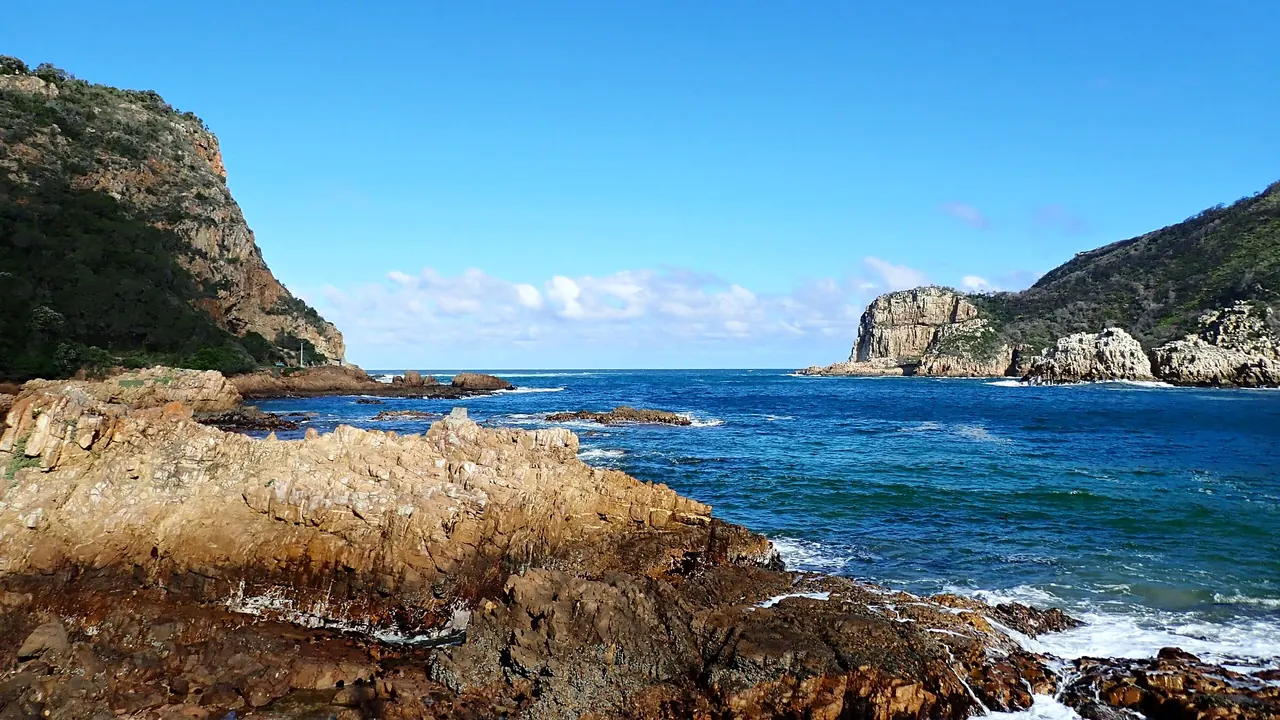
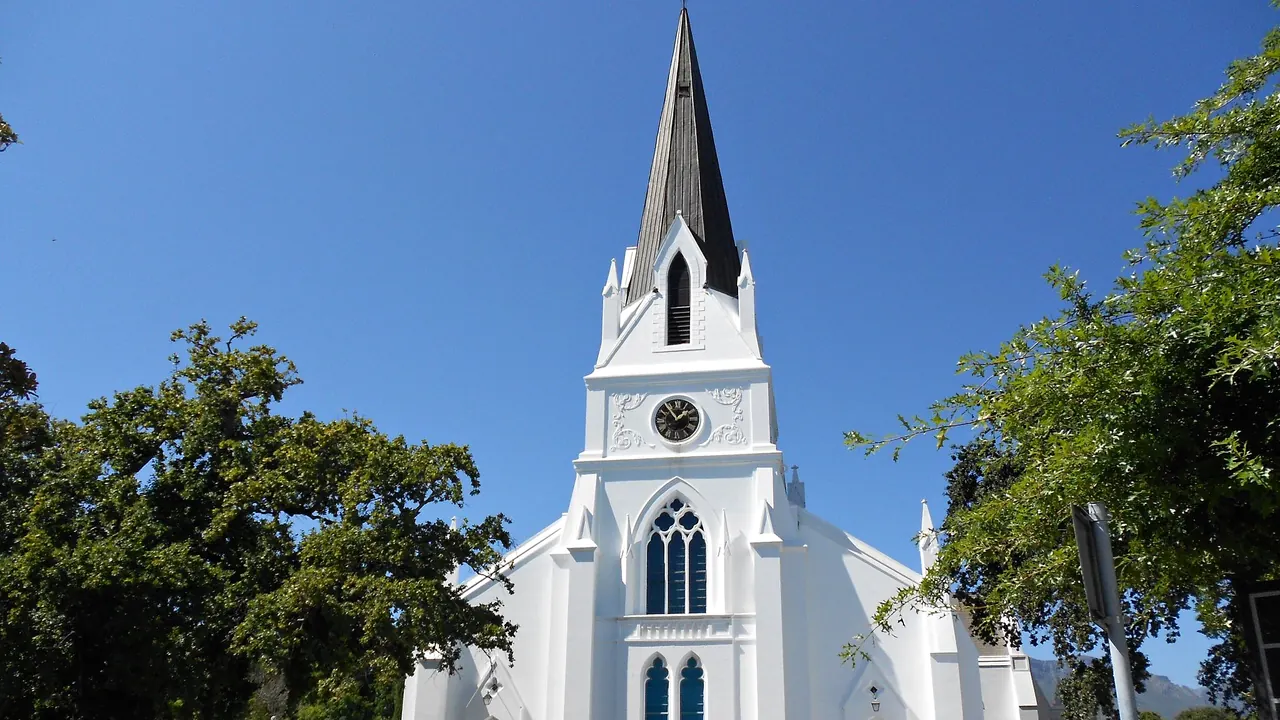
Photos: Knysna by Andrawaag, CC BY-SA 4.0, cropped; Stellenbosch by Lugerda, CC BY-SA 3.0, cropped.
Knysna or Stellenbosch?
Our verdict in twelve categories, each scored against the same fixed benchmark cities, and the climate month by month, so you can choose for your trip.
Choose Knysna for
- beaches
- families
- nature and the outdoors
Knysna suits travellers who want the outdoors and the water at the heart of the trip. You get forest trails at Diepwalle, kayaking on the lagoon, the Robberg walk past the seals, and wild Indian Ocean beaches a short drive away. It is also the better pick for families with active children, as long as you are happy with quiet evenings and a lot of driving.
Choose Stellenbosch for
- day trips
- food and drink
- culture and sights
Wine, food and a handsome old town make the case for Stellenbosch. Estate lunches and tasting rooms sit among mountains that are just as good for hiking and riding. Dorp Street gives you Cape Dutch history to walk, and Cape Town and Franschhoek are close enough for easy days out. In university term there is also more going on after dark.
Scoreboard
Twelve categories on one fixed scale from 0 to 100. The shaded stretch is the gap between the two.
Your match
Pick a travel style or drag the sliders, and both match scores follow your weighting.
Wins on beaches and families with your weighting.
Wins on day trips and food and drink with your weighting.
What matters to you?
Category by category
What the scores mean for a trip.
Beaches & swimming
Neither town is on the open sea, but Knysna is much closer to good beaches. Brenton-on-Sea, Buffalo Bay and the cove at Noetzie are about 20 minutes away, the calm lagoon flats suit small children, and Plettenberg Bay's sheltered sand is half an hour east.
From Stellenbosch, a beach day means driving to False Bay, to Gordon's Bay for a calm swim or Muizenberg for surf. On most days the hotel pool takes the place of the sea, and in the dry summer heat that is no hardship.
Food & drink
Knysna eats well within a narrow range. You get lagoon oysters, line fish and braai on the Thesen Island quays, with local beer and Cape wines. It is lovely for a long lunch by the water, but after a few days the menus start to repeat.
Stellenbosch is a destination in its own right for food. Wine farms in Jonkershoek, on Helshoogte and below the Simonsberg serve long tasting menus and farm lunches among the vines. In town there are bakeries and bistros, and Cape Malay and Afrikaans dishes such as bobotie and melktert.
Culture & sights
Knysna has a small stone church at Belvidere, the traces of the Millwood gold rush and museums on the timber trade. Its real landmark, the Heads, is scenery rather than history.
Stellenbosch has a much richer past to explore. It is one of South Africa's oldest European settlements, with whitewashed gabled houses under oak avenues, the four period houses of the Village Museum and the Moederkerk spire. You can see it all in a day or two, but it rewards a slow walk in a way Knysna does not.
Nightlife
A night out in Knysna means a sundowner on a lagoon deck, a long dinner and perhaps one of a handful of pubs. Most of the year the town is asleep before midnight.
Stellenbosch has more life after dark, mostly because of its students. In term time the pubs, sports bars and dance venues around Bird Street and Plein Street stay loud late at weekends. Visitors chasing proper clubs from either town end up in Cape Town.
Nature & outdoors
Both are outstanding, and the difference is in the landscape. Knysna is forest and water: South Africa's largest indigenous forest, a tidal lagoon for paddling and sailing, cliff paths on the Heads, and seals at Robberg and dolphins offshore.
Stellenbosch is mountain country. There are fynbos slopes and waterfalls in Jonkershoek, singletrack for mountain bikes through the vineyards, and Table Mountain within an hour. The hot summers push hikes into the early morning, which Knysna's milder weather rarely does.
Day trips
From Knysna, the Garden Route towns of Plettenberg Bay, Wilderness and Mossel Bay are pleasant but small. The most varied outing is the two-hour drive over the mountains to Oudtshoorn and the Cango Caves.
Stellenbosch has far more within reach. Cape Town, with Robben Island, Bo-Kaap and the museums, is under an hour away. Franschhoek and Paarl are short hops through the Winelands, and the whale coast at Hermanus makes a longer day.
Good for families
Knysna is the easier place to bring children. They can paddle on the lagoon flats, take boat trips through the Heads, and spend days at the elephant sanctuaries, the primate park and the bird aviary. The open-sea beaches need watching for currents.
Stellenbosch is built around adults who taste wine. Some estates have lawns, playgrounds and farm animals, and there is a small wildlife park, but the summer heat is hard on toddlers. Most families lean on Cape Town for the aquarium and the cable car.
Getting around
You need a car in both. Stellenbosch is easier without one: its flat, shaded historic centre has the museums and cafés within a few blocks, ride-hailing apps work well, and hop-on hop-off wine tours mean nobody has to drive after tastings.
In Knysna, only the waterfront, the town centre and Thesen Island are walkable. Everything else is strung along the N2 and up forest roads, and most visitors pick up a hire car at George, about an hour away.
Shopping & style
Both towns are for browsing rather than serious shopping. Knysna's best buys are yellowwood and stinkwood furniture from local woodturners, along with boutiques on Thesen Island and beadwork at the markets.
Stellenbosch has a little more choice. You can buy wine at the cellar door and have it shipped, and the streets around the Braak have galleries, ceramics and an old-fashioned general store. Cape Town's malls are close for anything bigger.
Affordability
A trip costs much the same in either town, and both need a hire car, which is the one steady expense they share. The difference is where the rest of the money goes. In Knysna the everyday pleasures are the cheap part: oysters and line fish by the lagoon, forest trails and paddling cost little. What changes the bill is when you go, because the South African summer vacation weeks of December and January are the expensive time for a room.
In Stellenbosch the season matters less than your choices. A day of tastings and a farm lunch under the oaks stays modest, but the celebrated tables in Jonkershoek and a night at one of the grand estate hotels push the bill up sharply. Your budget there depends on how much of the estate life you choose to pay for.
Live music & performing arts
Knysna's live music is mostly weekend bands in pubs, plus the concerts and street performances of the Oyster Festival and the Pink Loerie Mardi Gras.
Stellenbosch has a real if modest programme. The university conservatorium holds recitals and orchestral concerts in term time, and a wine-estate amphitheatre hosts summer evening concerts. In autumn the town fills for about ten days with its Afrikaans arts festival.
Wellness & relaxation
Neither has thermal springs or a bathing tradition, and both offer much the same kind of calm. In Knysna it comes from lagoon mornings, forest lodges and yoga retreats in the hills.
Stellenbosch offers rest of a more polished kind: shaded verandas, quiet valleys, and proper spas with pools on the larger wine estates and country hotels.
When should you go?
Pick your month. The climate figures are measured averages, not a forecast.
Knysna in July
Stellenbosch in July
Daytime high, °C
Rainfall in the month, mm
Where the figures come from
Knysna's temperatures are measured 62 km from the centre, at George, George Airport.
Knysna's station stands 184 m above the city centre, so the centre is likely a little warmer than the figures say.
Knysna has no rain gauge within 25 km of the centre, so its rainfall comes from a gridded climate dataset read at the city rather than from a gauge further away.
Temperature and rainfall are climate normals, averaged over the years shown. Knysna: 1991-2020 normals, George, George Airport (61.5 km from centre). Stellenbosch: 1991-2020 normals, Cape Town Airport (24.7 km from centre).
Knysna has a mild, even climate, with no real extremes in either direction. Rain falls through the whole year, slightly more in spring, peaking at around 81mm in November. December to March is beach time, when the sea reaches about 21°C. Even midwinter afternoons are comfortable for forest walks, and winter and spring bring the whales close inshore. Sunshine stays fairly steady from month to month.
Stellenbosch follows a different pattern, with a hot, dry and very sunny summer and a wet winter. February reaches about 28°C, which is too hot for hiking or walking around town except early in the day. June brings the most rain, at around 97mm. For walking and wine farms, the best months are spring, from September to November, and autumn in March and April. The False Bay sea it relies on stays cooler than Knysna's all year.
Which traveller are you?
On a family trip with children, Knysna is the stronger choice. The lagoon shallows at Leisure Isle suit paddling toddlers, boat trips run through the Heads, and the elephant sanctuaries and primate park give active children animals and forest rather than rides.
For a food and nightlife trip, Stellenbosch wins clearly. You can spend days on tasting menus and farm lunches on the wine estates, then go to student pubs around Bird Street in term time, while Knysna's evenings end after a waterfront sundowner and dinner.
On a culture and arts trip, Stellenbosch gives you much more. There is the Cape Dutch streetscape of Dorp Street and the Braak, the Village Museum, conservatorium concerts and an autumn Afrikaans arts festival. Knysna has little beyond a stone church and timber-trade museums.
Before you go
| Measure | Knysna | Stellenbosch |
|---|---|---|
| Official language | English, Zulu, Xhosa, Afrikaans, Venda, Northern Sotho, Swazi, Tswana, Tsonga, Sesotho, Southern Ndebele, South African Sign Language | English, Zulu, Xhosa, Afrikaans, Venda, Northern Sotho, Swazi, Tswana, Tsonga, Sesotho, Southern Ndebele, South African Sign Language |
| Currency | Rand (ZAR) | Rand (ZAR) |
| Sockets | CMN230 V, 50 Hz | CMN230 V, 50 Hz |
| Driving side | Left | Left |
| Time zone | UTC+2 | UTC+2 |
| Emergency number | 112 | 112 |
| Elevation | 9 m | 136 m |
| Main airport | George Airport (GRJ)62 km from centre4 non-stop destinations | Cape Town International Airport (CPT)24 km from centre45 non-stop destinations |
| Public holidays this year | 13 days | 13 days |
By the numbers
| Measure | Knysna | Stellenbosch |
|---|---|---|
| City population | 51,078 | 80,316 |
| People per km² | 469 | 9,795 |
| Museums within 10 km | 0 | 2 |
| UNESCO World Heritage sites within 50 km | 0 | 2 |
| Swim season, months above 21 °C | 1 month | None |
Where else could you go?
Every comparison below shares a destination with this one, so you can follow Knysna or Stellenbosch somewhere new.
- Cape Townvs Stellenbosch
- Hermanusvs Stellenbosch
- Hermanusvs Knysna
- Cape Townvs Knysna
- Durbanvs Knysna
- Johannesburgvs Knysna