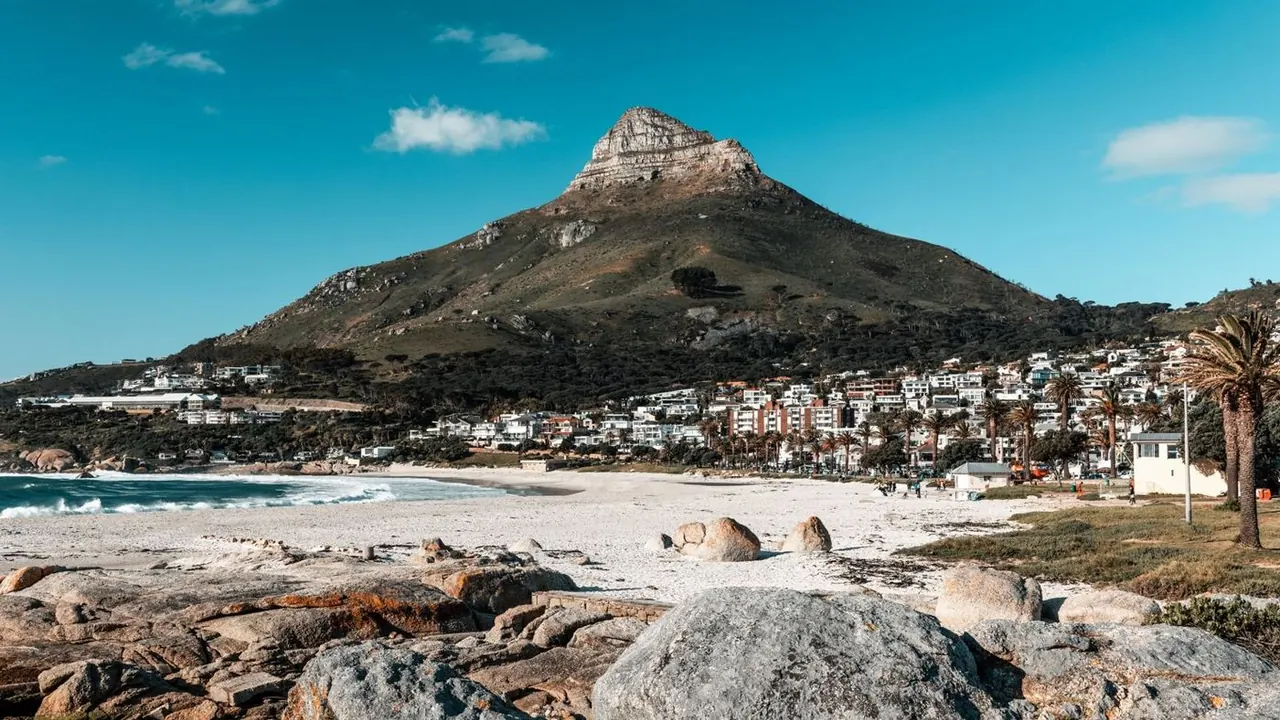
Photos: Cape Town by Stephan Louis, Pexels License.
Cape Town or Durban?
Our verdict in twelve categories, each scored against the same fixed benchmark cities, and the climate month by month, so you can choose for your trip.
Choose Cape Town for
- nature and the outdoors
- day trips
- culture and sights
Cape Town is the pick for a trip built around landscape and variety. Table Mountain rises behind the centre, the peninsula runs on through fynbos, penguin beaches and coastal roads to Cape Point, and the Winelands are under an hour away. Add a deeper history at Robben Island and the District Six Museum, a stronger restaurant scene and livelier evenings, and it suits travellers who want full days. The price is a car for most outings and Atlantic water too cold for a proper swim.
Choose Durban for
- beaches
- families
Durban makes more sense when the sea itself is the point. Its warm Indian Ocean lets you swim in any month, the Golden Mile and Umhlanga give long stretches of lifeguarded sand, and the curry kitchen of Africa's largest Indian community gives it a flavour all its own. It rewards a slower sun-and-surf stay far more than a sightseeing one.
Scoreboard
Twelve categories on one fixed scale from 0 to 100. The shaded stretch is the gap between the two.
Your match
Pick a travel style or drag the sliders, and both match scores follow your weighting.
Wins on nature and the outdoors and day trips with your weighting.
Wins on beaches and families with your weighting.
What matters to you?
Category by category
What the scores mean for a trip.
Beaches & swimming
Cape Town has the more beautiful beaches, but Durban has the better swimming. Clifton and Camps Bay are spectacular beneath the Twelve Apostles, yet the Atlantic there is icy. For a real swim you go half an hour to False Bay, and only in summer.
Durban's Golden Mile is the reverse: several kilometres of lifeguarded sand on a warm Indian Ocean that you can swim in every month, with Umhlanga and Ballito close by. The surf brings strong rips, so swim between the flags.
Food & drink
Cape Town lays the wider table. It has Cape Malay cooking from the Bo-Kaap, inventive tasting menus around Bree Street and in Woodstock's warehouses, fish by the harbour at Kalk Bay, and wine estates on the edge of the city.
Durban does one thing superbly: fiery red Indian curry and the bunny chow, best from a takeaway counter in the city centre, with masalas to buy from the Victoria Street Market. Beyond curry and seafood there is little fine dining, so a food trip there covers less ground.
Culture & sights
Both cities tell South Africa's difficult history, but Cape Town gives you much more to see. Robben Island, the District Six Museum, the Castle of Good Hope, the museums around the Company's Garden and Zeitz MOCAA fill three or four full days.
Durban's sights are meaningful but fewer. They include the Edwardian City Hall, the Juma Masjid, the KwaMuhle Museum and Gandhi's Phoenix Settlement, and most visitors cover them in a day or on a guided walk through a gritty centre.
Nightlife
Cape Town has the livelier evenings. There are Long Street's backpacker bars and clubs, cocktail and wine bars on Bree and Kloof Streets, De Waterkant's gay scene and summer sundowners at Camps Bay, with clubs running late at weekends.
Durban is quieter. Florida Road's terraces and Umhlanga's hotel lounges suit a relaxed drink, and a Sunday at a shisanyama is the most local night out. In both cities you get between areas by car after dark.
Nature & outdoors
This is where Cape Town pulls furthest ahead. Table Mountain, Lion's Head and the national park running down to Cape Point sit right behind the city, along with the fynbos, Kirstenbosch, the penguins at Boulders and whales in False Bay from about June to November.
Durban's outdoors is mostly in the water, with year-round surf and diving among ragged-tooth sharks on Aliwal Shoal. On land there are green hikes in the Valley of a Thousand Hills and Krantzkloof. Its big landscapes, the Drakensberg and the game reserves, are around three hours away and need an overnight stay.
Day trips
From Cape Town, the Winelands alone could fill several days, with Stellenbosch, Franschhoek and Paarl all under an hour away. Further out are Hermanus for clifftop whale watching and the quiet fishing villages of the West Coast.
Durban's outings are gentler: Pietermaritzburg's red-brick Victorian streets, the craft studios and cheese makers of the Midlands Meander, and the Mandela Capture Site. The region's most important heritage, the battlefields, is too far for a day. Both cities need a car or a tour.
Good for families
Both work well with children, in different ways. Cape Town's appeal is outdoor adventure: the cableway, the penguins at Boulders, Kirstenbosch's treetop walkway and the Two Oceans Aquarium, with False Bay's tidal pools for small swimmers in summer.
Durban is the classic beach city for families. uShaka Marine World puts an aquarium and a water park right on the sand, and the warm sea lets children swim in most months. Umhlanga makes a calmer base, and in both cities you will want a car.
Getting around
Neither city is easy without wheels, but Cape Town is the kinder of the two. The City Bowl, Bo-Kaap and Waterfront can be walked by day, and MyCiTi buses reach the airport, the Atlantic beaches and Hout Bay.
Durban offers little beyond the beachfront promenade and a small bus along the shore. The old centre is uncomfortable on foot, and visitors find the minibus taxis hard to use. In both cities, ride-hailing is easy and a hire car covers the day trips.
Shopping & style
Cape Town is the better shopping city, because it has an independent design scene that Durban lacks. Beyond the chains in the V&A Waterfront mall, Woodstock's converted warehouses and the shops on Bree and Kloof Streets sell ceramics, leather, homeware and fashion by South African designers. Wine and rooibos are easy things to take home.
Durban is mostly malls, led by the vast Umhlanga Ridge complex where locals go for brands, with only a few independent shops and galleries on Florida Road and in Musgrave. What it does well is crafts and spices: Zulu beadwork, woven baskets and telephone-wire bowls along the beachfront, and Indian goods from the Victoria Street Market.
Affordability
Your money goes a long way in both cities, but it goes on different things. In Cape Town, meals, tasting menus and wine are the bargains, while rooms on the Atlantic seaboard get expensive in the December to January peak.
In Durban, beachfront hotels and curry takeaways cost little. The extra spending is on daily ride-hailing or car hire, and Umhlanga is the pricier base.
Live music & performing arts
An evening at the theatre or a concert is easier to find in Cape Town, and the city has a sound of its own in Cape jazz. Artscape stages opera and ballet, the Baxter is the home of South African drama, and the Cape Philharmonic plays a regular season. The annual Cape Town International Jazz Festival is one of the largest in Africa, and in summer the Sunday sunset concerts on Kirstenbosch's lawns bring picnics beneath the mountain.
Durban's stage life is smaller: the Playhouse, the KwaZulu-Natal Philharmonic in the City Hall and the Jomba dance festival. Its own sounds, gqom and maskandi, are worth hearing, but they play mostly at local events, so you need to plan ahead or find a guide.
Wellness & relaxation
Neither city has a bathing tradition, so spas mean hotels in both. Cape Town is still the more restful stay, with long lunches on Winelands estates, morning swims in False Bay's tidal pools and the fishing-village calm of Kalk Bay and St James.
Durban's spas in Umhlanga and up towards Ballito are good value, but the city itself is busy and noisy. Visitors who want real rest head inland to the country spa hotels of the Midlands.
When should you go?
Pick your month. The climate figures are measured averages, not a forecast.
Cape Town in July
Durban in July
Daytime high, °C
Rainfall in the month, mm
Temperature and rainfall are climate normals, averaged over the years shown. Cape Town: 1991-2020 normals, Cape Town Airport (17.5 km from centre). Durban: 1991-2020 normals, Durban, Durban International Airport (14.1 km from centre).
Cape Town is at its best from December to March. Days reach about 28°C, it hardly rains and the sun shines for long hours, and this is the only stretch when the sheltered False Bay beaches are pleasant for a swim, though the sea stays cool even then. From June to August the city is cool, cloudier and wet, with June bringing 97mm of rain. The mild days still suit walking, though, and this is the season for whale watching.
Durban runs the other way. Summer is hot and humid and also the wettest time, with about 131mm in January, much of it in afternoon storms, and Durban gets less sun than Cape Town then. From May to August it turns dry, sunny and mild, comfortable for walking, and the sea rarely drops below 21°C. So a winter beach trip works in Durban but not in Cape Town.
Which traveller are you?
On a beach and sun trip, Durban is the clear choice. The Indian Ocean stays warm enough to swim all year, the Golden Mile has lifeguards and shark nets, and Umhlanga and Ballito add quieter sand. Cape Town's Atlantic beaches are mainly for looking at.
For an outdoors trip, Cape Town is hard to match. You can hike Table Mountain or Lion's Head straight from the city, drive Chapman's Peak to Cape Point, learn to surf at Muizenberg and watch penguins and whales. Durban's best outdoors is mostly surfing and diving.
On a culture and arts trip, choose Cape Town. Robben Island, the District Six Museum, Zeitz MOCAA and the Castle of Good Hope fill several days, and Artscape and the Baxter cover the evenings. Most visitors see Durban's sights in a single day.
Before you go
| Measure | Cape Town | Durban |
|---|---|---|
| Official language | English, Zulu, Xhosa, Afrikaans, Venda, Northern Sotho, Swazi, Tswana, Tsonga, Sesotho, Southern Ndebele, South African Sign Language | English, Zulu, Xhosa, Afrikaans, Venda, Northern Sotho, Swazi, Tswana, Tsonga, Sesotho, Southern Ndebele, South African Sign Language |
| Currency | Rand (ZAR) | Rand (ZAR) |
| Sockets | CMN230 V, 50 Hz | CMN230 V, 50 Hz |
| Driving side | Left | Left |
| Time zone | UTC+2 | UTC+2 |
| Emergency number | 112 | 112 |
| Elevation | 5 m | 22 m |
| Main airport | Cape Town International Airport (CPT)18 km from centre45 non-stop destinations | King Shaka International Airport (DUR)29 km from centre13 non-stop destinations |
| Public holidays this year | 13 days | 13 days |
By the numbers
| Measure | Cape Town | Durban |
|---|---|---|
| City population | 3,776,313 | 595,061 |
| People per km² | 1,538 | 2,634 |
| Museums within 10 km | 22 | 1 |
| UNESCO World Heritage sites within 50 km | 3 | 1 |
| Swim season, months above 21 °C | None | 12 months |
Where else could you go?
Every comparison below shares a destination with this one, so you can follow Cape Town or Durban somewhere new.