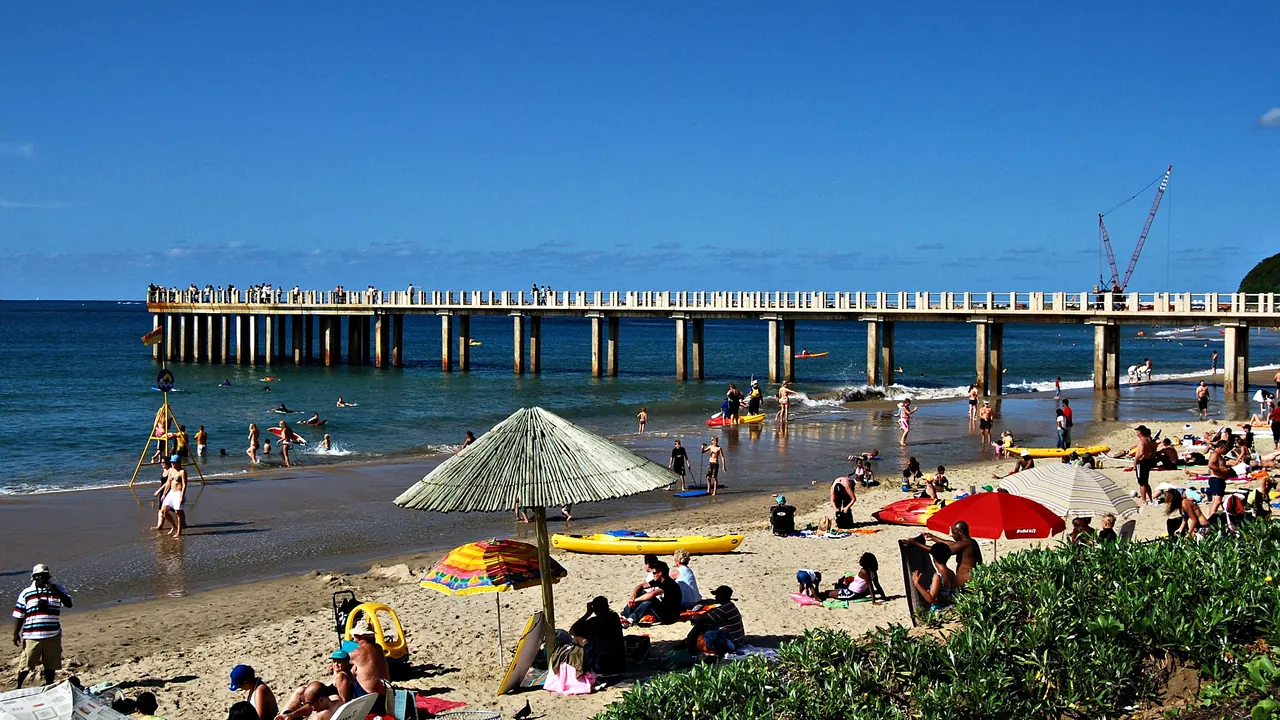
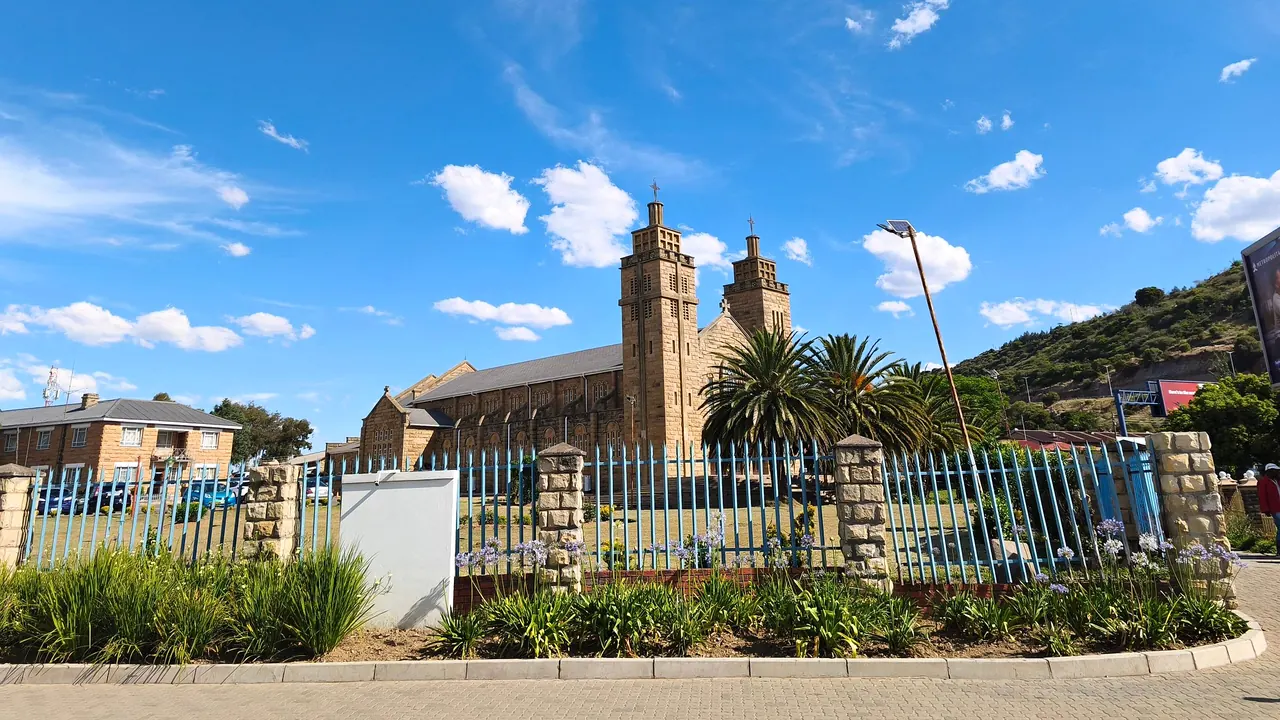
Photos: Durban by Ossewa, CC BY-SA 4.0, cropped; Maseru by August Dominus, CC0.
Durban or Maseru?
Our verdict in twelve categories, each scored against the same fixed benchmark cities, and the climate month by month, so you can choose for your trip.
Choose Durban for
- beaches
- families
- food and drink
Durban is the choice for a warm-water seaside trip with plenty to fill the days around it. The Golden Mile gives you lifeguarded sand within reach of the hotels, the curry houses and bunny chow counters give the city a real food identity, and uShaka, the reef dives at Aliwal Shoal and a handful of theatre and concert venues mean families, divers and couples all have enough to do. You will be using ride-hailing a lot, but there is far more here to spend the time on.
Choose Maseru for
- getting around
Maseru is a gateway rather than a destination. Its small centre takes a morning, and there is no beach, little to eat beyond papa and grills, and almost nothing aimed at children. It makes sense for travellers who want Lesotho's highlands, the mesas and gorges, pony trekking around Malealea and the story of Moshoeshoe I at Thaba Bosiu and Morija, and who are happy to treat the capital as a base with a hire car or driver.
Scoreboard
Twelve categories on one fixed scale from 0 to 100. The shaded stretch is the gap between the two.
Your match
Pick a travel style or drag the sliders, and both match scores follow your weighting.
Wins on beaches and families with your weighting.
Wins on getting around with your weighting.
What matters to you?
Category by category
What the scores mean for a trip.
Beaches & swimming
This is the starkest gap between the two. Durban is built around its shore: the Golden Mile runs from uShaka to the north beaches with piers, shark nets and lifeguards, Umhlanga offers a calmer stretch under its lighthouse, and Ballito and the south coast are within an hour. Strong rips mean swimming between the flags, but the Indian Ocean is warm enough every month.
Maseru sits high on a landlocked plateau, its rivers and reservoirs are not for swimming, and the coast is a long day's drive away. Anyone who wants to swim there is limited to a hotel pool.
Food & drink
Durban eats far better, chiefly thanks to its large Indian community. Red, fiery curry, bunny chow from a city-centre takeaway and the masala stalls of Victoria Street Market give it a flavour of its own, backed by Mozambican prawns and the restaurants of Florida Road and Umhlanga, even if fine dining is thin.
Maseru's table is practical: papa with moroho, stew or chakalaka at canteens and taxi-rank stalls, then hotel dining rooms and mall chains. Home-brewed sorghum beer is a glimpse of village life, but there is little in the city to plan a meal around.
Culture & sights
Neither city has sights of international rank, but Durban gives you a good deal more to work with. The Edwardian City Hall with its gallery and museum, the Juma Masjid on Grey Street, the KwaMuhle Museum on the pass laws, Gandhi's Phoenix Settlement and the Hindu temples of Chatsworth make for a full, layered day.
Maseru's centre offers the Basotho Hat craft centre, the cathedral and a glimpse of the Royal Palace grounds, done in a morning. Its real history lies outside town, at Thaba Bosiu and the mission museums of Morija.
Nightlife
Durban has the livelier evenings, though it is a city of strips rather than late nights. Florida Road's terraces fill at weekends, Umhlanga has polished hotel lounges, and the Sunday shisanyama sessions in the townships are the most local experience, best with someone who knows them.
Maseru's going out is a handful of bars and weekend clubs playing famo and amapiano, small enough that most visitors stay at their hotel. In both, you take a car or taxi between venues after dark.
Nature & outdoors
Durban has the stronger outdoors, mostly on the water: year-round surf, ragged-tooth sharks and turtles at Aliwal Shoal, and the winter sardine run bringing dolphins and whales up the coast. On land there are the green ridges of the Valley of a Thousand Hills and Krantzkloof's gorge, with the Drakensberg and the big game reserves as overnight trips.
Maseru's outdoors is all highland. Sandstone mesas, the plateau walk at Thaba Bosiu, pony trekking through Malealea's gorges and the Maletsunyane Falls at Semonkong give a mountain landscape Durban cannot match up close, though slow roads put the best of it at the edge of a day out.
Day trips
Both offer a modest circuit, but of a different kind. From Durban the outings are gentle and pastoral: Victorian Pietermaritzburg and its Gandhi station, the craft studios and cheese makers of the Midlands Meander, the Mandela Capture Site and the coastal towns of Ballito and Salt Rock, with the battlefields too far for a day.
Maseru's excursions are shorter and more rooted in Basotho history: Moshoeshoe I's stronghold at Thaba Bosiu half an hour away, the mission museum and dinosaur footprints at Morija, sandstone Roma, mohair weavers at Teyateyaneng and the lived-in Ha Kome cave houses. Both need a car.
Good for families
For families the gap between these two is wide, and most of it comes down to the sea. Durban's water is warm enough for children in almost every month, the swimming areas are netted and watched by lifeguards, and the long beachfront promenade lets younger ones ride bikes and scooters away from traffic. The aviaries of the Umgeni River Bird Park make a quieter morning away from the sand. The drawback is getting around, since you drive between outings and keep to well-used areas, so many parents base themselves in calmer Umhlanga.
Maseru needs the same car and gives back much less. Nothing in the city is built for children, and the centre is no place to let small ones roam, so days tend to revolve around the hotel pool and the malls. The pony rides and the cultural displays at the foot of Thaba Bosiu are the best outing, and they suit teenagers more than toddlers.
Getting around
Both are hard work without wheels, and Maseru is marginally the easier of the two. Its compact Kingsway centre can be walked in daylight, while Durban's distances are large and its old centre uncomfortable on foot, leaving the beachfront promenade and a small shore bus as the walkable parts.
The difference lies in the fallback. Durban runs on ride-hailing, simple and everywhere, whereas Maseru's shared four-plus-one taxis are unmarked and confusing, so most visitors hire a car or driver for slow mountain roads and possible border queues.
Shopping & style
Durban has more range, from the huge mall complex at Umhlanga Ridge to the spices and Indian goods of Victoria Street Market and Zulu beadwork and telephone-wire bowls along the beachfront, plus a few galleries in Musgrave and on Florida Road.
Maseru's offer is narrower but very specific: woven grass hats and the patterned Basotho blankets at the Basotho Hat, and mohair tapestries bought from the weavers at Teyateyaneng. Beyond crafts, both fall back on South African chain stores.
Affordability
The two cost much the same overall, but the money goes in different places. In Durban the beds are the easy part, with moderately priced beachfront hotels, cheap curry and inexpensive wine, while daily ride-hailing or a hire car adds up and Umhlanga is noticeably dearer.
Maseru reverses that: canteen meals, shared taxis and sights cost very little, but comfortable hotels are few and aimed at business visitors, so a good room is not much cheaper than across the border. Guesthouses and mission lodges help those happy with simple comforts.
Live music & performing arts
Durban has a genuine stage calendar. The Playhouse stages theatre, dance and musicals, the KwaZulu-Natal Philharmonic plays in the City Hall, and the Jomba dance festival and Durban International Film Festival mark the year, while gqom and maskandi reward anyone who finds a local event.
Maseru has no regular theatre or orchestra. Famo spills out of bars and taxis, and traditional song and dance appear at Thaba Bosiu or the Morija arts festival, but most of the year there is little to book.
Wellness & relaxation
Neither city is a retreat, but Durban has more to offer here. Umhlanga and the coast towards Ballito have good-value resort spas, and warm, slow coastal mornings set an easy pace, with Midlands country spa hotels for a deeper rest.
Maseru stops at a few hotel spas and gyms amid traffic and minibus horns. Those wanting calm in Lesotho head for the quiet mountain lodges in the interior.
When should you go?
Pick your month. The climate figures are measured averages, not a forecast.
Durban in July
Maseru in July
Daytime high, °C
Rainfall in the month, mm
Where the figures come from
Maseru's temperatures are measured 68 km from the centre, at Ficksburg.
Maseru has no rain gauge within 25 km of the centre, so its rainfall comes from a gridded climate dataset read at the destination rather than from a gauge further away.
Temperature and rainfall are climate normals, averaged over the years shown. Durban: 1991-2020 normals, Durban, Durban International Airport (14.1 km from centre). Maseru: 1998-2020 (rainfall 1991-2020) normals, Ficksburg (67.7 km from centre).
Durban is warm all year, with daytime highs between about 23°C and 29°C, and the sea stays swimmable even in its coolest months, when it still sits around 21°C. The rains fall in summer, heaviest from October to March, when afternoon storms are common and the sunshine is lowest. May to August is the driest and sunniest stretch and the most comfortable for walking and hiking, though the water is a little cooler then.
Maseru has a sharper highland climate. Summer days are as hot as Durban's and bring thunderstorms, but winter is very dry, with barely 7mm of rain in July, bright days around 18°C and frosty nights. That makes April to May and September to October the sweet spots for getting out into the hills: settled, clear and neither hot nor cold. Midwinter suits walkers who dress for cold evenings, while December to February greens the landscape at the cost of storms on the mountain roads.
Which traveller are you?
On a beach and sun trip, Durban is the only option of the two. Landlocked Maseru has nothing but hotel pools, while Durban has kilometres of netted, lifeguarded sand on the Golden Mile and an ocean warm enough to swim in every month.
On a family trip with children, Durban is far easier. uShaka's aquarium and water park, tidal pools, the stadium cable car and the Sharks Board in Umhlanga fill days, whereas Maseru has no attractions built for children and a centre unsuited to wandering.
For a food and nightlife trip, Durban gives you more. Fiery Indian curry, bunny chow and Florida Road's terraces beat Maseru's canteen papa and small weekend club scene, though in both cities evenings mean moving between venues by car.
Before you go
| Measure | Durban | Maseru |
|---|---|---|
| Official language | English, Zulu, Xhosa, Afrikaans, Venda, Northern Sotho, Swazi, Tswana, Tsonga, Sesotho, Southern Ndebele, South African Sign Language | English, Sesotho |
| Currency | Rand (ZAR) | Loti (LSL) |
| Sockets | CMN230 V, 50 Hz | M220 V, 50 Hz |
| Driving side | Left | Left |
| Time zone | UTC+2 | UTC+2 |
| Emergency number | 112 | Police 112, ambulance 114, fire 115 |
| Elevation | 22 m | 1,600 m |
| Main airport | King Shaka International Airport (DUR)29 km from centre13 non-stop destinations | Moshoeshoe I International Airport (MSU)18 km from centre1 non-stop destination |
| Public holidays this year | 13 days | 11 days |
By the numbers
| Measure | Durban | Maseru |
|---|---|---|
| Population | 595,061 | 343,541 |
| People per km² | 2,634 | 2,489 |
| Museums within 10 km | 1 | 0 |
| UNESCO World Heritage sites within 50 km | 1 | 0 |
| Swim season, months above 21 °C | 12 months | - |
Where else could you go?
Every comparison below shares a destination with this one, so you can follow Durban or Maseru somewhere new.
- Johannesburgvs Maseru
- Mbabanevs Durban
- Maputovs Durban
- Mbabanevs Maseru
- Johannesburgvs Durban
- Knysnavs Durban