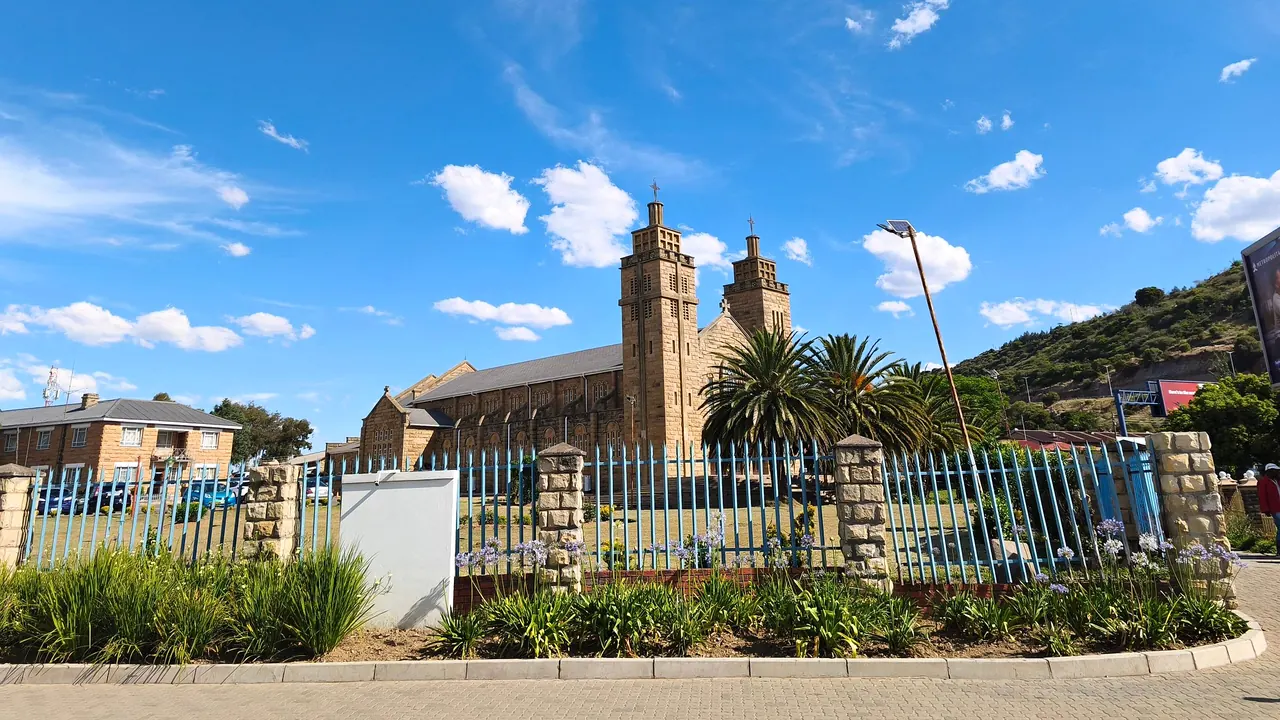
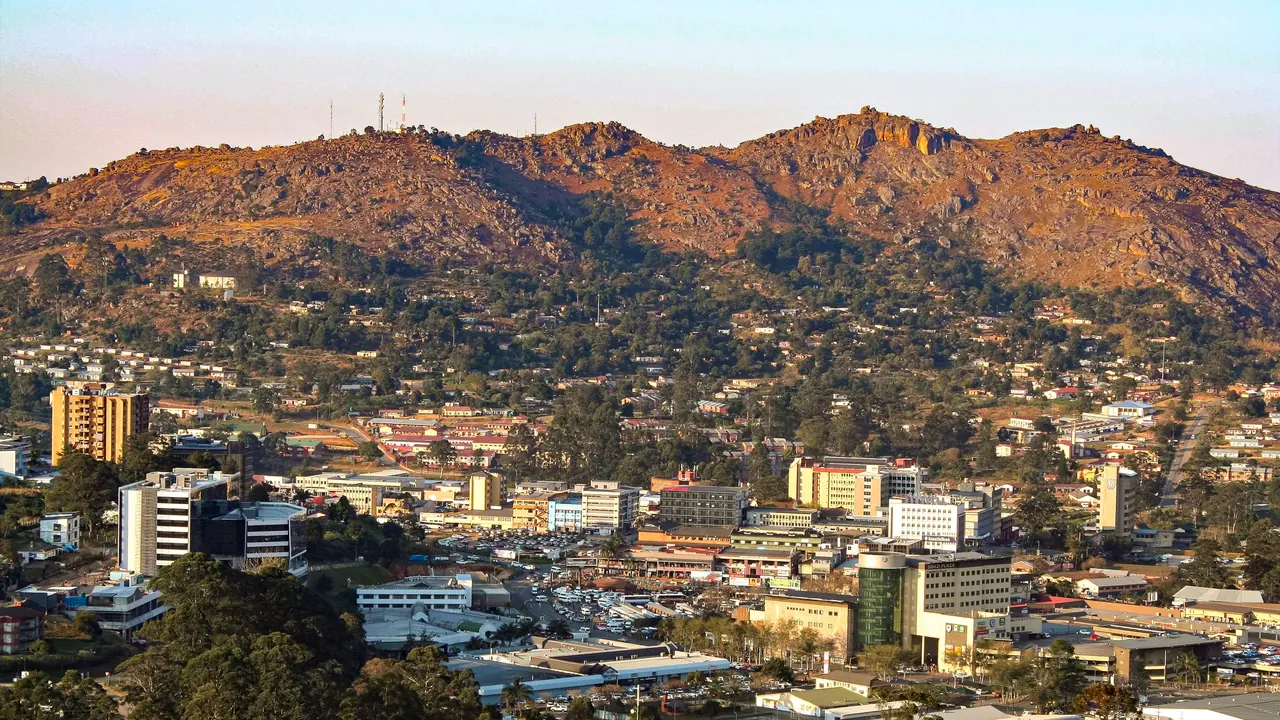
Photos: Maseru by August Dominus, CC0; Mbabane by Khaya Motsa, Pexels License.
Maseru or Mbabane?
Our verdict in twelve categories, each scored against the same fixed benchmark cities, and the climate month by month, so you can choose for your trip.
Choose Maseru for
- getting around
- day trips
- prices
Maseru suits travellers drawn to Basotho history and mountain landscapes who are happy to base themselves in a working capital rather than a destination. The short circuit from the city is its strongest suit: Thaba Bosiu, the mission town of Morija, the sandstone valley at Roma and the weavers of Teyateyaneng all lie within an hour. Pony trekking around Malealea and the falls at Semonkong pull the trip further into the highlands. Day-to-day costs stay low and the centre is a little easier to manage.
Choose Mbabane for
- families
- wellness
- nature and the outdoors
Mbabane is the better pick for anyone whose trip is really about wildlife and walking. Malolotja, Mlilwane and Sibebe Rock sit close to town, and the lowveld reserves with rhino, lions and elephants are an easy drive east. That makes it the stronger choice for families and for a slow, restful few days in quiet valley lodges. The Ezulwini Valley also adds more to see, from the National Museum at Lobamba to Mantenga's daily dancing, along with a warmer festival calendar.
Scoreboard
Twelve categories on one fixed scale from 0 to 100. The shaded stretch is the gap between the two.
Your match
Pick a travel style or drag the sliders, and both match scores follow your weighting.
Wins on getting around and day trips with your weighting.
Wins on families and wellness with your weighting.
What matters to you?
Category by category
What the scores mean for a trip.
Beaches & swimming
Both are landlocked highland capitals, so neither offers a beach or open-water swimming, and in either city a dip means a hotel or lodge pool. The difference lies in what a coast trip involves. From Maseru the sea is a long day's drive across South Africa, while from Mbabane the Mozambican coast is a few hours away and easy to add as a separate leg.
Food & drink
Neither is a place to travel for food, and both rest on a maize porridge staple: papa with moroho greens or chakalaka in Maseru's canteens and taxi-rank stalls, pap and braaied meat in Mbabane's grill houses. Maseru's wider choice is mostly hotel dining rooms and South African chains in the malls.
Mbabane has a slight edge in variety rather than a different league. Its town market is the easiest place to try sishwala and slow-cooked greens, and the farm-style terraces of the Malkerns Valley, among pineapple and citrus groves, offer the most enjoyable meals in either place.
Culture & sights
Maseru itself takes a morning: the Basotho Hat craft centre, Our Lady of Victories Cathedral, the Royal Palace seen from outside and a few colonial buildings on Kingsway. Its real history, Moshoeshoe I and the founding of the Basotho nation, has to be found outside the city.
Mbabane has more within easy reach, though mostly in the valley below rather than in town. At Lobamba, the National Museum and the King Sobhuza II Memorial Park explain the Swazi monarchy and independence, Mantenga rebuilds a beehive-hut homestead, and the Ngwenya mine adds a site worked tens of thousands of years ago. That fills a day or two, which is more than Maseru manages on its own doorstep.
Nightlife
Evenings are short in both, and most visitors end the night at their hotel or lodge. Maseru has the more local, urban scene, with a handful of bars, lounges and weekend clubs playing famo and amapiano loud, but you take a taxi rather than walk. Mbabane's options are spread between town bars, Manzini and the casino bars of the Ezulwini hotel strip, and unlit valley roads keep most people at their lodge after dinner.
Nature & outdoors
Maseru looks out on sandstone mesas and the Maluti Mountains, and the best of it is a drive away: Thaba Bosiu's plateau, the hills around Roma, and pony trekking through Malealea's grassland and gorges. Maletsunyane Falls at Semonkong is a full day out, and the high passes and ski slopes need nights in the mountains.
Mbabane has wilder country much closer to hand. Sibebe Rock, the vast granite dome, rises just outside town, Malolotja's gorges, waterfalls and canopy tour are half an hour north, and at Mlilwane you can walk or cycle among zebra and antelope. Add the lion, elephant and rhino of Hlane and rafting on the Great Usutu at Mkhaya, and it offers a far broader outdoors trip with less driving.
Day trips
Maseru has the more coherent set of short outings, all within an hour and all tied to Basotho history: the summit graves at Thaba Bosiu, the museum, archives and dinosaur footprints of Morija, sandstone churches at Roma, and the mohair weavers and lived-in cave houses north of the city.
From Mbabane the outings are pleasant but less focused on places in their own right: craft workshops and pineapple farms in the Malkerns, Manzini's market, the Ngwenya glassworks and Piggs Peak. Barberton across the border is about two hours away. Most longer drives from Mbabane are for wildlife rather than towns, which belongs more to its nature than to its day trips.
Good for families
Maseru is hard going with children. There is no zoo or park worth seeking out, the centre is not for wandering with little ones, and the pony rides and cultural village at Thaba Bosiu need a car and suit older children best.
Mbabane works far better because of its animals. Mlilwane's rest camp, with zebra and warthogs strolling past, is a gentle introduction, Hlane brings elephants and rhino within reach, and the dancing at Mantenga holds children's attention. Expect long car journeys, bring your own supplies, and check malaria advice before heading to the eastern reserves.
Getting around
Maseru is the easier of two difficult places. Its centre along Kingsway is flat, compact and walkable by day, and shared four-plus-one taxis run constantly, if confusingly. Most sights still need a hired car or driver, and the South African border can mean queues.
Mbabane's centre is small but steep, and the kombis that run along the main road do not reach the reserves or lodges where most visitors stay. A car is close to essential, and winding mountain roads with livestock make night driving something to avoid.
Shopping & style
Both are craft destinations with plain malls for everyday needs and no fashion to speak of. Maseru's buys are textiles and weaving: Basotho blankets and grass hats at the Basotho Hat, and mohair tapestries straight from the weavers at Teyateyaneng.
Mbabane has a slightly wider spread of handmade goods and more places to browse them. Recycled glass from Ngwenya, the bright animal candles, sisal baskets, carvings and soapstone are sold at workshops along the Malkerns and Ezulwini valleys and at roadside markets.
Affordability
Both are cheap day to day and expensive where it counts, in comfortable rooms and car hire. Maseru stretches a little further, with canteen meals and shared taxis costing next to nothing, and guesthouses and mission lodges offering simple, cheap beds.
In Mbabane the lodges of the Ezulwini Valley and the reserves are priced for international guests, with few backpacker options between them. The parks' rest camps and self-catering cottages are the way to keep costs down.
Live music & performing arts
Maseru's music is famo, heard in bars and from passing taxis, with traditional dance at Thaba Bosiu's cultural village and the Morija festival, with its horse racing, as the one real occasion. For most of the year there is little to attend.
Mbabane gives a visitor more to plan around. Mantenga stages song and dance most days, and the calendar holds the Umhlanga Reed Dance and Incwala ceremony near Lobamba, both national rituals partly open to respectful spectators, plus the Bushfire festival in the Malkerns Valley. Neither city has a concert hall or regular theatre.
Wellness & relaxation
Maseru offers little rest. Hotel spas and gyms are all there is, the business-trip bustle of traffic and minibus horns gets in the way, and the quiet lodges people want are deep in the mountains.
Mbabane is far better for a few slow days. The Ezulwini Valley has a warm mineral spring feeding the open-air Cuddle Puddle and a few resort spas, and the lodges in the valleys and reserves are peaceful, with early evenings and cool highveld air. It is not a spa destination, but unwinding comes easily there.
When should you go?
Pick your month. The climate figures are measured averages, not a forecast.
Maseru in July
Mbabane in July
Daytime high, °C
Rainfall in the month, mm
Where the figures come from
Maseru's temperatures are measured 68 km from the centre, at Ficksburg.
Maseru has no rain gauge within 25 km of the centre, so its rainfall comes from a gridded climate dataset read at the destination rather than from a gauge further away.
Mbabane has no weather station within reach, so its figures come from a gridded climate model rather than a measured record, and read a broad area rather than one spot.
Temperature and rainfall are climate normals, averaged over the years shown. Maseru: 1998-2020 (rainfall 1991-2020) normals, Ficksburg (67.7 km from centre). Mbabane: 1991-2020 normals, TerraClimate 4 km grid at the town, no weather station within 90 km.
Neither city has a sea, so the question is walking weather and rain. Maseru has the bigger swings. Summer afternoons reach about 29°C from December to February, with thunderstorms bringing 112mm in January, and winter is dry and bright but cool, with days around 18°C in June and July and frosty nights. The best months for hiking and driving the mountain roads are April to May and September to October, when it is mild and mostly dry.
Mbabane stays mild all year, with highs between about 20°C and 26°C, so heat is never the problem there. Rain is. Its summer is far wetter than Maseru's, peaking at 219mm in January, with heavy afternoon storms from November to March. From May to September it turns dry, the air clears for walking and game viewing is at its best, so a winter or early spring visit makes the most of it.
Which traveller are you?
On a family trip with children, Maseru means a long drive for each outing, followed by afternoons at the hotel pool. Mbabane is much easier. Families can stay inside a reserve, spend mornings on guided walks and rides, and be back at the lodge by dusk.
For an outdoors trip, Maseru suits travellers with a car and time to spare. Pony trekking at Malealea and the falls at Semonkong take long drives. Mbabane is the stronger choice, with serious hiking, granite climbing, rafting and big-game reserves all within easy reach.
On a trip on a tight budget, Maseru edges ahead. Thaba Bosiu and Morija both lie within an hour, so a few days with a car or driver cover the main outings. Mbabane also needs a car, so the savings come from booking park rest camps or self-catering cottages and cooking for yourself.
Before you go
| Measure | Maseru | Mbabane |
|---|---|---|
| Official language | English, Sesotho | English, Swazi |
| Currency | Loti (LSL) | Lilangeni (SZL) |
| Sockets | M220 V, 50 Hz | M230 V, 50 Hz |
| Driving side | Left | Left |
| Time zone | UTC+2 | UTC+2 |
| Emergency number | Police 112, ambulance 114, fire 115 | Police 999, ambulance 977, fire 933 |
| Elevation | 1,600 m | 1,243 m |
| Main airport | Moshoeshoe I International Airport (MSU)18 km from centre1 non-stop destination | King Mswati III International Airport (SHO)58 km from centre4 non-stop destinations |
| Public holidays this year | 11 days | 10 days |
By the numbers
| Measure | Maseru | Mbabane |
|---|---|---|
| Population | 343,541 | 76,218 |
| People per km² | 2,489 | 508 |
| Museums within 10 km | 0 | 1 |
| UNESCO World Heritage sites within 50 km | 0 | 0 |
Where else could you go?
Every comparison below shares a destination with this one, so you can follow Maseru or Mbabane somewhere new.
- Maputovs Mbabane
- Krugervs Mbabane
- Johannesburgvs Mbabane
- Durbanvs Maseru
- Johannesburgvs Maseru
- Durbanvs Mbabane