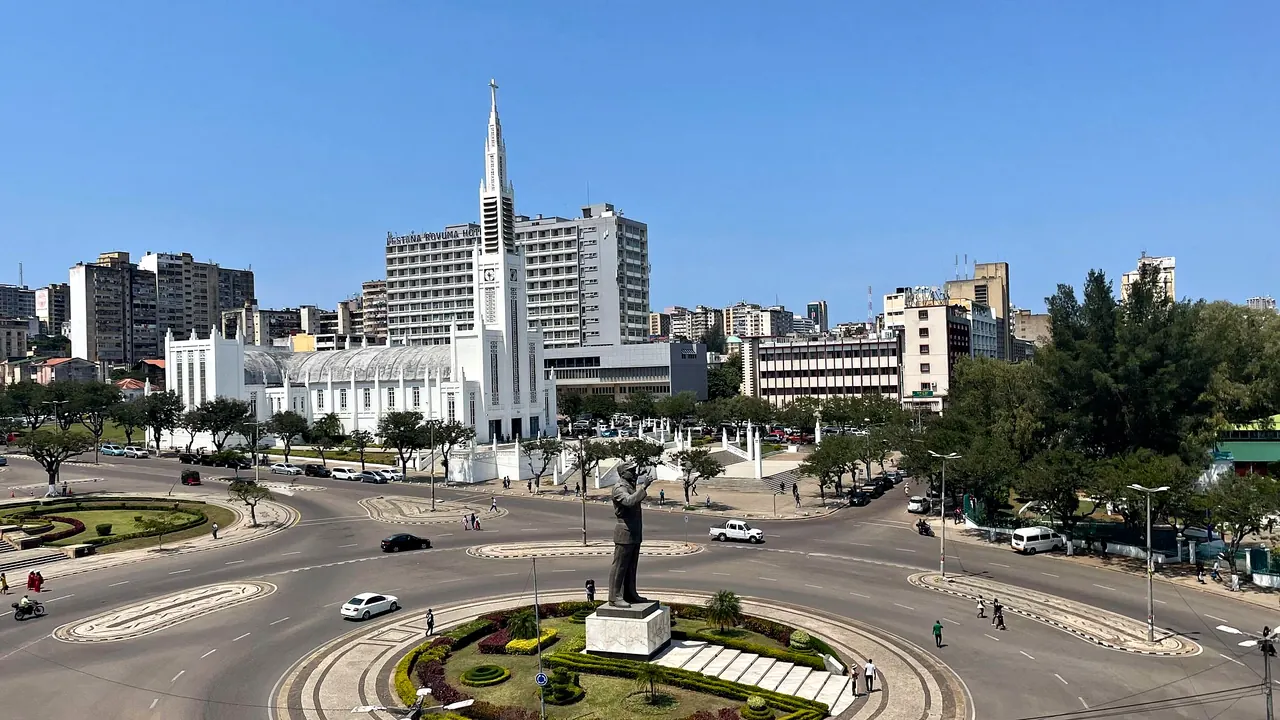
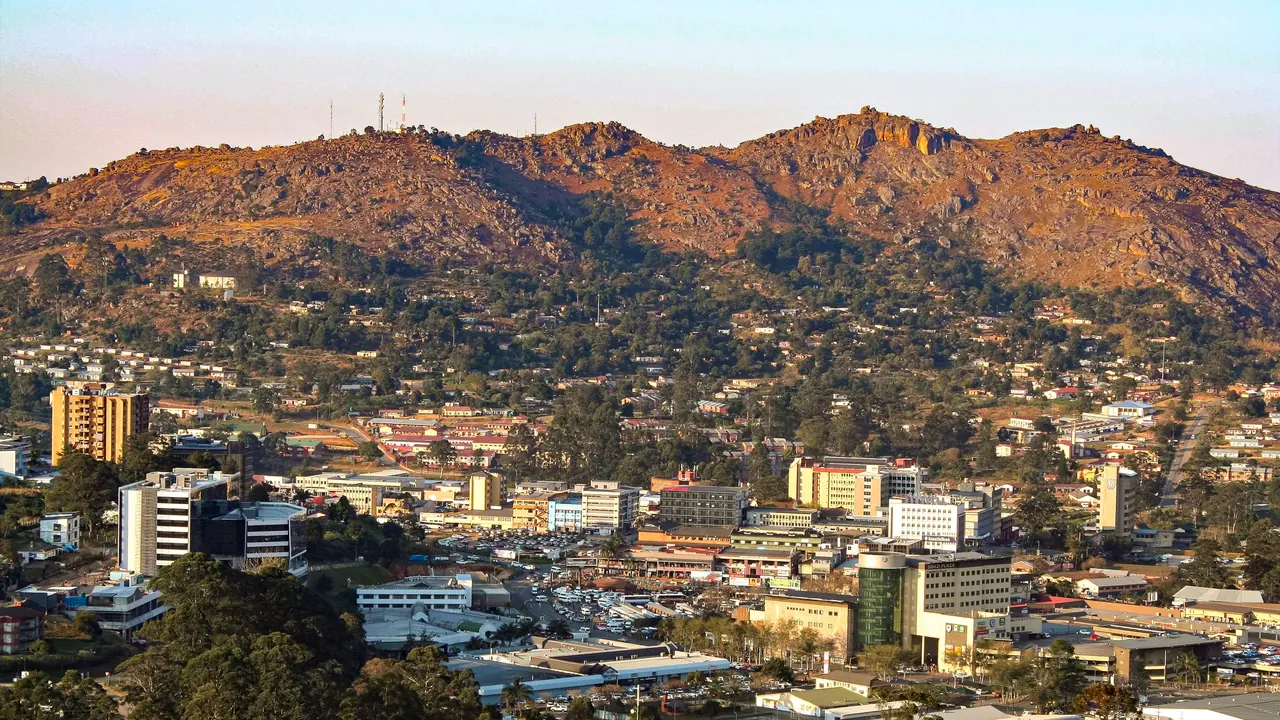
Photos: Maputo by Salazar Sérgio, CC BY-SA 4.0, cropped; Mbabane by Khaya Motsa, Pexels License.
Maputo or Mbabane?
Our verdict in twelve categories, each scored against the same fixed benchmark cities, and the climate month by month, so you can choose for your trip.
Choose Maputo for
- nightlife
- beaches
- food and drink
Maputo suits travellers who want a real city with a coast attached. Its draw is grilled prawns at the fish market, a long Marginal along the bay, late weekends to marrabenta and amapiano, and a walk past art deco and modernist buildings under the jacarandas. It also has the warm Indian Ocean within reach, though the best swimming is on Inhaca or further south rather than in town.
Choose Mbabane for
- nature and the outdoors
- families
- prices
Pick Mbabane if you would rather spend the days outdoors than in the streets. The highveld around it gives you granite domes, the gorges of Malolotja, horse rides among zebra at Mlilwane and lion and rhino country an easy drive east. It is the calmer and cheaper base, and better with children, but expect early evenings, simple meals and a hire car.
Scoreboard
Twelve categories on one fixed scale from 0 to 100. The shaded stretch is the gap between the two.
Your match
Pick a travel style or drag the sliders, and both match scores follow your weighting.
Wins on nightlife and beaches with your weighting.
Wins on nature and the outdoors and families with your weighting.
What matters to you?
Category by category
What the scores mean for a trip.
Beaches & swimming
Only Maputo has a beach at all, though even its city beach at Costa do Sol is for walks and grilled fish rather than swimming, because the shallow bay pulls out over mudflats at low tide. The real swimming is a trip away, on Inhaca across the bay, in the surf at Macaneta or on the clear water at Ponta do Ouro.
Mbabane is landlocked, and the nearest coast is several hours away and over a border, so here swimming means the lodge pool. Anyone who wants sea and sand should base themselves in Maputo or add a separate coastal stay.
Food & drink
Maputo is the place to eat well, as long as you like seafood. You pick prawns, lobster or line fish at the market stalls and have them grilled next door, and there is matapa and chicken à zambeziana to try, plus the Portuguese bakeries.
Mbabane's meals are practical: braaied meat and pap at grill houses, sishwala at the town market, and lodge restaurants. The farm terraces of the Malkerns Valley are the best of it, but nothing there matches a night at Maputo's fish market.
Culture & sights
Maputo's culture is its cityscape. You can spend a few days walking past the domed railway station, the Iron House, the white modernist cathedral and Pancho Guedes's sculptural buildings, and the National Art Museum adds Malangatana and modern Mozambican painting.
Mbabane itself has little to see. Its interest lies in the Ezulwini Valley at Lobamba, with the National Museum, the Sobhuza II memorial and the beehive huts at Mantenga, plus the ancient Ngwenya mine. It all fits into a day or two and reveals traditional Swazi life rather than architecture.
Nightlife
Maputo has a real night out. Evenings begin at lounge bars in Polana and Sommerschield and move on to clubs playing marrabenta and amapiano until dawn, while the bars along the Marginal stay loud on warm weekends. Venues are scattered, so you take taxis between them.
Mbabane goes to bed early. A few local bars, weekend music in Manzini and the Ezulwini casino bars are all there is, and most visitors staying at lodges call it a night after dinner rather than drive the unlit roads.
Nature & outdoors
Mbabane is surrounded by its landscape. You can climb Sibebe Rock with a guide just outside town, hike Malolotja's gorges, and walk, cycle or ride among antelope at Mlilwane. For lions, elephants, rhino tracking or rafting on the Great Usutu, the lowveld is a short drive east.
Maputo sits on a flat plain with few parks, so its wild side means a journey. Elephants and hippos in Maputo National Park take a 4x4 and most of a day, and diving with dolphins near Ponta do Ouro usually means a night away, but whale season and the Inhaca marine reserve add something the mountains cannot.
Day trips
Mbabane has the easier outings because the whole country is compact. You can loop through the Malkerns and Ezulwini valleys for candle makers, basket weavers and Lobamba, head north to the Ngwenya glassworks and Piggs Peak, or cross to Barberton in about two hours.
Maputo's day trips are mostly over the water: the boat to Inhaca and a seafood afternoon in Catembe across the bridge. Further afield, Namaacha and Marracuene are small places, and anything more ambitious needs an overnight stay.
Good for families
Mbabane works better with children because the animals are easy to reach. At Mlilwane zebra graze around the rest camp and the walks are short, Hlane adds elephants within a day, and malaria is less of a worry in the highlands than on the coast. Expect long car journeys and bring medical supplies.
Maputo offers older children a boat to Inhaca and prawns by the bay, but little else for them. With malaria all year, broken pavements and no walking after dark, most families pass through on their way to the coast or a safari lodge.
Getting around
Neither is easy, but Maputo has more options. Its grid of avenues can be walked by day, and taxis, tuk-tuks and ride-hailing cover the rest, with a car after dark and an eye out for pickpockets in the Baixa.
Mbabane's small, steep centre is walkable, but the reserves, lodges and valley sights are out of reach of the kombis, so a hire car or driver is part of the plan. The winding mountain roads and livestock mean you should avoid driving after dark.
Shopping & style
Both are craft destinations rather than fashion ones, with Maputo slightly ahead because it adds the city market to its crafts. Its open-air craft market has Makonde ebony carvings and batik, and you can have capulana cloth made into clothes in a day or two, while the tiled Mercado Central is good for cashews and piri-piri.
Mbabane's crafts are made in workshops along the valleys: recycled glass from Ngwenya, animal candles, sisal baskets and soapstone. You buy straight from the people who make them, but the town offers little else.
Affordability
Mbabane is the cheaper trip. Meals, kombis, crafts and reserve entry cost little, and self-catering cottages and park rest camps keep lodging down, although car hire and the international lodges add up.
Maputo surprises many visitors. Market food, beer and seafood are good value, but hotels and restaurants priced for diplomats and aid staff, plus the taxis you rely on, bring a comfortable stay close to a mid-range Western European city.
Live music & performing arts
Maputo has music any weekend. Marrabenta, jazz and timbila xylophone are played by bar house bands, the Franco-Mozambican Cultural Centre runs concerts, dance and film, and the Teatro Avenida keeps a theatre company going.
In Mbabane, performance depends on the calendar. You can count on daily dancing at Mantenga, but the highlights are the Umhlanga Reed Dance, the Incwala ceremony and the Bushfire festival in the Malkerns Valley. Outside those dates the evenings are quiet.
Wellness & relaxation
Mbabane is the more restful place. The warm mineral spring at the Cuddle Puddle and a few resort spas in the Ezulwini Valley are modest, but quiet lodges, early nights and cool highveld air make slow days easy.
Maputo offers hotel spas and the odd massage studio, and a sundowner over the bay helps, but traffic, noise and caution on the street work against relaxing. Rest there tends to mean going on to Inhaca or the southern beach lodges.
When should you go?
Pick your month. The climate figures are measured averages, not a forecast.
Maputo in July
Mbabane in July
Daytime high, °C
Rainfall in the month, mm
Where the figures come from
Mbabane has no weather station within reach, so its figures come from a gridded climate model rather than a measured record, and read a broad area rather than one spot.
Temperature and rainfall are climate normals, averaged over the years shown. Maputo: 1991-2020 (sunshine 1981-2010) normals, Maputo / Mavalane (5.8 km from centre). Mbabane: 1991-2020 normals, TerraClimate 4 km grid at the town, no weather station within 90 km.
Maputo is hot all year. From November to March highs reach 32°C and the rain is heavy, wettest in January, but this is also when the sea is warmest, around 28°C. That makes it the best time for swimming on Inhaca or the southern coast. May to September is dry and sunny and still warm in the high twenties by day, so it is the easiest time for walking the avenues, although the sea cools to about 22°C.
Mbabane sits up in the highveld and is milder all year, with summer highs only in the mid twenties and winter days a few degrees cooler. Its summers are much wetter than Maputo's, with afternoon storms and more than 200mm of rain in January. The dry winter from May to September is therefore the time for hiking and game viewing. Those months suit both cities, warm by the bay and cool and clear in the hills.
Which traveller are you?
For a food and nightlife trip, Maputo wins clearly. You get peri-peri prawns and crab cooked to order beside the Mercado do Peixe, then esplanadas and clubs playing kizomba and Afro-house until dawn. Mbabane mostly offers hotel dinners and quiet evenings.
On an outdoors trip, Mbabane is the better base. Sibebe Rock is just outside town, Malolotja's high grassland and waterfalls are half an hour away, and Hlane and Mkhaya are within a day's drive. Maputo's wild places all need long journeys.
On a family trip with children, Mbabane is easier. Zebra and warthogs wander round the Mlilwane rest camp, Hlane has elephants, and the Mantenga dancers go down well. In Maputo, malaria, heavy traffic and unsafe streets after dark make it harder.
Before you go
| Measure | Maputo | Mbabane |
|---|---|---|
| Official language | Portuguese | English, Swazi |
| Currency | Mozambique Metical (MZN) | Lilangeni (SZL) |
| Sockets | CFM220 V, 50 Hz | M230 V, 50 Hz |
| Driving side | Left | Left |
| Time zone | UTC+2 | UTC+2 |
| Emergency number | Police 119, ambulance 198, fire 117 | Police 999, ambulance 977, fire 933 |
| Elevation | 31 m | 1,243 m |
| Main airport | Maputo Airport (MPM)5 km from centre18 non-stop destinations | King Mswati III International Airport (SHO)58 km from centre4 non-stop destinations |
| Public holidays this year | 9 days | 10 days |
By the numbers
| Measure | Maputo | Mbabane |
|---|---|---|
| Population | 1,133,200 | 76,218 |
| People per km² | 3,268 | 508 |
| Museums within 10 km | 3 | 1 |
| UNESCO World Heritage sites within 50 km | 0 | 0 |
| Swim season, months above 21 °C | 12 months | - |
Where else could you go?
Every comparison below shares a destination with this one, so you can follow Maputo or Mbabane somewhere new.
- Krugervs Maputo
- Krugervs Mbabane
- Johannesburgvs Mbabane
- Durbanvs Mbabane
- Johannesburgvs Maputo
- Durbanvs Maputo