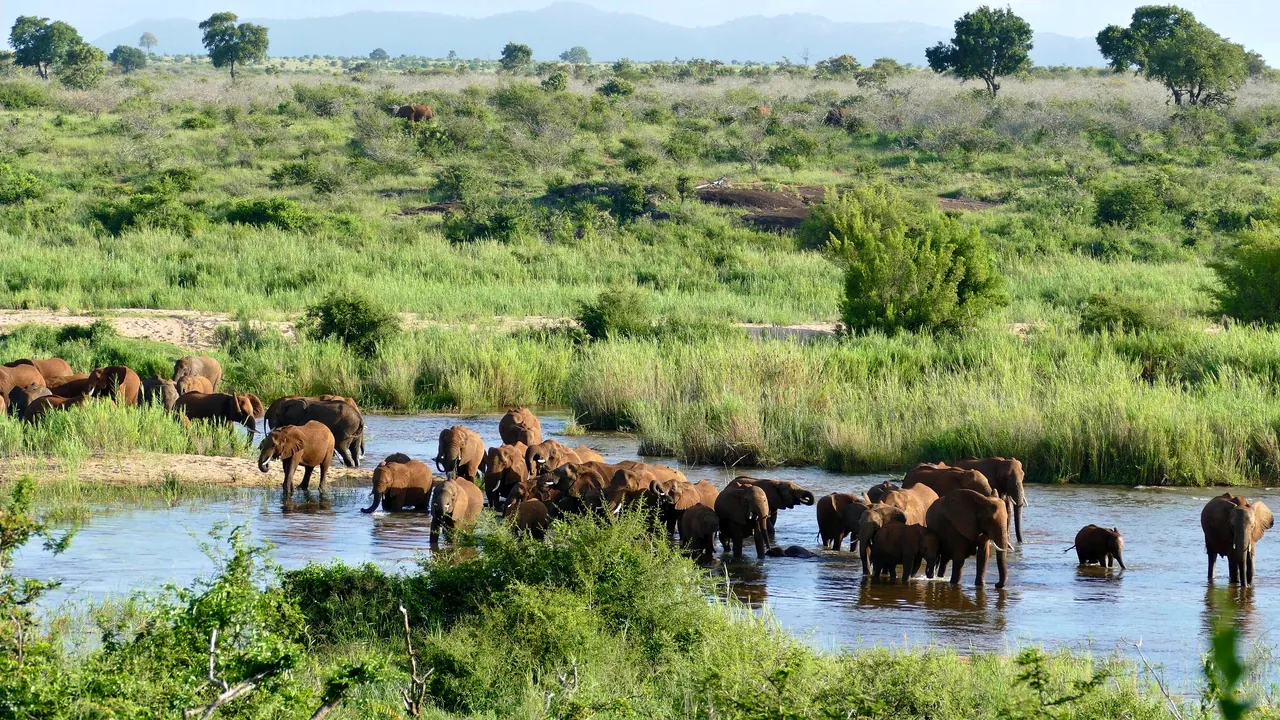
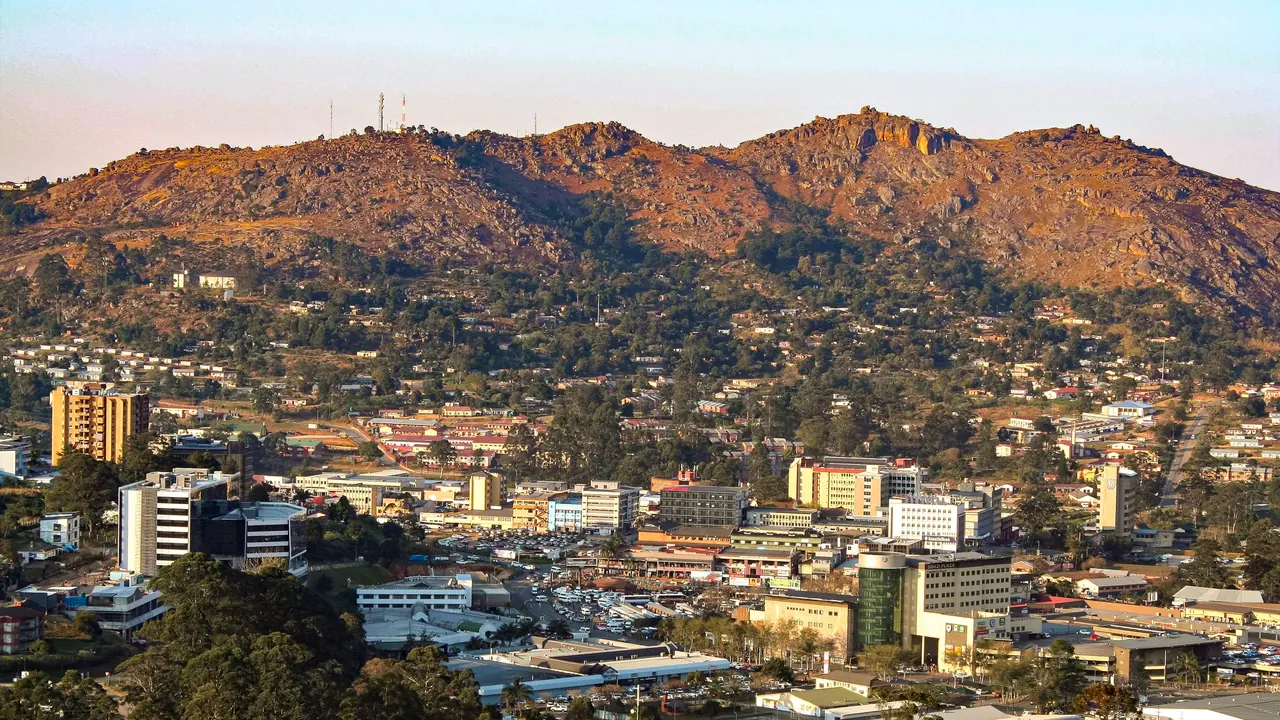
Photos: Kruger by Bernard DUPONT from FRANCE, CC BY-SA 2.0, cropped; Mbabane by Khaya Motsa, Pexels License.
Kruger or Mbabane?
Our verdict in twelve categories, each scored against the same fixed benchmark cities, and the climate month by month, so you can choose for your trip.
Choose Kruger for
- nature and the outdoors
- getting around
- wellness
Choose Kruger if the trip is about big game. Lion, leopard, elephant, buffalo and rhino range across the park and the unfenced private reserves of Sabi Sand, Timbavati and Klaserie, and you can find them yourself from a hire car or with rangers in an open vehicle. This is a region you take one section at a time, either by self-driving between rest camps or by flying to a lodge that handles everything. In return you give up towns, evenings out and much in the way of culture.
Choose Mbabane for
- shopping
- live music and the arts
- nightlife
Mbabane suits a slower, more varied trip based in the cool hills of a small country you can drive across in an afternoon. It mixes hiking in Malolotja, riding among zebra at Mlilwane, the royal town of Lobamba, craft workshops in the Malkerns Valley and, if your dates fit, the great Swazi ceremonies. Day to day it costs less, and it has more going on after dark and more to buy. The wildlife at Hlane and Mkhaya is real, but it is not on Kruger's scale.
Scoreboard
Twelve categories on one fixed scale from 0 to 100. The shaded stretch is the gap between the two.
Your match
Pick a travel style or drag the sliders, and both match scores follow your weighting.
Too close to call, 1 point apart
Wins on nature and the outdoors and getting around with your weighting.
Wins on shopping and live music and the arts with your weighting.
What matters to you?
Category by category
What the scores mean for a trip.
Beaches & swimming
Neither has a coastline, and in both the nearest sea is in Mozambique, a separate leg rather than a day out. Swimming in either means a pool. In Kruger, the rest camp or lodge pool is a real relief in the summer heat, and the rivers are off limits because of crocodiles and hippos. In Mbabane's cooler highland air, a pool matters less to the day.
Food & drink
Neither is a place to travel for food, but they eat in different ways. In Kruger, meals belong to the safari: boma dinners by the fire at the private lodges, or boerewors on the braai stand outside your rest camp bungalow.
Mbabane offers more of the local table. Grill houses serve pap and stews, the town market has sishwala and slow-cooked greens, and the farm terraces of the Malkerns Valley are the pleasantest places to sit down for a meal.
Culture & sights
Mbabane has more to see, mostly in the Ezulwini Valley below the town. Lobamba holds the National Museum and the King Sobhuza II Memorial Park, Mantenga rebuilds a beehive-hut homestead, and the ancient Ngwenya ochre mine lies in the hills to the west. Together they show a living monarchy and culture, and they fill a day or two.
Kruger's history comes in scattered stops between game drives. There are the Iron Age walls of Thulamela in the far north, the smelting site at Masorini and the small founders' museum at Skukuza. The best of it, the preserved gold-rush town of Pilgrim's Rest, sits up on the escarpment outside the park.
Nightlife
Neither is a place to go out, but Mbabane has at least some evening life. There are local bars and weekend music in town and in Manzini, plus casino bars along the Ezulwini hotel strip. In Kruger the camp gates shut at dusk, so the night's outing is a spotlit drive in search of leopards and hyenas, followed by an early bed before the dawn drive.
Nature & outdoors
Kruger is in another league for wildlife. The park runs about 350km from north to south, with the densest game around Lower Sabie and Skukuza and wilder mopane country to the north. You can self-drive, join rangers or walk multi-day trails, and the Blyde River Canyon and God's Window lie just to the west.
Mbabane's nature is gentler and easier to explore on foot. You can climb Sibebe Rock outside town, hike the gorges and waterfalls of Malolotja, or ride a horse among zebra at Mlilwane. Lions and rhino are an easy drive east at Hlane, and rafting on the Great Usutu at Mkhaya adds something Kruger lacks.
Day trips
Both have a short list of outings, of different kinds. From Kruger the classic day is a scenic loop up the escarpment through Graskop, Sabie and Pilgrim's Rest to the canyon viewpoints, with the wildlife rehabilitation centres at Hoedspruit as a gentler alternative.
Mbabane's are craft-and-country days in a compact country, with candle and basket makers in the Malkerns Valley, the Manzini market, the glassworks near Ngwenya and a northern loop to Piggs Peak. Each place lists the other as a reach across the border, which works better as a stay of its own.
Good for families
Both work for families, but for different ages. Kruger is a big adventure for older children, with rest camps such as Berg-en-Dal and Lower Sabie offering pools, lawns and family bungalows. But it is a malaria area, the drives are long, and many private lodges turn away young children.
Mbabane is easier with little ones. Mlilwane lets zebra and warthogs wander around the rest camp, and the highlands carry little malaria risk. Beyond the animals and the dancing at Mantenga, though, almost nothing is made for children, and good medical care may mean a trip to a larger centre.
Getting around
Kruger is more straightforward. Good highways run from Johannesburg, small airports at Skukuza, Hoedspruit and elsewhere sit close to the park, and the park roads are fine for an ordinary car. Lodges collect guests from the airstrip. The challenge is distance, since crossing the park from south to north takes days.
Mbabane's steep centre is walkable, but beyond it the kombi minibuses never reach the reserves or lodges. Most visitors hire a car or a driver and then face winding mountain roads, livestock on the tarmac and unlit valleys after dark.
Shopping & style
Mbabane is the better place to shop, because Eswatini's handmade goods are the real thing. You can buy recycled glass from Ngwenya, brightly coloured animal candles and sisal baskets woven by rural women, often in the workshops where they are made. Kruger has field guides and safari clothing in the camp shops, plus carvings and fabrics from the roadside stalls around Graskop.
Affordability
Mbabane is the cheaper of the two day to day. Kombi fares, local meals, crafts and reserve entry all cost little. The real expenses are a hire car and lodges priced for foreign guests, but self-catering cottages and rest camps keep costs down.
In Kruger the cost depends on how you travel. A self-drive trip using rest camps and your own braai shows you the same animals for much less, though car hire and the daily conservation fee for international visitors add up. The private lodges of Sabi Sand are among Africa's most expensive stays, and winter and South African school vacations push prices up.
Live music & performing arts
Mbabane has far more to watch. Mantenga Cultural Village performs song and dance most days, and the national calendar brings the Umhlanga Reed Dance in late winter and the Incwala ceremony in summer near Lobamba, parts of which are open to respectful spectators. The Bushfire festival in the Malkerns Valley draws performers from across southern Africa. In Kruger, a few lodges put on Shangaan dance for their guests, and the rest of the evening's sound comes from lions and hyenas.
Wellness & relaxation
Kruger's private lodges offer the more indulgent rest. Their spa rooms open onto riverbeds, and a plunge pool fills the midday gap between drives while elephants come down to drink, although the pre-dawn wake-up never lets you lie in.
Mbabane relaxes you in a quieter way. You can soak in the warm mineral water of the Cuddle Puddle in the Ezulwini Valley or book a massage at a hotel spa, but the real pleasure is the cool air and the early, unhurried evenings.
When should you go?
Pick your month. The climate figures are measured averages, not a forecast.
Kruger in July
Mbabane in July
Daytime high, °C
Rainfall in the month, mm
Where the figures come from
Mbabane has no weather station within reach, so its figures come from a gridded climate model rather than a measured record, and read a broad area rather than one spot.
Temperature and rainfall are climate normals, averaged over the years shown. Kruger: 1991-2020 (rainfall 1981-2010) normals, Skukuza (1.6 km from centre). Mbabane: 1991-2020 normals, TerraClimate 4 km grid at the town, no weather station within 90 km.
Both places follow the same pattern, a wet summer and a dry winter, but at very different temperatures. Around the main Kruger camps it is hot all year, with highs of 33°C from November to February and heavy rain at the same time. The dry months from May to September are the best: highs fall to about 26°C in July, game gathers at water, and long hours in a vehicle are much more comfortable.
Mbabane sits high enough to stay mild all year, from about 20°C in July to the mid-twenties in summer, so walking around town is never a strain. Its summer is far wetter than Kruger's, though, with 219mm in January falling mostly in afternoon storms. June to August is driest and clearest for hiking. A winter trip suits both, and with no coast in either, there is no beach season to plan around.
Which traveller are you?
On an outdoors trip, Kruger is the clear choice. Its game drives, guided bush walks and wilderness trails offer some of Africa's best wildlife viewing, and the canyon country of the escarpment adds hiking. Mbabane's highland trails are lovely, but its animals are fewer.
On a relaxing and wellness trip, Kruger's private lodges win, with open-sided spa rooms and plunge pools above dry riverbeds for the midday break. Mbabane has a warm spring pool and a few hotel spas, which is enough for a slow day.
For a culture and arts trip, Mbabane gives far more. Lobamba has the National Museum and the royal seat, Mantenga stages dance most days, and the Umhlanga, Incwala and Bushfire festival draw crowds. Kruger's history amounts to a few stops between drives.
Before you go
| Measure | Kruger | Mbabane |
|---|---|---|
| Official language | English, Zulu, Xhosa, Afrikaans, Venda, Northern Sotho, Swazi, Tswana, Tsonga, Sesotho, Southern Ndebele, South African Sign Language | English, Swazi |
| Currency | Rand (ZAR) | Lilangeni (SZL) |
| Sockets | CMN230 V, 50 Hz | M230 V, 50 Hz |
| Driving side | Left | Left |
| Time zone | UTC+2 | UTC+2 |
| Emergency number | 112 | Police 999, ambulance 977, fire 933 |
| Elevation | - | 1,243 m |
| Main airport | Kruger Mpumalanga International Airport (MQP)8 non-stop destinations | King Mswati III International Airport (SHO)58 km from centre4 non-stop destinations |
| Public holidays this year | 13 days | 10 days |
By the numbers
| Measure | Kruger | Mbabane |
|---|---|---|
| Population | - | 76,218 |
| People per km² | - | 508 |
| Museums within 10 km | - | 1 |
| UNESCO World Heritage sites within 50 km | - | 0 |
Where else could you go?
Every comparison below shares a destination with this one, so you can follow Kruger or Mbabane somewhere new.
- Maputovs Kruger
- Maputovs Mbabane
- Johannesburgvs Mbabane
- Durbanvs Mbabane
- Maseruvs Mbabane
- Victoria Fallsvs Kruger