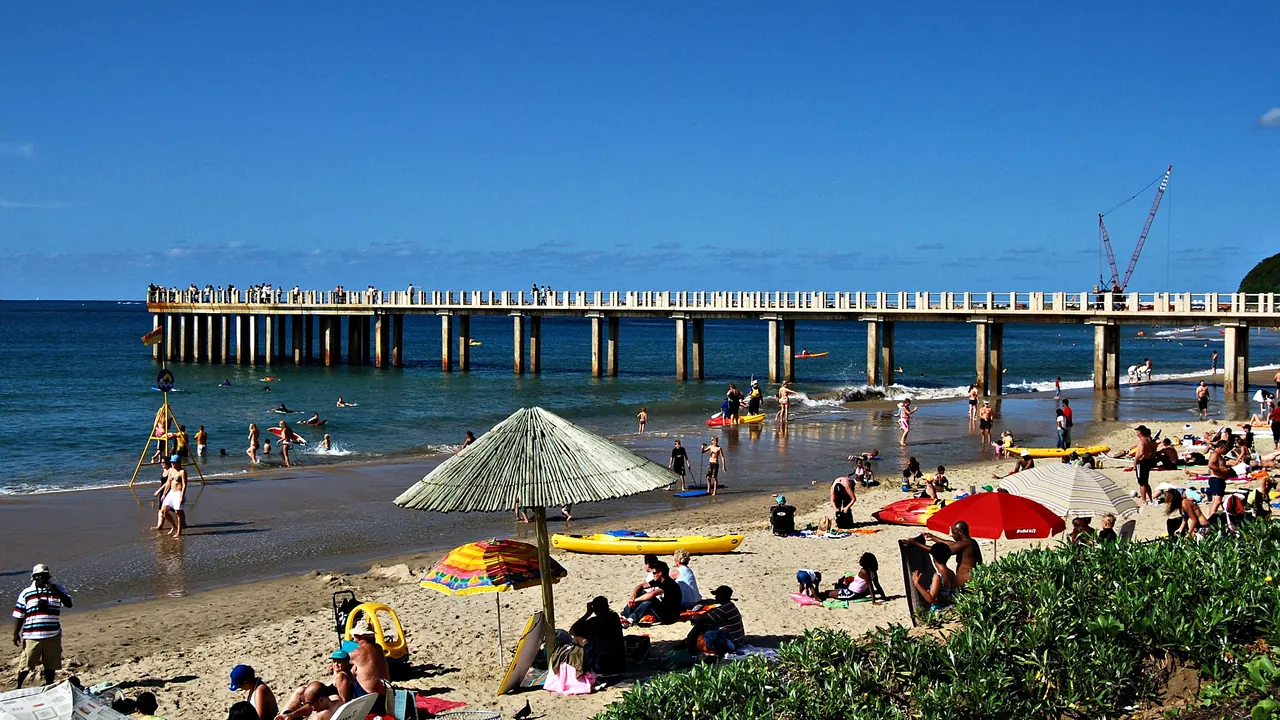
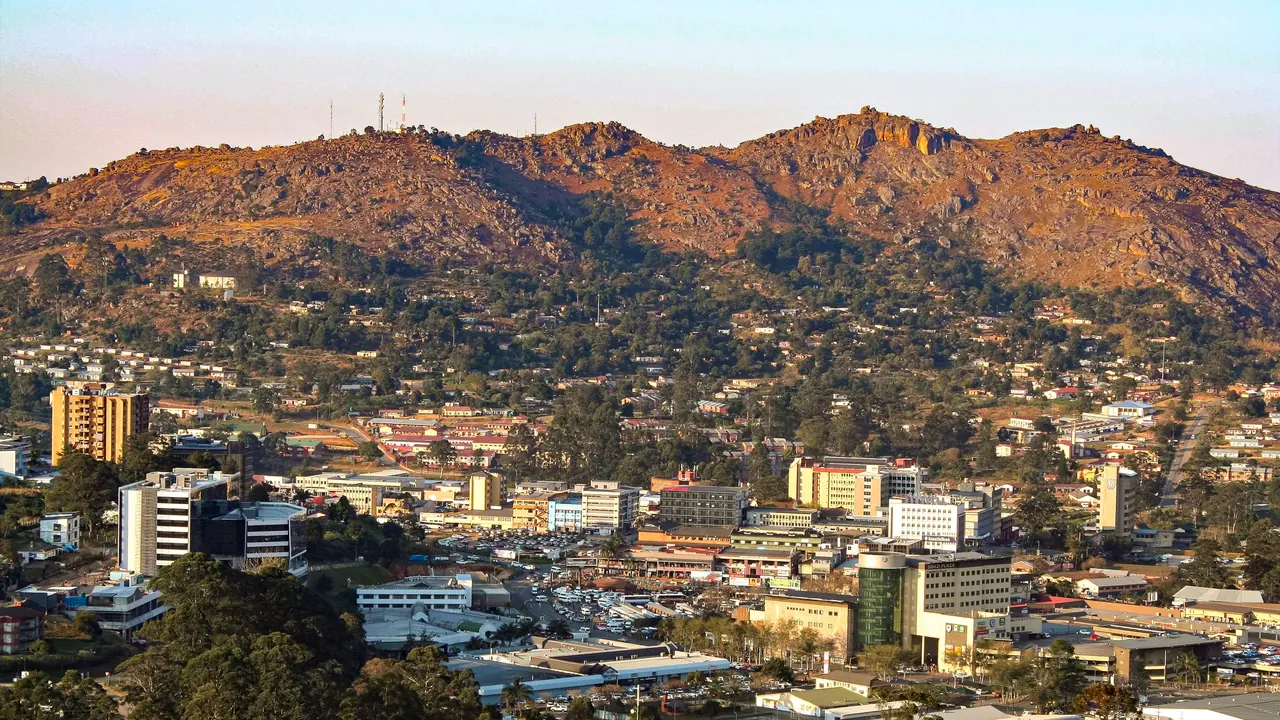
Photos: Durban by Ossewa, CC BY-SA 4.0, cropped; Mbabane by Khaya Motsa, Pexels License.
Durban or Mbabane?
Our verdict in twelve categories, each scored against the same fixed benchmark cities, and the climate month by month, so you can choose for your trip.
Choose Durban for
- beaches
- food and drink
- nightlife
Durban suits a warm-water beach trip with good food on the side. The Golden Mile's lifeguarded sand, an Indian Ocean you can swim in every month and the city's curry culture give it an easy pull for families and anyone who wants sea, bunny chow and a terrace on Florida Road in the evening. It is also the cheaper of the two day to day, though you will rely on ride-hailing to get about.
Choose Mbabane for
- nature and the outdoors
- wellness
Pick Mbabane if the trip is about walking, wildlife and quiet. The highveld around it has granite domes, the gorges of Malolotja and walking safaris among zebra at Mlilwane, and Hlane's rhino and elephants are an easy drive east. Evenings end early, there is no sea and the food is practical, so it rewards travellers who want landscape and slow lodge days rather than a city.
Scoreboard
Twelve categories on one fixed scale from 0 to 100. The shaded stretch is the gap between the two.
Your match
Pick a travel style or drag the sliders, and both match scores follow your weighting.
Wins on beaches and food and drink with your weighting.
Wins on nature and the outdoors and wellness with your weighting.
What matters to you?
Category by category
What the scores mean for a trip.
Beaches & swimming
There is no contest here. Durban's Golden Mile gives several kilometres of lifeguarded, shark-netted sand from uShaka to the north beaches, with Umhlanga's quieter shore below the lighthouse and Ballito within an hour. Just mind the rip currents and swim between the flags.
Mbabane is landlocked, so swimming means a lodge pool, and the nearest coast is hours away across the Mozambican border. If sand matters, it is Durban or a separate leg on the coast.
Food & drink
Durban has a real culinary identity, built on the largest Indian community in Africa: fiery red curry, bunny chow from a city-centre takeaway counter and the masala stalls of the Victoria Street Market, with Mozambican prawns and the Florida Road restaurants beyond.
Mbabane is plainer. Meals mostly happen at lodges, along the Ezulwini Valley road or in grill houses serving braaied meat and pap, though the town market is the place to try sishwala and slow-cooked greens, and the Malkerns Valley farm terraces stand out. In Durban you eat for pleasure; in Mbabane you eat to keep going.
Culture & sights
Neither city has sights of international weight, but Durban gives you more to work with. Its layered history shows in the Edwardian City Hall and its art gallery, the Juma Masjid on Grey Street, the KwaMuhle Museum on the apartheid pass laws and Gandhi's Phoenix Settlement, which together fill a day or a guided walk well.
Mbabane itself is a modern hill town, and the interest lies down in the Ezulwini Valley: the National Museum and King Sobhuza II Memorial Park at Lobamba, and the beehive-hut homestead at Mantenga. The ancient Ngwenya ochre mine in the western hills is its most striking single site.
Nightlife
Durban at least gives you somewhere to go: Florida Road's weekend terraces, Umhlanga's hotel lounges, and Sunday-afternoon shisanyama with loud music if you go with someone local. You get there by ride-hailing, and it is more relaxed drinks than clubbing.
In Mbabane the evening usually ends at the lodge after dinner. There are a few local bars and the Ezulwini casino bars, but the dark valley roads are reason enough to stay in.
Nature & outdoors
Both are strong, but on different ground. Mbabane wins on land: Sibebe Rock just outside town, the high grassland and gorges of Malolotja half an hour north, Mlilwane where you can cycle or ride among zebra and wildebeest, and lowveld parks such as Hlane and Mkhaya for lions, rhino and rafting, all within easy reach.
Durban's outdoors is mainly the sea: year-round surf, diving with ragged-tooth sharks at Aliwal Shoal and the winter sardine run. Inland it has the Valley of a Thousand Hills and Krantzkloof's gorge, but the big parks are about three hours away.
Day trips
Durban's outings carry more history, which gives it a slight edge. Pietermaritzburg's Victorian centre and the station where Gandhi was put off the train, the craft studios and cheese makers of the Midlands Meander and the Mandela Capture Site near Howick all make solid drives, though the battlefields need a night away.
From Mbabane the whole small country is within two hours, but the loops are about crafts and countryside: Malkerns workshops, Manzini's market, the Ngwenya glassworks and Piggs Peak, with Barberton across a border. Either way you need a car.
Good for families
Durban is built for a family beach vacation: uShaka Marine World's aquarium and water park on the sand, tidal pools, a promenade for scooters and the shark dissections at the Sharks Board. Umhlanga makes the calmer base.
Mbabane works for families who mainly want animals. Zebra and warthogs wander round the Mlilwane rest camp and Hlane adds elephants. Beyond that, little is made for children, good medical care can mean a drive, and you should check on malaria before heading to the eastern reserves.
Getting around
Ride-hailing is what lets you get by in Durban without driving. The city spreads widely and its old centre is uncomfortable on foot, but cars are easy to call and the beachfront promenade is a good walk.
Mbabane's steep little centre is walkable, but the kombis don't reach the lodges or reserves, so most visitors hire a car or a driver. That means winding mountain roads with livestock on them, and they are best avoided after dark.
Shopping & style
Both are good for crafts, but Durban offers more beyond them: the spices and Indian goods of the Victoria Street Market, Zulu beadwork and telephone-wire bowls along the beachfront, and the huge malls at Umhlanga Ridge for brands.
Mbabane's shopping is almost all handmade: recycled glass from Ngwenya, animal candles and sisal baskets from the Malkerns and Ezulwini workshops. It is lovely for souvenirs, but there is little else.
Affordability
Durban stretches a budget a little further. Golden Mile guesthouses are moderately priced, a bunny chow is about the cheapest good meal on the coast and wine and beer cost little, though daily ride-hailing or a hire car adds up and Umhlanga costs noticeably more.
Mbabane's everyday costs are low, but accommodation works against it, because the valley and reserve lodges are priced for international guests and there are few budget places in between. Self-catering cottages and park rest camps keep the cost down.
Live music & performing arts
Durban has a proper stage life: the Playhouse, the KwaZulu-Natal Philharmonic in the City Hall, the Jomba dance festival and the Durban International Film Festival. There are also gqom and maskandi at local events, if you plan ahead.
Mbabane has no concert hall and little theatre, but its calendar holds national rituals Durban has nothing like: the Umhlanga Reed Dance and the Incwala ceremony near Lobamba, plus the Bushfire festival in the Malkerns Valley. Outside those dates, it is the daily dancing at Mantenga.
Wellness & relaxation
Durban's version of wellness is the resort spa, good value and clustered in Umhlanga and up towards Ballito. The city around them is busy and noisy, though, and anyone who really wants calm heads inland to the Midlands.
Mbabane offers something more natural: the warm mineral pool known as the Cuddle Puddle in the Ezulwini Valley, alongside a few hotel spas. Its real draw is quiet lodges, early evenings and cool highveld air.
When should you go?
Pick your month. The climate figures are measured averages, not a forecast.
Durban in July
Mbabane in July
Daytime high, °C
Rainfall in the month, mm
Where the figures come from
Mbabane has no weather station within reach, so its figures come from a gridded climate model rather than a measured record, and read a broad area rather than one spot.
Temperature and rainfall are climate normals, averaged over the years shown. Durban: 1991-2020 normals, Durban, Durban International Airport (14.1 km from centre). Mbabane: 1991-2020 normals, TerraClimate 4 km grid at the town, no weather station within 90 km.
Durban is warm enough for the beach all year. Summer, roughly November to March, is hot and humid with afternoon storms, and the rain is heaviest from November to January. Winter, from May to August, is dry, sunnier and mild for walking, and even then the sea only drops to about 21°C. That makes the southern winter the best all-round time, with summer for those who want the warmest water.
Mbabane sits higher and runs a few degrees cooler than Durban in summer and winter, with winter highs around 20°C that make for crisp, clear hiking weather. In spring, from September to November, the two are about level. Its summer is much wetter than Durban's, with about 219mm falling in January as storms turn the hills green, while June sees only around 14mm. For hiking and game viewing, May to September is the time to go. Summer suits those who don't mind being caught in a downpour.
Which traveller are you?
On a beach and sun trip, Durban is the only choice. The Golden Mile has lifeguarded sand and warm Indian Ocean swimming in every month, Umhlanga and Ballito add quieter shores, and landlocked Mbabane offers nothing more than a lodge pool.
For an outdoors trip, Mbabane edges ahead. Malolotja's gorges and grassland, the guided climb up Sibebe Rock and walking or riding among zebra at Mlilwane are all close by, with rhino and elephants at Hlane, while Durban's outdoors centres on surf and diving.
On a food and nightlife trip, Durban wins clearly. Its fiery curry and bunny chow give it real culinary character, and Florida Road and Umhlanga offer evenings out, whereas in Mbabane you eat practically at lodges and grill houses and most evenings end after dinner.
Before you go
| Measure | Durban | Mbabane |
|---|---|---|
| Official language | English, Zulu, Xhosa, Afrikaans, Venda, Northern Sotho, Swazi, Tswana, Tsonga, Sesotho, Southern Ndebele, South African Sign Language | English, Swazi |
| Currency | Rand (ZAR) | Lilangeni (SZL) |
| Sockets | CMN230 V, 50 Hz | M230 V, 50 Hz |
| Driving side | Left | Left |
| Time zone | UTC+2 | UTC+2 |
| Emergency number | 112 | Police 999, ambulance 977, fire 933 |
| Elevation | 22 m | 1,243 m |
| Main airport | King Shaka International Airport (DUR)29 km from centre13 non-stop destinations | King Mswati III International Airport (SHO)58 km from centre4 non-stop destinations |
| Public holidays this year | 13 days | 10 days |
By the numbers
| Measure | Durban | Mbabane |
|---|---|---|
| Population | 595,061 | 76,218 |
| People per km² | 2,634 | 508 |
| Museums within 10 km | 1 | 1 |
| UNESCO World Heritage sites within 50 km | 1 | 0 |
| Swim season, months above 21 °C | 12 months | - |
Where else could you go?
Every comparison below shares a destination with this one, so you can follow Durban or Mbabane somewhere new.
- Maputovs Mbabane
- Krugervs Mbabane
- Johannesburgvs Mbabane
- Maseruvs Durban
- Maputovs Durban
- Maseruvs Mbabane