South Africa
Kruger
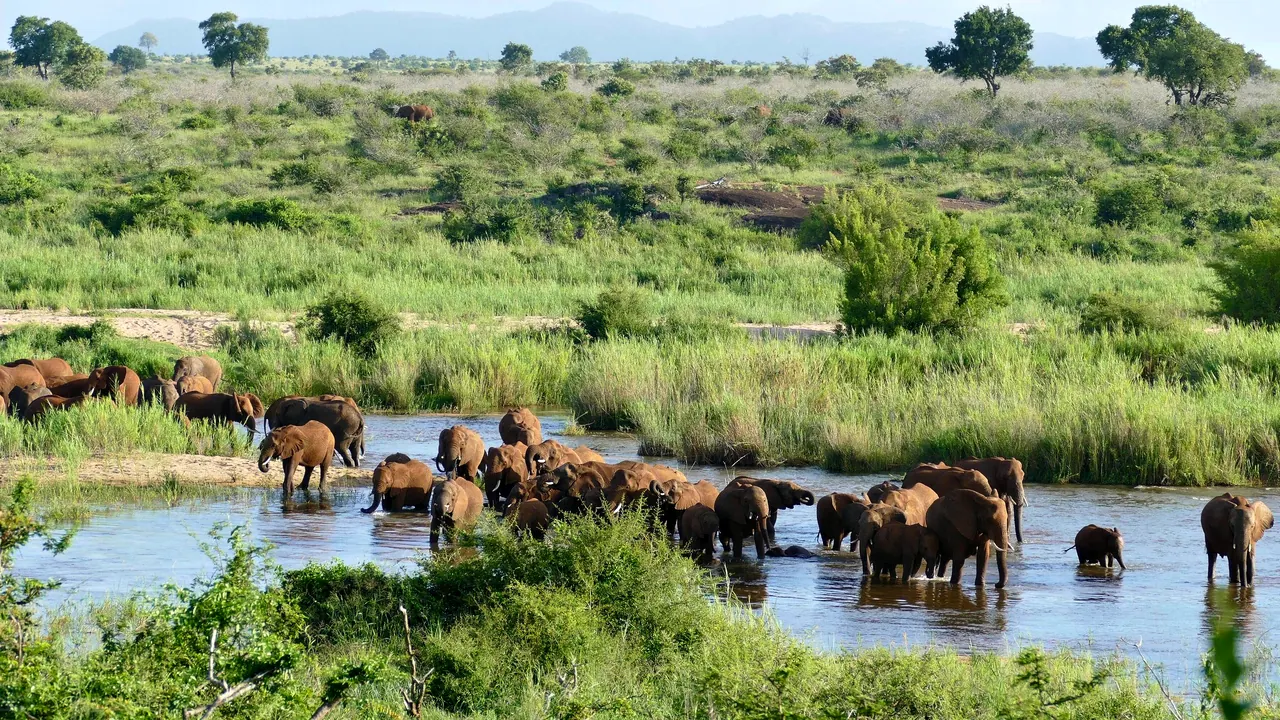
Elephants crossing the Sabie River
- Nature & outdoors96
- Affordability55
- Families45
Photo: Bernard DUPONT from FRANCE, CC BY-SA 2.0, cropped
Match
31
Every category weighted equally
- Beach & sun32
- Culture & arts26
- Food & nightlife22
- Family trip38
- Outdoors42
- Relax & unwind36
- Shopping & style26
- On a budget34
Kruger in twelve categories
Our verdict on each, scored 0 to 100 against the same fixed benchmark cities, so a score means the same thing on every page.
Beaches & swimming. Scores 5 out of 100.
Food & drink. Scores 24 out of 100.
Culture & sights. Scores 20 out of 100.
Nightlife. Scores 3 out of 100.
Nature & outdoors. Scores 96 out of 100.
Day trips. Scores 28 out of 100.
Good for families. Scores 45 out of 100.
Getting around. Scores 35 out of 100.
Shopping & style. Scores 12 out of 100.
Affordability. Scores 55 out of 100.
Live music & performing arts. Scores 5 out of 100.
Wellness & relaxation. Scores 45 out of 100.
Kruger category by category
Beaches & swimming
5Kruger is an inland region with no beaches or sea bathing. Swimming means the pool at a rest camp or lodge, and those pools are welcome in the summer heat. The rivers are home to crocodiles and hippos, and nobody swims in them. The Indian Ocean coast lies across the border in Mozambique, too far for a day out, so visitors who want beach time add it as a separate leg of the trip.
Food & drink
24Eating here follows the rhythm of the safari, not a restaurant scene. In the private reserves, meals are part of the stay: breakfast after the dawn drive, and dinner around a fire in an open-air boma. The cooking at the better lodges is polished. In the national park's rest camps, most visitors self-cater and cook on the braai stands outside their bungalows, which is the most South African way to eat in the bush. Camp shops sell boerewors, firewood and cold drinks.
Outside the park, the farm stalls and orchards around White River and Hazyview sell macadamias, avocados and tropical fruit. Restaurants in the Lowveld towns are pleasant but few. Nobody plans a trip here around food.
Culture & sights
20Kruger's sights are animals and landscape, not buildings, but the region has some modest history worth stopping for. In the far north of the park, Thulamela is a stone-walled hilltop citadel from the Iron Age, and Masorini near Phalaborwa is a reconstructed site of iron smelting. Skukuza, the main camp, has a small museum on the park's founding and its early wardens. On the escarpment to the west, Pilgrim's Rest is a gold-rush town from the 1870s, preserved almost whole, with its corrugated-iron cottages and old mining sites. Together these make interesting breaks between game drives rather than a reason to come.
Nightlife
3There is effectively no nightlife. The rest camp gates shut at dusk, lodge guests are up before dawn for the morning drive, and evenings mean a drink by the fire and early bed. The real night activity is a guided night drive to look for leopards, hyenas and owls by spotlight. The gateway towns have a handful of pubs and nothing that runs late.
Nature & outdoors
96This is one of the world's great places to see African wildlife. The park stretches about 350km from north to south, and the private reserves along its western edge, Sabi Sand, Timbavati and Klaserie, have no fences between them and the park. Lion, leopard, elephant, buffalo and rhino all live here, along with wild dog, cheetah and hundreds of bird species. The south, around Lower Sabie and Skukuza, has the densest game. The mopane country of the north is emptier and wilder. You can self-drive on the park roads, take open-vehicle drives with rangers, join guided bush walks or do multi-day wilderness trails on foot.
West of the park, the Drakensberg escarpment drops into the Lowveld at the Blyde River Canyon, with the Three Rondavels, Bourke's Luck Potholes and God's Window, plus waterfalls around Graskop and Sabie and good hiking. The dry winter from May to September is best for seeing animals, because the bush thins and game gathers at water. The hot, green summer brings migrant birds and newborn antelope.
Day trips
28Most days here are spent in the park itself, and the choice of separate places to visit is short. The best outing is the escarpment: the gold-rush town of Pilgrim's Rest and the small mountain towns of Graskop and Sabie, combined with the canyon viewpoints. Hoedspruit, near the central gates, has wildlife rehabilitation centres and reptile parks, and Mbombela is the region's provincial capital and service city. Eswatini and Maputo can be reached from the southern gates, but both mean border crossings and are better as stays of their own than as day trips.
Good for families
45For older children, a safari here can be the trip of a lifetime, and many South African families do it themselves. They self-drive and stay in the larger national park rest camps such as Skukuza, Berg-en-Dal and Lower Sabie, which have pools, open lawns and bungalows that work well for families. Gate hours set a daily routine, and kids get absorbed in spotting animals from the car.
There are drawbacks. The park is a malaria area, with higher risk in the wet summer months, and that concerns parents of very young children. Days involve long hours sitting in a vehicle. Many private lodges do not take young children on open game drives, and some do not take them at all. Families with small children often prefer a malaria-free reserve elsewhere or a short stay focused on the camps.
Getting around
35There is no public transport worth using, so you either drive yourself or stay at a private lodge that collects you from the airstrip and runs all the drives. Small airports at Mbombela, Hoedspruit, Phalaborwa and Skukuza put you close to the park. From Johannesburg it is a long but easy drive on good highways. Inside the park, the main roads are tarred and gravel roads are generally fine for an ordinary car.
Speed limits in the park are low, gates open and close with the light, and distances are large, so getting from the south to the north takes days, not hours. Plan to explore one section at a time.
Shopping & style
12Shopping is incidental. The shops at the rest camps and lodges sell field guides, safari clothing, carvings and beadwork. Along the Panorama Route, roadside stalls around Graskop and God's Window sell wooden carvings, woven baskets and fabrics. Mbombela has large malls for practical needs. Nobody comes to Kruger to shop.
Affordability
55The cost depends almost entirely on how you do it. Self-drive safaris are good value: you stay in national park rest camps or guesthouses around Hazyview and Malelane, cook for yourself and see the same animals the lodges show their guests. Fuel, groceries and simple meals are inexpensive. You do have to pay for car hire, and international visitors pay a daily conservation fee in the park.
At the other end, the all-inclusive private lodges in Sabi Sand and the other reserves along the park boundary are among the most expensive stays in Africa. Prices are higher in the dry winter months and during South African school vacations, when the camps book up.
Live music & performing arts
5There is almost no live performance to attend. A few lodges and cultural villages stage traditional Shangaan song and dance for guests, but the region has no regular theatre or concert life. The sound of an evening here is lions calling and hyenas whooping in the dark.
Wellness & relaxation
45Many of the private lodges in Sabi Sand and the other reserves along the park boundary have spas, often open-sided treatment rooms looking out over a dry riverbed, and the long midday break between game drives is made for lying by a plunge pool while elephants come down to drink. The national park rest camps are simpler and offer no treatments, though their quiet, dark nights are restful in their own way.
The region has no bathing tradition or thermal springs of its own, and the wake-up call before dawn for the morning drive comes every day. This is a stay that calms the mind more than it lets you sleep in.
Where to stay in Kruger
For a first visit, stay in the south of the national park, where the game is densest. Skukuza, Lower Sabie and Berg-en-Dal are large rest camps with pools, open lawns and self-catering bungalows. They suit families and anyone planning a self-drive safari on a sensible budget. Just outside the southern gates, guesthouses around Hazyview and Malelane cost less again and put town restaurants and farm stalls close by. The catch is driving in through the gate each morning, which only opens at first light.
The private reserves along the western boundary, Sabi Sand, Timbavati and Klaserie, suit couples and travellers who want a short, unhurried stay. Rangers run every drive, meals are part of the stay and the midday hours are spent by a plunge pool. Many of these lodges do not take young children. Timbavati and Klaserie are easiest to reach through the airstrip at Hoedspruit.
A second visit could go north of Phalaborwa into the emptier mopane country, where the bush feels wilder and you meet fewer vehicles. The park takes days to cross, so choose one section, or move between bases once at most. A night or two in Graskop or Sabie on the escarpment adds canyon viewpoints, waterfalls and hiking, and breaks up the long drive from Johannesburg.
When should you go?
Pick a month to see what it is like. The climate figures are measured averages, not a forecast.
Kruger in July
Daytime high, °C
Rainfall in the month, mm
The whole year
Shaded against this destination’s own year: the deepest cell is its best month for that figure and the palest its weakest.
Temperature and rainfall are climate normals, averaged over the years shown. Kruger: 1991-2020 (rainfall 1981-2010) normals, Skukuza (1.6 km from centre).
Before you go
| Measure | Kruger |
|---|---|
| Official language | English, Zulu, Xhosa, Afrikaans, Venda, Northern Sotho, Swazi, Tswana, Tsonga, Sesotho, Southern Ndebele, South African Sign Language |
| Currency | Rand (ZAR) |
| Sockets | CMN230 V, 50 Hz |
| Driving side | Left |
| Time zone | UTC+2 |
| Emergency number | 112 |
| Main airport | Kruger Mpumalanga International Airport (MQP)8 non-stop destinations |
| Public holidays this year | 13 days |
Compare Kruger with
Every comparison with a written verdict behind it.