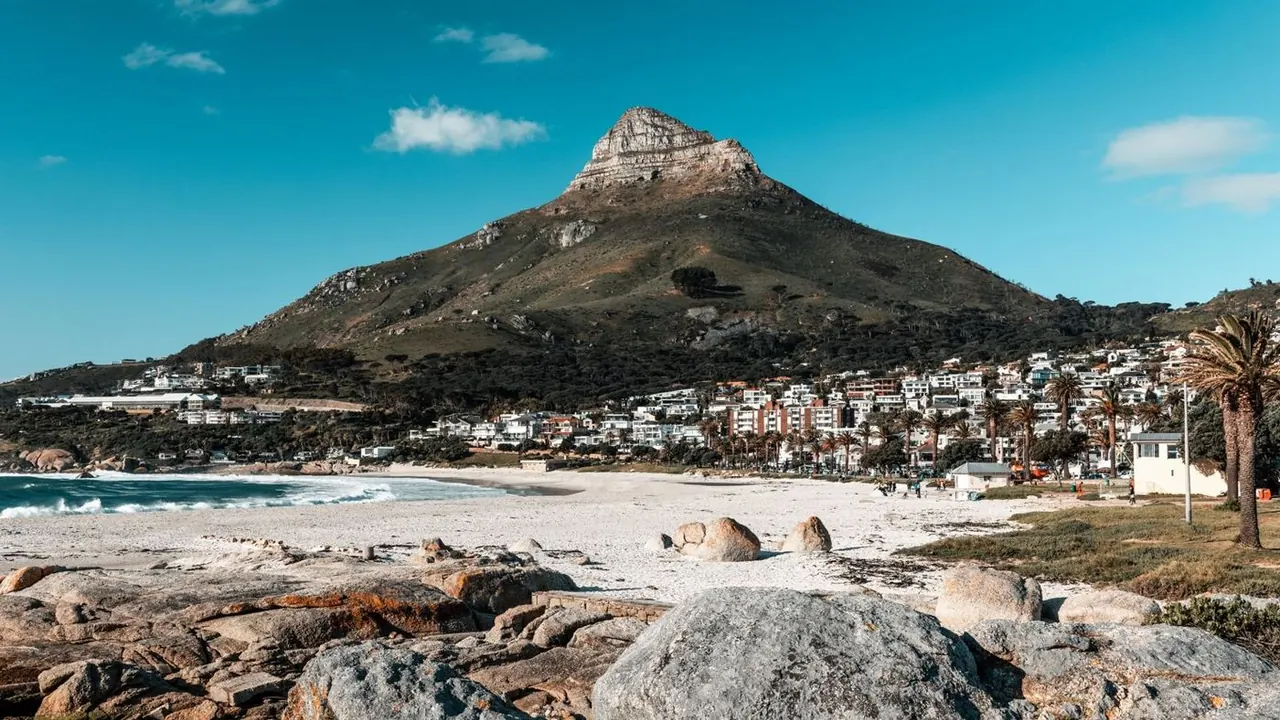
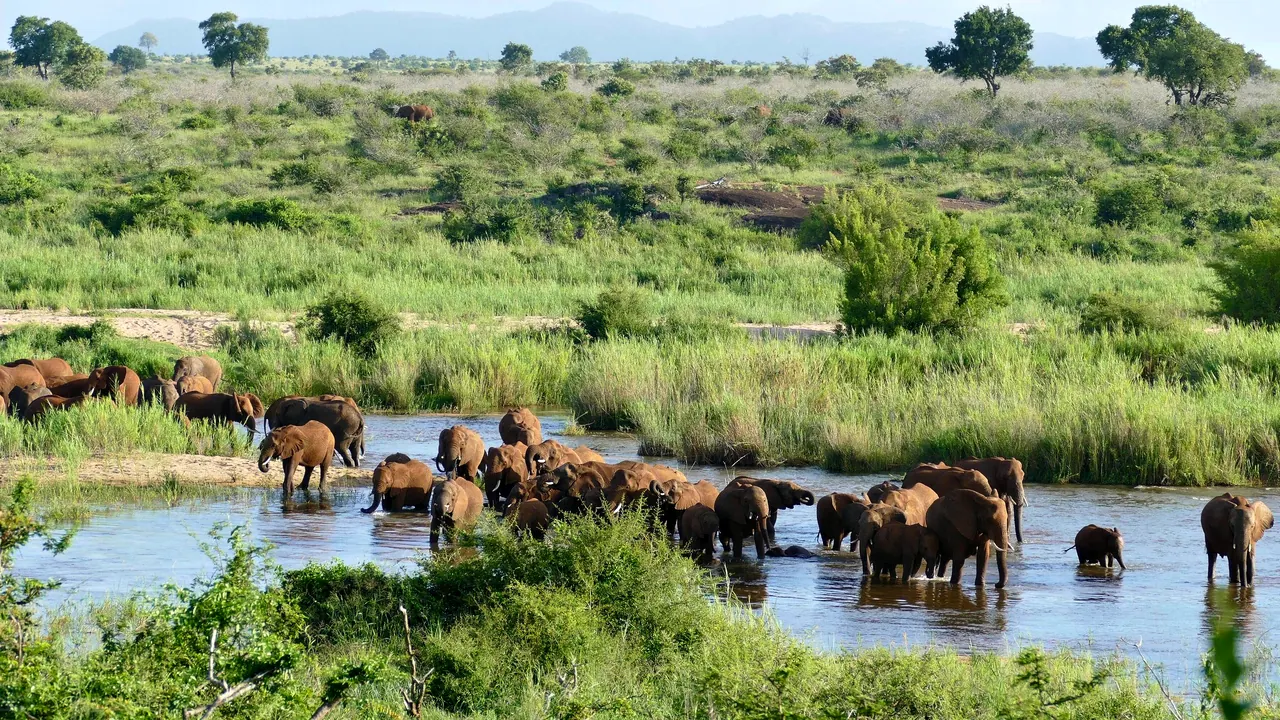
Photos: Cape Town by Stephan Louis, Pexels License; Kruger by Bernard DUPONT from FRANCE, CC BY-SA 2.0, cropped.
Cape Town or Kruger?
Our verdict in twelve categories, each scored against the same fixed benchmark cities, and the climate month by month, so you can choose for your trip.
Choose Cape Town for
- nightlife
- beaches
- food and drink
Choose Cape Town if you want a city with everything in reach: restaurants and wine estates, evenings out on Bree Street or a Camps Bay sundowner, a sobering day on Robben Island, and Table Mountain rising behind the centre for a morning hike. It suits travellers who like their scenery mixed with good food, some history and a social life, and who would rather move between beach, mountain and Winelands than settle in one place.
Choose Kruger for
Kruger does not lead in any category we score.
Kruger is a different trip altogether, built around the animals. Days start before dawn on a game drive, the long hot middle of the day passes by a pool, and nights mean a fire and early bed. Pick it if seeing lion, leopard and elephant in the wild matters more to you than dinners, shops or bars, and accept that the rest of what a city offers simply is not there.
Scoreboard
Twelve categories on one fixed scale from 0 to 100. The shaded stretch is the gap between the two.
Your match
Pick a travel style or drag the sliders, and both match scores follow your weighting.
Wins on nightlife and beaches with your weighting.
Has no clear advantage with the weighting you have chosen.
What matters to you?
Category by category
What the scores mean for a trip.
Beaches & swimming
Cape Town has real beaches, though with a catch. The Atlantic coves at Clifton and Camps Bay are beautiful but icy, so the swimming happens at Muizenberg, St James and Boulders on False Bay in the summer months.
Kruger has no coast at all. Swimming means a rest-camp or lodge pool in the heat, the rivers belong to crocodiles and hippos, and a beach means adding Mozambique as a separate leg.
Food & drink
Food is one of the main reasons to go to Cape Town. You can eat bobotie and koeksisters from the Bo-Kaap tradition, a gatsby from a Cape Flats takeaway, snoek by the harbour at Kalk Bay and inventive tasting menus in the City Bowl, all with Chenin Blanc and Pinotage from nearby estates.
In Kruger, meals follow the safari. Lodges serve polished dinners in a boma, while in the rest camps you grill boerewors on your own braai stand. It is a pleasant part of the bush experience, but not a food destination.
Culture & sights
Cape Town gives you several days of history that matters: Robben Island, the District Six Museum, the Castle of Good Hope, and the museums around the Company's Garden, with Zeitz MOCAA for contemporary African art.
Kruger has only a few cultural stops to fill a break between drives. There is the Iron Age citadel at Thulamela, the smelting site at Masorini, the small museum at Skukuza, and Pilgrim's Rest, the preserved gold-rush town up on the escarpment.
Nightlife
Cape Town has a proper night out, from Long Street's backpacker bars to the wine bars on Kloof Street and De Waterkant's gay scene. Expect to use ride-hailing between areas, and expect it to be quieter outside summer.
In Kruger the camp gates close at dusk and the nearest thing to going out is a spotlit night drive looking for hyenas and owls.
Nature & outdoors
Both are outstanding, but in different ways. Cape Town's nature is mountain and coast: hiking up Table Mountain or Lion's Head, the unique fynbos, Cape Point's cliffs, surf lessons at Muizenberg, kitesurfing and driving Chapman's Peak. Its wildlife is coastal, with penguins, seals and, from June to November, whales.
Kruger is about big game across a park some 350km long, with the dense south around Skukuza, the wild mopane north and unfenced reserves like Sabi Sand. The Blyde River Canyon and the escarpment waterfalls add a scenic, hiking side.
Day trips
Cape Town has the Winelands on its doorstep. Stellenbosch, Franschhoek, Paarl and Constantia can fill several days, and Hermanus for whale watching or the quiet West Coast villages make further outings, almost always by car or tour.
From Kruger the obvious outing is the Panorama Route, which links Pilgrim's Rest, Graskop and Sabie with the canyon viewpoints, plus the wildlife centres at Hoedspruit. Beyond that, most days are spent inside the park itself.
Good for families
Cape Town works better for most families. The Two Oceans Aquarium, Boulders penguins, the cableway, picnics at Kirstenbosch and calm tidal pools give children plenty of variety, though you will need a car and normal street sense.
Kruger can be unforgettable for older children staying in family-friendly rest camps like Berg-en-Dal or Lower Sabie. For toddlers it is harder: there is malaria, there are long hours in the car, and many private lodges have age limits on drives or do not take small children at all.
Getting around
Neither is a place to rely on public transport, and both mean driving. In Cape Town, the centre and Waterfront are walkable by day, MyCiTi buses reach the Atlantic beaches, and ride-hailing is cheap for everything else, including door-to-door trips at night.
In Kruger you either drive yourself on tarred and gravel park roads with low speed limits and gate hours, or let a private lodge collect you from a small airstrip. The distances are so large that it is best to explore one section of the park at a time.
Shopping & style
Neither is somewhere to plan a trip around shops, but only Cape Town can fill an afternoon with them. The V&A Waterfront covers chains, South African labels and a makers' hall, while Woodstock's warehouses and the shops on Bree Street and Kloof Street sell local design, ceramics and leather. Greenmarket Square adds African crafts, and wine and rooibos make the easiest things to carry home.
In Kruger you buy what you need along the way: field guides and carvings in the camp shops, and baskets and fabrics from the roadside stalls around Graskop and God's Window.
Affordability
Cape Town is the easier place to stay within budget. Good restaurants, tasting menus, estate wine and ride-hailing all cost visitors little. The money goes on rooms on the Atlantic seaboard over Christmas and New Year, the best hotels, and the cableway, Robben Island and guided tours, which add up for a family.
What you pay in Kruger depends on how you do it. Self-driving and self-catering in the rest camps is good value, though car hire and the park's daily conservation fee come on top. A stay at a Sabi Sand lodge is among the most expensive in Africa.
Live music & performing arts
For an evening of music or theatre, the choice is easy. Cape jazz, the sound Abdullah Ibrahim carried abroad, still plays in a few clubs, the annual jazz festival is one of Africa's biggest, and summer Sundays bring picnic concerts on the Kirstenbosch lawns. Artscape and the Baxter cover opera, ballet and South African drama for a night or two.
Kruger offers at most a lodge display of Shangaan song and dance, and the evening soundtrack is lions calling in the dark.
Wellness & relaxation
Both are restful rather than spa destinations, and neither has thermal baths. In Cape Town relaxation comes from the slow outdoor pace: long Winelands lunches, morning yoga and early swims in the False Bay tidal pools, with good hotel spas.
Kruger's calm is the bush itself. Lodge spas look out over dry riverbeds and the midday break is spent by a plunge pool, but the dawn alarm for the game drive rules out sleeping in.
When should you go?
Pick your month. The climate figures are measured averages, not a forecast.
Cape Town in July
Kruger in July
Daytime high, °C
Rainfall in the month, mm
Temperature and rainfall are climate normals, averaged over the years shown. Cape Town: 1991-2020 normals, Cape Town Airport (17.5 km from centre). Kruger: 1991-2020 (rainfall 1981-2010) normals, Skukuza (1.6 km from centre).
The two peak at opposite ends of the year, which is why many people combine them. Cape Town is at its best from December to March, when days reach about 28°C, rain almost stops and the sun is out for long hours. Even then the sea only reaches about 18°C, and the warmest water is on the False Bay side. From May to August the city turns cool, grey and wet, with June the rainiest month at close to 97mm, so it suits walking and wine estates more than the beach.
Kruger is warm all year but has a very different rhythm. The dry winter from May to September brings comfortable days in the high 20s, almost no rain and the best game viewing. From November to February the bush turns green under thunderstorms, about 104mm falls in January, and afternoons around 33°C make long hours in a vehicle hard going.
Which traveller are you?
For a food and nightlife trip, Cape Town is the only real option. Cape Malay cooking, tasting menus around Bree Street and Woodstock, and estate wine under an hour away lead into cocktail bars and weekend clubs, while Kruger's evenings end at the fire.
On a family trip with younger children, Cape Town is easier: the aquarium, Boulders penguins, the cableway and False Bay's tidal pools, with no malaria. Kruger rewards older children who will sit happily in a car spotting animals for hours.
For a safari to see Africa's big game, Kruger wins clearly. Lion, leopard, elephant, buffalo and rhino roam the park and the unfenced private reserves, and you can self-drive, ride with rangers or walk the bush. Cape Town's wildlife stops at penguins, seals and whales.
Before you go
| Measure | Cape Town | Kruger |
|---|---|---|
| Official language | English, Zulu, Xhosa, Afrikaans, Venda, Northern Sotho, Swazi, Tswana, Tsonga, Sesotho, Southern Ndebele, South African Sign Language | English, Zulu, Xhosa, Afrikaans, Venda, Northern Sotho, Swazi, Tswana, Tsonga, Sesotho, Southern Ndebele, South African Sign Language |
| Currency | Rand (ZAR) | Rand (ZAR) |
| Sockets | CMN230 V, 50 Hz | CMN230 V, 50 Hz |
| Driving side | Left | Left |
| Time zone | UTC+2 | UTC+2 |
| Emergency number | 112 | 112 |
| Elevation | 5 m | - |
| Main airport | Cape Town International Airport (CPT)18 km from centre45 non-stop destinations | Kruger Mpumalanga International Airport (MQP)8 non-stop destinations |
| Public holidays this year | 13 days | 13 days |
By the numbers
| Measure | Cape Town | Kruger |
|---|---|---|
| Population | 3,776,313 | - |
| People per km² | 1,538 | - |
| Museums within 10 km | 22 | - |
| UNESCO World Heritage sites within 50 km | 3 | - |
| Swim season, months above 21 °C | None | - |
Where else could you go?
Every comparison below shares a destination with this one, so you can follow Cape Town or Kruger somewhere new.
- Stellenboschvs Cape Town
- Hermanusvs Cape Town
- Knysnavs Cape Town
- Johannesburgvs Cape Town
- Windhoekvs Cape Town
- Durbanvs Cape Town