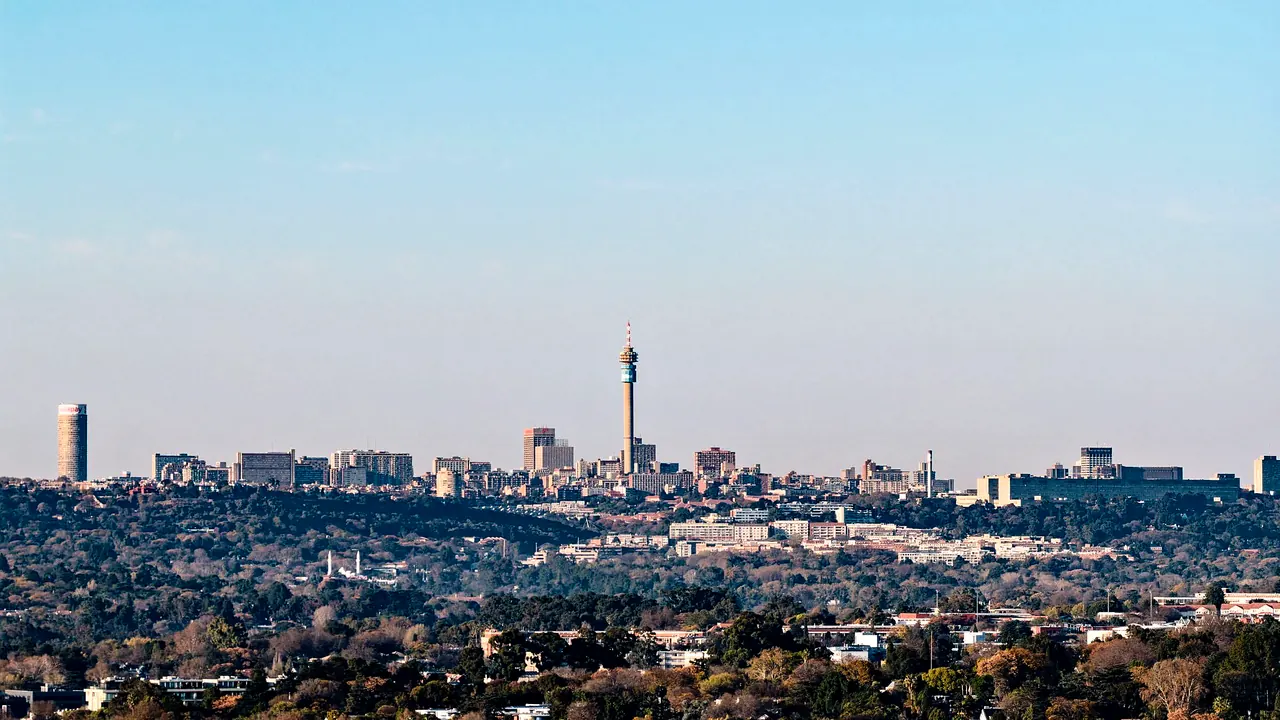
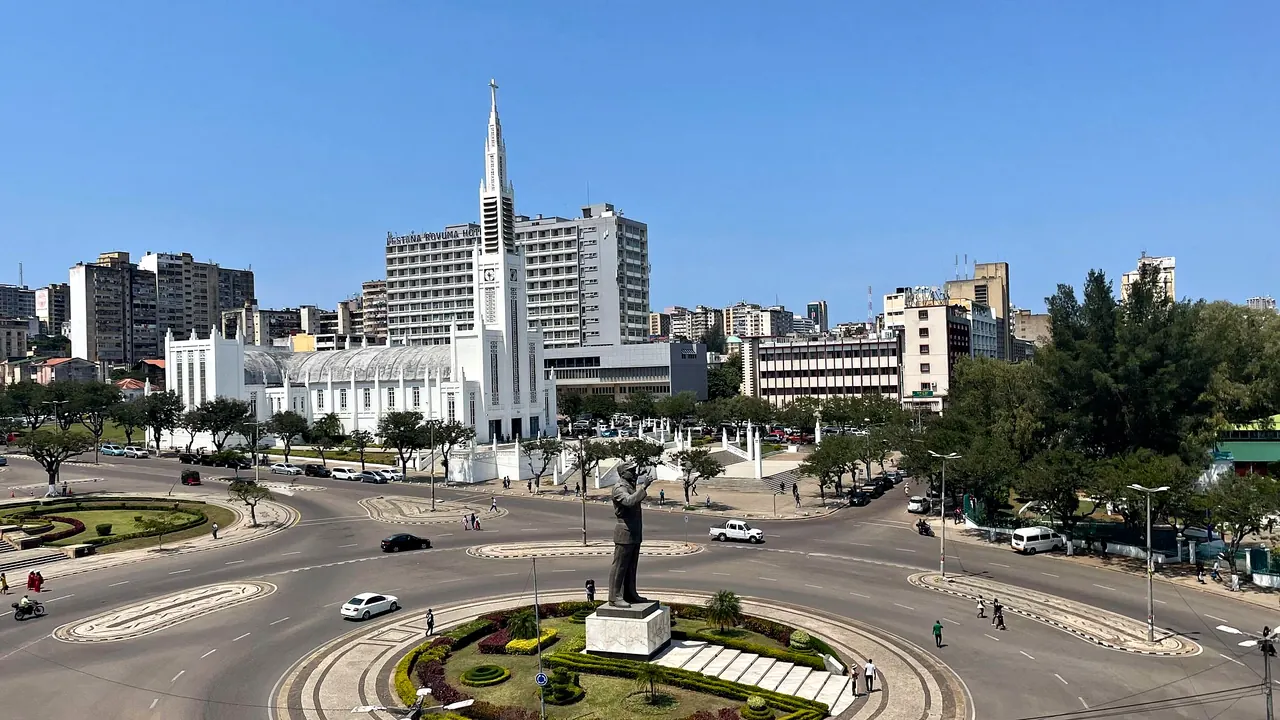
Photos: Johannesburg by K, Pexels License; Maputo by Salazar Sérgio, CC BY-SA 4.0, cropped.
Johannesburg or Maputo?
Our verdict in twelve categories, each scored against the same fixed benchmark cities, and the climate month by month, so you can choose for your trip.
Choose Johannesburg for
- day trips
- shopping
- families
Johannesburg suits the traveller who wants substance and convenience from a city break in southern Africa. Its museums and memorials tell the apartheid story with real depth, its stages and jazz clubs carry a strong local voice, and Pretoria and the Cradle of Humankind are easy outings. It is also the cheaper place to stay comfortably and the better base for families. The price is a city built around the car, where almost every move needs a ride.
Choose Maputo for
- beaches
- getting around
Maputo is for someone drawn to atmosphere over attractions: jacaranda avenues, modernist buildings, grilled prawns by the bay and late nights to marrabenta. It is the one of the two with warm Indian Ocean water within reach, and Inhaca and the southern coast turn a city stay into a coastal trip. Expect thin museums, few easy day trips and higher prices than you might guess, and plan on moving on rather than staying long.
Scoreboard
Twelve categories on one fixed scale from 0 to 100. The shaded stretch is the gap between the two.
Your match
Pick a travel style or drag the sliders, and both match scores follow your weighting.
Wins on day trips and shopping with your weighting.
Wins on beaches and getting around with your weighting.
What matters to you?
Category by category
What the scores mean for a trip.
Beaches & swimming
Johannesburg has no beach at all. It sits on the inland plateau, and swimming means a hotel pool or a drive to the dams at Hartbeespoort.
Maputo at least has the sea, and it is warm. The city shore at Costa do Sol is muddy and shallow, better for a stroll and grilled fish than a swim, but Inhaca is a boat ride away, Macaneta has open surf, and Ponta do Ouro's clear water rewards an overnight trip.
Food & drink
Both cities eat well, but in different directions. Johannesburg is about meat over fire, from Soweto's shisa nyama to steak in Rosebank and Sandton, and it has the wider range: Indian cooking in Fordsburg, street food like bunny chow and kotas, and a proper fine-dining scene.
Maputo is narrower and more focused. Seafood is the point, best done the local way at the Mercado do Peixe, with Mozambican dishes like matapa and the Portuguese inheritance in its pastelarias and garlicky cooking. Beyond prawns and fish, the choice runs out sooner.
Culture & sights
Johannesburg has more to see and more weight behind it. The Apartheid Museum, Constitution Hill and the Hector Pieterson Memorial in Soweto make up a powerful history trail, with the Origins Centre and the university's art museum beside them, though the sites are scattered and often visited with a guide.
In Maputo the city itself is the sight: the domed railway station, the Iron House, the modernist cathedral and Pancho Guedes's sculptural buildings make a fine architectural walk. The museums are modest, though Malangatana's work at the National Art Museum is worth seeking out, and two or three days is plenty.
Nightlife
Both cities go out late and loud at weekends, and in both you take a car between venues. Johannesburg is bigger and more varied: amapiano and house in Sandton's clubs, afternoon sessions at Soweto shisa nyamas, student rooftops in Braamfontein and the bars of Melville's 7th Street.
Maputo is smaller and more relaxed, starting at esplanadas and lounges around Polana before moving to clubs playing marrabenta and kizomba until dawn. Its open-air bars along the Marginal by the bay give it a warm-night seaside feel that Johannesburg cannot match.
Nature & outdoors
The outdoors is equally good in both, but different in character. Johannesburg is Highveld country, a heavily treed city with the Walter Sisulu Botanical Garden on its edge, hiking and ballooning in the Magaliesberg and big game at Pilanesberg's volcanic crater.
Maputo's nature is coastal and takes more effort: elephants and hippos among the lakes and dunes of Maputo National Park, mangroves and a marine reserve on Inhaca, diving and dolphins down towards Ponta do Ouro, and humpback whales passing from June to November.
Day trips
Johannesburg has the better spread of easy outings. Pretoria's Union Buildings and Voortrekker Monument are an hour away by the Gautrain, the Sterkfontein Caves at the Cradle of Humankind are a similar drive, and Cullinan's diamond mine and Sun City add more.
Maputo's list is short. Inhaca by boat and a seafood afternoon in Catembe across the bay are the pleasant ones, Namaacha has a waterfall and faded colonial houses, and most else, Eswatini and the southern coast included, needs a night away.
Good for families
Johannesburg gives families much more to do: Gold Reef City's theme park, the zoo, the Sci-Bono Discovery Centre and lion and rhino parks where young children can see big animals without a long safari. Getting around still means a car and a base in the northern suburbs.
Maputo offers little for children beyond a boat to Inhaca or grilled prawns by the bay with older ones. Year-round malaria, broken pavements and heavy traffic add to the effort, and most families pass through on the way to the coast.
Getting around
Neither city is easy, but Maputo is the more manageable on foot. Its central grid of long avenues, from the Baixa up the slope to Polana and Sommerschield, can be walked in daylight, despite broken pavements and the distances involved, and taxis and tuk-tuks fill the gaps.
Johannesburg is built for the car, with sights spread over a huge area and walking between districts not advised. The Gautrain is its one clean, simple link between the airport, Sandton, Rosebank and Pretoria; otherwise it is ride-hailing, a hired car or a guide.
Shopping & style
Johannesburg is the shopping city of the two, and of the continent. Sandton's malls around Nelson Mandela Square gather the international luxury brands, Rosebank's Sunday rooftop market is good for southern African crafts, and Parkhurst and the inner city's converted warehouses hold local designers.
Maputo is about crafts and cloth. Makonde carvings and batik at the craft market, spices and cashews in the tiled Mercado Central, and capulanas sewn into clothes by a tailor in a day or two make good buys, but boutiques and fashion are scarce.
Affordability
Johannesburg is noticeably kinder on the wallet. Restaurant meals, Cape wine and comfortable northern-suburb guesthouses cost well below Western European levels, with rides and guided tours the main extra costs.
Maputo surprises people the other way. Street food, beer and the fish market are cheap, but hotels and restaurants for foreigners are priced for its diplomats and aid workers, and with taxis on top a comfortable stay costs much like a mid-range European city.
Live music & performing arts
Johannesburg has the fuller stage. The Market Theatre in Newtown, famous for its protest drama, and the Soweto Theatre keep South African writing alive, larger theatres take musicals and ballet, and a jazz line runs from Sophiatown to the Joy of Jazz festival.
Maputo's strength is live music rather than formal venues: marrabenta, timbila and Afro-fusion in bars with house bands, plus concerts and dance at the Franco-Mozambican Cultural Centre and theatre at the Teatro Avenida. With no orchestra or opera, it rewards asking locals what is on.
Wellness & relaxation
Neither city is a place to rest, and in both the real retreat lies outside town. Johannesburg has the better supply of reasonably priced day spas and quiet garden guesthouses in its leafy suburbs, with bush lodges and the Magaliesberg for proper calm.
Maputo has fewer spas, but a sundowner looking over the bay from Polana has its own pull. For true rest, visitors head to the beach lodges of the southern coast or Inhaca rather than the bush.
When should you go?
Pick your month. The climate figures are measured averages, not a forecast.
Johannesburg in July
Maputo in July
Daytime high, °C
Rainfall in the month, mm
Temperature and rainfall are climate normals, averaged over the years shown. Johannesburg: 2005-2019 (sunshine 1991-2020, rainfall 1991-2020) normals, Johannesburg B / Roosevelt Park (7.3 km from centre). Maputo: 1991-2020 (sunshine 1981-2010) normals, Maputo / Mavalane (5.8 km from centre).
Johannesburg is at its best in May and September, when the days are dry, sunny and warm enough for walking. April is a drying-out month, mostly fine but with some afternoon rain still about. Midwinter in June and July is bright but cool, with daytime highs around 19°C. From October to March afternoon thunderstorms bring most of the year's rain, peaking around 135mm in December, though mornings are often fine.
Maputo is hotter all year and has the same pattern of wet summers and dry winters. January and February are steamy and wet, with highs near 32°C, but this is when the sea is warmest, reaching about 28°C. March and April are the best time for the beach, as the heat eases, the rain thins out and the water stays warm. From May to September the city is dry and comfortable for exploring on foot, though the sea cools to about 22°C. From October the clouds build and the sunny days are fewer.
Which traveller are you?
On a beach and sun trip, Maputo is the only real choice. Johannesburg sits far inland with nothing but pools, while Maputo has warm sea, the boat to Inhaca and the clear water of Ponta do Ouro for a night away.
On a family trip with children, Johannesburg can fill several days. Hire a car, stay in a garden guesthouse in the northern suburbs and plan one short drive a day. Maputo is harder going, so keep it to a night or two with a driver.
For a trip on a tight budget, Johannesburg goes further. A day of museums, a shisa nyama lunch in Soweto and a Gautrain ride costs little, and your rides are the main expense. In Maputo, street food and chapas are cheap, but a decent bed and taxis after dark soon use up the savings.
Before you go
| Measure | Johannesburg | Maputo |
|---|---|---|
| Official language | English, Zulu, Xhosa, Afrikaans, Venda, Northern Sotho, Swazi, Tswana, Tsonga, Sesotho, Southern Ndebele, South African Sign Language | Portuguese |
| Currency | Rand (ZAR) | Mozambique Metical (MZN) |
| Sockets | CMN230 V, 50 Hz | CFM220 V, 50 Hz |
| Driving side | Left | Left |
| Time zone | UTC+2 | UTC+2 |
| Emergency number | 112 | Police 119, ambulance 198, fire 117 |
| Elevation | 1,753 m | 31 m |
| Main airport | O.R. Tambo International Airport (JNB)22 km from centre83 non-stop destinations | Maputo Airport (MPM)5 km from centre18 non-stop destinations |
| Public holidays this year | 13 days | 9 days |
By the numbers
| Measure | Johannesburg | Maputo |
|---|---|---|
| Population | 4,803,262 | 1,133,200 |
| People per km² | 2,922 | 3,268 |
| Museums within 10 km | 14 | 3 |
| UNESCO World Heritage sites within 50 km | 2 | 0 |
| Swim season, months above 21 °C | - | 12 months |
Where else could you go?
Every comparison below shares a destination with this one, so you can follow Johannesburg or Maputo somewhere new.
- Krugervs Maputo
- Mbabanevs Maputo
- Mbabanevs Johannesburg
- Maseruvs Johannesburg
- Durbanvs Maputo
- Durbanvs Johannesburg