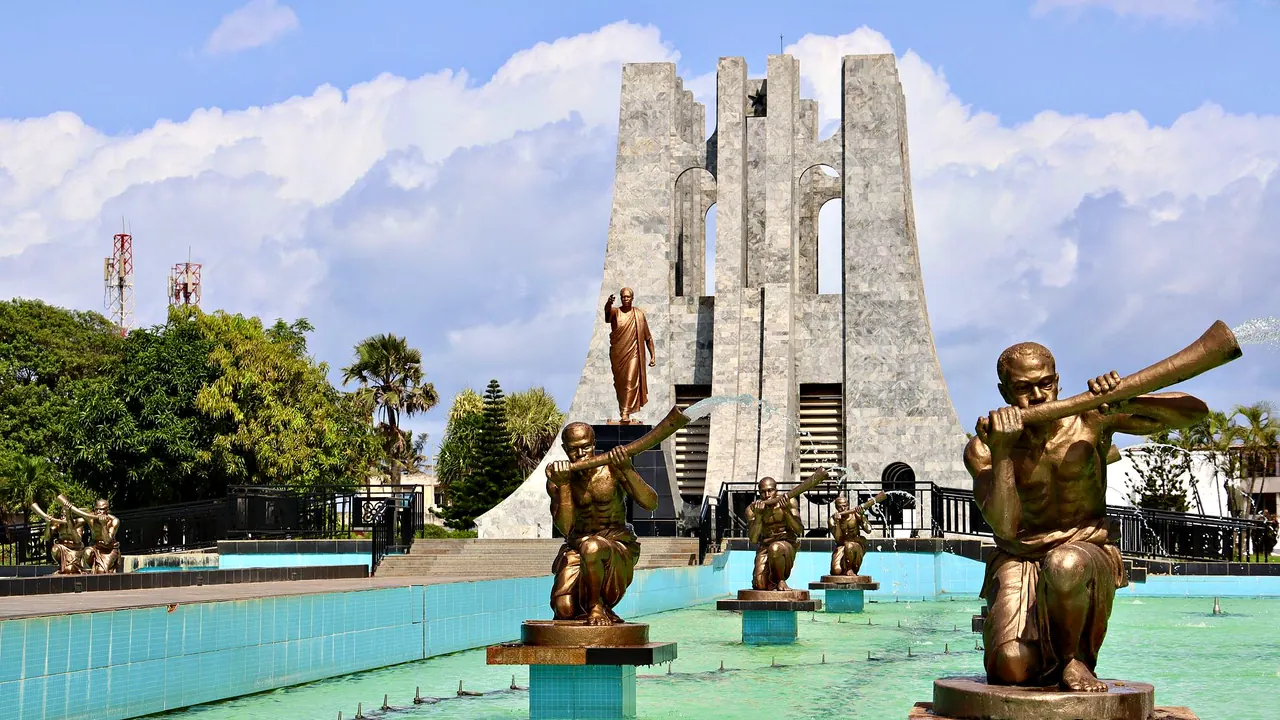

Photos: Accra by Ana Kenk, Pexels License; Nairobi by Lmwangi, CC BY-SA 3.0, cropped.
Accra or Nairobi?
Our verdict in twelve categories, each scored against the same fixed benchmark cities, and the climate month by month, so you can choose for your trip.
Choose Accra for
- beaches
- live music and the arts
- food and drink
Accra suits travellers who come for the city's own energy: Ghanaian street food, highlife and Afrobeats, long nights out and a run of weekend beach parties along the coast. It has the sea, even if the surf is rough, and its sights tell the story of independence and the forts of the coast before it. Come in December and the whole city turns into a festival.
Choose Nairobi for
- nature and the outdoors
- families
- wellness
Nairobi is the choice for anyone who wants wildlife and open country with a city attached. Lions and rhinos roam a national park at the edge of town, the Rift Valley is close enough for a day's hiking or cycling, and children get giraffes and baby elephants without a long journey. The highland climate is gentler for being outdoors, but there is no beach, and the food and music are less of a reason to come.
Scoreboard
Twelve categories on one fixed scale from 0 to 100. The shaded stretch is the gap between the two.
Your match
Pick a travel style or drag the sliders, and both match scores follow your weighting.
Too close to call, level with your weighting
Wins on beaches and live music and the arts with your weighting.
Wins on nature and the outdoors and families with your weighting.
What matters to you?
Category by category
What the scores mean for a trip.
Beaches & swimming
Accra at least has a coast. The Gulf of Guinea is warm, but heavy swells and rip currents make Labadi and the other city beaches better for drumming, horse rides and weekend crowds than for swimming. The calmer sand is out of town at Bojo and Kokrobite.
Nairobi has nothing to offer here. It sits on an inland plateau, the Kenyan coast is a flight away, and swimming means a hotel pool. Beach time has to be planned as a separate stay on the coast.
Food & drink
Accra's cooking is the bigger reason to come. Banku with groundnut soup, kenkey with fried fish, morning waakye and plantain kelewele under street lanterns give it bolder, spicier street eating, best found in Osu, Jamestown and around Makola Market.
Nairobi's food centres on nyama choma, meat roasted over charcoal for a long afternoon, with simpler everyday dishes around it. Where it does better is variety: long-established Indian cooking, Ethiopian restaurants and a café scene that pours Kenyan coffee grown just outside the city.
Culture & sights
Accra's history stands outdoors, in monuments to independence and forts on the shore, while Nairobi's is mostly kept behind glass. In Accra that means the Nkrumah mausoleum, the parade ground of Independence Square under the Black Star Gate, the lighthouse and old forts of Jamestown, best walked with a local guide, and the Danish-built Osu Castle on the waterfront. The painted fantasy coffins of the Teshie workshops add a contemporary twist, but the museums are thin and two or three days covers it.
Nairobi was founded as a railway depot in 1899, so there is no old quarter to wander. Its strengths are the National Museum, whose early human fossils are a real draw, and the Karen Blixen farmhouse on the city's edge, the setting of Out of Africa. A day or two is enough before the wildlife takes over.
Nightlife
Both cities go out late and dance to Afrobeats and amapiano, so the difference is in shape. Accra's evenings spread across Osu, Labone and East Legon and spill onto the sand at Labadi and Kokrobite, and in December the returning diaspora turns the city into a month-long party.
Nairobi gathers its clubs and rooftop bars in Westlands, busiest from Thursday to Saturday, with gengetone and bongo flava in the mix and football crowds in the local pubs. Its districts are not safe to walk between at night, so plan on cars door to door.
Nature & outdoors
This is where Nairobi pulls far ahead. Nairobi National Park puts lions, rhinos and giraffes on open savanna within sight of office towers, Karura Forest and the Ngong Hills give walking inside the city, and within two hours you can cycle Hell's Gate, see hippos on Lake Naivasha or climb Mount Longonot.
Accra is flat, hot and built up. Its outdoor options are pleasant rather than memorable: shaded trails in Achimota Forest, the cooler Aburi hills, baboons at Shai Hills and boat trips on the Volta.
Day trips
Neither city is a good base for day trips, and in both the best outing is too far. Accra's is the slave-trade castles of Cape Coast and Elmina, around three hours away and better as an overnight stay. Closer to town are the woodcarvers of Aburi and the glass-bead villages of Krobo.
From Nairobi the nearby choices are the Limuru tea estates and the stone hand axes of Olorgesailie. Kenya's great heritage sites, Mombasa and Lamu, are on the coast and out of reach.
Good for families
Nairobi is far easier to fill with children's days. Feeding giraffes at the Giraffe Centre, watching baby elephants bottle-fed at the Sheldrick Trust and a morning game drive are hard to beat. Staying in Karen or Langata keeps them close.
Accra welcomes children just as warmly but has little made for them. Rough surf turns the beaches into places for playing on the sand, Shai Hills and the Aburi gardens are the main outings, and malaria precautions add to the planning. Older children who enjoy markets and drumming get the most from it.
Getting around
Both cities mean ride-hailing cars and long waits in traffic, with no metro or tram in either. Accra's trotros and Nairobi's painted matatus are hard for a newcomer to use.
The difference is in where you can walk. In Accra, parts of Osu and Jamestown work on foot. In Nairobi, the compact business district can be walked by day, but the main sights are scattered across distant suburbs, so almost every visit is a drive.
Shopping & style
The two are evenly matched and both are about craft, though the crafts differ. Accra is a city of cloth. Wax prints at Makola Market, kente at the Arts Centre and having fabric made up by a tailor in a few days are its signature.
Nairobi's Maasai Market moves around the city and sells beadwork, soapstone and kiondo baskets, while workshops in Karen let you watch glass and ceramics being made. Kenyan coffee and tea make easy gifts.
Affordability
Costs are broadly similar, and in both cities eating locally is cheap while good hotels are not. In Accra the premium is for rooms with reliable power and water, and prices climb in December.
In Nairobi the extra costs come from wildlife. Non-residents pay far more than Kenyans at the national park, and a game drive means paying for a vehicle and driver too, so a safari-heavy stay adds up quickly.
Live music & performing arts
Accra has more music to go out for. Highlife, born on this coast, still has live band nights in garden venues, the December season fills arenas with Afrobeats stars, and the Chale Wote festival brings performance to Jamestown's streets. The ship-shaped National Theatre stages dance and the national symphony.
Nairobi's scene is smaller. It has benga, rumba and jazz nights, traditional dance shows at Bomas of Kenya, and plays in English and Swahili at the National Theatre, with spoken word and comedy adding some variety.
Wellness & relaxation
Neither city is restful, and in both wellness means hotel spas. The difference is that Nairobi has calm within its limits: garden hotels in Karen and Langata, with lawns and cool highland mornings on the veranda.
In Accra you have to leave town to unwind, for the beach lodges of Kokrobite or the cooler air of the Aburi hills.
When should you go?
Pick your month. The climate figures are measured averages, not a forecast.
Accra in July
Nairobi in July
Daytime high, °C
Rainfall in the month, mm
Temperature and rainfall are climate normals, averaged over the years shown. Accra: 1991-2020 normals, Accra (5.9 km from centre). Nairobi: 1991-2020 normals, Nairobi ACC/FIC/RCC/MET/COM/ (13.3 km from centre).
Accra is hot all year, with daytime highs around 33°C from November to April and only slight relief in July and August, so street walking is best kept to mornings and evenings. The heavy rains fall in May and June, with a smaller wet spell in October. December to February is the driest stretch, and the clearest skies run from October to December. The sea is warm enough for swimming almost all year, though it cools to about 23°C in August.
Nairobi is milder, rarely above 28°C, which keeps walking and game drives comfortable in every month. Its long rains come in April and May and the short rains in November, with 128mm, and December stays fairly damp as they tail off. June to September is dry but cool and often grey. January and February are dry, warm and the sunniest months of the year, and they also fall in Accra's dry season, so they are the best time to visit either city.
Which traveller are you?
For a food and nightlife trip, Accra has the edge. Its jollof, kelewele and grilled tilapia come from chop bars and street stalls, and evenings move from roadside grills to Osu rooftops and Afrobeats clubs, with December parties on top.
On an outdoors trip, Nairobi wins easily. Game drives in the national park, forest trails in Karura, ridge walks in the Ngong Hills and cycling among zebras at Hell's Gate are all close by, and the highland air keeps them comfortable.
On a family trip with children, Nairobi is the better bet. Feeding giraffes at the Giraffe Centre, watching orphaned elephants at the Sheldrick Trust and a short morning safari beat anything in Accra, where rough surf limits the beaches.
Before you go
| Measure | Accra | Nairobi |
|---|---|---|
| Official language | English | English, Swahili |
| Currency | Ghana Cedi (GHS) | Kenyan Shilling (KES) |
| Sockets | G230 V, 50 Hz | G240 V, 50 Hz |
| Driving side | Right | Left |
| Time zone | UTC | UTC+3 |
| Emergency number | 999 | Police 112/999, ambulance 112/999, fire 112/999 |
| Elevation | 61 m | 1,661 m |
| Main airport | Kotoka International Airport (ACC)6 km from centre36 non-stop destinations | Jomo Kenyatta International Airport (NBO)13 km from centre60 non-stop destinations |
| Public holidays this year | 11 days | 10 days |
By the numbers
| Measure | Accra | Nairobi |
|---|---|---|
| City population | 1,782,150 | 5,545,000 |
| People per km² | 10,301 | 7,967 |
| Museums within 10 km | 3 | 4 |
| UNESCO World Heritage sites within 50 km | 1 | 0 |
| Swim season, months above 21 °C | 12 months | - |
Where else could you go?
Every comparison below shares a destination with this one, so you can follow Accra or Nairobi somewhere new.
- Arushavs Nairobi
- Mombasavs Nairobi
- Stone Townvs Nairobi
- Kigalivs Nairobi
- Addis Ababavs Nairobi
- Dakarvs Accra