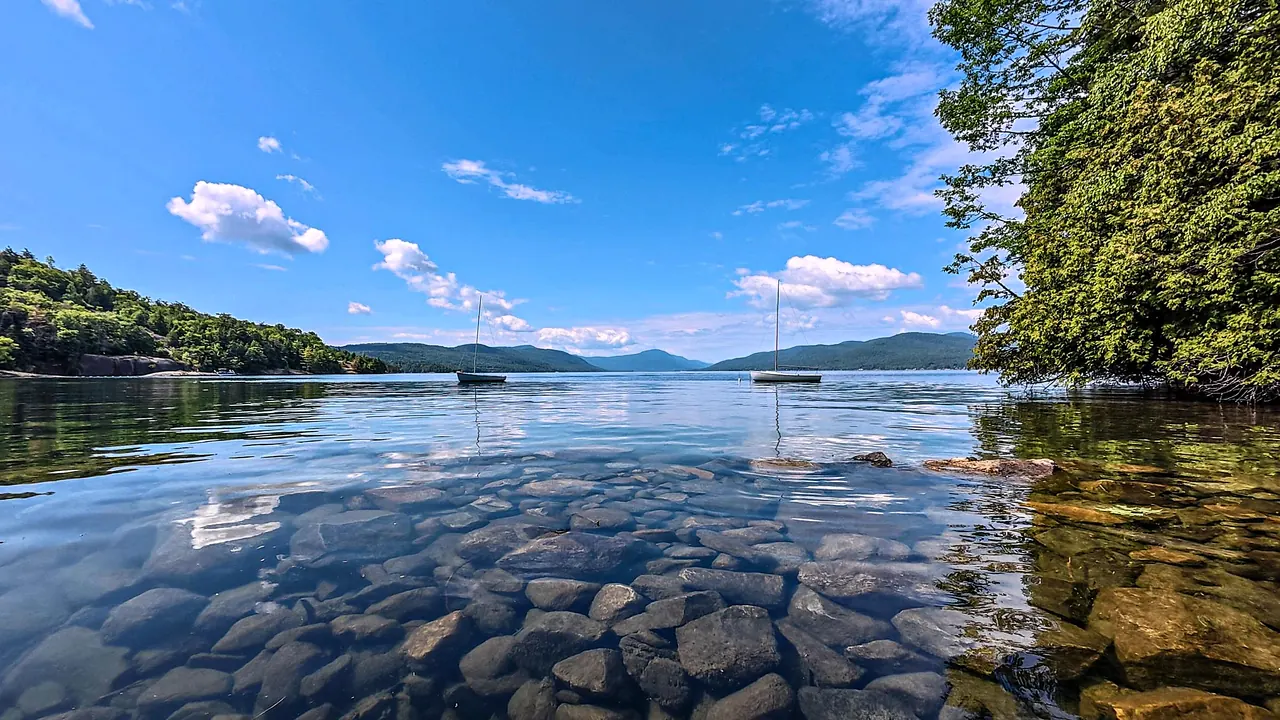
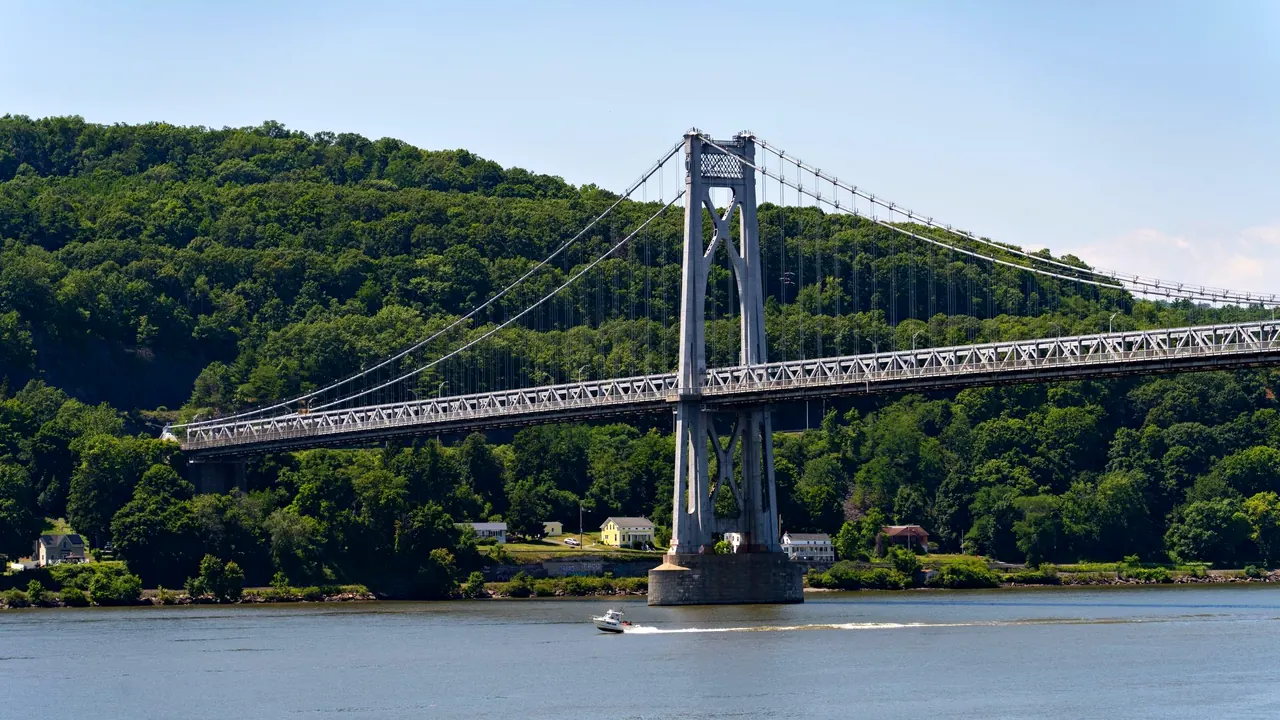
Photos: Adirondacks by Internetjessy, CC0; Hudson Valley by Brett A, Pexels License.
Adirondacks or Hudson Valley?
Our verdict in twelve categories, each scored against the same fixed benchmark cities, and the climate month by month, so you can choose for your trip.
Choose Adirondacks for
- beaches
- nature and the outdoors
- families
Choose the Adirondacks if you want to disappear into the woods for a week. The High Peaks, canoe routes linking one lake to the next, and long summers on a cabin dock give it the wilder landscape and the better swimming of the two. It suits hikers, paddlers, families who want lake life, and winter skiers. In return you give up good food, culture and evenings out, and you will spend a lot of time driving.
Choose Hudson Valley for
- culture and sights
- food and drink
- shopping
The Hudson Valley suits travellers who like their countryside with a good dinner at the end of the day. River estates, the Hudson River School painters, Dia Beacon and Storm King give it far more to see. Farm-to-table cooking and antique streets fill the gaps between hikes, and Manhattan is a train ride away. It is the better choice for couples, art lovers and weekenders who want walks and comfort in equal measure.
Scoreboard
Twelve categories on one fixed scale from 0 to 100. The shaded stretch is the gap between the two.
Your match
Pick a travel style or drag the sliders, and both match scores follow your weighting.
Wins on beaches and nature and the outdoors with your weighting.
Wins on culture and sights and food and drink with your weighting.
What matters to you?
Category by category
What the scores mean for a trip.
Beaches & swimming
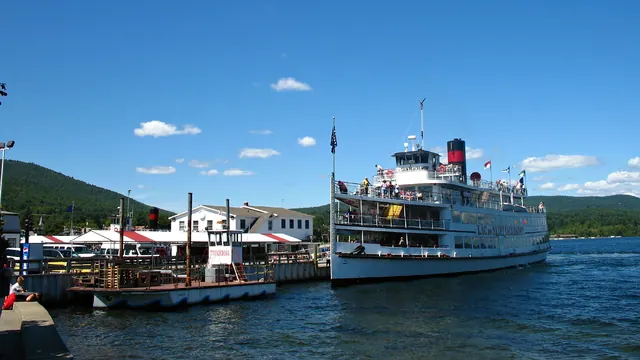
Neither has a coast, but the Adirondacks make far more of fresh water. Lake George has sandy beaches near the village and islands you can reach by boat, and Mirror Lake, the Saranac Lakes and the Fulton Chain have town beaches and campground docks, so a summer stay can be built around the water.
In the Hudson Valley, swimming is a side activity. It means state park lakes such as Lake Welch and Lake Taghkanic, or stream pools in the Catskills and Shawangunks. The river itself is mostly too murky to swim in, apart from a few spots such as Croton Point.
Food & drink
The Hudson Valley eats much better. Hudson, Rhinebeck, Kingston and Beacon build their menus around nearby farms and dairies, the Culinary Institute at Hyde Park opens its student restaurants to visitors, and cideries, distilleries and the Shawangunk Wine Trail take care of the drinking.
The Adirondacks offer simple meals after a day outdoors: maple-syrup pancakes at diners, summer ice-cream stands, and trout in log-built lodge dining rooms. Lake Placid and Saranac Lake have most of the better tables, and the Champlain Valley's autumn cider and cheese are the main local produce.
Culture & sights
The Hudson Valley has much more to see. River estates such as Sunnyside, Kykuit and Lyndhurst, Roosevelt's home and library, and Olana from the Hudson River School era line the river. Dia Beacon and Storm King add modern art on a large scale.
Adirondack history is more specialised. It covers the colonial forts at Ticonderoga and Lake George, the rustic Great Camps, the Adirondack Experience museum and the Olympic venues at Lake Placid. Each is worth an afternoon but none is a major museum, and in both regions the sights are spread out.
Nightlife
Both are early-to-bed regions, and the Hudson Valley is only a little livelier. Its evenings mean cocktails, taprooms and wine bars in Kingston, Beacon and Hudson, plus student bars in New Paltz. Anyone who wants a big night takes the train to the city.
The Adirondacks' one real scene is Lake George village in summer, with waterfront decks and party boats full of a young weekend crowd. Elsewhere it is a pub on Lake Placid's Main Street or a campfire.
Nature & outdoors
The Adirondacks are the bigger, wilder outdoors. Forty-six High Peaks include Mount Marcy at about 1,630m, with bare summits above the treeline, and the St Regis Canoe Area offers paddling trips of several days between lean-tos. In winter you can ski at Whiteface and go ice climbing, and you may see moose and hear loons.
The Hudson Valley's outdoors are closer to roads and towns but still serious. You can scramble up Breakneck Ridge above the river gorge, climb the Shawangunk cliffs, follow the Catskill escarpment to Kaaterskill Falls, or cycle the carriage roads at Minnewaska. It is wooded and rolling rather than alpine.
Day trips
A day out from the Adirondacks usually means leaving the park. From Lake George, the springs and racecourse of Saratoga Springs and Albany's capitol are each about an hour away. Ferries cross Lake Champlain to Burlington and the Vermont farm villages, and Montreal makes a long day from the northern lakes. Inside the park, an outing tends to lead to another lake or summit rather than another town.
The Hudson Valley's trump card is the train. Metro-North puts Manhattan about an hour from the lower valley, so a day of museums and city streets fits easily into a country stay. Closer to hand, Cold Spring, Rhinebeck's old village, Hudson and Woodstock each fill a half-day, and from the northern end the Berkshire towns are within reach. That makes the valley the more varied base for days away.
Good for families
The Adirondacks have a slight edge for children, thanks to the classic lake summer of cabin, dock and canoe. Lake George adds a theme park, a water park and paddle steamers, and there is also the Wild Center's treetop walkway and a ride down Lake Placid's Olympic bobsled run.
The Hudson Valley is at its best for families in autumn and early spring, with pick-your-own orchards, pumpkin patches, maple sugaring and Sleepy Hollow's headless horseman lore. Bear Mountain's small zoo and a Lego-themed resort near Goshen help in summer. In both regions you will spend a lot of time driving, and the best trails are too steep for small children.
Getting around
The Hudson Valley is easier to manage without a car. Metro-North and Amtrak run up the east bank to Cold Spring, Beacon, Rhinecliff and Hudson, so a car-free weekend in one river town is realistic, and most drives between towns take under an hour.
In the Adirondacks a car is essential. Winding two-lane roads mean well over an hour and a half from Lake George to Lake Placid, and the Champlain train and the few buses never reach a trailhead or a lake.
Shopping & style
The Hudson Valley gives shopping some reason to fit into a trip. Hudson's Warren Street is lined with antique and interiors dealers, Woodstock sells pottery, there are vintage shops from Saugerties to Beacon, and a large designer outlet village sits near Central Valley.
Adirondack shopping is mostly outdoor gear and souvenirs in Lake Placid and Lake George. The souvenirs worth carrying home are regional crafts: twig furniture, pack baskets, balsam pillows and maple syrup.
Affordability
Neither is cheap in high season, but the Adirondacks leave a little more room to save. Lake Placid and the Lake George waterfront charge resort prices, but the central and western lakes have family motels and state campgrounds.
The Hudson Valley is priced for weekenders from the city. Boutique inns, farm-to-table dinners and an almost unavoidable hire car add up, especially on foliage weekends. Chain motels near Poughkeepsie or Kingston and midweek stays bring costs down. In both regions the trails and parks cost little or nothing.
Live music & performing arts
Adirondack stages are almost all a July and August affair. There are chamber festivals in lakeside churches around Lake George, a young singers' opera programme near Schroon Lake and the arts centre at Lake Placid. For orchestra or ballet on a big scale, you drive to the amphitheatre at Saratoga Springs.
Summer in the Hudson Valley goes much further. Bard's Gehry-designed Fisher Center stages opera, dance and theatre, Caramoor holds concerts in its gardens, the Maverick series near Woodstock is one of the country's oldest for chamber music, and Shakespeare is played outdoors above the river near Garrison. Woodstock and Kingston add roots and rock in small venues, and restored theatres in Poughkeepsie and Kingston keep a modest programme going through the cooler months.
Wellness & relaxation
Both are places to slow down rather than to take the waters, and both send bathers to Saratoga Springs. In the Adirondacks, rest means solitude: a porch over a still lake, a canoe at dawn, in a region whose Saranac Lake was built around mountain air.
In the Hudson Valley it is more organised. There are full spas at the Victorian lake resorts on the Shawangunk Ridge, yoga weekends near Rhinebeck, and meditation at Buddhist monasteries near Carmel and Mount Tremper.
When should you go?
Pick your month. The climate figures are measured averages, not a forecast.
Adirondacks in July
Hudson Valley in July
Daytime high, °C
Rainfall in the month, mm
Where the figures come from
Adirondacks has no rain gauge within 25 km of the centre, so its rainfall comes from a gridded climate dataset read at the destination rather than from a gauge further away.
Hudson Valley's temperatures are measured 35 km from the centre, at Poughkeepsie / New Hackensack.
Hudson Valley has no rain gauge within 25 km of the centre, so its rainfall comes from a gridded climate dataset read at the destination rather than from a gauge further away.
Temperature and rainfall are climate normals, averaged over the years shown. Adirondacks: 2006-2020 (rainfall 1991-2020) normals, Harrietstown (20.1 km from centre). Hudson Valley: 1991-2020 normals, Poughkeepsie / New Hackensack (34.5 km from centre).
The Adirondacks are a summer and winter destination with little in between. July and August are the only months warm enough for proper lake swimming, with daytime highs around 25°C, but they are also the wettest, with up to 117mm in July, so expect afternoon showers. Late September brings mild days for hiking among the turning leaves. From December to February highs stay below freezing, around -3°C, which is when the ski slopes and frozen lakes come into their own. April and May are cool and muddy.
The Hudson Valley runs several degrees warmer all year. July reaches about 30°C, which is hot for touring estates and climbing exposed ridges, though fine for an afternoon at a lake. Its best months for walking and sightseeing are May, September and October, with highs between the high teens and mid-20s. Rain is spread fairly evenly through the year. Winters are cold and grey but hover just above freezing rather than deep below it.
Which traveller are you?
On a beach and sun trip, the Adirondacks win clearly, even without a coast. Lake George's sandy public beaches, the Saranac chain and the Fulton Chain make a summer of swimming, boating and docks, where the Hudson Valley offers only the odd state park lake.
For a culture and arts trip, choose the Hudson Valley. Roosevelt's Hyde Park, the Vanderbilt Mansion, Olana and the river estates, together with Dia Beacon and Storm King, add up to far more than the Adirondacks' scattered forts and Olympic venues.
For skiers, only the Adirondacks will do. Whiteface and Gore offer downhill runs, and there are cross-country trails and ice climbing around Lake Placid, in a long freezing winter. The Hudson Valley's winters are just cold and grey, with no slopes to build a trip around.
Before you go
| Measure | Adirondacks | Hudson Valley |
|---|---|---|
| Currency | US Dollar (USD) | US Dollar (USD) |
| Sockets | AB120 V, 60 Hz | AB120 V, 60 Hz |
| Driving side | Right | Right |
| Time zone | UTC-5, UTC-4 in summer | UTC-5, UTC-4 in summer |
| Emergency number | 911 | 911 |
| Main airport | Albany International Airport (ALB)26 non-stop destinations | New York Stewart International Airport (SWF)9 non-stop destinations |
| Public holidays this year | 13 days | 13 days |
Where else could you go?
Every comparison below shares a destination with this one, so you can follow Adirondacks or Hudson Valley somewhere new.
- Catskillsvs Hudson Valley
- Poconosvs Hudson Valley
- The Hamptonsvs Hudson Valley
- Catskillsvs Adirondacks
- Finger Lakesvs Hudson Valley
- Finger Lakesvs Adirondacks