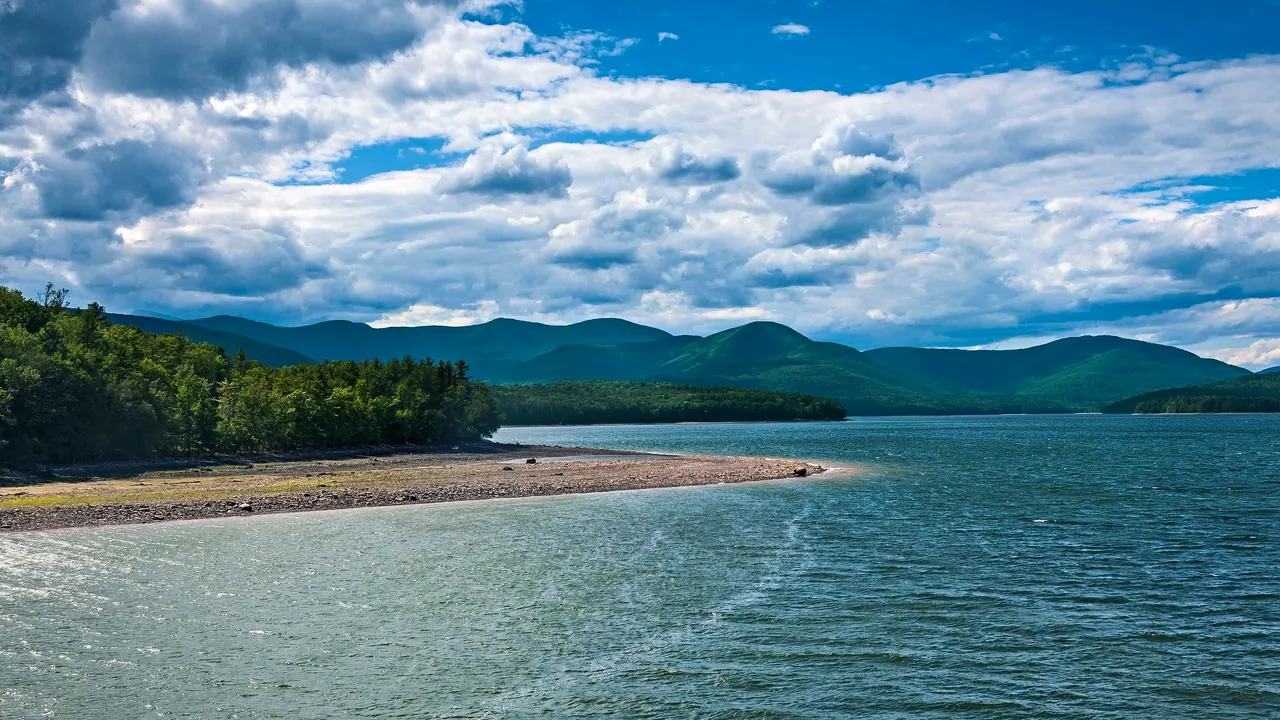
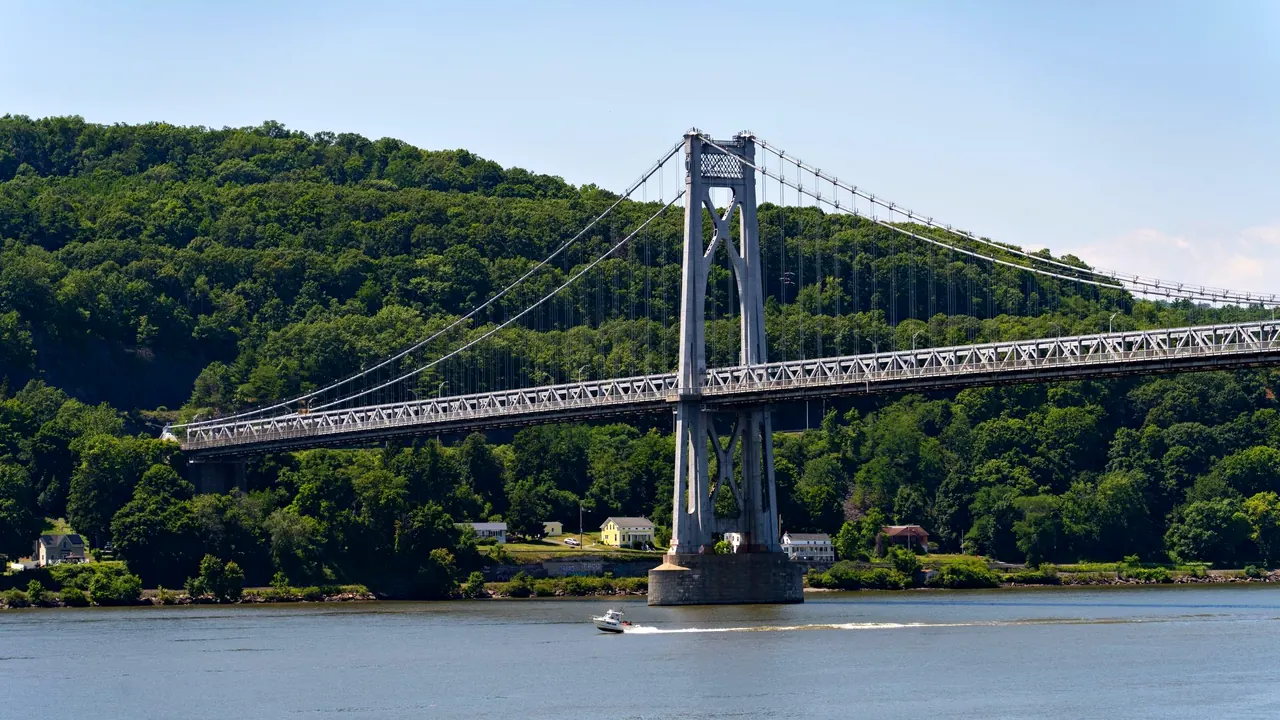
Photos: Catskills by Daniel Case, CC BY-SA 3.0, cropped; Hudson Valley by Brett A, Pexels License.
Catskills or Hudson Valley?
Our verdict in twelve categories, each scored against the same fixed benchmark cities, and the climate month by month, so you can choose for your trip.
Choose Catskills for
- beaches
- prices
The Catskills suit travellers who want to be in the mountains rather than look at them. That means a cabin by a creek, hard ridge walks on the Devil's Path, fly-fishing, cold swimming holes in summer and modest skiing in winter. Of the two it is the more secluded and simpler, with fewer sights and plainer food, and you need a car for almost everything.
Choose Hudson Valley for
- culture and sights
- shopping
- families
For a trip with more to see and eat, the Hudson Valley is the stronger choice. It has the river estates, modern art at Dia Beacon and Storm King, better restaurants and antique shopping on Warren Street, so each day has more variety. Its hiking and climbing are as good as the Catskills', and the riverside railway means a weekend can work without a car.
Scoreboard
Twelve categories on one fixed scale from 0 to 100. The shaded stretch is the gap between the two.
Your match
Pick a travel style or drag the sliders, and both match scores follow your weighting.
Wins on beaches and prices with your weighting.
Wins on culture and sights and shopping with your weighting.
What matters to you?
Category by category
What the scores mean for a trip.
Beaches & swimming
Neither has a coast, but the Catskills give swimmers more choice. There is the sandy beach at North-South Lake with forest all round, calm water at Pleasant Pond near Belleayre, and clear, cold rock pools along the Esopus and in the Peekamoose valley.
In the Hudson Valley you mostly swim at state park lakes such as Lake Welch and Lake Taghkanic, which warm to around 24°C in high summer. The river itself is tidal and murky, apart from a few supervised spots like Croton Point. In both places the season runs only from late June to early September.
Food & drink
Both are farm country with orchards, cider and weekend markets, but you eat better in the Hudson Valley. In Hudson, Rhinebeck, Kingston and Beacon the best kitchens compare with serious city dining. You can also eat at the Culinary Institute's student restaurants at Hyde Park and visit small wineries along the Shawangunk trail.
Eating in the Catskills is simpler: old diners, general stores and country restaurants cooking from nearby farms. Kingston on the eastern edge has the most choice, and Woodstock, Phoenicia and Livingston Manor each have a few good tables. Away from those towns, and outside summer and the foliage season, the options soon run thin.
Culture & sights
This is where the two differ most. The Hudson Valley has the river's great estates, such as Sunnyside, Kykuit and the Vanderbilt Mansion, as well as Roosevelt's home and library at Hyde Park and West Point. On top of that come two major modern art sites, Dia Beacon and Storm King, so several days still leave you choosing.
The Catskills' story is narrower, about how the mountains were painted and settled. You see it at Thomas Cole's house in Catskill, the viewpoints around Kaaterskill Falls, the Byrdcliffe colony above Woodstock and the museum at Bethel. Kingston's Stockade district belongs to both, but a culture trip to the Catskills is done in a couple of days.
Nightlife
Evenings end early in both, and neither has clubs. The Hudson Valley has a bit more after dark. Kingston, Beacon and Hudson have good bars and wine bars, New Paltz and Poughkeepsie have student bars, and you can take the train to the city for a big night out. In the Catskills a night out means a brewery taproom or a country tavern, or more often a fire pit outside the cabin, and the casino resort near Monticello is the only place open late.
Nature & outdoors
Both have outdoor country of the same quality, but of different kinds. The Catskills are one large block of protected mountain forest. There are thirty-five summits over 1,060m, the demanding Devil's Path ridge, fire towers looking over wooded ridges, classic fly-fishing on the Beaverkill and Willowemoc, and modest ski slopes in winter.
The Hudson Valley offers more variety, close to the river. There is the steep scramble up Breakneck Ridge in the Highlands gorge, the Appalachian Trail across Harriman, rock climbing on the white Shawangunk cliffs, carriage roads at Minnewaska and Mohonk, and kayaking on the river and its marshes.
Day trips
The Hudson Valley's best day trip is Manhattan, about an hour by Metro-North from the lower valley. Closer to hand are river towns such as Cold Spring and Rhinebeck for a half day. From the northern end you can reach Saratoga Springs and the Berkshire towns of Stockbridge and Lenox.
From the Catskills, the best outings mostly go down into the Hudson Valley itself: Olana, Hudson's Warren Street, Hyde Park and Storm King. Cooperstown and its baseball museum lie to the west. It is a good list, but almost everything on it means a drive.
Good for families
The Hudson Valley has more that is made for children. There is the Legoland resort near Goshen, the small zoo of native animals and the carousel at Bear Mountain, the flat Walkway Over the Hudson, and the pumpkin displays around Sleepy Hollow in autumn.
The Catskills offer simple outdoor time instead: the lake beaches at North-South Lake and Pleasant Pond, tubing on the Esopus, short waterfall walks and beginner ski lessons at Hunter and Windham. Rented cabins give families plenty of room, but rainy days are harder to fill and the drives are longer.
Getting around
In both, most visitors rely on a car, but the Hudson Valley gives you another option. Its east-bank railway runs through Tarrytown, Cold Spring and Beacon to Poughkeepsie, with Amtrak on to Hudson, so you can spend a weekend in one walkable river town without driving.
In the Catskills, coaches reach Kingston, Woodstock and Phoenicia but not the trailheads, swimming holes or most rentals. Winding roads through the cloves turn short distances on the map into thirty minutes to an hour at the wheel, and winter storms slow the higher passes.
Shopping & style
You will find more to take home in the Hudson Valley. Warren Street in Hudson is a long run of antique dealers, interiors shops and galleries. Cold Spring, Rhinebeck and Beacon add vintage and craft shops, and the large designer outlet village near Central Valley covers the big brands.
Shopping in the Catskills is a slower browse: antique barns along Route 28, potters and jewellers in Woodstock, general stores in Phoenicia and Andes, and farm stands for maple syrup and honey. Neither region has fashion streets or department stores.
Affordability
In the Catskills, the way to save is to head west. The Delaware County side costs noticeably less than the Woodstock area, and state campgrounds and older motels keep a stay cheap. Hiking, swimming holes and scenic drives cost nothing.
In the Hudson Valley, the cheaper beds are the chain motels around Poughkeepsie, Newburgh and Kingston, and diners and farm stands cost far less than its farm-to-table kitchens. Otherwise the two are priced much the same, for weekenders from New York. Boutique inns are expensive on autumn weekends, restaurants charge city prices and a hire car adds to the bill. Coming midweek cuts the cost in either.
Live music & performing arts
The Catskills lean towards roots music. Folk and rock play in Woodstock's small barns and halls, bluegrass and folk festivals fill summer weekends in the hills, and summer stock and a small theatre in Hunter round out the season.
The Hudson Valley has the more formal stages: opera and dance at Bard's Fisher Center, designed by Frank Gehry, garden concerts at Caramoor and outdoor Shakespeare above the river near Garrison. You can reach the Maverick chamber concerts outside Woodstock and the big touring acts at Bethel Woods from either. In winter both go quiet, but the restored theatres in Poughkeepsie and Kingston keep the valley's calendar a little fuller.
Wellness & relaxation
The Catskills offer seclusion: a cabin with a wood stove, a porch above the creek, and retreats that take guests, such as the Zen monastery at Mount Tremper and the Tibetan Buddhist centre above Woodstock. Its few resort spas are in the larger lodges.
The Hudson Valley's version is more polished. There are grand Victorian lake resorts with full spas on the Shawangunk Ridge, country inns made for long lunches, and yoga weekends around Rhinebeck. Neither has hot springs of its own, though the historic mineral baths of Saratoga Springs lie just beyond the valley's northern end.
When should you go?
Pick your month. The climate figures are measured averages, not a forecast.
Catskills in July
Hudson Valley in July
Daytime high, °C
Rainfall in the month, mm
Where the figures come from
Catskills's temperatures are measured 50 km from the centre, at Poughkeepsie / New Hackensack.
Catskills has no rain gauge within 25 km of the centre, so its rainfall comes from a gridded climate dataset read at the destination rather than from a gauge further away.
Hudson Valley's temperatures are measured 35 km from the centre, at Poughkeepsie / New Hackensack.
Hudson Valley has no rain gauge within 25 km of the centre, so its rainfall comes from a gridded climate dataset read at the destination rather than from a gauge further away.
Temperature and rainfall are climate normals, averaged over the years shown. Catskills: 1991-2020 normals, Poughkeepsie / New Hackensack (50 km from centre). Hudson Valley: 1991-2020 normals, Poughkeepsie / New Hackensack (34.5 km from centre).
The two share the same climate, which is no surprise because the Catskills rise on the Hudson Valley's western edge. Summers are warm, with July highs around 30°C, and late June to early September is the only time lake swimming is comfortable. September and October are the best months for walking and hiking, as highs fall from 24°C to 18°C, and the autumn colour comes in the same weeks.
Winters are cold in both, with January highs about 2°C. That suits the ski slopes in the Catskills better than strolling round the valley towns. Rain falls all through the year, with around 100mm in the wettest months of June, September and October, so no season is reliably dry. In the Catskills, expect the higher ground to be cooler than these figures.
Which traveller are you?
For a culture and arts trip, choose the Hudson Valley. Its river estates, Roosevelt's home at Hyde Park, West Point and the large modern artworks at Dia Beacon and Storm King fill several days. You can see the Catskills' painters' sites and Woodstock's arts colony in a couple.
On a family trip with young children, the Hudson Valley gives you more for the days. It has Legoland near Goshen, Bear Mountain's small zoo and carousel, autumn orchards and petting farms. The Catskills offer lake beaches and tubing but little else made for children.
For skiers, only the Catskills are worth considering. Hunter, Windham, Belleayre and Plattekill have modest slopes with beginner lessons, and the backcountry becomes snowshoe country. Winters in the Hudson Valley are just cold and grey, with no slopes to speak of.
Before you go
| Measure | Catskills | Hudson Valley |
|---|---|---|
| Currency | US Dollar (USD) | US Dollar (USD) |
| Sockets | AB120 V, 60 Hz | AB120 V, 60 Hz |
| Driving side | Right | Right |
| Time zone | UTC-5, UTC-4 in summer | UTC-5, UTC-4 in summer |
| Emergency number | 911 | 911 |
| Main airport | Albany International Airport (ALB)26 non-stop destinations | New York Stewart International Airport (SWF)9 non-stop destinations |
| Public holidays this year | 13 days | 13 days |
Where else could you go?
Every comparison below shares a destination with this one, so you can follow Catskills or Hudson Valley somewhere new.
- Poconosvs Hudson Valley
- Poconosvs Catskills
- The Hamptonsvs Hudson Valley
- The Hamptonsvs Catskills
- Adirondacksvs Catskills
- Finger Lakesvs Catskills