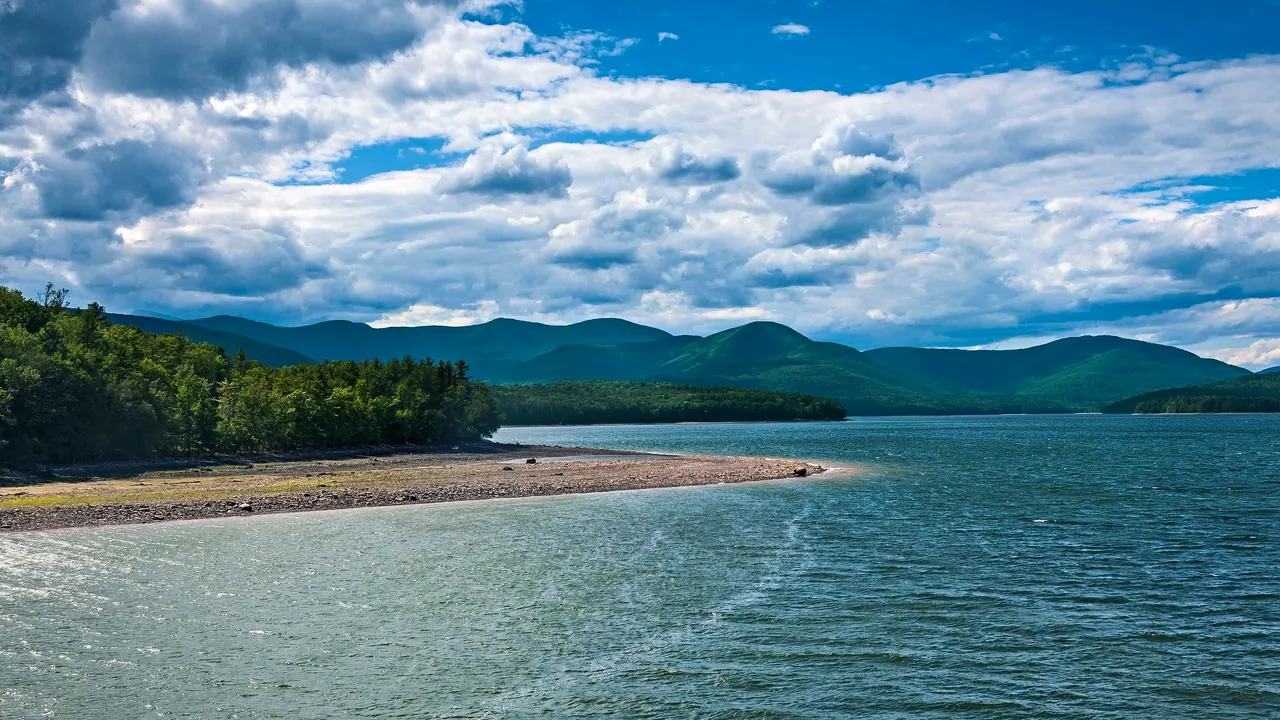
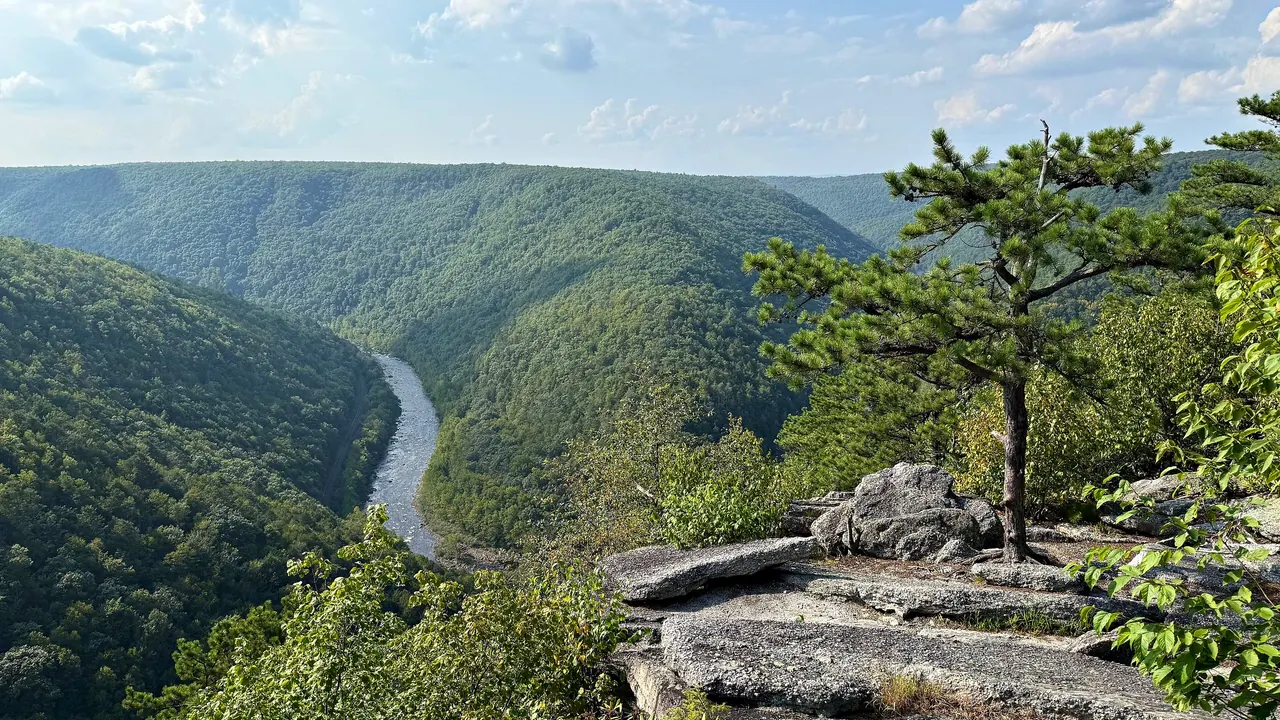
Photos: Catskills by Daniel Case, CC BY-SA 3.0, cropped; Poconos by Famartin, CC BY-SA 4.0, cropped.
Catskills or Poconos?
Our verdict in twelve categories, each scored against the same fixed benchmark cities, and the climate month by month, so you can choose for your trip.
Choose Catskills for
- food and drink
- nature and the outdoors
- culture and sights
Pick the Catskills if the mountains themselves are the point. The hiking is steeper and wilder, the fire-tower summits and trout rivers give you real reasons to walk, and the Hudson River School painters, Woodstock's arts colony and a summer of barn concerts add an artistic side the Poconos lack. With farm-to-table cooking around Kingston and outings into the Hudson Valley, it suits couples and walkers who don't mind paying weekend prices.
Choose Poconos for
- families
- prices
- getting around
Families with children are better served in the Poconos. Whole resorts are built around indoor waterparks, the ski hills are gentle, and the lakes, Bushkill Falls and the alpine coaster are all a short drive apart. It is also a little cheaper and easier to get around, which makes it a good fit for a relaxed weekend of lakes, rafting and hot tubs rather than a hard walking trip.
Scoreboard
Twelve categories on one fixed scale from 0 to 100. The shaded stretch is the gap between the two.
Your match
Pick a travel style or drag the sliders, and both match scores follow your weighting.
Too close to call, 1 point apart
Wins on food and drink and nature and the outdoors with your weighting.
Wins on families and prices with your weighting.
What matters to you?
Category by category
What the scores mean for a trip.
Beaches & swimming
Neither has a coast, and in both you can only swim from late June into early September. The difference is in the water. In the Catskills it means cold, clear creek pools along the Esopus and in the Peekamoose valley, plus the sandy, forest-ringed beach at North-South Lake.
The Poconos are more about lakes, with guarded state-park beaches at Promised Land and Beltzville, boating on the large Lake Wallenpaupack and tubing on the Delaware. The beaches are grassier, but the water is calmer and warmer for small children.
Food & drink
The Catskills eat better. Their dairy and orchard valleys supply country restaurants that cook from nearby farms. Kingston, Woodstock and Livingston Manor give you real choice, and there are cideries, distilleries, maple syrup and local cheeses besides.
In the Poconos, meals are mostly diners, pizza and resort dining rooms. Pennsylvania Dutch baking such as shoofly pie and a handful of bistros in Stroudsburg, Jim Thorpe and Milford add some interest. It is hearty food after a day outdoors rather than a reason to book.
Culture & sights
Both regions are better for scenery than for sights, but the Catskills have more of a story to follow. The Hudson River School painters and Thomas Cole's house in Catskill, the Byrdcliffe arts colony above Woodstock, the 1969 festival museum at Bethel and the old stone houses of Kingston's Stockade district can fill a couple of days.
The Poconos' heritage is coal and railway money. Most of it is in Jim Thorpe, with its Victorian streets and the Asa Packer Mansion, and Eckley Miners' Village and Grey Towers lie further out. These are good half-day visits, better for a rainy afternoon than as the plan for a trip.
Nightlife
Neither is a place for a night out, and evenings in both end early. In the Catskills a night out means a brewery taproom or a cocktail bar in Kingston or Woodstock, then a fire pit. The Poconos lean on resort lounges and après-ski bars on winter weekends. Each region has one casino resort for anyone who wants to stay up late, near Monticello and at Mount Pocono.
Nature & outdoors
The Catskills are true mountains, and it shows. About thirty-five summits rise above 1,060m, and the Devil's Path is one of the hardest ridge hikes in the eastern US. The fire towers on Overlook and Hunter look out over wave after wave of forest, and the Beaverkill is classic fly-fishing water.
The Poconos are a gentler, forested plateau. The Delaware Water Gap, with the Appalachian Trail along Kittatinny Ridge, Bushkill Falls and the rafting and rail trail of the Lehigh Gorge, makes it better for easy walks, cycling and paddling. Skiing is modest in both, though snowmaking keeps the Poconos slopes reliable.
Day trips
The Catskills sit beside the Hudson Valley, which gives them the richer outings. You have Olana across the river, the antique dealers of Hudson, the Roosevelt home at Hyde Park, the Vanderbilt mansion, and art at Beacon and Storm King. Cooperstown is within reach to the west.
From the Poconos, the best day out is Bethlehem, with its Moravian settlement and old steel furnaces. Scranton's railway and coal-mine museums lie to the northwest. New York and Philadelphia are about two hours away, which makes for a long and tiring day in weekend traffic.
Good for families
The Poconos were built for family weekends, and the gap is large. Indoor waterpark resorts around Mount Pocono save a wet day. In summer Camelback becomes an outdoor waterpark with an alpine coaster, and mini-golf, go-karts and petting zoos are all close together.
The Catskills offer simpler pleasures: waterfall walks, apple picking, tubing on the Esopus and beginner slopes at Hunter and Windham. Rented farmhouses give families space, but the winding drives and the lack of things to do on rainy days make the region harder going with young children.
Getting around
You need a car in both, and neither has local transport worth planning around. The Poconos are a little easier. Interstates cross the region and most drives take under an hour, though traffic is heavy on Friday evenings and Sunday afternoons.
In the Catskills the roads wind through narrow cloves and over passes, so towns that look close on the map take longer to reach, and winter storms slow the higher routes. Coaches from New York reach Kingston, Woodstock and Phoenicia, but not the trailheads.
Shopping & style
Catskills shopping is all browsing. Expect antique barns along Route 28 and in the western valleys, potters and jewellers in Woodstock dating back to its arts colony, and general stores in Phoenicia and Andes selling maple syrup and local goods. The Poconos have the one place in either region worth a shopping trip, a large premium outlet centre at Tannersville selling discounted brand-name clothing, and beyond that much the same antique and gift shops in Jim Thorpe and Milford.
Affordability
The Poconos are the cheaper of the two, though neither is cheap. Midweek cabins and shared rental houses keep costs down, and the national recreation area and state-park lakes cost little or nothing.
The popular Catskills towns are priced as a weekend escape from New York, and inns around Woodstock, Phoenicia and Hunter are expensive on summer and autumn weekends. For better value, look to the western Delaware County side, state campgrounds and weekday stays.
Live music & performing arts
Summer is the season in both, but the Catskills have more to hear. Woodstock's resident musicians fill barns and halls with folk and roots music, the Maverick chamber series has played in its hall in the woods since 1916, and Bethel's amphitheatre books big touring acts.
The highlights in the Poconos are the late-summer jazz festival at Delaware Water Gap and the Mauch Chunk Opera House in Jim Thorpe, with touring shows and summer stock elsewhere. In both regions the winter calendar is thin.
Wellness & relaxation
Both offer rest rather than a spa culture, and neither has hot springs. The Catskills add a contemplative side, with a Zen monastery at Mount Tremper, a Tibetan Buddhist centre above Woodstock and yoga retreats that take guests.
The Poconos are more about comfort: couples' resorts with in-room hot tubs and fireplaces, and large spa resorts near Lake Wallenpaupack with treatments and indoor pools.
When should you go?
Pick your month. The climate figures are measured averages, not a forecast.
Catskills in July
Poconos in July
Daytime high, °C
Rainfall in the month, mm
Where the figures come from
Catskills's temperatures are measured 50 km from the centre, at Poughkeepsie / New Hackensack.
Catskills has no rain gauge within 25 km of the centre, so its rainfall comes from a gridded climate dataset read at the destination rather than from a gauge further away.
Poconos's temperatures are measured 40 km from the centre, at Wilkes-Barre/Scranton International.
Poconos's station stands 162 m above the place it is measured for, so that place is likely a little warmer than the figures say.
Poconos has no rain gauge within 25 km of the centre, so its rainfall comes from a gridded climate dataset read at the destination rather than from a gauge further away.
Temperature and rainfall are climate normals, averaged over the years shown. Catskills: 1991-2020 normals, Poughkeepsie / New Hackensack (50 km from centre). Poconos: 1991-2020 (sunshine 1981-2010) normals, Wilkes-Barre/Scranton International (40 km from centre).
The two neighbouring uplands have almost the same climate. July brings highs near 30°C, and the lakes are warm enough for swimming from late June into early September. That is the only stretch when either works as a water destination. Rain falls evenly through the year with no dry season, so showers and thunderstorms come with any summer stay, and early autumn is slightly the wettest time in both.
Late September and October are the best months for walking and autumn colour, still mild at around 18°C in October. From December to March highs stay only a few degrees above freezing. That suits the ski slopes and snowshoe trails, but it is too cold for lingering in town. The Poconos data shows sunshine peaking at about 290 hours in June and falling below 100 hours in December, the greyest month.
Which traveller are you?
On a family trip with children, the Poconos are the safer bet. So much of the region is built for children that a wet day or a restless afternoon is easy to fill, and short drives mean more time playing and less in the car.
For an outdoors trip, choose the Catskills if you want to earn your views. Steep climbs, long days on the ridges and remote trout water suit serious walkers and anglers. The Poconos plateau is better for shorter walks and paddling alongside other plans.
On a tight budget, the Poconos make your money go a little further. Locals and visitors alike rent a house, share it and cook for themselves, then spend the days outdoors for free. In the Catskills it pays to stay on the western side and travel midweek.
Before you go
| Measure | Catskills | Poconos |
|---|---|---|
| Currency | US Dollar (USD) | US Dollar (USD) |
| Sockets | AB120 V, 60 Hz | AB120 V, 60 Hz |
| Driving side | Right | Right |
| Time zone | UTC-5, UTC-4 in summer | UTC-5, UTC-4 in summer |
| Emergency number | 911 | 911 |
| Main airport | Albany International Airport (ALB)26 non-stop destinations | Lehigh Valley International Airport (ABE)13 non-stop destinations |
| Public holidays this year | 13 days | 12 days |
Where else could you go?
Every comparison below shares a destination with this one, so you can follow Catskills or Poconos somewhere new.
- Hudson Valleyvs Catskills
- Hudson Valleyvs Poconos
- The Hamptonsvs Catskills
- Adirondacksvs Catskills
- Finger Lakesvs Catskills
- The Hamptonsvs Poconos