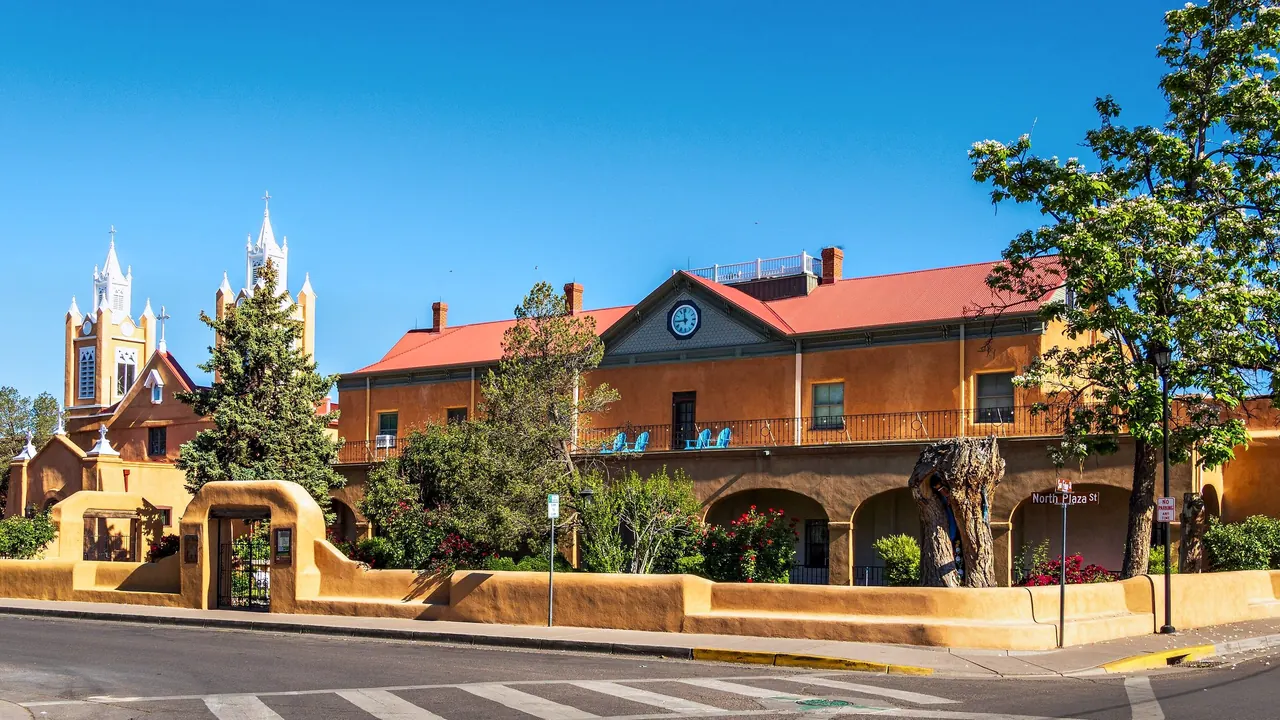
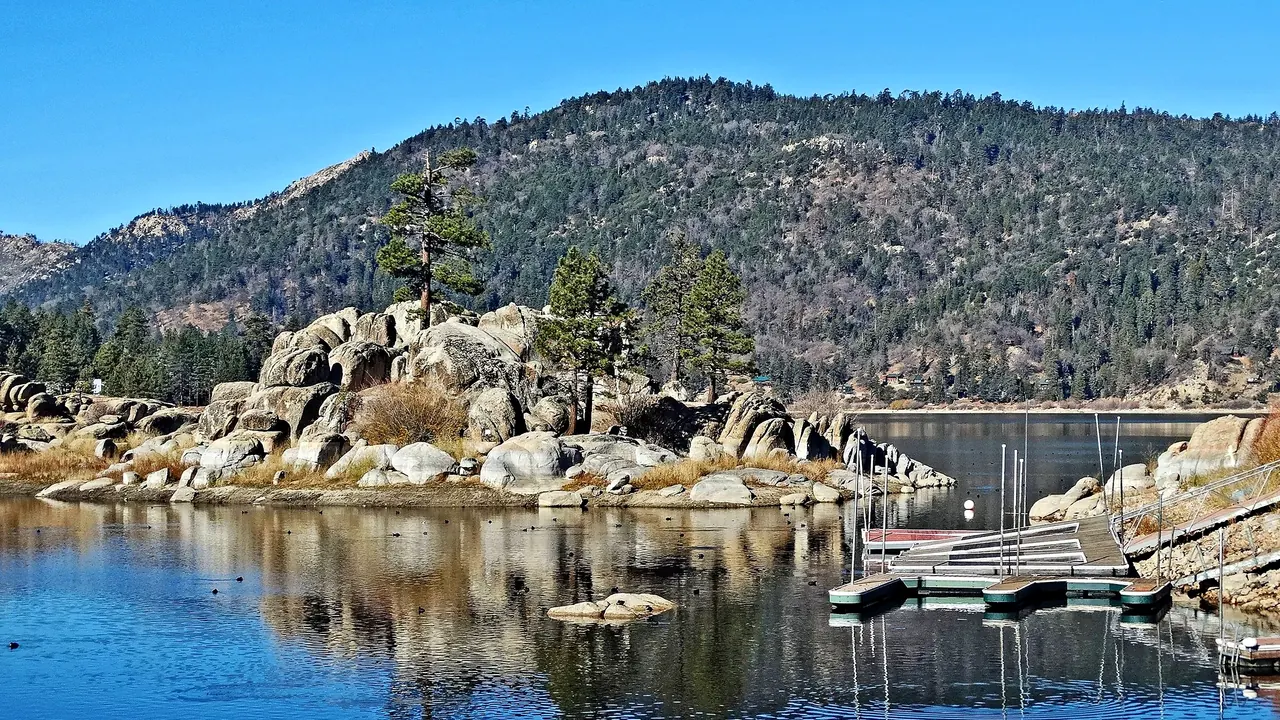
Photos: Albuquerque by dconvertini, CC BY-SA 2.0, cropped; Big Bear Lake by inkknife_2000, CC BY-SA 2.0, cropped.
Albuquerque or Big Bear Lake?
Our verdict in twelve categories, each scored against the same fixed benchmark cities, and the climate month by month, so you can choose for your trip.
Choose Albuquerque for
- food and drink
- culture and sights
- day trips
Albuquerque is the better pick for a trip with plenty to discover. New Mexican cooking built on red and green chile, Pueblo and Hispanic culture in Old Town and its museums, and Santa Fe an hour up the road give you several days of variety. It suits travellers who want a city to explore by car, with the Sandia Mountains there for a morning's hike rather than as the whole point.
Choose Big Bear Lake for
- beaches
- nature and the outdoors
- getting around
Big Bear Lake is a mountain retreat, not a place for sightseeing. Choose it when the outdoors is the trip: skiing and sledding in winter, and kayaks, trails and mountain biking around an alpine lake in summer, with evenings in a cabin hot tub. Food, culture and nightlife are thin, so come for the pines and the water rather than the town.
Scoreboard
Twelve categories on one fixed scale from 0 to 100. The shaded stretch is the gap between the two.
Your match
Pick a travel style or drag the sliders, and both match scores follow your weighting.
Wins on food and drink and culture and sights with your weighting.
Wins on beaches and nature and the outdoors with your weighting.
What matters to you?
Category by category
What the scores mean for a trip.
Beaches & swimming
Neither place is for a beach vacation, but at Big Bear Lake you can at least get into the water. Meadow Park has a small supervised swim beach. On a summer afternoon you can also take a quick dip off the rocky shore or go out on a paddleboard, though the lake stays cool.
Albuquerque has no swimming in the Rio Grande at all, so cooling off means a hotel or public pool, or a drive out to a reservoir such as Cochiti Lake.
Food & drink
Albuquerque is the place to eat well. New Mexican cooking is a reason to go in itself: carne adovada, blue corn enchiladas and sopaipillas, with red or green chile on almost everything, at its best in old family places in the South and North Valleys and along Route 66. In late summer the city smells of roasting chile, and the taprooms of Nob Hill and downtown round off the day.
Big Bear serves mountain comfort food, from big diner breakfasts to burgers and pizza, and has no cooking of its own. Many visitors simply stock the cabin kitchen and cook.
Culture & sights
Albuquerque gives you a couple of rewarding days. There is the adobe plaza of Old Town with its 1793 church, the Indian Pueblo Cultural Center, the National Hispanic Cultural Center in Barelas, the nuclear science museum and the neon of old Route 66. On the western edge of the city, thousands of carved images survive in the volcanic rock.
Big Bear has almost nothing to compare. The Discovery Center and a small museum on the Holcomb Valley gold rush fill an hour or two, and the chalet-style Village is modern.
Nightlife
Of the two, only Albuquerque offers anything like a night out, and even here it is modest and mostly a weekend affair. On a Friday or Saturday you can pick your mood: a louder stretch of Central Avenue where the dancing goes on late, or a gentler one by the university for a cocktail or a local beer. From spring to autumn the mild, dry evenings draw people outside onto taproom patios. Midweek, expect many places to be half empty.
At Big Bear, evenings revolve around the mountain rather than the bar. In winter there is a round of après-ski once the lifts close. The rest of the year it is a beer at a brewpub or a game on the screen at a sports bar, then back to the cabin fire before an early start on the slopes or trails. There is nowhere to dance and nothing stays open late.
Nature & outdoors
Both have mountains on the doorstep, but Big Bear Lake sits right in them. The lake, the pine forest, two ski areas, the summer mountain-bike runs, the Pacific Crest Trail and the San Gorgonio Wilderness are all a short trip from your cabin, and the outdoors is the whole reason to come.
Albuquerque's landscape is bigger but more spread out. You have the tramway to the Sandia crest, the cottonwood bosque along the Rio Grande with its wintering cranes, and volcanic cones west of the river, but you need a car for most of it. The summer heat also limits the best hiking to spring and autumn.
Day trips
Albuquerque is by far the better base for days out, mainly because Santa Fe, with its plaza, Canyon Road galleries and museums, is an hour north and can even be reached by commuter train. With a car you can add Acoma's Sky City on its mesa, the cliff dwellings of Bandelier and the old mining villages of the Turquoise Trail.
From Big Bear, every outing starts with a slow drive down winding roads. Lake Arrowhead and the orchards of Oak Glen are the easy trips, while Palm Springs or Los Angeles makes for a long day, so most visitors stay on the mountain.
Good for families
Families do well in both, but in different ways. Albuquerque offers a city's worth of outings: the BioPark's zoo and aquarium, the Explora science centre, the dinosaur halls and the dawn launches of the October Balloon Fiesta. The catch is that everything is a drive apart and the summer sun is fierce.
Big Bear is a vacation built around playing outdoors, with sledding and first ski lessons in winter, and the alpine slide, pedal boats and the small Alpine Zoo in summer. A cabin makes an easy family base, though you have to accept cold nights and queues on the roads on winter weekends.
Getting around
Both need a car, but Big Bear is easier once you have arrived. The Village is walkable, and a local bus and a seasonal trolley reach the ski areas and parts of the shore. The catch is the drive up, on mountain highways that can crawl on long weekends or call for snow chains in winter.
Albuquerque is a wide, low city laid out for driving. Old Town is walkable, and the Central Avenue bus links it with downtown and Nob Hill, but the mountains, the petroglyphs and the day trips all mean renting a car. At least that is simple, since the airport is close to the centre.
Shopping & style
Albuquerque's shopping has a real speciality: silver and turquoise jewellery, Pueblo pottery and Navajo weaving around Old Town and the Indian Pueblo Cultural Center, best bought directly from the artists. Nob Hill adds a short run of independent and vintage shops. Big Bear's Village has gift shops, fudge, bear-themed souvenirs and outfitters for ski and lake gear, which is pleasant for an hour but no more.
Affordability
Neither is cheap, but Albuquerque's costs are steadier. Rooms are fairly priced for most of the year except Balloon Fiesta week, the casual New Mexican plates are generous, and Old Town and the trails cost little. The car rental is the main expense.
At Big Bear the bill depends on when you go. A shared cabin midweek can be economical for a group that cooks for itself, but winter weekends and school vacations push rates up, and lift tickets and equipment hire add to the cost.
Live music & performing arts
Albuquerque has a modest but genuine stage life. There are touring musicals and the philharmonic at Popejoy Hall, film and concerts in the Pueblo Deco KiMo Theatre, a deep-rooted flamenco scene, and Native dances at the Indian Pueblo Cultural Center on weekends. Big Bear has a community arts centre, free summer concerts by the lake and Bavarian bands at its autumn Oktoberfest, pleasant enough but rarely a reason to plan an evening.
Wellness & relaxation
Albuquerque's best rest lies outside the city, in the hot springs of northern New Mexico. The mineral pools of Jemez Springs are a little over an hour's drive away, and there are Japanese-style bathhouses around Santa Fe. Closer in, resort spas on Pueblo lands look out over the mountains.
Big Bear has no thermal springs, so you relax at the cabin itself, with a private hot tub on a deck among the pines, a wood stove and slow midweek days in clear mountain air. On busy winter weekends, though, the crowds break the calm.
When should you go?
Pick your month. The climate figures are measured averages, not a forecast.
Albuquerque in July
Big Bear Lake in July
Daytime high, °C
Rainfall in the month, mm
Where the figures come from
Big Bear Lake has no rain gauge within 25 km of the centre, so its rainfall comes from a gridded climate dataset read at the city rather than from a gauge further away.
Temperature and rainfall are climate normals, averaged over the years shown. Albuquerque: 1991-2020 normals, Albuquerque International Airport (7.3 km from centre). Big Bear Lake: 2014-2025 (rainfall 1991-2020) normals, Big Bear City (5 km from centre).
Albuquerque is at its best in spring and autumn. April, May, September and October bring warm, dry and very sunny days that suit both Old Town's streets and the foothill trails. From June to August the city is hot, at around 33°C, which makes midday walking hard work. July is the wettest month, but at 42mm it is still a dry place. Winters are cool and bright, fine for museums and sightseeing but chilly once the sun goes down.
Big Bear Lake follows a different calendar. From December to February it is cold and wet, with up to 135mm a month, and that wet season is what makes it a snow destination. June is almost completely dry, and July and August reach about 26°C, ideal for hiking and just warm enough for a quick swim in the lake. In midsummer, when Albuquerque is at its hottest, Big Bear is the more comfortable of the two. In spring and autumn Albuquerque has the warmer, drier days.
Which traveller are you?
For a culture and arts trip, Albuquerque is the obvious choice. Old Town, the Pueblo and Hispanic cultural centres, the petroglyphs and an evening of flamenco fill several days, with Santa Fe's museums an hour away. Big Bear has little beyond a small history museum.
On a food and nightlife trip, choose Albuquerque. Red and green chile, long-running family New Mexican kitchens and craft taprooms give every evening a focus, and downtown and Nob Hill offer a proper night out. Big Bear's diners and brewpubs feed you well enough, but evenings end early.
On a ski trip, Big Bear Lake is far ahead. Albuquerque's small ski area on Sandia Peak, reached from the tramway, has a short and unreliable season. Big Bear's two ski areas sit just above town, with plenty of snowmaking, sledding hills and beginner lessons.
Before you go
| Measure | Albuquerque | Big Bear Lake |
|---|---|---|
| Currency | US Dollar (USD) | US Dollar (USD) |
| Sockets | AB120 V, 60 Hz | AB120 V, 60 Hz |
| Driving side | Right | Right |
| Time zone | UTC-7, UTC-6 in summer | UTC-8, UTC-7 in summer |
| Emergency number | 911 | 911 |
| Elevation | 1,619 m | 2,058 m |
| Main airport | Albuquerque International Sunport (ABQ)6 km from centre27 non-stop destinations | Ontario International Airport (ONT)67 km from centre28 non-stop destinations |
| Public holidays this year | 13 days | 13 days |
By the numbers
| Measure | Albuquerque | Big Bear Lake |
|---|---|---|
| City population | 564,559 | 5,046 |
| People per km² | 1,150 | 299 |
| Museums within 10 km | 10 | 1 |
| UNESCO World Heritage sites within 50 km | 0 | 0 |
Where else could you go?
Every comparison below shares a destination with this one, so you can follow Albuquerque or Big Bear Lake somewhere new.
- Palm Springsvs Big Bear Lake
- Palm Desertvs Big Bear Lake
- Santa Fevs Albuquerque
- Anaheimvs Big Bear Lake
- Laguna Beachvs Big Bear Lake
- Newport Beachvs Big Bear Lake