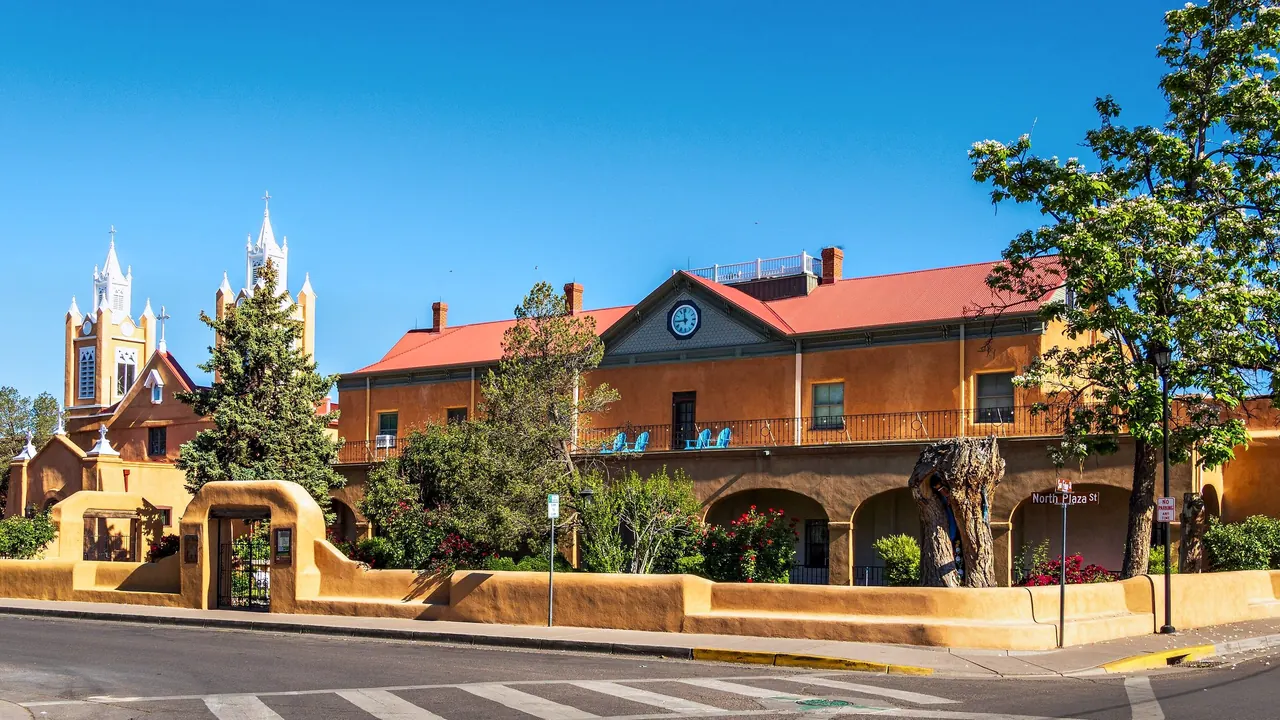
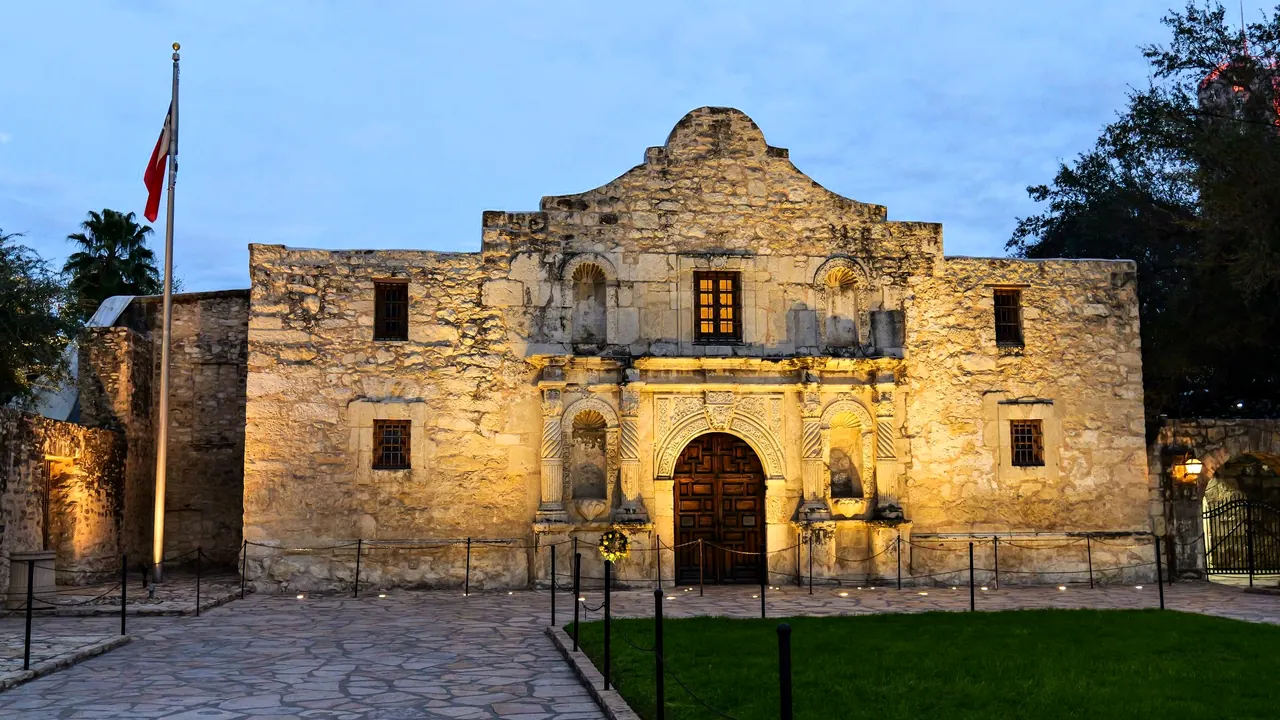
Photos: Albuquerque by dconvertini, CC BY-SA 2.0, cropped; San Antonio by Mark Direen, Pexels License.
Albuquerque or San Antonio?
Our verdict in twelve categories, each scored against the same fixed benchmark cities, and the climate month by month, so you can choose for your trip.
Choose Albuquerque for
- nature and the outdoors
- wellness
Albuquerque suits a traveller who puts landscape first. It has a mountain range on the edge of town with a tramway to the crest, and desert trails, lava fields carved with petroglyphs and the Pueblo world explained by the Pueblos themselves. Bring a car, come in spring or autumn, and use the city as a base for the outdoors and for Santa Fe rather than as a sightseeing destination in its own right.
Choose San Antonio for
- culture and sights
- families
- getting around
For a city stay with more to see in town, San Antonio is the better pick. The Spanish missions and the River Walk give it a stronger historic core, theme parks and the zoo make it easier with children, and its compact downtown and slightly lower costs make the trip simpler to organise. Its winters are much milder too, though its outdoors is gentle hill country rather than mountains.
Scoreboard
Twelve categories on one fixed scale from 0 to 100. The shaded stretch is the gap between the two.
Your match
Pick a travel style or drag the sliders, and both match scores follow your weighting.
Wins on nature and the outdoors and wellness with your weighting.
Wins on culture and sights and families with your weighting.
What matters to you?
Category by category
What the scores mean for a trip.
Beaches & swimming
Neither city is near the sea, and Albuquerque has almost nowhere to swim. The Rio Grande is not for bathing, so it is hotel pools or a drive to Cochiti Lake.
San Antonio does better, thanks to the spring-fed Comal and San Marcos rivers under an hour away, which are clear and cool enough to float on an inner tube through a summer afternoon, plus Hill Country swimming holes. For a real beach both mean a separate trip, though the Gulf is far closer to San Antonio.
Food & drink
Both are reasons to come hungry, and in both the best meals come from modest family kitchens rather than smart dining rooms, but the cooking is different. Albuquerque's is New Mexican, built on locally grown chile, red or green, in carne adovada, blue corn enchiladas and sopaipillas with honey. Craft breweries in Nob Hill and downtown complete the picture.
San Antonio's is Tex-Mex: breakfast tacos, puffy tacos, enchiladas in chili gravy and Sunday barbacoa, with Central Texas brisket alongside and the Pearl's market and restaurants for something more ambitious. Both narrow quickly once you look beyond their regional speciality.
Culture & sights
San Antonio has more history to see. The Alamo and four more 18th-century missions along the river form a World Heritage group, with San José's carved rose window and Espada's aqueduct. The cathedral, the King William mansions and two worthwhile art museums round it out.
Albuquerque's Old Town plaza is smaller, and its strengths lie elsewhere: the Indian Pueblo Cultural Center for Native cultures, the nuclear science museum, Route 66 neon and the petroglyphs on the western edge. It fills a rewarding couple of days rather than a full itinerary of landmarks.
Nightlife
Neither is a place for late nights, but San Antonio gives a little more choice of evening. Beyond the River Walk's margarita terraces there are icehouses, beer gardens and Tejano dance halls in Southtown, the Pearl and the St. Mary's Strip. Albuquerque's evenings are mostly taprooms and patios in Nob Hill, with a downtown strip of bars and clubs that gets rowdy at weekends and goes quiet midweek.
Nature & outdoors
Here Albuquerque pulls well ahead. The Sandia Mountains form its eastern edge, with a tramway to a crest above 3,000m and the steep La Luz Trail for those who climb on foot. Down by the river there are cottonwood bosque paths, wintering cranes and lava escarpments.
San Antonio's setting is softer: limestone hills, cypress-lined rivers for kayaking, caverns to the north and bluebonnets in spring, with no mountains of any real scale. Its hiking season runs through the cooler half of the year, while Albuquerque's trails are at their best in spring and autumn.
Day trips
Both have a solid list of trips and both need a car, but the trips are of different kinds. Albuquerque's include one outstanding day in Santa Fe, which can also be reached by train, and then ancient sites: Acoma's mesa-top Sky City, Bandelier's cliff dwellings and the ruined Salinas missions.
San Antonio's are more about small towns: German-rooted Fredericksburg with its wineries, Gruene's old dance hall and cowboy Bandera, with Austin for the Capitol and music. Albuquerque offers Native heritage and old settlements, and San Antonio offers wine country, small-town Texas and a second city.
Good for families
San Antonio is the easier choice with children. Two large theme parks sit on its edges, Brackenridge Park holds the zoo and the Witte Museum, and Morgan's Wonderland is built for children with disabilities and their families.
Albuquerque has a good core in the BioPark, Explora and the tramway ride, and the October Balloon Fiesta, with hundreds of balloons rising at dawn, is something few children forget. Beyond those, though, it has fewer big days out. In both cities the distances mean driving, and the summer heat needs planning.
Getting around
Both are car cities, but San Antonio is easier for part of a stay. Its compact downtown is linked by the shaded River Walk, and you can cycle the river path south to the missions.
In Albuquerque only Old Town is truly walkable, with a bus along Central Avenue to downtown and Nob Hill. The mountains, the petroglyphs and nearly every outing need a hire car, though the commuter train to Santa Fe is a useful exception.
Shopping & style
Albuquerque's shopping is Native American craft and San Antonio's is Mexican and Western, and that difference matters more than how many shops each has. In Albuquerque, look for silver and turquoise jewellery, Pueblo pottery and Navajo weaving around Old Town's plaza and the Indian Pueblo Cultural Center, ideally bought from the artists themselves. Nob Hill's short run of vintage shops is a sideline.
In San Antonio, El Mercado in Market Square sells embroidered dresses, pottery, papel picado and piñatas, and specialist shops sell boots and hats. It also has larger malls and the outlet centres at San Marcos and New Braunfels for practical buying, though there is no fashion street in either city.
Affordability
San Antonio stretches a budget a little further. Its convention hotels keep rooms moderate away from the river, tacos and barbecue are cheap, and the missions are free, though theme parks add up quickly for a family.
Albuquerque is inexpensive by American standards, but a comfortable room costs about what it would in a European capital, and a hire car is almost unavoidable. Old Town and the foothills trails cost little, but if money matters, avoid Balloon Fiesta week.
Live music & performing arts
San Antonio has the fuller programme: symphony, opera and ballet at the Tobin Center, Broadway at the 1929 Majestic and summer shows at the Arneson, where the audience sits across the river from the stage. Conjunto and Tejano dance halls give it a sound of its own.
Albuquerque's stages are fewer, chiefly Popejoy Hall and the KiMo, but it has two things you won't find in San Antonio: a deep flamenco tradition and weekend Pueblo dances at the cultural centre. Santa Fe's open-air summer opera is within an evening's drive.
Wellness & relaxation
Albuquerque's advantage is the hot springs of northern New Mexico. There are mineral pools at Jemez Springs, about an hour and a quarter away, and Japanese-style bathhouses around Santa Fe. Closer in, rest means a resort spa, several of them on Pueblo lands with views of the mountains, and the dry air and quiet evenings suit a slow stay.\n\nSan Antonio has nothing comparable to soak in, so a restful trip usually means booking one of the golf or Hill Country resorts on the north side. A slow morning on a quiet stretch of the River Walk or among the ponds of the Japanese Tea Garden is pleasant, but the summer heat makes long, idle days outdoors hard going.
When should you go?
Pick your month. The climate figures are measured averages, not a forecast.
Albuquerque in July
San Antonio in July
Daytime high, °C
Rainfall in the month, mm
Temperature and rainfall are climate normals, averaged over the years shown. Albuquerque: 1991-2020 normals, Albuquerque International Airport (7.3 km from centre). San Antonio: 1971-2000 (sunshine 1981-2010, rainfall 1991-2020) normals, San Antonio / Lackland Air Force Base (9.6 km from centre).
Albuquerque is dry and sunny almost all year, but because it sits so high the seasons are sharp. Winter days reach only about 9°C and the nights are cold, while June and July reach 33°C in the city. The best months are April and May, then September and October, when days are warm and clear and good for the trails. What little rain falls comes in short summer storms, mostly in July and August.
San Antonio is far milder in winter, around 17°C in January, so December to March is comfortable for walking the missions, though cloudier than Albuquerque. July and August climb to 35°C, which is hard work for sightseeing but the season for river tubing. It is also much wetter, with heavy spells in May at 112mm and again in September and October, so March, April and November are the safest choices.
Which traveller are you?
For an outdoors trip, pick Albuquerque. The Sandia Mountains rise straight from the suburbs, the tramway reaches forest trails on the crest, and the bosque and volcanic escarpments are close by. San Antonio has gentler hill country and caves.
On a family trip with children, San Antonio has more to fill the days: SeaWorld and Six Flags on the city's edge, the zoo and the Witte Museum's dinosaurs, river cruises and summer tubing. Albuquerque has fewer big days out beyond the BioPark.
For a culture and arts trip, San Antonio goes further. Its Spanish missions form a World Heritage Site, its art museums hold real collections, and Tejano music gives its stages a local voice. Albuquerque's Old Town and Pueblo centre fill a couple of days.
Before you go
| Measure | Albuquerque | San Antonio |
|---|---|---|
| Currency | US Dollar (USD) | US Dollar (USD) |
| Sockets | AB120 V, 60 Hz | AB120 V, 60 Hz |
| Driving side | Right | Right |
| Time zone | UTC-7, UTC-6 in summer | UTC-6, UTC-5 in summer |
| Emergency number | 911 | 911 |
| Elevation | 1,619 m | 198 m |
| Main airport | Albuquerque International Sunport (ABQ)6 km from centre27 non-stop destinations | San Antonio International Airport (SAT)12 km from centre48 non-stop destinations |
| Public holidays this year | 13 days | 13 days |
By the numbers
| Measure | Albuquerque | San Antonio |
|---|---|---|
| City population | 564,559 | 1,434,625 |
| People per km² | 1,150 | 1,187 |
| Museums within 10 km | 10 | 11 |
| UNESCO World Heritage sites within 50 km | 0 | 1 |
Where else could you go?
Every comparison below shares a destination with this one, so you can follow Albuquerque or San Antonio somewhere new.
- Santa Fevs Albuquerque
- Austinvs San Antonio
- Taosvs Albuquerque
- Durango, Coloradovs Albuquerque
- Houstonvs San Antonio
- Telluridevs Albuquerque