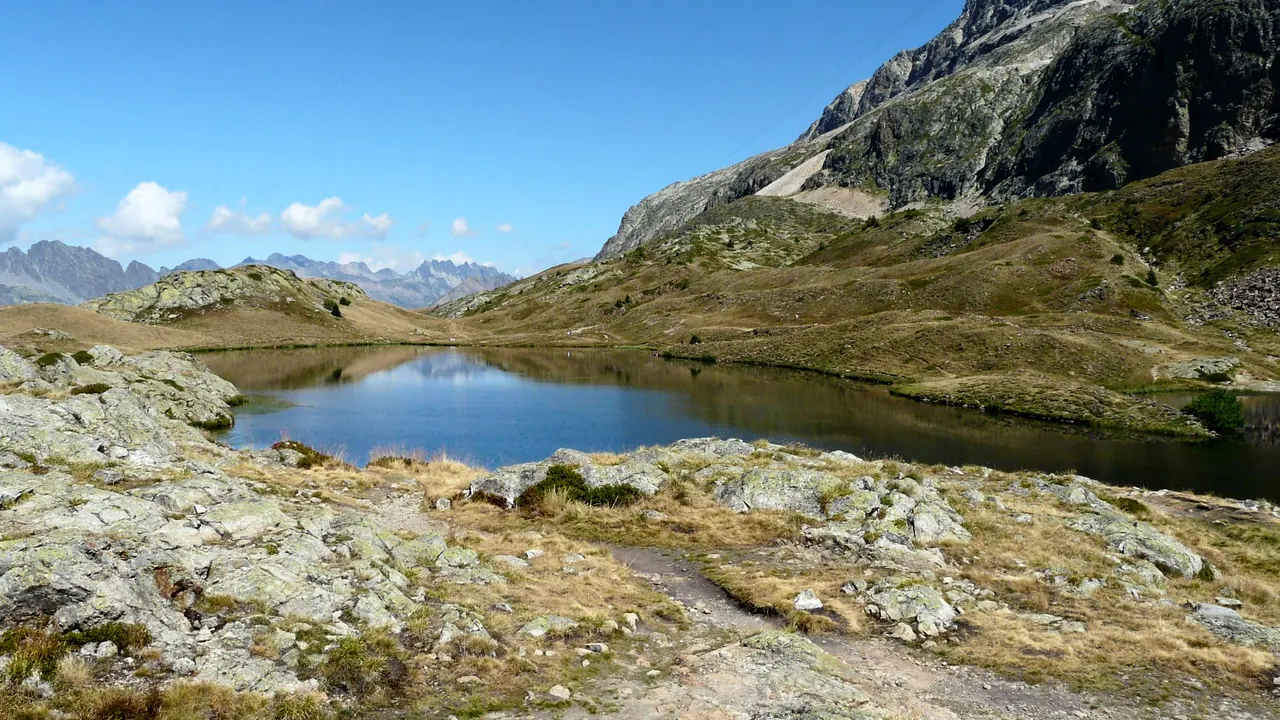
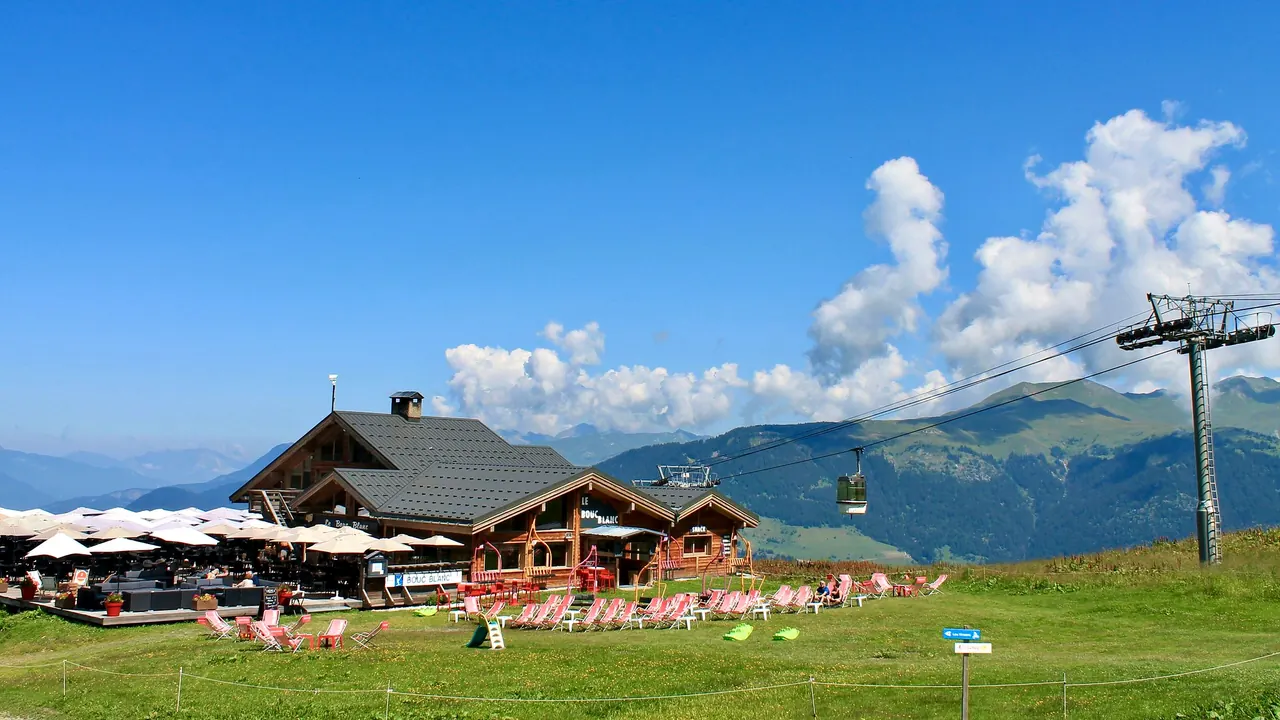
Photos: Alpe d'Huez by Beany, CC BY-SA 3.0, cropped; Courchevel by B. Brassoud, CC BY-SA 4.0, cropped.
Alpe d'Huez or Courchevel?
Our verdict in twelve categories, each scored against the same fixed benchmark cities, and the climate month by month, so you can choose for your trip.
Choose Alpe d'Huez for
- prices
- day trips
- live music and the arts
Alpe d'Huez suits skiers and riders who want big mountains without the bill that comes with Courchevel. The sunny south-facing slopes, the climb to the Pic Blanc and the summer pull of the famous hairpin road give it a strong outdoor case all year. Grenoble is close enough for a day off the hill, and a self-catered apartment keeps a family week within reach.
Choose Courchevel for
- food and drink
- shopping
- wellness
Courchevel is for travellers who want the ski week itself to be the luxury. It puts you at the heart of Les 3 Vallées, has starred kitchens and lavish hotel spas in 1850, and has a short but glamorous street of fashion houses and jewellers. Getting around once you arrive is easier too. The catch is cost, which is steep in every village and extreme at the top.
Scoreboard
Twelve categories on one fixed scale from 0 to 100. The shaded stretch is the gap between the two.
Your match
Pick a travel style or drag the sliders, and both match scores follow your weighting.
Wins on prices and day trips with your weighting.
Wins on food and drink and shopping with your weighting.
What matters to you?
Category by category
What the scores mean for a trip.
Beaches & swimming
Neither resort is anywhere near the sea, and the swimming is equally limited in both. In Alpe d'Huez the summer dip is in the cold lakes on the Lac Besson plateau, with slightly milder water down in the Romanche valley. In Courchevel it is a paddle and a lie on the grass at Lac de la Rosière. Courchevel's public aquatic centre with slides is the better wet-weather option than the sports centre pool at Alpe d'Huez.
Food & drink
Courchevel eats far better. The palace hotels of 1850 hold a run of Michelin-starred kitchens, and a slope-side lunch there can mean grilled seafood and a long wine list rather than a quick plate between runs. The Savoyard basics are there as well, though very little of it is cheap.
Alpe d'Huez keeps to raclette, tartiflette, diots with polenta, pizzerias and brasseries. The sunny terrace lunches are good, but over a week the menus start to repeat, and supermarkets do much of the work for anyone self-catering.
Culture & sights
Neither resort is a reason to come for sights, since both were built for skiing in the twentieth century. Alpe d'Huez has slightly more to fill a spare afternoon: the tent-shaped church of Notre-Dame des Neiges, a small local museum and the remains of the medieval silver-mining village of Brandes. Courchevel's equivalents are the 1992 Olympic ski jumps at Le Praz and the modernist chalets of 1850.
Nightlife
Courchevel has a little more after dark, and it is a different kind of night. In 1850 après-ski moves on to hotel bars and a few expensive late clubs with big tables and champagne, a scene built around spending.
Alpe d'Huez is younger and more casual, with music at the slope-side bars as the lifts close, then pubs and a few small clubs full of British, Dutch and French skiers. Outside winter, both go quiet.
Nature & outdoors
Both are first-rate mountain bases, and the difference is in scale and character. Courchevel gives access to Les 3 Vallées, about 600km of linked pistes reaching Méribel and Val Thorens, and the Vanoise National Park with its ibex and glaciers in summer.
Alpe d'Huez is smaller as a ski area but sunnier on its south-facing shelf. It has the Sarenne black run, views from the Pic Blanc across much of the French Alps, the Écrins for summer hiking, and lift-served mountain biking.
Day trips
Alpe d'Huez has the better outings, mainly because Grenoble is about an hour and a quarter down the hairpins, with the Bastille cable car, the fine-arts museum and the Revolution museum at Vizille on the way. Over the Col du Lautaret, Vauban's fortified Briançon is a fine longer run.
From Courchevel everything starts with the descent to Moûtiers. Conflans and Beaufort are about an hour away and Annecy close to two, which is why most skiers there never leave.
Good for families
Both resorts work about equally well for a family ski week, with ski schools, kids' clubs and gentle sunny beginner areas. Courchevel's free beginner lifts at Moriond and Village and its aquatic centre with slides are strong points, though 1850 is geared to adults. Alpe d'Huez adds an ice rink and sledging but has a steep, spread-out layout that is hard work with pushchairs.
Getting around
Courchevel is the easier of the two. A rail station at Moûtiers lies about 25km below, and once you are up there the shuttles, the gondola from Le Praz and a compact, walkable centre at 1850 make car-free days simple.
Alpe d'Huez has no railway, so arrival is by coach, transfer or a drive up the hairpins. Free shuttles and a small gondola help, but the quarters are stacked up a steep slope, which is tiring to walk carrying skis.
Shopping & style
Courchevel is clearly ahead, though only in one direction. Its short street of luxury fashion houses, jewellers and watchmakers in 1850 is unusual for a mountain village, alongside good equipment shops. Alpe d'Huez sells what a ski week needs, mainly rental, technical clothing, cheese and souvenirs, and anything more means a trip to Grenoble.
Affordability
Neither is cheap, but Alpe d'Huez is much easier to manage. Self-catering, its more modest places to stay and the quieter summer and off-peak weeks bring a stay there down to a reasonable level.
Courchevel ranks among the costliest destinations anywhere. Rooms in 1850 are priced for the very wealthy, and even Le Praz, La Tania and the apartments only soften the cost.
Live music & performing arts
There is little live performance in either, so plan your evenings around food and bars instead. Alpe d'Huez has a slight edge through the organ concerts at Notre-Dame des Neiges, while Courchevel relies on occasional seasonal events and bands at après-ski. For a real programme, Grenoble is the nearer option from Alpe d'Huez.
Wellness & relaxation
Courchevel is the better place to unwind after skiing. Its luxury hotel spas, with timber-roofed pools, hammams and treatments, are among the most lavish in the mountains, many are open to non-residents, and the aquatic centre offers a simpler sauna and steam option.
At Alpe d'Huez, wellness mostly means saunas and hot tubs in hotels and residences. The historic thermal baths at Uriage-les-Bains are about an hour away, and the quiet early summer is its most restful time.
When should you go?
Pick your month. The climate figures are measured averages, not a forecast.
Alpe d'Huez in July
Courchevel in July
Daytime high, °C
Rainfall in the month, mm
Where the figures come from
Alpe d'Huez has no weather station within reach, so its figures come from a gridded climate model rather than a measured record, and read a broad area rather than one spot.
Courchevel has no weather station within reach, so its figures come from a gridded climate model rather than a measured record, and read a broad area rather than one spot.
Temperature and rainfall are climate normals, averaged over the years shown. Alpe d'Huez: 2001-2020 normals, NASA POWER reanalysis grid, no weather station within 90 km. Courchevel: 2001-2020 normals, NASA POWER reanalysis grid, no weather station within 90 km.
Both resorts sit high enough that winter is the whole point. From December to March daytime highs stay around freezing or below, about -3°C in January in each, which keeps the snow in good order. April brings softer spring skiing as highs reach 6°C, then May is the wettest month in both, with Courchevel the damper of the two at about 103mm. These shoulder weeks between the seasons are the least rewarding time to come.
Summer runs from late June to early September, when highs reach about 18°C in July. That is pleasant for hiking and cycling, though never warm enough for a real swim in the lakes. Alpe d'Huez stays a little drier through June to August, while Courchevel collects more summer rain, around 89mm in June. That gives Alpe d'Huez the slight edge for a walking or riding trip. By November the cold is back in both.
Which traveller are you?
On a trip on a tight budget, Alpe d'Huez is the realistic choice. It is expensive in peak weeks, but its more modest lodgings, self-catering apartments and cheaper summer stays put it well within reach compared with Courchevel, where even the lower villages are priced high.
For a food and nightlife trip, Courchevel wins clearly. Starred restaurants in 1850, long terrace lunches with serious wine lists and late clubs running on champagne make for evenings Alpe d'Huez cannot match, where dinner means fondue and a crowded pub.
For road cyclists, Alpe d'Huez is the place to go. The 21 hairpins up from Bourg d'Oisans are among the most famous climbs in the sport, and riding them is a goal in itself. Courchevel's summer is shorter and has no climb with that standing.
Before you go
| Measure | Alpe d'Huez | Courchevel |
|---|---|---|
| Official language | French | French |
| Currency | Euro (EUR) | Euro (EUR) |
| Sockets | CE230 V, 50 Hz | CE230 V, 50 Hz |
| Driving side | Right | Right |
| Time zone | UTC+1, UTC+2 in summer | UTC+1, UTC+2 in summer |
| Emergency number | 112 | 112 |
| Elevation | 1,860 m | 1,757 m |
| Main airport | Grenoble Alpes Isère Airport (GNB)65 km from centre16 non-stop destinations | Geneva International Airport (GVA)100 km from centre150 non-stop destinations |
| Public holidays this year | 11 days | 11 days |
By the numbers
| Measure | Alpe d'Huez | Courchevel |
|---|---|---|
| Museums within 10 km | 1 | 0 |
| UNESCO World Heritage sites within 50 km | 0 | 0 |
Where else could you go?
Every comparison below shares a destination with this one, so you can follow Alpe d'Huez or Courchevel somewhere new.
- Méribelvs Courchevel
- Les Deux Alpesvs Alpe d'Huez
- La Plagnevs Courchevel
- Les Menuiresvs Courchevel
- Val Thorensvs Courchevel
- Tignesvs Courchevel